First Time Diving in Bahamas - A Beginner's Complete Guide
Everything you need to know before your first dive in Bahamas
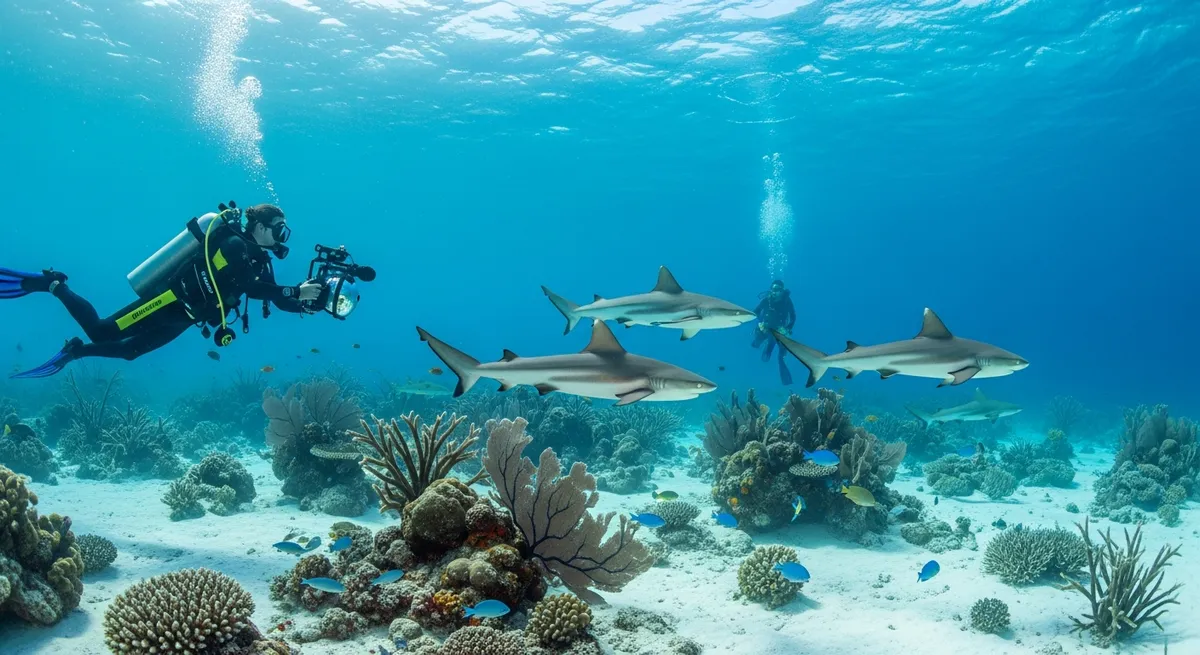
Why Bahamas for Your First Dives?
The Bahamas stands out as an exceptional destination for beginner divers, offering a welcoming underwater environment perfectly suited for those taking their first fins-first plunge. With an impressive 214 dive sites spread across 8 dive regions, the country boasts a significant proportion of sites designated as beginner-friendly (39 out of 46 sites with difficulty ratings). This means you'll find numerous shallow, calm locations designed to build confidence and hone your skills without overwhelming challenges.
A key factor contributing to the Bahamas' appeal for new divers is its consistently warm water temperatures, typically ranging from 75-84°F (24-29°C) year-round. This allows for comfortable diving, often in just a shorty wetsuit or even a swimsuit, reducing the need for bulky gear and making the overall experience more enjoyable. Visibility is also consistently excellent, frequently exceeding 80-100 feet, which enhances the learning experience by allowing divers to clearly see their surroundings and instructors. You can expect to encounter vibrant coral reefs, a diverse array of reef fish like parrotfish and angelfish, nurse sharks, and even friendly sea turtles, all in a gentle, low-current setting.
Best Beginner-Friendly Regions
Nassau & New Providence: As the primary entry point to the Bahamas, Nassau and New Providence offer unparalleled accessibility and a high concentration of beginner-friendly dive operators. Many dive sites here are shallow and protected, with minimal currents, perfect for initial training dives and discovery experiences. Sites like the James Bond Wrecks, particularly the shallower parts of the Tears of Allah, offer interesting features without deep depths or strong currents, making them ideal for new divers to explore artificial reefs and a variety of marine life.
Exuma Cays: The Exuma Cays are renowned for their stunning clear waters and a more relaxed pace. This region offers numerous shallow reefs and sheltered cays perfect for new divers. The famous Thunderball Grotto, while not strictly a dive site, is an excellent snorkeling location that gives beginners a taste of the underwater world in a confined, safe environment. Many of the outer reef systems in the Exumas are relatively shallow and host abundant reef fish, making them visually rewarding and easy to navigate for those just starting out.
Long Island: While perhaps less frequented than Nassau, Long Island provides a tranquil setting with some exceptional shallow diving opportunities. Known for its dramatic topography, the island also features accessible reef systems that are perfect for beginners. The calm, protected waters on the leeward side of the island offer excellent conditions for skill development and enjoying the colorful coral formations and fish life without challenging currents. Dive sites near Cape Santa Maria are particularly noted for their calm conditions and rich marine biodiversity at shallow depths.
What Certification Do You Need?
For your first independent dives in the Bahamas, you will typically need a PADI Open Water Diver certification or an equivalent from another recognized agency such as SSI, NAUI, or CMAS. This entry-level certification teaches you the fundamental knowledge and skills required for safe diving to a maximum depth of 60 feet (18 meters). If you're not ready for a full certification, many dive centers offer a 'Discover Scuba Diving' program, which allows you to experience diving under direct instructor supervision in shallow water, without requiring a full certification. The Bahamas has a robust network of PADI and SSI dive centers, making it easy to complete your certification or enjoy guided dives. These local centers are well-versed in catering to beginners and often have multilingual instructors.
Best Time to Visit
The Bahamas offers excellent diving conditions year-round, but the peak season for pleasant weather is generally from November to May. During these months, the weather is cooler and drier, with less humidity and a lower chance of tropical storms. Air temperatures average 70-80°F (21-27°C). Water temperatures during this period range from 75-78°F (24-26°C), making a 3mm shorty wetsuit comfortable for most divers. The summer months from June to October bring warmer air and water temperatures (80-84°F / 27-29°C), but also higher humidity and the potential for hurricanes, particularly from August to October. Visibility remains consistently high throughout the year, often exceeding 80-100 feet regardless of the season, thanks to the clear oceanic waters.
What to Expect on Your First Dive
Your first dive experience in the Bahamas will typically begin at a local dive center where you'll check in, complete any necessary paperwork, and get fitted for your gear. You'll then receive a comprehensive pre-dive briefing from your instructor, covering safety procedures, hand signals, marine life you might encounter, and an overview of the dive site. Most beginner dives in the Bahamas are conducted from a boat, as many of the best sites are a short ride offshore. After gearing up on the boat, you'll perform a controlled entry into the water, usually a giant stride or a backroll, guided by your instructor.
Once in the water, you'll practice some basic skills at the surface before descending slowly with your instructor. The typical dive style is calm and relaxed, focusing on gentle drifts along shallow reefs or exploring sheltered wrecks, with minimal to no current. Your instructor will be with you every step of the way, ensuring your comfort and safety. You'll spend about 30-45 minutes underwater, exploring the vibrant coral formations and observing reef fish, often seeing nurse sharks or sea turtles. After surfacing, you'll re-board the boat, and depending on the excursion, you might have a surface interval before a second dive or head back to shore. The emphasis is always on a safe, enjoyable, and educational introduction to the underwater world.
Budget Guide
Diving in the Bahamas can vary in cost depending on the region and type of experience. A 'Discover Scuba Diving' experience, perfect for first-timers, typically costs around $150-200 USD. If you decide to pursue a full PADI Open Water Diver certification, expect to pay approximately $500-700 USD, which usually includes all course materials, equipment rental, and instructor fees. For certified divers, a two-tank fun dive trip ranges from $120-180 USD, including tanks and weights, with equipment rental adding an extra $30-50 USD per day. Most dive centers accept major credit cards, but having some Bahamian dollars (BSD, pegged 1:1 with USD) for smaller purchases or tips is advisable.
Accommodation costs in the Bahamas are diverse. Budget-friendly guesthouses or smaller hotels might start from $100-150 USD per night. Mid-range hotels typically range from $200-400 USD per night, while luxury resorts can easily exceed $500 USD per night. Food costs can also vary, with casual meals costing $15-30 USD and fine dining significantly higher. Factor in transportation (taxis, ferries) and potential marine park fees, which are sometimes included in dive trip prices but can be separate.
Essential Tips
- Book in Advance: Especially during peak season (November-May), dive centers and popular resorts can book up quickly. Secure your spots for courses and dive trips well ahead of time.
- Hydrate Well: The warm climate and sun can lead to dehydration. Drink plenty of water before and after your dives to prevent fatigue and aid decompression.
- Respect Marine Life: The Bahamas has strict marine conservation laws. Do not touch or disturb coral, fish, or other marine creatures. Maintain a safe distance, especially from sharks and turtles.
- Sun Protection: The Bahamian sun is strong. Use reef-safe sunscreen, wear a hat, and consider a rash guard or light wetsuit for surface intervals.
- Currency: The Bahamian Dollar (BSD) is pegged 1:1 with the US Dollar (USD). USD is widely accepted, but having smaller BSD notes can be useful for local vendors.
- Consider Travel Insurance: Always a good idea when traveling, especially for diving. Ensure your policy covers diving-related incidents and medical evacuation.
- Check for Marine Park Fees: Some dive sites, particularly within protected areas, may have additional marine park fees. Confirm if these are included in your dive trip price.
At a Glance
| Destination | Difficulty | Best Months |
|---|---|---|
| AbacoBahamas | Beginner | Jan-Dec |
| AndrosBahamas | Beginner | Jan-Dec |
| Long IslandBahamas | Beginner | Jan-Dec |
| Nassau & New ProvidenceBahamas | Beginner | Jan-Dec |
| Exuma CaysBahamas | Beginner | Jan-Dec |
Abaco
Bahamas
Difficulty
Beginner
Best Months
Jan-Dec
Water Temp
24-30C
Visibility
14-24 nmi
Dive Centres
13
Practical Info
- dive Sites:
- 60
- dive Centres:
- 13
Andros
Bahamas
Difficulty
Beginner
Best Months
Jan-Dec
Water Temp
25-25C
Dive Centres
4
Practical Info
- dive Sites:
- 45
- dive Centres:
- 4
Nassau & New Providence
Bahamas
Difficulty
Beginner
Best Months
Jan-Dec
Water Temp
25-30C
Dive Centres
7
Practical Info
- dive Sites:
- 27
- dive Centres:
- 7
Exuma Cays
Bahamas
Difficulty
Beginner
Best Months
Jan-Dec
Water Temp
25-30C
Dive Centres
10
Practical Info
- dive Sites:
- 18
- dive Centres:
- 10
Frequently Asked Questions
Do I need a certification to dive in Bahamas?
For independent diving in the Bahamas, you'll need a PADI Open Water Diver certification or equivalent. However, you can try a 'Discover Scuba Diving' program under direct instructor supervision without certification.
How much does diving cost in Bahamas?
A 'Discover Scuba Diving' experience costs $150-200 USD. A full Open Water certification is $500-700 USD. Certified divers can expect to pay $120-180 USD for a two-tank fun dive, plus $30-50 USD for equipment rental.
What is the best time to dive in Bahamas?
The best time to dive is from November to May, offering cooler, drier weather and water temperatures of 75-78°F (24-26°C). Diving is good year-round, but June to October has higher humidity and hurricane potential.
Is Bahamas safe for beginner divers?
Yes, the Bahamas is very safe for beginner divers. It features many shallow, calm dive sites with excellent visibility and warm water. Dive operators are experienced in guiding new divers, focusing on safety and comfort.
What marine life will I see in Bahamas?
Beginner divers in the Bahamas can expect to see vibrant coral reefs, a variety of reef fish like parrotfish and angelfish, nurse sharks, and sea turtles. The clear waters make marine life easily observable.
Related Guides
Planning when to go?
See the month-by-month conditions guide