First Time Diving in Brazil - A Beginner's Complete Guide
Everything you need to know before your first dive in Brazil
Why Brazil for Your First Dives?
Brazil, with its vast coastline and diverse underwater ecosystems, offers a compelling introduction to scuba diving, even for beginners. While the country boasts 245 dive sites across 7 regions, some areas are particularly well-suited for those just starting out. The water temperature is generally warm, often ranging from 24°C to 29°C in popular spots, which means less bulk in your wetsuit and more comfort during your dives. Visibility can vary significantly by region and season, but many beginner-friendly sites offer good to excellent conditions, typically 10-25 meters, allowing for clear views of the marine environment.
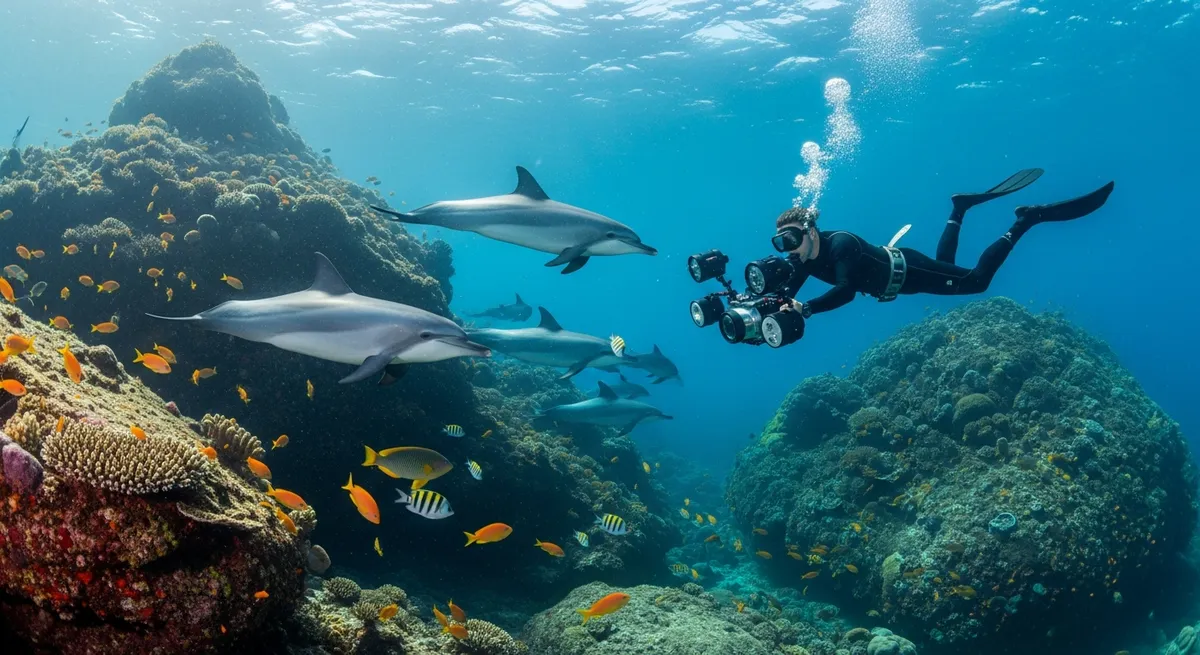
While Brazil does have some challenging sites, particularly those with stronger currents or deeper profiles, the key is to choose the right region and dive operator. Beginners can expect to encounter a variety of marine life, including colorful reef fish, sea turtles, rays, and sometimes even dolphins. The relaxed pace of many Brazilian dive operations, coupled with the natural beauty both above and below the water, contributes to a memorable first diving experience. It's a destination that balances accessibility for novices with the promise of exciting discoveries.
Best Beginner-Friendly Regions
Arraial do Cabo
Often called the 'Diving Capital' of Rio de Janeiro state, Arraial do Cabo is an excellent choice for beginners due to its generally calm waters and abundant marine life close to shore. The upwelling phenomenon here brings nutrient-rich waters, attracting a diverse range of species. Dive sites like Praia do Forno and Ilha dos Franceses offer shallow depths, good visibility, and plenty of opportunities to see turtles, rays, and schooling fish, making them ideal for initial training and discovery dives.
Fernando de Noronha
While a bit more remote and requiring a higher budget, Fernando de Noronha offers some of Brazil's most pristine conditions, perfect for comfortable beginner dives. Its protected marine park status ensures healthy reefs and a rich diversity of life. Sites such as Baía do Sancho and Praia do Porto feature calm, clear waters and a remarkable abundance of marine life, including spinner dolphins, reef sharks (harmless to divers), and vibrant corals. The gentle currents make it very accommodating for those still getting comfortable underwater.
Salvador & Bahia
The Salvador & Bahia region provides a unique blend of history and accessible diving. While not as famous for its reefs as other regions, it offers interesting wreck dives in shallow, calm waters, which can be fascinating for beginners. The Bay of All Saints (Baía de Todos os Santos) has several historical shipwrecks, like the Cavo Artemidi, that are at depths suitable for Open Water divers. These sites often have good visibility and less current, providing a different type of underwater experience without being overly challenging.
What Certification Do You Need?
For your first independent dives in Brazil, you will typically need a PADI Open Water Diver certification or an equivalent from another recognized agency like SSI, CMAS, or NAUI. This certification allows you to dive to a maximum depth of 18 meters with a buddy. If you're not yet certified, you can enroll in a Discover Scuba Diving (DSD) experience, which allows you to try diving under direct instructor supervision in shallow water without prior certification. Most reputable dive centers throughout Brazil offer both DSD programs and full Open Water Diver courses. Brazil has a strong network of dive centers, many of which are PADI or SSI affiliated, ensuring consistent training standards and equipment availability.
Best Time to Visit
The best time to visit Brazil for diving largely depends on the region, but generally, the drier months offer more stable conditions. For most of the coast, the period from May to September is considered excellent, with less rain and good visibility. However, specific regions have nuances:
- Northeast Coast (Fernando de Noronha, Recife): The dry season runs from August to January, offering the calmest seas and best visibility, with water temperatures consistently around 27°C-29°C.
- Southeast Coast (Arraial do Cabo): While good year-round, the summer months (December to March) bring warmer water (24°C-26°C) and generally good conditions, though occasional rain can occur. The winter months (June-August) can see cooler water but often excellent visibility due to upwelling.
- Salvador & Bahia: Diving is good almost year-round, but the period from September to March typically offers warmer waters (26°C-28°C) and calmer conditions, ideal for exploring the bay's wrecks.
Overall, water temperatures across the main dive regions rarely drop below 22°C, making for comfortable diving in a 3mm or 5mm wetsuit, or even just a rash guard in warmer areas.
What to Expect on Your First Dive
Your first dive experience in Brazil will typically begin at a local dive center. After check-in, you'll receive a comprehensive briefing covering the dive site, safety procedures, hand signals, and what marine life you might encounter. You'll then be fitted with your gear- wetsuit, BCD, regulator, mask, and fins. Most beginner dives in Brazil, particularly in regions like Arraial do Cabo and Fernando de Noronha, are boat dives. You'll board a comfortable dive boat, usually with a short ride to the site.
Upon arrival at the dive site, your instructor will guide you through a controlled entry into the water, often a giant stride or back roll. Once in the water, you'll perform a few basic skills in shallow, calm conditions to ensure comfort and control, such as mask clearing and regulator recovery. The underwater experience itself will be a guided tour, with your instructor managing your depth and direction. Expect generally calm conditions at beginner sites, allowing you to focus on buoyancy and enjoying the vibrant underwater scenery. The typical dive profile for a beginner will be shallow, often no deeper than 12-18 meters, and last between 45-60 minutes, depending on air consumption.
Budget Guide
Diving in Brazil offers a range of price points, but it's generally considered a mid-range diving destination compared to some other global hotspots. Here's a realistic breakdown:
- Discover Scuba Diving (DSD): Expect to pay R$300-R$600 (approximately $60-$120 USD) for a DSD experience, which includes equipment rental and instructor supervision.
- Open Water Diver Course: A full PADI or SSI Open Water Diver course will typically cost R$1,800-R$3,500 (approximately $360-$700 USD). This usually includes all theoretical and practical sessions, equipment rental, and certification fees.
- Fun Dives (Certified Divers): A two-tank boat dive for certified divers, including equipment rental, will cost around R$400-R$800 (approximately $80-$160 USD). Prices can be higher in premium locations like Fernando de Noronha.
- Equipment Rental: If not included in a package, individual gear rental (BCD, regulator, wetsuit, mask, fins) can be R$100-R$200 per day (approximately $20-$40 USD).
- Accommodation: Budget hostels can be found for R$80-R$150 ($16-$30 USD) per night. Mid-range hotels typically range from R$250-R$600 ($50-$120 USD) per night. Luxury options can exceed R$1000 ($200 USD) per night, especially in Fernando de Noronha.
Essential Tips
- Book in Advance: Especially for popular destinations like Fernando de Noronha or during peak season, dive trips and courses can fill up quickly. Book your spots well in advance.
- Portuguese Basics: While many dive operators, especially in tourist areas, will have English-speaking staff, knowing a few basic Portuguese phrases can enhance your experience.
- Marine Park Fees: Be aware that some dive locations, particularly Fernando de Noronha, require environmental protection fees for entry to the island and the marine park. Factor these into your budget.
- Currents: While beginner sites are chosen for calm conditions, some areas, like Arraial do Cabo, can experience occasional currents due to upwelling. Listen carefully to your dive briefing and follow your instructor's guidance.
- Sun Protection: The Brazilian sun is intense. Use reef-safe sunscreen, wear hats, and stay hydrated, especially on dive boats.
- Local Dive Centers: Opt for dive centers affiliated with international organizations like PADI or SSI to ensure high safety standards and well-maintained equipment.
- Cash vs. Card: While credit cards are widely accepted, having some Brazilian Reais (R$) cash on hand is always useful for smaller purchases or places that prefer cash.
At a Glance
| Destination | Difficulty | Best Months |
|---|---|---|
| Arraial do CaboBrazil | Beginner | Jan-Dec |
| Fernando de NoronhaBrazil | Beginner | Jan-Dec |
| Salvador & BahiaBrazil | Beginner | - |
| AbrolhosBrazil | Beginner | - |
| Recife & Northeast CoastBrazil | Beginner | - |
Arraial do Cabo
Brazil
Difficulty
Beginner
Best Months
Jan-Dec
Water Temp
22-27C
Dive Centres
27
Practical Info
- dive Sites:
- 98
- dive Centres:
- 27
Fernando de Noronha
Brazil
Difficulty
Beginner
Best Months
Jan-Dec
Water Temp
27-29C
Dive Centres
6
Practical Info
- dive Sites:
- 82
- dive Centres:
- 6
Frequently Asked Questions
Do I need a certification to dive in Brazil?
To dive independently in Brazil, you'll need a PADI Open Water Diver certification or equivalent. However, you can try a Discover Scuba Diving (DSD) experience without certification, under direct instructor supervision in shallow water.
How much does diving cost in Brazil?
A Discover Scuba Diving experience typically costs R$300-R$600 ($60-$120 USD). A full Open Water Diver course ranges from R$1,800-R$3,500 ($360-$700 USD). Two-tank fun dives for certified divers are about R$400-R$800 ($80-$160 USD), including equipment rental.
What is the best time to dive in Brazil?
Generally, the dry season from May to September offers stable conditions. For the Northeast (Fernando de Noronha), August to January is best. For the Southeast (Arraial do Cabo), December to March offers warmer water, while June-August can have excellent visibility.
Is Brazil safe for beginner divers?
Yes, Brazil is safe for beginner divers, provided you choose reputable dive centers and stick to beginner-friendly sites. Many regions offer calm, shallow waters with experienced instructors. Always follow safety briefings and instructor guidance.
What marine life will I see in Brazil?
Beginner divers in Brazil can expect to see a variety of marine life including colorful reef fish, sea turtles, various species of rays, and sometimes dolphins. In places like Fernando de Noronha, you might also encounter reef sharks and vibrant coral formations.
Related Guides
Planning when to go?
See the month-by-month conditions guide