First Time Diving in Cape Verde - A Beginner's Complete Guide
Everything you need to know before your first dive in Cape Verde
Why Cape Verde for Your First Dives?
Cape Verde, an archipelago off the coast of West Africa, offers a surprisingly accessible entry point for beginner divers. While it boasts a total of 92 dive sites across its four main regions, a significant 30 of these are specifically categorized as beginner-friendly. This high proportion of easy sites means you're likely to find suitable conditions regardless of which island you choose to explore. The underwater environment here is known for its volcanic landscapes, creating interesting topography with reefs, swim-throughs, and caverns.
One of the key advantages for new divers is the consistently warm water temperatures, typically ranging from 22°C to 27°C (72°F to 81°F) year-round. This allows for comfortable diving in a 3mm or 5mm wetsuit, reducing the need for heavy thermal protection. Visibility is generally good, often exceeding 15 meters (50 feet), which is crucial for building confidence and observing the marine life without feeling disoriented. While currents can be present in some areas, the designated beginner sites are chosen for their sheltered locations and calmer conditions, making them ideal for initial training and discovery dives.
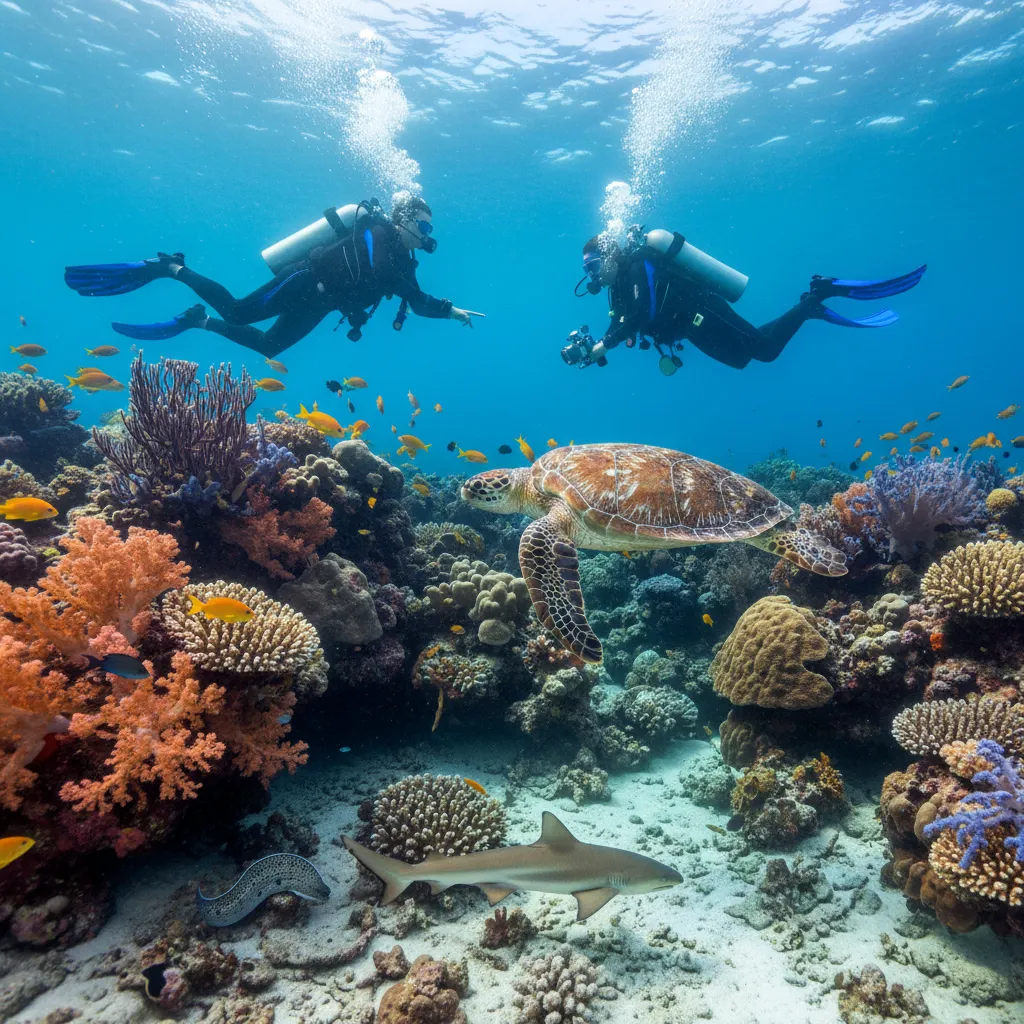
Marine life highlights for beginners include a variety of reef fish, moray eels, octopus, and occasionally turtles. Depending on the season, you might also encounter stingrays or small sharks. While Cape Verde can offer more challenging dives for experienced individuals, its dedicated beginner sites provide a safe and engaging environment to learn the ropes without being overwhelmed by strong currents or deep technical requirements. It strikes a good balance between exciting underwater scenery and manageable conditions for those new to the sport.
Best Beginner-Friendly Regions
Sal: Sal is arguably the most popular island for tourism and diving, offering excellent infrastructure for beginners. Its calm, sandy bays and accessible shore entries make it a prime spot for initial training. Dive sites like the 'House Reef' in Santa Maria provide a gentle introduction to underwater exploration, with shallow depths and abundant small marine life. Many dive centers are concentrated here, offering a variety of courses and discovery dives. The island's accessibility and established dive community make it a reliable choice for your first dives.
Boa Vista: Known for its extensive sandy beaches, Boa Vista also provides several sheltered areas suitable for beginners. The relatively calm waters on the leeward side of the island create good conditions for learning. Sites such as 'Diving Centre's Reef' offer shallow, protected environments where new divers can practice skills and observe reef fish, often in good visibility. While perhaps less bustling than Sal, Boa Vista offers a relaxed atmosphere, which can be beneficial for those feeling nervous about their first underwater experiences.
Santiago: As the largest island and home to the capital city of Praia, Santiago offers a different cultural experience alongside its diving opportunities. While less developed for dive tourism than Sal, it still features beginner-friendly sites, particularly around the calmer bays. The volcanic rock formations create interesting, shallow reefs where you can spot diverse fish species. Dive operations here might be smaller and more personalized, potentially offering a more intimate learning experience. It's a good option for those looking to combine their diving with a deeper exploration of Cape Verdean culture.
What Certification Do You Need?
To participate in guided fun dives in Cape Verde, you will typically need a PADI Open Water Diver certification or an equivalent from another recognized agency such as SSI, CMAS, or BSAC. This entry-level certification demonstrates that you have completed the necessary theoretical knowledge, confined water skills, and open water training dives to dive safely with a buddy. If you are not yet certified, most local dive centers in Cape Verde offer the PADI Open Water Diver course (or equivalent), which usually takes 3-4 days to complete. Many centers also offer 'Discover Scuba Diving' experiences, which allow uncertified individuals to try diving under direct instructor supervision in shallow water without committing to a full course. PADI is widely popular and recognized across Cape Verdean dive centers, making it easy to find courses and guides.
Best Time to Visit
The best time to visit Cape Verde for diving is generally from May to December. During these months, the weather is consistently warm and the seas are typically calmer, especially on the leeward sides of the islands. Air temperatures range from 25°C to 30°C (77°F to 86°F), and water temperatures are very comfortable, averaging between 24°C and 27°C (75°F to 81°F). Visibility is usually at its best during this period, often exceeding 20 meters (65 feet). The peak tourist season is usually around December to February, which also offers good diving but can have slightly stronger winds and currents in some areas. The period from January to April can experience stronger winds, particularly on the eastern coasts, which might affect boat trips and create choppier conditions, though sheltered sites remain diveable.
What to Expect on Your First Dive
When you arrive at a dive center in Cape Verde for your first dive, expect a thorough check-in process where you'll fill out medical questionnaires and waivers. If you're doing a Discover Scuba Diving experience, you'll receive a comprehensive briefing covering basic dive theory, equipment usage, and safety procedures. Certified divers will have a less extensive briefing focused on the specific dive site. Next, you'll be fitted with rental gear-mask, fins, wetsuit, BCD, regulator, and weights. Many beginner dives in Cape Verde, especially on islands like Sal and Boa Vista, are conducted from boats that take you to sheltered, shallow reefs. Shore dives are also available at some locations.
Entry into the water is typically a controlled backward roll from a small boat or a giant stride from a larger vessel. Once in the water, you'll perform a final equipment check and descend slowly with your instructor or guide. The underwater experience will focus on controlled breathing, buoyancy, and observing the marine environment. Expect calm to mild currents at designated beginner sites. The typical dive style is relaxed, allowing you to get comfortable and enjoy the scenery. Your instructor will be attentive, ensuring your safety and helping you with any adjustments. Dives usually last between 45-60 minutes, depending on air consumption and dive profile. After surfacing, you'll return to the boat or shore, where you'll debrief and share your experience.
Budget Guide
Diving in Cape Verde offers a range of price points. A 'Discover Scuba Diving' experience, which includes equipment and instructor supervision, typically costs around 70-90 EUR (approximately 75-95 USD). A full PADI Open Water Diver course, including all materials, equipment rental, and certification, usually ranges from 350-450 EUR (approximately 380-490 USD). For certified divers, a single fun dive with equipment rental will cost about 40-50 EUR (45-55 USD), while a package of 4-6 dives often brings the per-dive cost down to 35-45 EUR (38-49 USD). Equipment rental, if not included in a package, is usually 10-15 EUR (11-16 USD) per day for a full set.
Accommodation costs vary significantly. Budget guesthouses can be found for 30-50 EUR (33-55 USD) per night. Mid-range hotels typically cost 70-120 EUR (76-130 USD) per night, while resorts can range from 150 EUR (163 USD) upwards. Food costs are reasonable, with local meals costing 8-15 EUR (9-16 USD) per person. Overall, a week-long diving trip for a beginner, including an Open Water course, mid-range accommodation, and food, could realistically be estimated at 1000-1500 EUR (1080-1630 USD), excluding international flights.
Essential Tips
- Book in Advance: Especially during peak season (December-February and July-August), dive centers can get busy. Book your courses or dive packages ahead of time to secure your spot.
- Hydrate Well: The warm climate and sun exposure in Cape Verde can lead to dehydration. Drink plenty of water before and after your dives.
- Sun Protection: The sun is strong. Use reef-safe sunscreen, wear a hat, and consider a rash guard or light wetsuit for surface intervals.
- Currents Can Vary: While beginner sites are chosen for calm conditions, understand that currents can sometimes be present in Cape Verde. Listen carefully to your dive guide's briefing.
- Cash is King (Sometimes): While major centers accept cards, having some local currency (Cape Verdean Escudo - CVE) for smaller purchases or tips is advisable.
- Respect Marine Life: Observe marine life without touching. Cape Verde takes conservation seriously.
- Consider Travel Insurance: Ensure your travel insurance covers scuba diving activities, including medical evacuation, just in case.
At a Glance
| Destination | Difficulty | Best Months |
|---|---|---|
| Santo AntãoCape Verde | Beginner | Jan, Apr-Dec |
| SalCape Verde | Beginner | - |
| Boa VistaCape Verde | Beginner | - |
| SantiagoCape Verde | Beginner | - |
Santo Antão
Cape Verde
Difficulty
Beginner
Best Months
Jan, Apr-Dec
Water Temp
24-28C
Dive Centres
5
Practical Info
- dive Sites:
- 46
- dive Centres:
- 5
Frequently Asked Questions
Do I need a certification to dive in Cape Verde?
To go on guided fun dives in Cape Verde, you generally need a PADI Open Water Diver certification or an equivalent. However, if you're uncertified, you can participate in a 'Discover Scuba Diving' experience under direct instructor supervision, or take a full Open Water course at local dive centers.
How much does diving cost in Cape Verde?
A 'Discover Scuba Diving' experience costs around 70-90 EUR. A full PADI Open Water course is typically 350-450 EUR. For certified divers, a single fun dive with equipment rental is about 40-50 EUR, with packages reducing the per-dive cost.
What is the best time to dive in Cape Verde?
The best time to dive in Cape Verde is from May to December. During these months, water temperatures range from 24°C to 27°C, and conditions are generally calmer with excellent visibility, making it ideal for beginners.
Is Cape Verde safe for beginner divers?
Yes, Cape Verde is suitable for beginner divers. With 30 designated beginner-friendly dive sites, warm waters, generally good visibility, and sheltered locations, it provides a safe and comfortable environment for learning and experiencing your first dives.
What marine life will I see in Cape Verde?
On beginner dives in Cape Verde, you can expect to see various reef fish, moray eels, octopus, and occasionally turtles. Depending on the season and location, you might also spot stingrays or small sharks. The volcanic topography also creates interesting underwater landscapes.
Related Guides
Planning when to go?
See the month-by-month conditions guide