First Time Diving in Cayman Islands - A Beginner's Complete Guide
Everything you need to know before your first dive in Cayman Islands
Why Cayman Islands for Your First Dives?
The Cayman Islands present an excellent destination for first-time divers, offering a combination of accessible dive sites and comfortable conditions. With 105 named dive sites spread across three distinct regions, the islands cater to a wide range of skill levels. The warm Caribbean waters maintain a consistent temperature, typically ranging from 26°C to 29°C (79°F to 84°F) year-round, eliminating the need for thick wetsuits and making longer dives more pleasant. Visibility is consistently good, often exceeding 25 meters (80 feet), which is ideal for new divers who benefit from clear views of their surroundings and instructors.
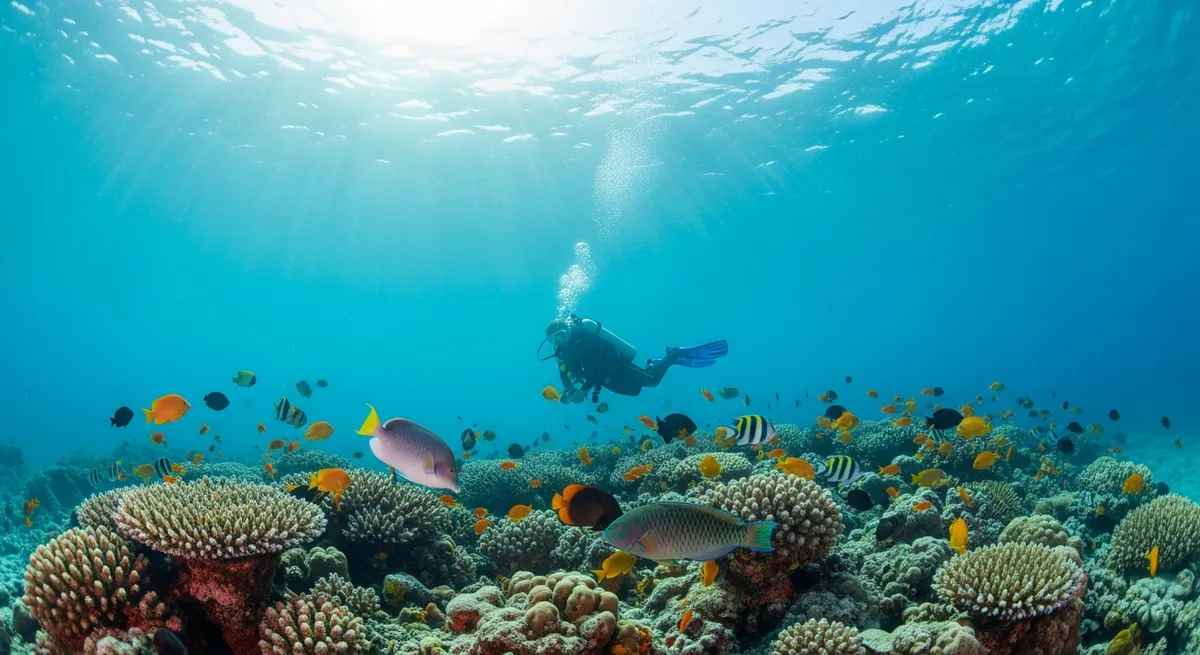
While the Cayman Islands are known for dramatic wall dives, many sites feature shallow reefs and calm conditions perfect for initial underwater experiences. The marine environment is rich with diverse species, including colorful reef fish, stingrays, turtles, and various corals. This abundant marine life provides constant visual engagement, helping beginners feel more comfortable and excited about their new adventure. The calm waters and minimal currents at many beginner sites reduce potential stress, allowing new divers to focus on buoyancy and basic skills rather than battling challenging conditions.
It's important to note that while the Cayman Islands offer numerous beginner-friendly options, some sites are indeed more challenging. However, the dive operators are well-versed in guiding beginners and will select appropriate locations based on skill level and ocean conditions. The focus here is on providing a safe and enjoyable introduction to diving without overwhelming new participants.
Best Beginner-Friendly Regions
Grand Cayman: As the largest and most developed island, Grand Cayman offers the widest selection of dive operators and beginner-friendly sites. The west side of the island, in particular, is sheltered from prevailing winds, providing calm conditions ideal for initial dives. Sites like the shallow reefs near Seven Mile Beach or the famous Stingray City Sandbar, while not a true dive, offer unparalleled interaction with marine life in a very controlled, shallow environment. Many introductory dives and Open Water courses begin in these calm, clear waters before progressing to slightly deeper, still accessible reefs.
Cayman Brac: Located about 145 kilometers (90 miles) northeast of Grand Cayman, Cayman Brac offers a more laid-back diving experience with a good mix of sites for all levels. For beginners, the shallower reef systems along the island's north and south sides provide excellent opportunities. The MV Captain Keith Tibbetts wreck, while deeper in parts, also has shallower sections that can be explored by Open Water divers with guidance. The generally calm conditions and less crowded sites make for a peaceful introduction to diving.
Little Cayman: Often lauded for its pristine environment, Little Cayman is a fantastic choice for beginners seeking unspoiled reefs. While it's home to the famous Bloody Bay Wall, there are numerous shallower reef dives that are perfectly suited for new divers. The visibility here is often exceptional, and the abundance of marine life in protected areas like the Bloody Bay Marine Park's shallower sections makes for an incredible first dive experience. Dive operators on Little Cayman are experienced with guiding new divers through these vibrant, yet gentle, underwater landscapes.
What Certification Do You Need?
To participate in certified dives in the Cayman Islands, you will need a PADI Open Water Diver certification or an equivalent entry-level certification from another recognized agency such as SSI, NAUI, or BSAC. This certification demonstrates that you have completed the necessary theoretical knowledge and practical skills training to safely dive to a maximum depth of 18 meters (60 feet). If you are not yet certified, you can enroll in a Discover Scuba Diving (DSD) experience, which allows you to try diving under direct instructor supervision in shallow water without prior certification. Many dive centers across all three islands offer DSD programs and full Open Water Diver courses. PADI is a very popular certification agency in the region, and courses are readily available in multiple languages.
Best Time to Visit
The Cayman Islands offer good diving conditions year-round, but the peak season for calm waters and sunny weather is generally from November to April. During these months, the islands experience less rainfall and lower humidity. Water temperatures during this period range from 26°C to 28°C (79°F to 82°F). The visibility is consistently high, often exceeding 30 meters (100 feet). The off-peak season, from May to October, brings warmer air and water temperatures, typically 28°C to 29°C (82°F to 84°F), and higher humidity, with a greater chance of rain showers. However, these showers are often brief, and diving is rarely significantly impacted. Hurricane season runs from June to November, but direct hits are infrequent, and dive operators monitor weather patterns closely.
What to Expect on Your First Dive
Your first dive experience in the Cayman Islands, especially if it's a Discover Scuba Diving program or the first few dives of an Open Water course, will typically begin at a local dive center. You'll check in, complete any necessary paperwork, and then receive a comprehensive briefing from your instructor. This briefing will cover safety procedures, basic hand signals, equipment usage, and an overview of what you'll see underwater. You'll then be fitted with your gear-mask, fins, wetsuit (if desired, though often not needed due to warm water), BCD (buoyancy control device), regulator, and tanks.
Most dives in the Cayman Islands are boat dives, even for beginners, as many of the best sites are a short boat ride away. You'll board a comfortable dive boat, where your gear will be set up for you. Once at the dive site, you'll enter the water, usually with a giant stride or back roll, and spend time at the surface getting comfortable with breathing from your regulator. For beginners, the initial underwater experience will often involve practicing basic skills in shallow, calm water, such as clearing your mask and recovering your regulator. The dive itself will be a guided tour, moving slowly over a shallow reef, allowing you to focus on buoyancy and enjoying the marine life. Currents are generally minimal at beginner sites, ensuring a relaxed experience. The emphasis is on safety, comfort, and enjoyment, with your instructor always close by.
Budget Guide
Diving costs in the Cayman Islands can vary. A Discover Scuba Diving (DSD) experience, perfect for first-timers, typically costs between $120-180 USD. A full PADI Open Water Diver course, including all materials, instruction, and certification, generally ranges from $550-750 USD. For certified divers, a two-tank fun dive trip usually costs around $110-140 USD, not including equipment rental. Equipment rental, if not included in a package, is approximately $20-30 USD per day for a full set. Accommodation varies widely: budget guesthouses can start from $150 USD per night, mid-range hotels from $250-400 USD per night, and luxury resorts upwards of $500 USD per night. Food costs are generally higher than in many other Caribbean destinations.
Essential Tips
- Book in Advance: Especially during peak season (November-April), dive operators and popular accommodations can book up quickly. Secure your spots well ahead of time.
- Hydrate: The warm climate and sun exposure, combined with diving, can lead to dehydration. Drink plenty of water before and after your dives.
- Reef-Safe Sunscreen: Help protect the delicate coral ecosystems by using reef-safe sunscreen that is free of oxybenzone and octinoxate.
- Stingray City Etiquette: If visiting Stingray City, listen carefully to your guide's instructions on how to interact with the stingrays respectfully and safely.
- Gratuities: Tipping dive boat crew and instructors is customary in the Cayman Islands, typically 15-20% for good service.
- Travel Insurance: Ensure your travel insurance covers scuba diving activities, including potential medical emergencies and evacuation.
- Local Currency: While US dollars are widely accepted, the local currency is the Cayman Islands Dollar (KYD). The exchange rate is fixed at 1 KYD = 1.25 USD.
At a Glance
| Destination | Difficulty | Best Months |
|---|---|---|
| Grand CaymanCayman Islands | Beginner | Jan-Dec |
| Cayman BracCayman Islands | Beginner | Jan-Dec |
| Little CaymanCayman Islands | Beginner | - |
Grand Cayman
Cayman Islands
Difficulty
Beginner
Best Months
Jan-Dec
Water Temp
27-30C
Dive Centres
13
Practical Info
- dive Sites:
- 82
- dive Centres:
- 13
Cayman Brac
Cayman Islands
Difficulty
Beginner
Best Months
Jan-Dec
Water Temp
27-30C
Dive Centres
16
Practical Info
- dive Sites:
- 23
- dive Centres:
- 16
Frequently Asked Questions
Do I need a certification to dive in Cayman Islands?
To participate in certified dives, you need a PADI Open Water Diver certification or equivalent. If you're not certified, you can try a Discover Scuba Diving (DSD) experience under instructor supervision, or enroll in a full Open Water course locally.
How much does diving cost in Cayman Islands?
A Discover Scuba Diving experience is typically $120-180 USD. A full PADI Open Water course ranges from $550-750 USD. A two-tank fun dive trip for certified divers costs about $110-140 USD, plus equipment rental if needed ($20-30 USD/day).
What is the best time to dive in Cayman Islands?
The best time to dive is from November to April, offering less rain, lower humidity, and water temperatures of 26-28°C (79-82°F) with excellent visibility. Diving is good year-round, but the off-peak season (May-October) has warmer water and higher humidity.
Is Cayman Islands safe for beginner divers?
Yes, the Cayman Islands are very safe for beginner divers. Operators are experienced, and many dive sites feature calm, shallow waters with minimal currents and excellent visibility, perfect for learning and gaining confidence.
What marine life will I see in Cayman Islands?
You can expect to see abundant marine life including colorful reef fish, stingrays, sea turtles, various species of coral, eagle rays, and nurse sharks. The clear waters provide great opportunities for spotting diverse underwater creatures.
Related Guides
Planning when to go?
See the month-by-month conditions guide