First Time Diving in Chile - A Beginner's Complete Guide
Everything you need to know before your first dive in Chile
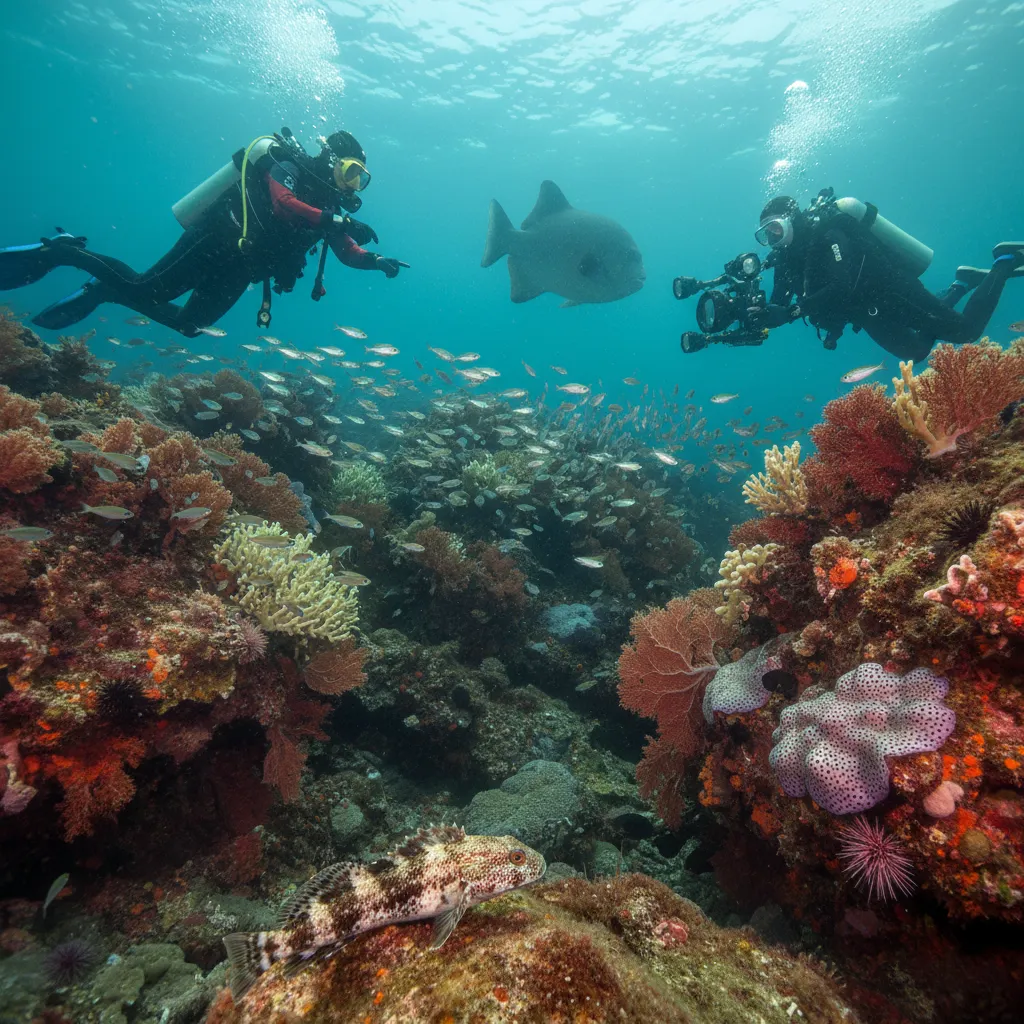
Why Chile for Your First Dives?
Chile offers a unique and often challenging introduction to scuba diving, making it an excellent destination for adventurous beginners who are ready for an experience beyond typical tropical reefs. While not known for warm, calm waters, the country's two main dive regions- Easter Island (Rapa Nui) and the Juan Fernandez Islands- provide distinctive underwater landscapes and marine encounters. With 9 dive sites across these two regions, there's enough variety to get a taste of Chilean diving.
For beginners, the appeal lies in the unique geological formations and endemic species rather than ease of conditions. Water temperatures can be cooler than many popular beginner destinations, ranging from 18-24°C, requiring appropriate thermal protection. Visibility is generally good to excellent, often exceeding 20 meters, which is a significant advantage for new divers learning to navigate and appreciate their surroundings. While some sites present currents, there are also sheltered areas suitable for initial dives. This destination rewards those seeking an unconventional and memorable first diving experience, offering a mix of intermediate and beginner-friendly sites.
Best Beginner-Friendly Regions
While Chile has only two main dive regions, Easter Island (Rapa Nui) offers the most accessible options for new divers. The island's volcanic origins create dramatic underwater topography with caves and arches. Sites like Hanga Roa Bay provide calmer conditions and shallower depths, ideal for practicing skills and getting comfortable underwater. The absence of strong currents in these sheltered areas makes it a suitable environment for initial open water dives, allowing beginners to focus on buoyancy and marine life observation. Easter Island is particularly known for its underwater Moai statue, an artificial reef that is suitable for divers of various experience levels.
What Certification Do You Need?
To participate in guided fun dives in Chile, you will generally need a PADI Open Water Diver certification or an equivalent from another recognized agency such as SSI, NAUI, or CMAS. If you are new to diving entirely, local dive centers in Easter Island offer Discover Scuba Diving experiences, which allow you to dive under direct instructor supervision without prior certification. For a full certification, PADI Open Water Diver courses are widely available and are the most common entry-level certification sought by visitors. It is advisable to book your course in advance, especially during peak season, as dive centers, particularly on Easter Island, may have limited instructor availability.
Best Time to Visit
The best time to visit Chile for diving largely depends on the region. For Easter Island (Rapa Nui), the warmer months from October to April offer the most comfortable conditions. During this period, water temperatures typically range from 22-24°C. Air temperatures are also pleasant, averaging 20-25°C, making surface intervals enjoyable. Visibility is generally excellent year-round, often exceeding 30 meters, but the warmer months offer the most favorable overall conditions for beginners. The Juan Fernandez Islands, being more remote and requiring more advanced logistics, are also best visited in their summer months, typically December to March, when sea conditions are calmer, though water temperatures will be cooler, around 18-20°C.
What to Expect on Your First Dive
Upon arrival at the dive center, you'll typically check-in, complete necessary paperwork including medical declarations, and be fitted for rental gear. A detailed dive briefing will cover the dive site's layout, maximum depth, expected marine life, safety procedures, and communication signals. Depending on the site, entries are usually from a boat, particularly on Easter Island, with a backward roll or giant stride. Shore entries are less common but may be available at very sheltered sites. Underwater, expect good visibility and unique volcanic rock formations. The pace will be relaxed, focusing on comfort and observation for beginners. Currents are generally mild in beginner areas, but your instructor will guide you to avoid any stronger flows. The dives are typically planned for no-decompression limits, with safety stops and gradual ascents.
Budget Guide
Diving in Chile, particularly on Easter Island, can be more expensive than some other beginner destinations due to its remote location. A Discover Scuba Diving experience typically costs around CLP 75,000 - 90,000 (USD 80-100). A full PADI Open Water Diver course can range from CLP 380,000 - 450,000 (USD 400-480), often including equipment rental. Fun dives for certified divers are usually around CLP 45,000 - 55,000 (USD 50-60) per dive, with discounts for multi-dive packages. Equipment rental, if not included in a package, is approximately CLP 10,000 - 15,000 (USD 10-15) per day. Accommodation on Easter Island varies widely; hostels start from CLP 30,000 (USD 32) per night, while mid-range hotels can be CLP 80,000 - 150,000 (USD 85-160) per night. Budget for transportation to the islands, which is a significant cost.
Essential Tips
- Book flights and accommodation to Easter Island well in advance, especially during peak season (October-April), as options are limited.
- Consider bringing your own thermal protection (wetsuit) if you are sensitive to cooler water, as rental suits might be standard thicknesses.
- Be prepared for potential language barriers; while dive centers often have English-speaking staff, basic Spanish phrases are helpful.
- Respect local Rapa Nui customs and the environment, both above and below water.
- Confirm dive center cancellation policies, particularly for weather-related changes, as conditions can impact dive schedules.
- Carry sufficient cash, as ATMs can be scarce or run out of money on Easter Island, and not all establishments accept credit cards.
- Allow a day or two between your last dive and flying, especially when traveling from remote islands back to the mainland.
At a Glance
| Destination | Difficulty | Best Months |
|---|---|---|
| Easter Island (Rapa Nui)Chile | Beginner | Jan-Dec |
| Juan Fernandez IslandsChile | Beginner | Jan-Dec |
Difficulty
Beginner
Best Months
Jan-Dec
Water Temp
23-23C
Dive Centres
2
Practical Info
- dive Sites:
- 6
- dive Centres:
- 2
Difficulty
Beginner
Best Months
Jan-Dec
Water Temp
18-18C
Dive Centres
18
Practical Info
- dive Sites:
- 3
- dive Centres:
- 18
Frequently Asked Questions
Do I need a certification to dive in Chile?
Yes, for guided fun dives in Chile, you typically need a PADI Open Water Diver certification or an equivalent from another recognized agency. If you are a complete beginner, you can participate in a Discover Scuba Diving experience under direct instructor supervision, or enroll in a full PADI Open Water Diver course.
How much does diving cost in Chile?
A Discover Scuba Diving experience costs around CLP 75,000 - 90,000 (USD 80-100). A full PADI Open Water Diver course ranges from CLP 380,000 - 450,000 (USD 400-480). Fun dives for certified divers are approximately CLP 45,000 - 55,000 (USD 50-60) per dive, with multi-dive packages offering better value. Equipment rental is usually extra if not part of a course or package.
What is the best time to dive in Chile?
For Easter Island, the best time to dive is during the warmer months from October to April, when water temperatures are 22-24°C and air temperatures are pleasant. Visibility is generally excellent year-round. For the Juan Fernandez Islands, December to March offers calmer sea conditions, though water temperatures are cooler at 18-20°C.
Is Chile safe for beginner divers?
Chile can be safe for beginner divers, especially in designated beginner-friendly areas on Easter Island. While not a typical warm-water, calm-reef destination, dive centers adhere to safety standards. Beginners should be prepared for cooler water temperatures and unique volcanic environments. Always dive with a reputable center and within your comfort and training limits.
What marine life will I see in Chile?
In Chile's dive regions, you can expect to see unique endemic species due to their isolation. On Easter Island, you might encounter various reef fish, moray eels, sea turtles, and occasionally sharks. The Juan Fernandez Islands are known for their endemic fish species, lobsters, and fur seals. Both areas feature dramatic volcanic rock formations and underwater topography.
Related Guides
Planning when to go?
See the month-by-month conditions guide