First Time Diving in Colombia - A Beginner's Complete Guide
Everything you need to know before your first dive in Colombia
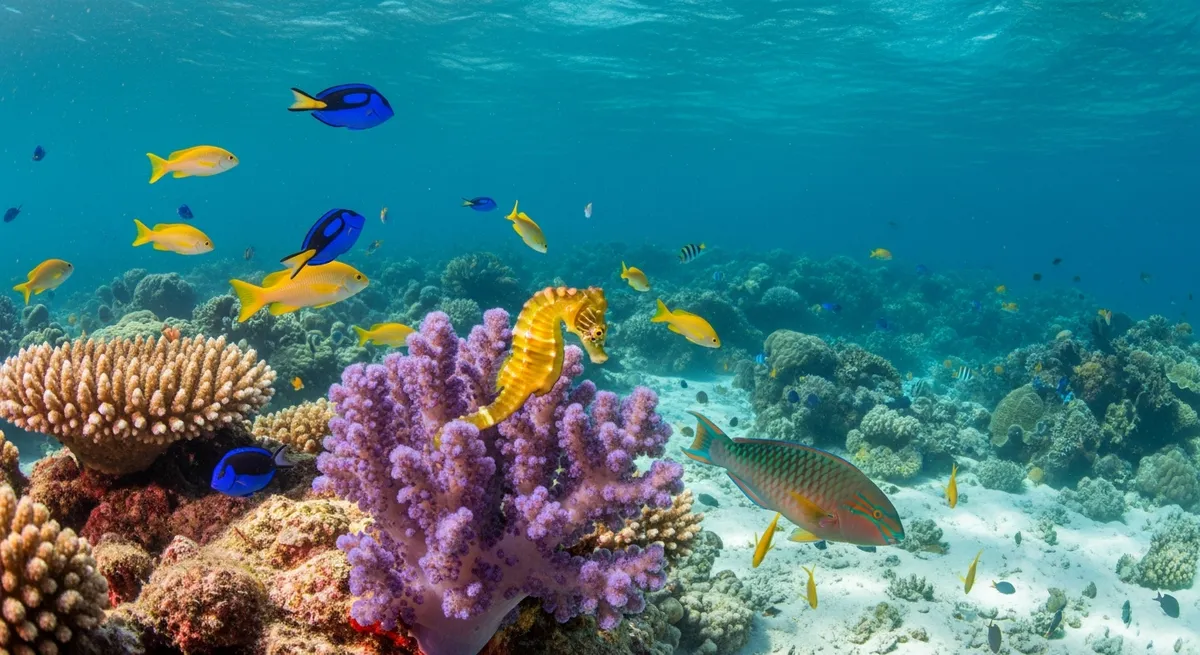
Why Colombia for Your First Dives?
Colombia offers a diverse and accessible entry point for beginner divers, boasting 232 dive sites across 6 regions. While some areas like Malpelo Island are reserved for advanced divers due to strong currents and deep dives, many other regions provide calm, shallow environments ideal for learning. The Caribbean coast, in particular, offers consistently warm water temperatures, typically ranging from 26-30°C (79-86°F), which makes for a comfortable first experience without the need for thick wetsuits. Visibility is generally good, often exceeding 15 meters (50 feet), allowing new divers to easily orient themselves and enjoy the underwater scenery.
Beginners will appreciate the relaxed pace of many dive operations along the Caribbean, especially in areas like San Andrés and Tayrona. Here, you'll encounter vibrant coral reefs, a variety of reef fish, and often sea turtles or rays in gentle conditions. While Colombia does offer challenging diving, these beginner-friendly locations are specifically chosen for their calm waters and manageable depths, ensuring a low-stress introduction to scuba. It's a destination where you can progress from a Discover Scuba Dive to Open Water certification with confidence.
Best Beginner-Friendly Regions
San Andrés & Providencia: These Caribbean islands are arguably the best entry point for beginners. The islands are surrounded by a barrier reef system, creating numerous sheltered and shallow dive sites with minimal currents. Expect calm waters, good visibility, and a chance to see colorful reef fish, small sharks, and turtles. Specific sites like 'El Acuario' in San Andrés offer very shallow, clear conditions perfect for initial skill practice, while 'Third Bridge' provides a gentle reef exploration.
Santa Marta & Tayrona: Located on Colombia's northern Caribbean coast, this region combines the calm waters of Tayrona National Natural Park with accessible dive centers in Santa Marta. The park's protected bays offer excellent conditions for new divers, featuring healthy coral formations and a variety of marine life in relatively shallow depths. Sites such as 'Granate' or 'Punta Betín' provide gentle slopes and abundant fish life, making them suitable for initial open water dives.
Cartagena & Pacific Coast (specific sites): While the Pacific Coast generally presents more challenging conditions, certain areas near Cartagena offer beginner-friendly opportunities. The Rosario Islands, a short boat ride from Cartagena, feature calm, sheltered reefs with good visibility and moderate depths. Sites like 'Pabellones' or 'Barú' are often used for beginner courses, showcasing sponges, corals, and a range of reef inhabitants in tranquil settings, distinct from the more dynamic Pacific diving.
What Certification Do You Need?
For your very first dive experience in Colombia, you don't necessarily need a certification. Most dive centers offer a 'Discover Scuba Diving' (DSD) program, which allows you to experience diving under the direct supervision of an instructor without prior certification. If you wish to dive independently with a buddy or participate in multiple dives, you will need an entry-level certification like the PADI Open Water Diver or an equivalent from agencies such as SSI, NAUI, or CMAS. These courses are widely available throughout Colombia, especially in popular dive regions like San Andrés, Santa Marta, and the Rosario Islands near Cartagena.
Local dive centers are well-equipped to provide these courses, often with multilingual instructors. PADI is a particularly popular and globally recognized agency in Colombia, so finding a center offering PADI courses is straightforward. It's advisable to check with your chosen dive center about their specific course offerings and what is included in the price, such as equipment rental and certification fees.
Best Time to Visit
The best time to visit Colombia for diving largely depends on the region. For the Caribbean coast (San Andrés, Santa Marta, Cartagena), the dry season, generally from December to April, offers the most stable weather and best diving conditions. During these months, you can expect less rain, calmer seas, and excellent visibility. Water temperatures remain consistently warm, typically between 27-30°C (81-86°F).
The shoulder months of May-June and November can also offer good diving with fewer crowds, though there might be a higher chance of rain. The wet season, from July to October, brings more rainfall and potentially choppier seas, which can sometimes affect visibility and comfort for beginners, especially along the Caribbean. For the Pacific Coast, the diving season is typically from June to October, aligning with whale migration, but this region is less recommended for first-time divers due to more challenging conditions.
What to Expect on Your First Dive
Your first dive in Colombia will typically begin at a local dive center, where you'll check in and complete necessary paperwork, including medical questionnaires. You'll then receive a comprehensive briefing from your instructor, covering safety procedures, hand signals, equipment functions, and an overview of the dive site. After the briefing, you'll be fitted with appropriate gear-mask, fins, wetsuit (if needed, usually a shorty or 3mm full suit), BCD, regulator, and tank. Most beginner dives in Colombia are boat dives, departing from a marina or beach.
Once on the boat, your instructor will help you don your gear. Entry into the water is usually a controlled giant stride from the side of the boat, or a back roll for smaller boats. In the water, you'll practice basic skills in shallow, calm conditions, such as mask clearing and regulator recovery, before descending. The underwater experience for beginners in Colombia's Caribbean regions is generally calm, with minimal currents. You'll swim slowly with your instructor, observing marine life like colorful fish, corals, and perhaps a turtle or ray, focusing on enjoying the new sensation of breathing underwater. The dive will be relatively shallow, usually not exceeding 12 meters (40 feet) for DSDs, and carefully monitored by your instructor.
Budget Guide
Diving in Colombia offers a range of price points. A 'Discover Scuba Diving' (DSD) experience, which includes equipment and instructor supervision for one dive, typically costs between 200,000 COP and 350,000 COP (approximately $50-$90 USD). An Open Water Diver certification course, which usually spans 3-4 days and includes equipment, training materials, and certification fees, ranges from 1,200,000 COP to 2,000,000 COP (approximately $300-$500 USD).
For certified divers, a two-tank fun dive typically costs between 300,000 COP and 500,000 COP (approximately $75-$130 USD), with equipment rental often included. If not included, equipment rental might add 50,000-100,000 COP ($13-$25 USD) per day. Accommodation costs vary significantly: a budget hostel might be 50,000-100,000 COP ($13-$25 USD) per night, while mid-range hotels can be 200,000-400,000 COP ($50-$100 USD) per night. Luxury options are higher. Food and local transport are generally affordable, adding to the overall value of diving in Colombia.
Essential Tips
- Book in Advance for Peak Season: Especially if diving in San Andrés or Santa Marta during December-April, secure your dive courses or fun dives ahead of time.
- Stay Hydrated: The tropical climate can lead to dehydration; drink plenty of water, especially before and after dives.
- Sun Protection: The Caribbean sun is strong. Use reef-safe sunscreen, wear a hat, and consider a rash guard.
- Check Dive Center Reviews: Before booking, read reviews for safety standards, equipment quality, and instructor professionalism.
- Learn Basic Spanish Phrases: While many instructors speak English, knowing some basic Spanish can enhance your experience and communication.
- Understand Marine Park Fees: Some dive sites, particularly within Tayrona National Natural Park or the Rosario Islands, may have additional park entrance fees not always included in the dive price.
- Currents Can Vary: While beginner areas are generally calm, always listen to your instructor regarding local conditions, as currents can occasionally pick up.
At a Glance
| Destination | Difficulty | Best Months |
|---|---|---|
| Malpelo IslandColombia | Beginner | Jan-Dec |
| Santa Marta & TayronaColombia | Beginner | - |
| San Andrés & ProvidenciaColombia | Beginner | - |
| Cartagena & Pacific CoastColombia | Beginner | - |
| Gorgona IslandColombia | Beginner | - |
Malpelo Island
Colombia
Difficulty
Beginner
Best Months
Jan-Dec
Water Temp
28-30C
Dive Centres
28
Practical Info
- dive Sites:
- 179
- dive Centres:
- 28
Santa Marta & Tayrona
Colombia
Difficulty
Beginner
Dive Centres
28
Practical Info
- dive Sites:
- 53
- dive Centres:
- 28
Frequently Asked Questions
Do I need a certification to dive in Colombia?
No, not for your very first experience. Most dive centers offer a 'Discover Scuba Diving' (DSD) program, allowing you to dive under direct instructor supervision without certification. To dive independently or take multiple dives, you'll need an entry-level certification like PADI Open Water Diver or equivalent.
How much does diving cost in Colombia?
A 'Discover Scuba Diving' experience typically costs 200,000-350,000 COP ($50-$90 USD). An Open Water Diver course ranges from 1,200,000-2,000,000 COP ($300-$500 USD). A two-tank fun dive for certified divers is usually 300,000-500,000 COP ($75-$130 USD), often including equipment rental.
What is the best time to dive in Colombia?
For the Caribbean coast (San Andrés, Santa Marta, Cartagena), the dry season from December to April offers the best conditions with less rain, calmer seas, and excellent visibility. Water temperatures are consistently warm, 27-30°C (81-86°F).
Is Colombia safe for beginner divers?
Yes, many regions in Colombia are very suitable and safe for beginner divers. Areas like San Andrés and Tayrona offer calm, shallow waters with minimal currents, perfect for learning. Dive centers adhere to international safety standards, and instructors are well-trained to supervise new divers.
What marine life will I see in Colombia?
In beginner-friendly Caribbean areas, you can expect to see vibrant coral reefs, a variety of reef fish like parrotfish and angelfish, sea turtles, stingrays, and sometimes nurse sharks. The diversity is rich in these protected marine environments.
Related Guides
Planning when to go?
See the month-by-month conditions guide