First Time Diving in Costa Rica - A Beginner's Complete Guide
Everything you need to know before your first dive in Costa Rica
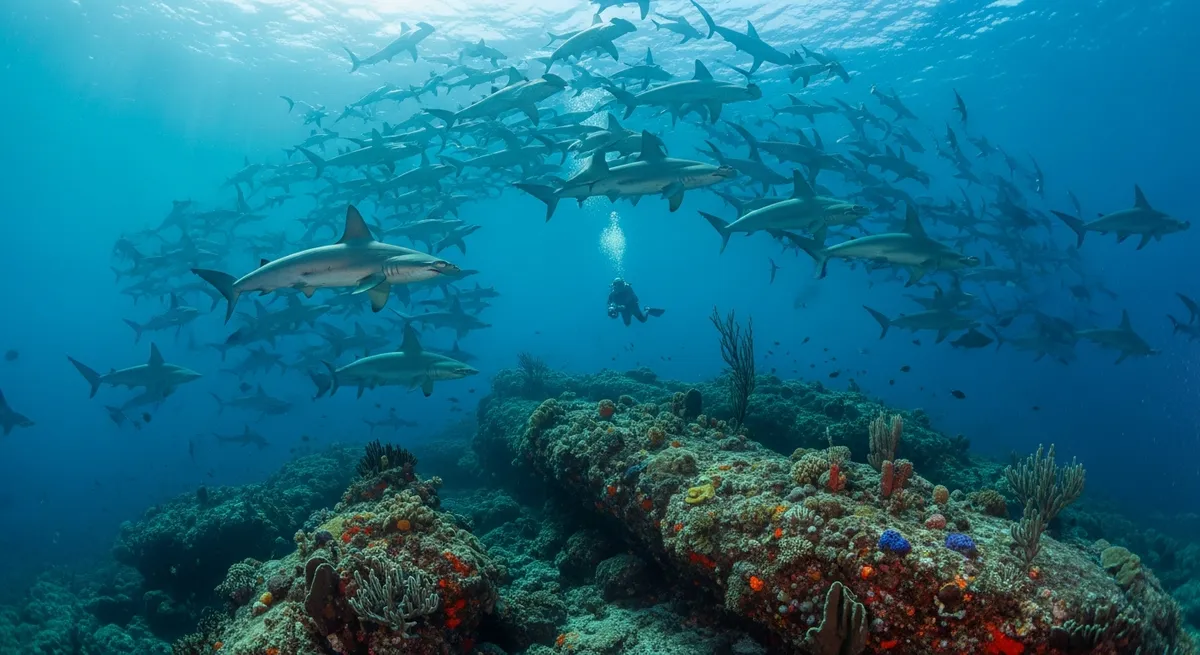
Why Costa Rica for Your First Dives?
Costa Rica, known for its incredible biodiversity, offers a unique entry point into the underwater world for new divers. While some of its most famous sites, like Cocos Island, are strictly for advanced divers, the country still provides ample opportunities for beginners to earn their fins. With 130 dive sites spread across five distinct regions, you'll find areas specifically tailored for those just starting out.
For your initial dives, you can expect generally comfortable water temperatures, typically ranging from 24-29°C (75-84°F) in beginner-friendly areas. Visibility can vary, but often ranges from 10-25 meters (30-80 feet) on good days, allowing for clear views of the diverse marine life. Beginner sites are usually characterized by calmer conditions and shallower depths, focusing on vibrant reef ecosystems rather than strong currents or deep pelagic encounters. While Costa Rica also has challenging dive sites, selecting the right region ensures a safe and enjoyable introduction to diving.
Best Beginner-Friendly Regions
With 7 dive sites explicitly classified as beginner-friendly, Costa Rica offers several excellent regions for your first underwater adventures.
Guanacaste & Pacific Coast
This region is a prime choice for beginners due to its accessible shorelines and numerous calm bays. Dive sites like Playas del Coco and Tamarindo offer relatively shallow depths and minimal currents, making them ideal for initial training and discovery dives. You'll encounter a variety of reef fish, rays, and sometimes even turtles in these protected areas, providing a gentle introduction to marine observation.
Caño Island
Located off the Osa Peninsula, Caño Island Biological Reserve offers designated beginner-friendly sites with excellent visibility and a high concentration of marine life. While some sites here are for more experienced divers, specific areas around the island are shallower and protected, perfect for Open Water certification dives. Expect to see white-tip reef sharks, large schools of fish, and various rays in a vibrant reef setting.
Golfo Dulce
The Golfo Dulce, or "Sweet Gulf," is a tranquil fjord-like body of water on the Pacific side, known for its calm, protected conditions. This makes it an excellent location for learning to dive, particularly for those who might be apprehensive about ocean conditions. The waters are generally warmer and very placid, perfect for practicing skills and getting comfortable underwater. While perhaps less dramatic than open ocean sites, the unique ecosystem here offers a different kind of beauty, with a focus on smaller reef inhabitants and calm exploration.
What Certification Do You Need?
To participate in guided fun dives in Costa Rica, you will typically need a PADI Open Water Diver certification or an equivalent from another recognized agency like SSI, NAUI, or CMAS. This certification demonstrates that you have completed the necessary training to dive safely to a maximum depth of 18 meters (60 feet) with a buddy.
If you are not yet certified, you can enroll in a Discover Scuba Diving (DSD) experience, which allows you to try diving under direct instructor supervision in shallow water. For full certification, local dive centers across Costa Rica, particularly in popular tourist hubs like Guanacaste, offer PADI Open Water Diver courses. These courses usually involve academic sessions, confined water training (in a pool or calm shallow bay), and four open water dives. PADI is widely recognized and available throughout Costa Rica, making it easy to find a reputable dive school.
Best Time to Visit
The best time to visit Costa Rica for diving largely depends on the region, but generally, the dry season offers the most consistent conditions.
- Pacific Coast (including Guanacaste, Caño Island, Golfo Dulce): The dry season runs from December to April. During these months, you can expect calmer seas, less rainfall, and generally better visibility. Water temperatures typically range from 26-29°C (79-84°F). The wet season, from May to November, can bring more surge and reduced visibility, but also attracts larger pelagic species due to plankton blooms, though this is less relevant for beginner sites.
- Caribbean Coast: The diving season here is less defined by the Pacific's dry/wet seasons. Good conditions are often found from September to October and again from February to May, when the seas are calmer. Water temperatures are consistently warm, around 27-29°C (81-84°F).
For beginners seeking the calmest and most predictable conditions, aiming for the Pacific's dry season (December-April) is generally recommended.
What to Expect on Your First Dive
Your first dive experience in Costa Rica, especially if it's a Discover Scuba Dive or the initial dives of your Open Water course, will be carefully structured for safety and comfort.
Typically, your day will begin with a check-in at the dive center, where you'll complete necessary paperwork and try on equipment. This is followed by a thorough briefing by your instructor, covering the dive plan, safety procedures, hand signals, and what marine life you might encounter. You'll then be assigned your gear, which the staff will help you assemble and check.
Most beginner dives in Costa Rica's Pacific regions are conducted from boats. You'll board the dive boat, which usually provides a comfortable ride to the dive site. Entry into the water is typically a controlled backward roll or a giant stride from the boat. Once in the water, your instructor will ensure you're comfortable and help you with your descent. Expect calm conditions at beginner sites, with gentle currents or none at all. The underwater experience will focus on shallow reefs, allowing you to practice basic skills and observe marine life under close supervision. Your instructor will guide you, pointing out interesting creatures and ensuring you feel at ease throughout the dive. Exits are usually back onto the boat via a ladder.
Budget Guide
Diving in Costa Rica can be tailored to various budgets, though it's generally considered a mid-range to upper-mid-range diving destination.
- Discover Scuba Dive (DSD): Expect to pay around $100-$150 USD for a single DSD experience, often including equipment rental.
- PADI Open Water Course: A full Open Water Diver certification course typically ranges from $450-$600 USD, covering tuition, materials, and equipment rental for the duration of the course.
- Fun Dives (Certified Divers): A two-tank boat dive usually costs between $90-$130 USD, often excluding equipment rental. If you need to rent gear, add another $20-$30 USD per day.
- Equipment Rental: Full equipment rental (BCD, regulator, wetsuit, mask, fins) can be around $20-$40 USD per day.
- Accommodation: Budget hostels can be found for $20-$40 USD per night. Mid-range hotels in dive towns often cost $80-$150 USD per night. High-end resorts can exceed $200 USD per night.
- Local Currency: The local currency is the Costa Rican Colón (CRC). While USD is widely accepted, especially in tourist areas, paying in CRC can sometimes offer better value.
Essential Tips
- Book in Advance: Especially during the dry season (December-April), dive operators and popular courses can fill up quickly. Book your dives and courses well in advance.
- Hydrate Well: Costa Rica's tropical climate means you'll be sweating more. Drink plenty of water before and after your dives to prevent dehydration.
- Sun Protection: The tropical sun is intense. Use reef-safe sunscreen, wear a hat, and consider a rash guard even when not diving.
- Respect Marine Life: Follow responsible diving practices-do not touch, chase, or harass marine animals. Maintain proper buoyancy to avoid contact with coral.
- Learn Basic Spanish Phrases: While many in the tourism industry speak English, knowing some basic Spanish phrases will enhance your experience and interactions with locals.
- Consider a Shorty Wetsuit: Water temperatures are warm, but a 3mm shorty wetsuit can provide comfort and protection from minor scrapes or stings, especially during multiple dives.
- Carry Small Bills: For tips, small purchases, or local sodas (eateries), having small denominations of Costa Rican Colón is convenient.
At a Glance
| Destination | Difficulty | Best Months |
|---|---|---|
| Caribbean CoastCosta Rica | Beginner | Jan-Dec |
| Cocos IslandCosta Rica | Beginner | Jan-Apr |
| Guanacaste & Pacific CoastCosta Rica | Beginner | - |
| Golfo DulceCosta Rica | Beginner | - |
| Caño IslandCosta Rica | Beginner | - |
Caribbean Coast
Costa Rica
Difficulty
Beginner
Best Months
Jan-Dec
Water Temp
28-30C
Dive Centres
31
Practical Info
- dive Sites:
- 109
- dive Centres:
- 31
Cocos Island
Costa Rica
Difficulty
Beginner
Best Months
Jan-Apr
Water Temp
27-30C
Dive Centres
13
Practical Info
- dive Sites:
- 21
- dive Centres:
- 13
Frequently Asked Questions
Do I need a certification to dive in Costa Rica?
To go on guided fun dives, you need a PADI Open Water Diver certification or equivalent. However, you can try diving without certification via a Discover Scuba Diving (DSD) experience under instructor supervision.
How much does diving cost in Costa Rica?
A Discover Scuba Dive typically costs $100-$150 USD. A PADI Open Water course ranges from $450-$600 USD. Two-tank fun dives for certified divers are usually $90-$130 USD, plus $20-$40 USD for equipment rental if needed.
What is the best time to dive in Costa Rica?
For beginners on the Pacific Coast (Guanacaste, Caño Island, Golfo Dulce), the dry season from December to April offers the calmest seas and best visibility. Water temperatures are 26-29°C (79-84°F).
Is Costa Rica safe for beginner divers?
Yes, specific regions and dive sites in Costa Rica are very safe for beginners. Areas like Guanacaste and parts of Caño Island offer calm, shallow conditions ideal for learning and initial dives, with experienced instructors.
What marine life will I see in Costa Rica?
In beginner-friendly areas, you can expect to see a variety of reef fish, stingrays, eagle rays, turtles, and sometimes white-tip reef sharks. The Pacific Coast is known for its biodiversity.
Related Guides
Planning when to go?
See the month-by-month conditions guide