First Time Diving in Croatia - A Beginner's Complete Guide
Everything you need to know before your first dive in Croatia
Why Croatia for Your First Dives?
Croatia offers a surprisingly welcoming environment for new divers, making it an excellent choice for your first underwater adventures. With 644 dive sites spread across 6 regions, there's a significant number of locations tailored for beginners. Specifically, 150 of these sites are classified as beginner-friendly, providing shallow depths, minimal currents, and easy access. The Adriatic Sea boasts impressive visibility, often exceeding 20-30 meters, which is ideal for building confidence as you can always see your instructor and your surroundings clearly.
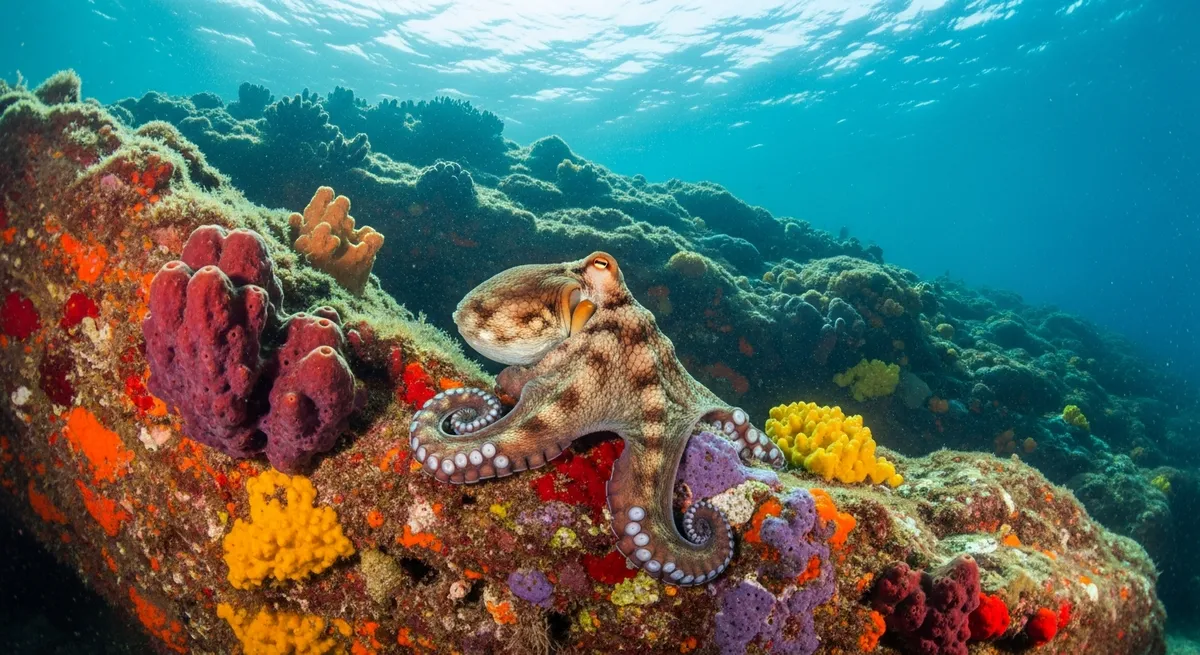
The water temperature in Croatia is another major draw for beginners. During the peak diving season, temperatures range from a comfortable 22-26°C, allowing for longer dives without significant thermal discomfort. While not known for large pelagic encounters, Croatia's marine life includes abundant small fish, octopus, cuttlefish, various nudibranchs, and often seahorses in protected bays. The underwater topography frequently features gentle slopes, small caves, and interesting rock formations that are easily navigable for those still mastering buoyancy and finning techniques. Croatia presents a comfortable and visually engaging experience for new divers, allowing them to focus on skill development rather than challenging conditions.
Best Beginner-Friendly Regions
Istria Peninsula
The Istria Peninsula, located in the northern Adriatic, is particularly well-suited for beginners due to its sheltered bays and numerous shallow dive sites. The coastline offers easy shore entries and calm conditions, making it perfect for initial training dives. Sites like the Baron Gautsch wreck near Rovinj, while deep, have accessible parts for advanced divers, but the surrounding reefs and shallower areas are excellent for beginners. Pula and Rovinj are popular bases with dive centers offering Discover Scuba Diving experiences and Open Water courses in calm, protected waters.
Split & Central Dalmatia
Split and the Central Dalmatian coast provide a blend of accessibility and beautiful dive sites for beginners. The numerous islands and coves create natural shelters from open sea conditions. Dive sites around the islands of Brač, Hvar, and Šolta often feature gentle slopes, abundant small fish, and good visibility. Many dive centers operate out of Split, offering boat trips to nearby islands where beginners can enjoy shallow reef dives or explore small, easily navigable caverns under direct supervision.
Dubrovnik & South Coast
The Dubrovnik region on the south coast offers a stunning backdrop for beginner dives with its historic city and clear waters. While some sites can be deeper, many protected bays and shallow reefs are ideal for initial training and fun dives. Lokrum Island, just off Dubrovnik, has several beginner-friendly spots with good visibility and interesting rock formations. The warmer waters of the southern Adriatic further enhance the comfort for new divers, allowing for longer underwater exploration without the chill.
What Certification Do You Need?
To participate in guided fun dives in Croatia, you will typically need a PADI Open Water Diver certification or an equivalent entry-level certification from another recognized agency such as SSI, CMAS, or NAUI. This certification demonstrates that you have completed the necessary theoretical knowledge and practical skills to dive safely with a buddy. If you are not yet certified, Croatian dive centers widely offer PADI Open Water Diver courses, which usually take 3-4 days to complete. Many also offer Discover Scuba Diving programs, allowing uncertified individuals to experience diving under direct instructor supervision in shallow water, without committing to a full course.
Best Time to Visit
The best time to visit Croatia for diving, especially for beginners, is during the late spring, summer, and early autumn months. Specifically, from June to September offers the most favorable conditions. During June and September, the crowds are slightly smaller than in peak July and August, but the weather and water temperatures remain excellent. Air temperatures during this period typically range from 25-32°C. Water temperatures are at their warmest from July to August, averaging 24-26°C, making a 3mm or 5mm wetsuit comfortable. Visibility is consistently good throughout these months, often exceeding 20 meters, which is perfect for new divers to gain confidence. Early October can also be pleasant, with water temperatures still around 20-22°C, though air temperatures start to cool.
What to Expect on Your First Dive
Your first diving experience in Croatia will typically begin at a local dive center. After check-in, you'll receive a comprehensive briefing covering the dive plan, safety procedures, communication signals, and an overview of the site's marine life. You'll then be fitted with rental equipment-wetsuit, BCD, regulator, mask, fins, and weights. Most beginner dives in Croatia are conducted from a boat, which provides access to calmer, more interesting sites away from shore. You'll gear up on the boat, and your instructor will assist you with the final checks.
Entry into the water is usually a controlled backward roll or a giant stride from the boat. Once in the water, you'll spend a few moments adjusting your gear and practicing breathing from your regulator on the surface. Descending is slow and controlled, with your instructor guiding you every step of the way, ensuring you equalize your ears properly. Underwater, you can expect calm conditions at beginner sites, with minimal to no current. Your instructor will lead you through a gentle tour, pointing out marine life and helping you maintain buoyancy. Dives for beginners are kept shallow, typically no deeper than 12 meters for certified divers or 6 meters for Discover Scuba Diving participants. The dive concludes with a slow ascent back to the boat, followed by a surface interval and often another dive at a different site if you're on a two-tank trip.
Budget Guide
Diving in Croatia offers a range of price points. A Discover Scuba Diving (DSD) experience, which is a single supervised dive for uncertified individuals, typically costs between 60-90 EUR (approximately 65-95 USD). A full PADI Open Water Diver course usually ranges from 350-500 EUR (approximately 370-530 USD), which includes theory, pool sessions, and four open water dives, plus certification fees. For certified divers, a single fun dive with equipment rental generally costs 45-60 EUR (approximately 48-65 USD), while a two-tank dive package with rental can be 80-110 EUR (approximately 85-115 USD). Equipment rental is often included in these prices, but it's always wise to confirm.
Accommodation costs vary widely. A budget hostel bed can be found for 20-40 EUR (21-43 USD) per night, while a mid-range apartment or guesthouse might cost 60-120 EUR (65-130 USD) per night. High-end hotels will be upwards of 150 EUR (160 USD). Food and daily expenses can add another 30-60 EUR (32-65 USD) per day, depending on your dining choices. Overall, a week-long diving trip for a beginner, including an Open Water course, can realistically range from 800-1500 EUR (850-1600 USD) excluding flights, depending on your accommodation and dining preferences.
Essential Tips
- Book in Advance: Especially during peak season (July-August), dive centers can be fully booked. Secure your DSD or course spot well ahead of time.
- Stay Hydrated: The Mediterranean sun can be intense. Drink plenty of water, especially between dives, to help prevent decompression sickness.
- Respect Marine Life: Observe, but do not touch or disturb marine creatures or historical artifacts. Croatia has strict rules regarding underwater heritage.
- Ear Equalization: Practice ear equalization techniques before your trip. The ability to clear your ears comfortably is crucial for enjoyable dives.
- Sun Protection: Wear reef-safe sunscreen, a hat, and sunglasses on the boat to protect yourself from the strong Adriatic sun.
- Learn Basic Croatian Phrases: While English is widely spoken in tourist areas, knowing a few basic Croatian phrases like 'dobar dan' (good day) or 'hvala' (thank you) is always appreciated by locals.
- Check Dive Center Affiliations: Ensure your chosen dive center is affiliated with a recognized international diving organization (e.g., PADI, SSI) and has positive reviews regarding safety and professionalism.
At a Glance
| Destination | Difficulty | Best Months |
|---|---|---|
| Istria PeninsulaCroatia | Beginner | Jun-Sep |
| Kornati IslandsCroatia | Beginner | Jun-Oct |
| Vis & BiševoCroatia | Beginner | Jun-Oct |
| Split & Central DalmatiaCroatia | Beginner | Jun-Oct |
| Dubrovnik & South CoastCroatia | Beginner | Jun-Oct |
Istria Peninsula
Croatia
Difficulty
Beginner
Best Months
Jun-Sep
Water Temp
12-26C
Dive Centres
147
Practical Info
- dive Sites:
- 393
- dive Centres:
- 147
Kornati Islands
Croatia
Difficulty
Beginner
Best Months
Jun-Oct
Water Temp
14-26C
Dive Centres
45
Practical Info
- dive Sites:
- 101
- dive Centres:
- 45
Vis & Biševo
Croatia
Difficulty
Beginner
Best Months
Jun-Oct
Water Temp
15-26C
Dive Centres
6
Practical Info
- dive Sites:
- 80
- dive Centres:
- 6
Split & Central Dalmatia
Croatia
Difficulty
Beginner
Best Months
Jun-Oct
Water Temp
15-26C
Dive Centres
12
Practical Info
- dive Sites:
- 42
- dive Centres:
- 12
Dubrovnik & South Coast
Croatia
Difficulty
Beginner
Best Months
Jun-Oct
Water Temp
15-26C
Dive Centres
5
Practical Info
- dive Sites:
- 28
- dive Centres:
- 5
Frequently Asked Questions
Do I need a certification to dive in Croatia?
Yes, for guided fun dives, you need a PADI Open Water Diver certification or equivalent. However, if you're uncertified, you can try a Discover Scuba Diving experience under direct instructor supervision in shallow water, without needing a full certification.
How much does diving cost in Croatia?
A Discover Scuba Diving experience costs 60-90 EUR. A full PADI Open Water course is typically 350-500 EUR. For certified divers, a single fun dive with equipment rental is 45-60 EUR, and a two-tank dive is 80-110 EUR. These prices are approximate and can vary by dive center and region.
What is the best time to dive in Croatia?
The best time for diving in Croatia, especially for beginners, is from June to September. Water temperatures are warmest (22-26°C), visibility is excellent, and weather conditions are generally calm. Early October can also be pleasant.
Is Croatia safe for beginner divers?
Yes, Croatia is very safe for beginner divers. It has 150 designated beginner-friendly dive sites with shallow depths, minimal currents, and high visibility. Dive centers are professional, and instructors are experienced in guiding new divers through their first underwater experiences.
What marine life will I see in Croatia?
In Croatia, you can expect to see a variety of small marine life suitable for beginner divers. This includes numerous types of small fish, octopus, cuttlefish, various nudibranchs, and sometimes seahorses in protected bays. The Adriatic Sea also features interesting underwater topography with reefs and small caverns.
Related Guides
Planning when to go?
See the month-by-month conditions guide