First Time Diving in Cyprus - A Beginner's Complete Guide
Everything you need to know before your first dive in Cyprus
Why Cyprus for Your First Dives?
Cyprus offers an excellent entry point for new divers, making it a highly suitable destination for your first underwater experiences. The island benefits from a Mediterranean climate, resulting in consistently warm water temperatures for much of the year. This comfort reduces the initial shock often associated with colder waters, allowing beginners to focus more on their skills and surroundings. Visibility is reliably good, often exceeding 20 meters, which provides clear views of the underwater landscape and marine inhabitants, reducing anxiety for those new to the underwater environment.
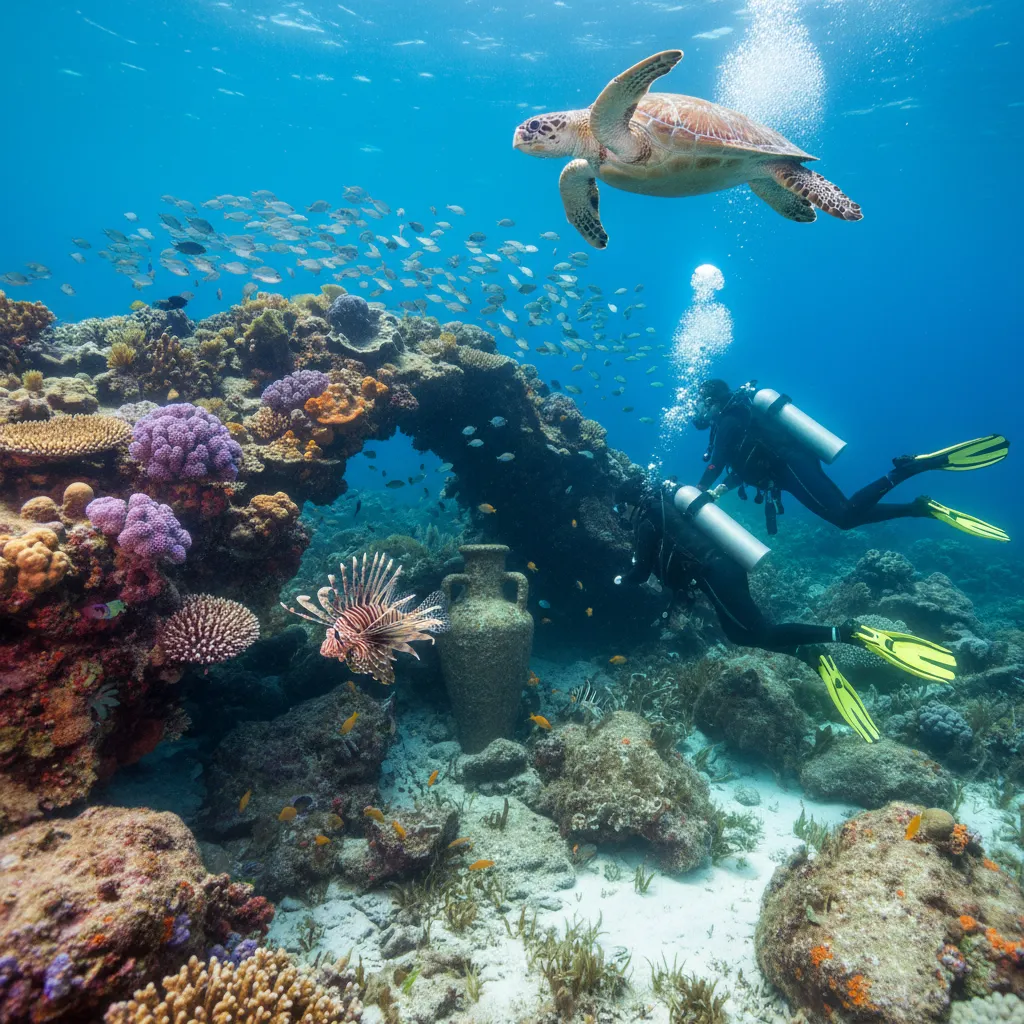
The dive sites in Cyprus are predominantly calm, with minimal currents, especially in the sheltered bays favored by dive centers. This makes for a relaxed and controlled learning environment. While not a challenging destination in terms of strong currents or complex dive profiles, Cyprus still offers a diverse range of sites. Marine life highlights include various species of wrasse, damselfish, groupers, barracuda, and occasional sightings of sea turtles, particularly loggerheads. The combination of warm, clear, calm waters and accessible marine life creates an ideal setting for building confidence and enjoying your initial dives.
Best Beginner-Friendly Regions
Larnaca: This region is arguably the most popular for beginner divers in Cyprus, largely due to its calm, protected waters and the ease of access to a variety of sites. The Zenobia Wreck, while a more advanced dive for its deeper sections, also offers shallower areas around the superstructure that are suitable for supervised introductory dives or early Open Water training. Shore dives are common here, providing an easy entry and exit point without the need for boat transfers. The Larnaca coastline features numerous sandy bottoms and gentle slopes, ideal for practicing buoyancy and basic skills.
Paphos: The Paphos region also caters well to beginners, offering a mix of shore and boat dives in sheltered bays. Specific sites like White River or St. George's Island provide calm conditions and good visibility. The underwater topography here often includes rock formations and small reefs that attract a variety of fish, providing engaging scenery for new divers. Dive centers in Paphos are well-equipped to handle introductory courses and ensure a safe first dive experience.
Coral Bay: Located near Paphos, Coral Bay is another excellent choice for those just starting out. Its namesake bay is naturally protected, leading to very calm and shallow waters perfect for initial skill development and Discover Scuba Diving experiences. The sandy bottom and gentle slopes are ideal for practicing mask clearing and regulator recovery in a stress-free environment. Marine life here includes smaller reef fish, making for an enjoyable first encounter with the underwater world without overwhelming currents or complex navigation.
What Certification Do You Need?
To participate in guided fun dives in Cyprus, you will generally need a PADI Open Water Diver certification or an equivalent entry-level certification from another recognized agency such as SSI, NAUI, BSAC, or CMAS. If you are entirely new to diving, you can start with a Discover Scuba Diving (DSD) experience, which allows you to dive under direct instructor supervision without prior certification. This is a great way to try diving before committing to a full course.
Cyprus has a high concentration of PADI and SSI dive centers, making these two agencies particularly popular and widely recognized across the island. Obtaining your Open Water certification typically involves a combination of academic study, confined water skill practice, and four open water dives. Most dive centers offer courses in multiple languages. It's advisable to book your course in advance, especially during peak season, to secure your spot and ensure availability.
Best Time to Visit
The best time to visit Cyprus for diving is from May to October. During these months, the weather is consistently warm and sunny, and the sea conditions are generally calm and inviting.
- May-June: Water temperature ranges from 20°C to 24°C. Air temperature is typically 25°C-30°C. Excellent visibility and fewer crowds than peak summer.
- July-August: Peak season. Water temperature reaches its warmest, 26°C to 28°C. Air temperature often exceeds 30°C. Visibility remains high, but dive sites can be busier.
- September-October: Water temperature remains pleasant, 24°C to 26°C. Air temperature is 25°C-30°C. Excellent visibility, fewer crowds than August, and still very comfortable diving conditions.
While diving is possible year-round, the winter months (November-April) see cooler water temperatures (dropping to 16°C-18°C) and can experience more variable weather, including stronger winds and choppier seas, which might not be ideal for a first-time diver.
What to Expect on Your First Dive
Your first diving experience in Cyprus, whether a Discover Scuba Dive or your first Open Water training dive, will typically follow a structured and safety-focused process. You'll usually start at a dive center for check-in and paperwork. This is followed by a comprehensive briefing by your instructor, covering safety procedures, equipment use, communication signals, and an overview of the dive site. You'll then be fitted with your dive gear - wetsuit, mask, fins, BCD, and regulator. Most beginner dives in Cyprus, especially for DSD or initial training, are conducted as shore dives or from small boats very close to the shore in calm, shallow areas.
Entry into the water will be gradual, either by walking in from the beach or a simple giant stride from a boat. Your instructor will guide you through initial shallow water practice, ensuring you're comfortable breathing underwater and performing basic skills like mask clearing. The underwater experience itself will be slow-paced and focused on comfort and observation. You'll typically descend to a maximum depth of 6-12 meters, exploring gentle slopes or sandy bottoms, observing local marine life like damselfish, wrasse, and small groupers. Currents are generally minimal in beginner areas, allowing for a relaxed and enjoyable introduction to the underwater world. Your instructor will be with you every step of the way, ensuring your safety and helping you feel at ease.
Budget Guide
Here's a realistic budget guide for diving in Cyprus, using approximate local currency (Euro) and USD equivalents:
- Discover Scuba Diving (DSD) Experience: €70-€100 (approx. $75-$110). This typically includes equipment rental and direct instructor supervision for one introductory dive.
- PADI Open Water Diver Course: €380-€500 (approx. $410-$540). This usually covers all course materials, equipment rental, confined water sessions, and four open water dives over 3-4 days.
- Certified Fun Dives (per dive): €40-€60 (approx. $43-$65). This often includes tank and weights. Package deals for multiple dives are usually cheaper.
- Equipment Rental (full set per day): €20-€30 (approx. $22-$33) if not included in a course or package.
- Accommodation Range (per night):
- Budget Hostel/Guesthouse: €30-€60 (approx. $33-$65)
- Mid-range Hotel: €80-€150 (approx. $87-$163)
- Higher-end Resort: €180+ (approx. $195+)
Prices can fluctuate based on the dive center, season, and specific location. Always confirm current prices when booking.
Essential Tips
- Book in Advance: Especially during peak season (July-August) and for certification courses, secure your spot with a dive center well ahead of time.
- Hydrate Well: The Mediterranean sun can be intense. Drink plenty of water before and after your dives to prevent dehydration.
- Sun Protection: Use reef-safe sunscreen, wear a hat, and consider a rash guard. The sun's intensity is high, even when cloudy.
- Consider a Shorty Wetsuit: While the water is warm, a 3mm shorty wetsuit is often sufficient for comfort and minor protection, particularly in the warmer months.
- Listen to Your Instructor: Cyprus dive centers prioritize safety. Pay close attention to all briefings and follow your instructor's guidance precisely.
- Respect Marine Life: Observe marine life without touching or disturbing it. Be mindful of your buoyancy to avoid contact with the seabed or coral.
- Combine with Sightseeing: Cyprus offers rich history and culture. Plan your diving around exploring ancient ruins and charming villages.
At a Glance
| Destination | Difficulty | Best Months |
|---|---|---|
| LarnacaCyprus | Beginner | Jan-Dec |
| Paphos & Coral BayCyprus | Beginner | Jan-Dec |
Larnaca
Cyprus
Difficulty
Beginner
Best Months
Jan-Dec
Water Temp
19-19C
Dive Centres
42
Practical Info
- dive Sites:
- 75
- dive Centres:
- 42
Paphos & Coral Bay
Cyprus
Difficulty
Beginner
Best Months
Jan-Dec
Water Temp
18-18C
Dive Centres
16
Practical Info
- dive Sites:
- 27
- dive Centres:
- 16
Frequently Asked Questions
Do I need a certification to dive in Cyprus?
To go on guided fun dives in Cyprus, you will need a PADI Open Water Diver certification or an equivalent. If you are a complete beginner, you can try a Discover Scuba Diving experience, which allows you to dive under direct instructor supervision without certification.
How much does diving cost in Cyprus?
A Discover Scuba Diving experience typically costs €70-€100. A full PADI Open Water Diver course ranges from €380-€500. Certified fun dives are usually €40-€60 per dive, often with discounts for multiple dives.
What is the best time to dive in Cyprus?
The best time to dive in Cyprus is from May to October. Water temperatures range from 20°C to 28°C, and sea conditions are generally calm with excellent visibility. Peak season is July-August.
Is Cyprus safe for beginner divers?
Yes, Cyprus is very safe for beginner divers. The waters are typically calm with minimal currents, especially in beginner-friendly regions like Larnaca, Paphos, and Coral Bay. Dive centers follow strict safety protocols, and instructors are highly experienced.
What marine life will I see in Cyprus?
In Cyprus, you can expect to see various species of wrasse, damselfish, groupers, barracuda, and occasionally sea turtles, particularly loggerheads. The underwater environment also features rock formations and small reefs.
Related Guides
Planning when to go?
See the month-by-month conditions guide