First Time Diving in Denmark - A Beginner's Complete Guide
Everything you need to know before your first dive in Denmark
Why Denmark for Your First Dives?
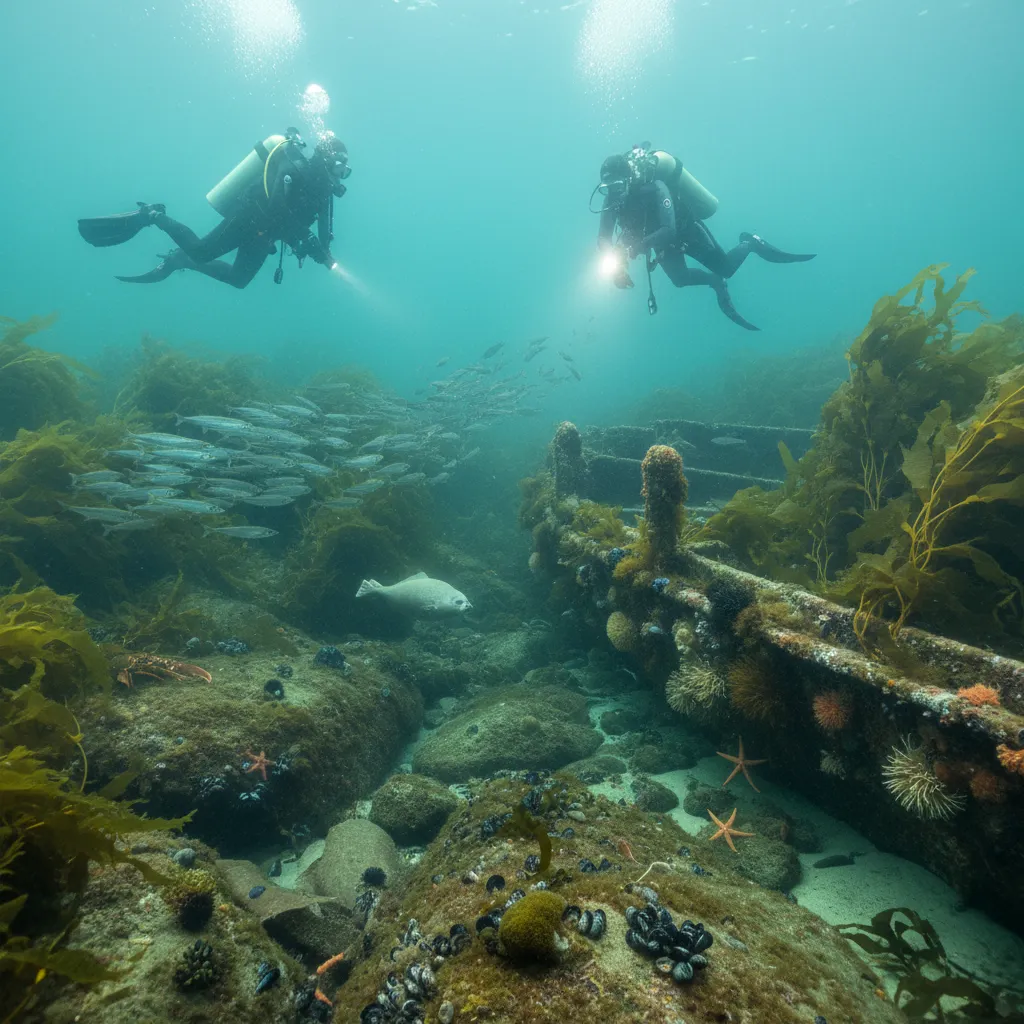
Denmark, with its 1202 dive sites across two main regions, might not be the first place that comes to mind for a beginner diver, but it offers a unique and rewarding experience. While the North Sea Coast can present more challenging conditions, areas like Bornholm provide shallower, more sheltered sites suitable for those just starting out. The waters are cooler, typically ranging from 5°C to 20°C depending on the season, necessitating good thermal protection, but this also contributes to unique marine ecosystems.
Visibility in Danish waters can vary significantly, from a few meters to often exceeding 10-15 meters on good days, especially around Bornholm. For beginners, the focus is often on exploring the diverse bottom topography, including kelp forests and rocky reefs, rather than vast coral formations. Marine life highlights include various species of crabs, lobsters, flatfish, cod, and occasionally seals. While not a tropical destination, the underwater environment offers a different kind of beauty and an excellent opportunity to refine buoyancy and navigation skills in temperate waters.
Best Beginner-Friendly Regions
While Denmark has a mix of difficulty levels, there are specific areas well-suited for beginners. DivePlnr.com identifies one beginner-rated site and one beginner-rated site, along with two intermediate and one advanced. For your first dives, look towards more sheltered coastal areas.
Bornholm: This island in the Baltic Sea is generally considered more beginner-friendly than the exposed North Sea coast. The waters around Bornholm are often calmer and slightly warmer in summer. Divers can explore shallow rocky reefs and kelp forests, with good opportunities to spot local fish and crustaceans. Specific sites like the area around Hammeren or along the southern coast offer sheltered conditions ideal for initial dives and skill practice.
Fyn and the Small Belts: The waters around the island of Fyn and the Small Belts (Lillebælt) offer numerous sheltered coves and bays. These areas are known for their gentle currents and diverse bottom topography, including eelgrass meadows and small wrecks accessible at shallow depths. The sheltered nature of these sites makes them excellent for practicing basic dive skills and getting comfortable underwater without strong currents or deep profiles. Local dive centers often use these spots for initial training dives.
The Limfjord: Located in northern Jutland, the Limfjord is an extensive inlet known for its calm, brackish waters. While visibility can sometimes be lower than in the open sea, the lack of strong currents and generally shallow depths make it a safe and comfortable environment for beginners. Divers can explore sandy bottoms, oyster beds, and look for local fish species. It's a great place to focus on buoyancy control and observation in a very relaxed setting.
What Certification Do You Need?
To participate in guided fun dives in Denmark, you will generally need a PADI Open Water Diver certification or an equivalent certification from another recognized agency such as SSI, CMAS, or SDI. This certification demonstrates that you have completed the necessary theoretical and practical training to dive safely to a maximum depth of 18 meters. For those without a certification, many local dive centers offer Discover Scuba Diving experiences, which allow you to try diving under direct instructor supervision in shallow water without prior certification.
Danish dive centers are well-equipped and offer courses in English. PADI is a widely recognized agency, and you will find PADI-affiliated centers throughout the country, particularly in larger coastal towns and near popular dive regions. It's advisable to book your course or guided dives in advance, especially during the peak summer months, to ensure availability.
Best Time to Visit
The best time to visit Denmark for diving is during the summer months, from June to September. During this period, the water temperatures are at their highest, typically ranging from 15°C to 20°C (59°F to 68°F) in more sheltered areas like Bornholm or the Limfjord, and slightly cooler on the North Sea coast. Air temperatures are also pleasant, making surface intervals more comfortable.
Visibility tends to be at its best during late spring and early summer, before significant algal blooms can occur later in the season. While diving is possible year-round with appropriate drysuit training and gear, the warmer months offer the most comfortable and accessible conditions for beginners. Expect longer daylight hours, providing more flexibility for dive schedules. Weather patterns are generally stable during this period, though sudden changes can occur, so checking local forecasts is always recommended.
What to Expect on Your First Dive
Your first dive in Denmark will typically start at a local dive center, where you'll check in and complete any necessary paperwork. You'll then receive a comprehensive dive briefing from your instructor or dive guide, covering the dive site, expected conditions, marine life, safety procedures, and communication signals. This is your opportunity to ask any questions you might have.
Next, you'll gear up. Given the cooler water temperatures, you'll likely be wearing a thick wetsuit (7mm or semi-dry) or even a drysuit, along with hood, gloves, and boots. Your instructor will help you assemble and check your equipment. Most beginner dives in Denmark are shore entries, especially in sheltered bays or harbors. You'll walk into the water from the beach or a pier, making a gradual descent. Boat dives are also common for accessing specific sites, particularly around Bornholm, but shore dives are often preferred for initial training and comfort.
Underwater, expect a calm and controlled experience. Your instructor will guide you, focusing on basic skills like breathing, buoyancy control, and finning. You'll explore the local marine environment, observing the unique temperate water species. Currents are generally minimal in beginner-friendly sites, allowing for a relaxed pace. The dive will conclude with a slow ascent and safety stop, followed by a debriefing back at the surface or dive center.
Budget Guide
Diving in Denmark has costs comparable to other European destinations. Here's a realistic breakdown:
- Discover Scuba Diving Experience: Expect to pay around 700-1000 DKK (approximately 100-145 USD). This typically includes all equipment and instructor supervision for one introductory dive.
- PADI Open Water Course: A full Open Water certification course usually costs between 3500-5000 DKK (approximately 500-725 USD). This covers theory, confined water sessions, and four open water dives, plus equipment rental.
- Fun Dives (certified divers): A single guided fun dive, including tank and weights, can range from 300-500 DKK (approximately 45-75 USD). Package deals for multiple dives are often available at a reduced per-dive rate.
- Full Equipment Rental (per day): If you're a certified diver without your own gear, a full set of rental equipment (wetsuit/drysuit, BCD, regulator, mask, fins) will cost around 250-400 DKK (approximately 35-60 USD) per day.
- Accommodation: A budget-friendly hostel bed can be 200-400 DKK (30-60 USD) per night. Mid-range hotels typically start from 800 DKK (115 USD) per night. Camping is also a popular and more affordable option during summer.
Essential Tips
- Book in Advance: Especially during the peak summer months (June-August), dive centers and accommodation can fill up quickly. Book your courses and guided dives well ahead of time.
- Thermal Protection is Key: Even in summer, Danish waters are cooler than tropical seas. Invest in or rent a good 7mm wetsuit, semi-dry suit, or drysuit. Don't forget a hood, gloves, and boots.
- Be Prepared for Variable Visibility: Visibility can change with weather and local conditions. Manage your expectations and focus on the unique macro life and topography rather than always expecting distant views.
- Consider Drysuit Certification: If you plan to dive frequently in Denmark or other cold water destinations, obtaining a drysuit certification will significantly enhance your comfort and extend your dive season.
- Respect Local Regulations: Adhere to local diving regulations, which may include specific rules for marine protected areas or wreck sites. Always dive with a reputable local center.
- Learn Basic Danish Phrases: While English is widely spoken, learning a few basic Danish phrases like 'Tak' (thank you) can be appreciated by locals.
- Check Weather Forecasts: Conditions on the North Sea coast can change rapidly. Always check the local marine weather forecast before planning your dive day.
At a Glance
| Destination | Difficulty | Best Months |
|---|---|---|
| North Sea CoastDenmark | Beginner | - |
| BornholmDenmark | Beginner | - |
North Sea Coast
Denmark
Difficulty
Beginner
Water Temp
5-5C
Dive Centres
40
Practical Info
- dive Sites:
- 769
- dive Centres:
- 40
Bornholm
Denmark
Difficulty
Beginner
Water Temp
3-3C
Dive Centres
44
Practical Info
- dive Sites:
- 433
- dive Centres:
- 44
Frequently Asked Questions
Do I need a certification to dive in Denmark?
Yes, to participate in guided fun dives in Denmark, you generally need a PADI Open Water Diver certification or an equivalent from another recognized agency like SSI or CMAS. If you don't have a certification, you can try a Discover Scuba Diving experience under direct instructor supervision.
How much does diving cost in Denmark?
A Discover Scuba Diving experience costs around 700-1000 DKK (100-145 USD). A full PADI Open Water course is typically 3500-5000 DKK (500-725 USD). A single fun dive for certified divers is 300-500 DKK (45-75 USD), and full equipment rental is 250-400 DKK (35-60 USD) per day.
What is the best time to dive in Denmark?
The best time for beginner diving in Denmark is during the summer months, from June to September. Water temperatures are highest then, ranging from 15°C to 20°C, and visibility tends to be better. Air temperatures are also more comfortable for surface intervals.
Is Denmark safe for beginner divers?
Yes, Denmark can be safe for beginner divers, especially in sheltered regions like Bornholm, the Small Belts, or the Limfjord. These areas offer calmer waters, shallower depths, and minimal currents, ideal for learning. Good thermal protection is essential due to cooler water temperatures.
What marine life will I see in Denmark?
In Denmark's temperate waters, you can expect to see various species of crabs, lobsters, flatfish, cod, and potentially seals. The underwater environment features kelp forests, rocky reefs, and sandy bottoms, offering a unique ecosystem different from tropical diving.
Related Guides
Planning when to go?
See the month-by-month conditions guide