First Time Diving in Djibouti - A Beginner's Complete Guide
Everything you need to know before your first dive in Djibouti
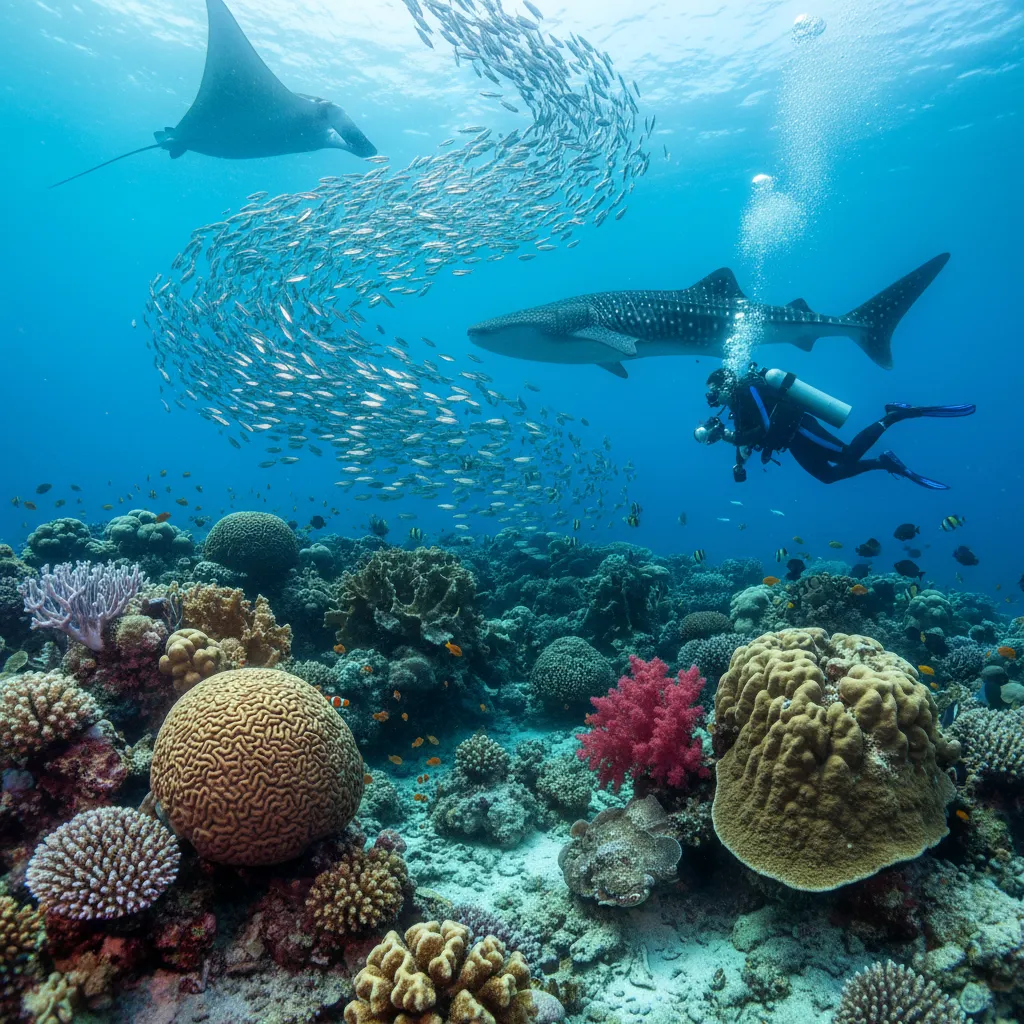
Why Djibouti for Your First Dives?
Djibouti, with its 45 dive sites spread across the Gulf of Tadjoura, offers a unique and surprisingly accessible introduction to scuba diving. While some destinations cater exclusively to advanced divers, Djibouti provides a good mix, including 4 sites specifically rated for beginners. The warm waters of the Gulf of Tadjoura, generally ranging from 25°C to 30°C, eliminate the need for thick wetsuits, making the initial experience more comfortable. Visibility is consistently good, often exceeding 15 meters, which is ideal for new divers learning to navigate and appreciate the underwater world without feeling overwhelmed.
For beginners, the highlight of diving in Djibouti often revolves around its impressive marine life. While whale sharks are a seasonal draw for all levels, even on calmer, shallower reefs, new divers can expect to encounter diverse hard and soft corals, schools of fusiliers, snappers, and groupers. Keep an eye out for moray eels peeking from crevices and the occasional reef shark patrolling the deeper sections. The relatively calm conditions in many of the beginner-friendly areas within the Gulf of Tadjoura mean less current to contend with, allowing new divers to focus on their buoyancy and breathing without the added challenge of strong water movement.
It's important to note that while Djibouti offers excellent beginner sites, it's not exclusively a beginner destination. Some areas feature stronger currents or deeper dives suitable for more experienced divers. However, local dive centers are adept at selecting sites appropriate for skill levels, ensuring that your first dives are enjoyable and safe. The overall infrastructure for diving is developing, so while it may not have the sheer volume of dive operations as more established destinations, the personalized attention often received is a significant advantage for those taking their first plunge.
Best Beginner-Friendly Regions
The primary region for diving in Djibouti, and where all beginner sites are located, is the Gulf of Tadjoura. This large inlet of the Indian Ocean provides sheltered bays and calmer waters perfect for initial training and discovery dives. Its diverse topography includes fringing reefs, volcanic formations, and sandy bottoms, all contributing to a varied underwater landscape suitable for different skill levels. Dive operators typically base themselves around Djibouti City or Tadjoura, offering boat trips to various sites within the Gulf.
Within the Gulf of Tadjoura, specific areas are particularly well-suited for beginners. The waters around the Seven Brothers Islands (Sawabi Islands), while sometimes experiencing currents, also have protected leeward sides perfect for introductory dives. Sites like 'The Aquarium' near one of the islands offer shallow, calm conditions with abundant fish life, making it an excellent spot for first-time underwater breathing. Another prime area is closer to the mainland, with numerous unnamed shallow reef systems providing gentle slopes and vibrant coral gardens where new divers can practice skills and observe marine life in a relaxed environment.
While specific named beginner sites are fewer in number compared to intermediate or advanced, the general characteristics of the inner Gulf of Tadjoura ensure suitability. Dive centers will often select protected coves and shallow reef tops that boast good visibility and minimal current. These locations allow for extended bottom time at shallow depths, enhancing the learning experience and boosting confidence for those new to diving.
What Certification Do You Need?
To participate in guided fun dives in Djibouti, you will generally need to hold an entry-level scuba diving certification such as a PADI Open Water Diver or an equivalent certification from a recognized agency like SSI, CMAS, or NAUI. This certification demonstrates that you have completed the necessary theoretical knowledge and practical skills to dive safely to a maximum depth of 18 meters with a buddy.
If you are completely new to diving and wish to try it out, you can enroll in a Discover Scuba Diving (DSD) program. This experience allows you to dive under the direct supervision of an instructor in shallow water without needing prior certification. Several local dive centers in Djibouti, primarily based in Djibouti City, offer PADI courses from DSD to advanced levels. While PADI is the most widely recognized certification agency globally and in Djibouti, local centers may also offer SSI courses. It's advisable to check with your chosen dive operator regarding the specific certifications they offer and recognize.
Best Time to Visit
The best time to visit Djibouti for diving is during the cooler, dry season, which runs from October to May. During these months, the weather is more pleasant, and sea conditions are generally calmer, offering optimal diving experiences.
- October to January: This period is often considered prime time. Air temperatures range from 25°C to 30°C, and water temperatures are a comfortable 27°C to 29°C. This is also the peak season for whale shark sightings, particularly from November to February, making it highly desirable for many divers.
- February to May: Temperatures gradually increase, but conditions remain excellent for diving. Air temperatures can reach 30°C to 35°C, and water temperatures hover around 28°C to 30°C. Visibility remains consistently good during these months.
- June to September: This is the hot and humid season, often referred to as 'khamsin'. Air temperatures can exceed 40°C, and water temperatures can reach 30°C to 32°C. While diving is still possible, the heat can be intense, and some operators may reduce their schedules. Visibility might also be slightly reduced due to plankton blooms, though this can also attract more pelagic life.
For beginners, the calmer seas and more moderate temperatures of October to May offer the most comfortable and enjoyable introduction to diving.
What to Expect on Your First Dive
Your first dive in Djibouti will typically begin at a local dive center in Djibouti City. You'll start with a check-in process, where you'll present your certification (if applicable) and fill out any necessary paperwork, including medical questionnaires. Following this, there will be a comprehensive dive briefing. The instructor will cover the dive site's layout, expected marine life, safety procedures, communication signals, and an overview of the dive plan, including maximum depth and bottom time.
After the briefing, you'll be assigned and fitted with your scuba gear-a BCD, regulator, mask, fins, and a wetsuit (usually a 3mm shorty or full suit, or even just a rash guard in warmer months). Most diving in Djibouti is conducted from boats. You'll board a dive boat, which will then take you to the chosen dive site, typically within the Gulf of Tadjoura. The boat ride can range from 20 minutes to over an hour, depending on the site.
Upon arrival at the dive site, you'll gear up on the boat. Your instructor will assist you with donning your equipment and conducting a final buddy check. Entry into the water is usually a giant stride from the side of the boat. Once in the water, you'll perform a final equipment check and begin your descent. For beginner dives, descents are slow and controlled, with the instructor guiding you every step of the way. Underwater, expect relatively calm conditions in designated beginner areas, allowing you to focus on buoyancy control and enjoying the marine environment. You'll observe corals, various reef fish, and potentially larger species. Dives are typically around 45-60 minutes, depending on air consumption. After the dive, you'll ascend slowly, complete a safety stop, and then re-board the boat. There's often a surface interval between dives, allowing for snacks, drinks, and relaxation before a potential second dive or the journey back to shore.
Budget Guide
Diving in Djibouti requires budgeting for courses, fun dives, equipment, and accommodation. Here's a realistic breakdown (prices are approximate and can vary by operator):
- Discover Scuba Diving (DSD) Course: Expect to pay around 100-150 USD (18,000-27,000 DJF) for a half-day experience, including equipment and instructor supervision.
- PADI Open Water Diver Course: A full Open Water certification typically costs between 450-600 USD (80,000-107,000 DJF). This usually includes all course materials, equipment rental, and certification fees over 3-4 days.
- Fun Dives (Certified Divers): A two-dive boat trip generally ranges from 100-150 USD (18,000-27,000 DJF), including tanks and weights. Some operators might offer slight discounts for multiple-day packages.
- Equipment Rental: If you don't own your gear, full equipment rental (BCD, regulator, wetsuit, mask, fins) is often included in course fees. For fun dives, it might be an additional 20-30 USD (3,500-5,500 DJF) per day, though some packages include it.
- Accommodation:
- Budget (Guesthouses/Basic Hotels): 40-70 USD (7,000-12,500 DJF) per night.
- Mid-Range (3-4 Star Hotels): 100-200 USD (18,000-36,000 DJF) per night.
- High-End (Resorts): 200+ USD (36,000+ DJF) per night.
- Transportation: Taxis are common in Djibouti City. Fares are negotiable but generally inexpensive for short distances. Transfers to dive centers or ports might be arranged by your operator.
Overall, a 3-day diving trip for a certified diver, including 6 fun dives, equipment rental, and mid-range accommodation, could realistically cost around 500-800 USD, excluding international flights and food.
Essential Tips
- Book in Advance: Djibouti's dive infrastructure is smaller than major hubs. Book your courses or fun dives several weeks, or even months, in advance, especially during the peak whale shark season (November-February).
- Hydration is Key: The climate can be hot and dry. Drink plenty of water before, during, and after dives to prevent dehydration, which can contribute to decompression sickness.
- Sun Protection: The sun is intense. Use reef-safe sunscreen, wear a hat, and consider a rash guard even when not diving to protect your skin.
- Respect Local Customs: Djibouti is a predominantly Muslim country. Dress modestly when in public areas, especially outside of dive boats or resorts.
- Currency: The local currency is the Djiboutian Franc (DJF), but US Dollars are widely accepted in tourist-oriented businesses. It's useful to have small denominations of both.
- Check Visa Requirements: Ensure you have the necessary visa for entry into Djibouti well before your travel dates. Requirements vary by nationality.
- Flexibility with Dive Sites: Dive operators may adjust sites based on weather, currents, or specific marine life sightings. Be flexible and trust your instructor's judgment for the safest and most enjoyable experience.
At a Glance
| Destination | Difficulty | Best Months |
|---|---|---|
| Gulf of TadjouraDjibouti | Beginner | Jan-Dec |
Gulf of Tadjoura
Djibouti
Difficulty
Beginner
Best Months
Jan-Dec
Water Temp
27-27C
Dive Centres
2
Practical Info
- dive Sites:
- 45
- dive Centres:
- 2
Frequently Asked Questions
Do I need a certification to dive in Djibouti?
To participate in guided fun dives in Djibouti, you generally need an entry-level certification like PADI Open Water Diver or equivalent. However, if you're new to diving, you can try a Discover Scuba Diving (DSD) program under direct instructor supervision without prior certification.
How much does diving cost in Djibouti?
A Discover Scuba Diving experience costs around 100-150 USD. A full PADI Open Water course is typically 450-600 USD. For certified divers, a two-dive boat trip ranges from 100-150 USD, including tanks and weights. Equipment rental might be an additional 20-30 USD per day.
What is the best time to dive in Djibouti?
The best time to dive in Djibouti is during the cooler, dry season from October to May. This period offers pleasant weather, calmer seas, and water temperatures between 27°C and 30°C. November to February is also prime for whale shark sightings.
Is Djibouti safe for beginner divers?
Yes, Djibouti is suitable for beginner divers. The Gulf of Tadjoura has several sheltered, calm sites with good visibility and warm water, ideal for learning. Local dive centers are experienced in guiding new divers and selecting appropriate locations for their skill level.
What marine life will I see in Djibouti?
Beginner divers in Djibouti can expect to see diverse hard and soft corals, schools of reef fish like fusiliers, snappers, and groupers, as well as moray eels and occasional reef sharks. During the season (November-February), whale sharks are a major attraction.
Related Guides
Planning when to go?
See the month-by-month conditions guide