First Time Diving in Fiji - A Beginner's Complete Guide
Everything you need to know before your first dive in Fiji
Why Fiji for Your First Dives?
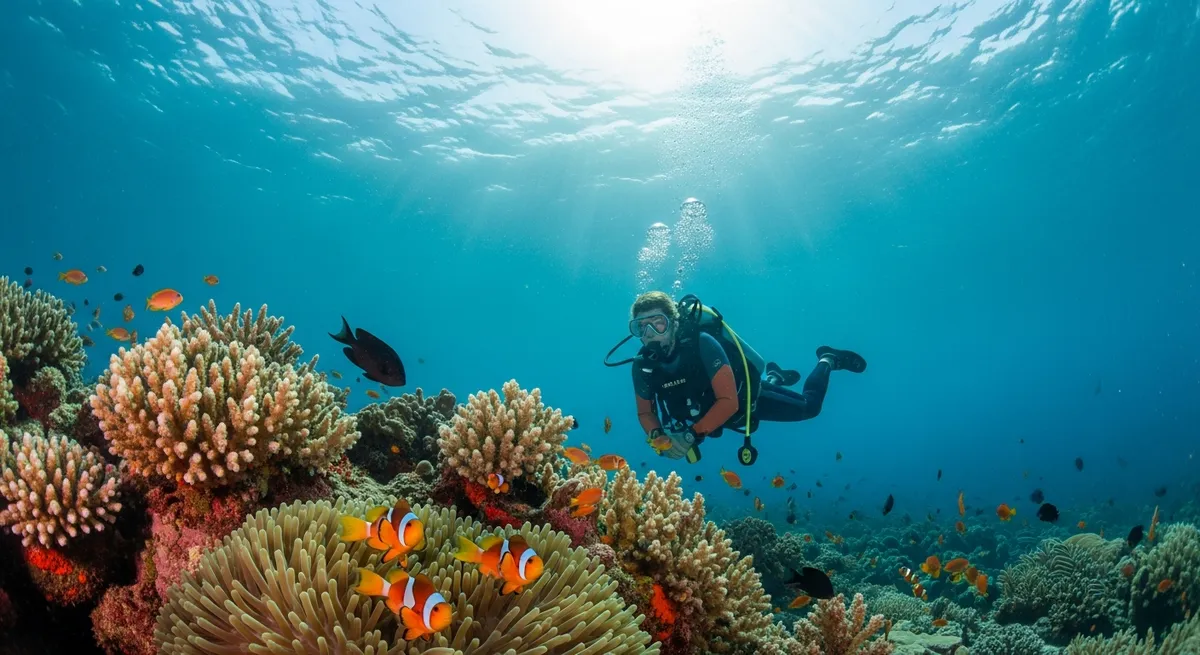
Fiji, with its 514 dive sites spread across six distinct regions, offers a genuinely welcoming environment for new divers. The warm tropical waters, typically ranging from 25-30°C (77-86°F), eliminate the need for thick wetsuits, making your first underwater experience more comfortable and less intimidating. Visibility is consistently excellent, often exceeding 30 meters (100 feet), which helps beginners feel secure and allows for clear views of the vibrant coral reefs and diverse marine life.
While Fiji is renowned for its exhilarating drift dives and challenging currents in certain areas, there are 138 identified beginner-friendly dive sites specifically designed for those just starting out. These sites often feature sheltered lagoons, gentle slopes, and minimal current, providing a calm and controlled setting to practice skills and enjoy the underwater scenery. The abundant soft corals, anemones, and a vast array of reef fish create an engaging visual experience, making it easy to forget any initial nerves.
Best Beginner-Friendly Regions
Kadavu & Great Astrolabe Reef: For beginners seeking a more remote and authentic Fijian experience, Kadavu offers numerous sheltered bays and shallow reefs ideal for learning. The Great Astrolabe Reef, the fourth largest barrier reef in the world, has many protected inner reef sections with gentle currents and abundant coral gardens. Dive sites like Naigoro Passage (inner sections) provide calm conditions to observe colorful reef fish and healthy hard corals without being overwhelmed.
Mamanuca Islands: Easily accessible from Nadi International Airport, the Mamanuca Islands are a popular choice for beginners due to their calm, sheltered waters and proximity to resorts. Many dive operators cater specifically to first-timers, offering Discover Scuba Diving experiences and Open Water courses in ideal conditions. Sites like The Supermarket (outer reef) or Plantation Island's House Reef are known for their gentle currents and rich marine biodiversity, including clownfish, reef sharks, and turtles.
Beqa Lagoon: While famous for its shark dives, Beqa Lagoon also boasts many calm and shallow sites perfect for beginners. The lagoon itself acts as a natural barrier, protecting the inner reefs from strong ocean currents. Beginner dives here focus on the vibrant soft coral gardens and a high density of small reef fish. Sites such as Caesar's Rocks or Side Streets offer controlled environments for skill development and enjoyable sightseeing.
What Certification Do You Need?
To embark on certified dives in Fiji, you will typically need a PADI Open Water Diver certification or an equivalent certification from another recognized agency such as SSI, NAUI, or CMAS. This certification allows you to dive to a maximum depth of 18 meters (60 feet) and participate in guided dives. If you are not yet certified, you can enroll in a Discover Scuba Diving (DSD) experience, which allows you to try diving under direct instructor supervision in shallow water without requiring full certification. Many dive centers across Fiji offer DSD programs and full Open Water courses, making it convenient to get certified locally. PADI is widely recognized and popular throughout Fiji.
Best Time to Visit
The best time to visit Fiji for diving is during its dry season, from May to October. During these months, the weather is generally sunny with less rainfall, and the water temperature averages between 25-27°C (77-81°F). This period also typically offers the best visibility, often exceeding 30 meters (100 feet), due to calmer seas and less runoff. While the wet season (November to April) still offers warm water (up to 30°C / 86°F), there is a higher chance of rain and occasional cyclones, which can impact visibility and dive operations. For whale migration sightings, plan your trip between July and October.
What to Expect on Your First Dive
Your first dive in Fiji, especially if it's a Discover Scuba Diving experience or part of an Open Water course, will follow a structured process. You'll typically check in at the dive shop, complete necessary paperwork, and receive a comprehensive briefing on the dive site, safety procedures, hand signals, and equipment use. After the briefing, you'll be fitted with your gear-wetsuit, BCD, regulator, mask, and fins-and then proceed to the dive boat. Most beginner dives in Fiji are boat dives, taking you to sheltered, calm sites. After a giant stride or back roll entry from the boat, you'll spend some time on the surface adjusting to your gear before slowly descending with your instructor. The underwater experience will focus on controlled breathing, maintaining buoyancy, and observing the marine environment. Expect a relaxed pace, with instructors providing close supervision and guidance throughout the dive.
Budget Guide
A Discover Scuba Diving (DSD) experience in Fiji typically costs FJD 250-400 (USD 110-180), including equipment rental and instructor supervision. A full PADI Open Water Diver course can range from FJD 900-1,500 (USD 400-670), depending on the dive center and location, and usually includes all materials and certification fees. For certified divers, a two-tank fun dive typically costs FJD 280-450 (USD 125-200), with package deals often available for multiple days. Equipment rental is usually included in course prices and DSDs, but may be an additional FJD 50-100 (USD 20-45) per day for fun dives if not specified. Accommodation varies widely, from budget hostels at FJD 80 (USD 35) per night to mid-range resorts at FJD 300-600 (USD 130-270) per night, and luxury options exceeding FJD 1,000 (USD 450).
Essential Tips
- Book in Advance: Especially during the dry season (May-October), dive centers and popular resorts can book up quickly. Secure your spot well ahead of time.
- Reef-Safe Sunscreen: Protect Fiji's delicate coral reefs by using reef-safe sunscreen. Many local shops sell it, or bring your own.
- Respect Local Customs: When visiting villages or interacting with locals, dress modestly and always ask permission before taking photos. A friendly "Bula!" goes a long way.
- Stay Hydrated: The tropical climate can lead to dehydration, especially after diving. Drink plenty of water throughout the day.
- Consider Dive Insurance: While general travel insurance is good, specific dive insurance (e.g., DAN) provides specialized coverage for diving-related incidents.
- Check Dive Site Suitability: Although many sites are beginner-friendly, always confirm with your dive operator that the chosen sites match your comfort level and experience.
At a Glance
| Destination | Difficulty | Best Months |
|---|---|---|
| Kadavu & Great Astrolabe ReefFiji | Beginner | Jan-Dec |
| Taveuni & Somosomo StraitFiji | Beginner | - |
| Beqa LagoonFiji | Beginner | - |
| Bligh WaterFiji | Beginner | - |
| Mamanuca IslandsFiji | Beginner | - |
Difficulty
Beginner
Best Months
Jan-Dec
Water Temp
26-30C
Dive Centres
71
Practical Info
- dive Sites:
- 281
- dive Centres:
- 71
Difficulty
Beginner
Dive Centres
2
Practical Info
- dive Sites:
- 233
- dive Centres:
- 2
Frequently Asked Questions
Do I need a certification to dive in Fiji?
To go on certified dives, you'll need a PADI Open Water Diver certification or equivalent. However, you can try diving without certification via a Discover Scuba Diving (DSD) experience, which is supervised by an instructor in shallow water. Many dive centers in Fiji offer DSDs and full certification courses.
How much does diving cost in Fiji?
A Discover Scuba Diving (DSD) experience typically costs FJD 250-400 (USD 110-180). A full PADI Open Water course ranges from FJD 900-1,500 (USD 400-670). For certified divers, a two-tank fun dive is usually FJD 280-450 (USD 125-200), with equipment rental potentially extra.
What is the best time to dive in Fiji?
The best time to dive in Fiji is during the dry season, from May to October. This period offers sunny weather, calm seas, water temperatures of 25-27°C (77-81°F), and excellent visibility, often exceeding 30 meters (100 feet).
Is Fiji safe for beginner divers?
Yes, Fiji is safe for beginner divers. There are 138 identified beginner-friendly dive sites with calm, sheltered waters and minimal currents. Warm water, excellent visibility, and professional dive operators contribute to a secure and enjoyable first-time diving experience.
What marine life will I see in Fiji?
In Fiji, you can expect to see abundant soft and hard corals, a wide variety of colorful reef fish such as clownfish, angelfish, and parrotfish, as well as sea turtles, reef sharks, anemones, and various invertebrates. Specific sightings depend on the dive site and region.
Related Guides
Planning when to go?
See the month-by-month conditions guide