First Time Diving in French Polynesia - A Beginner's Complete Guide
Everything you need to know before your first dive in French Polynesia
Why French Polynesia for Your First Dives?
French Polynesia offers a truly unique introduction to scuba diving, despite some areas being known for more challenging conditions. For beginners, the consistent warm water temperatures, typically ranging from 26-29°C (79-84°F) year-round, eliminate the need for thick wetsuits, making the experience more comfortable and less intimidating. Visibility is consistently excellent, often exceeding 30 meters (100 feet), which allows new divers to clearly see their surroundings and feel less confined underwater. This clarity is a significant advantage for those still getting accustomed to buoyancy and navigation.
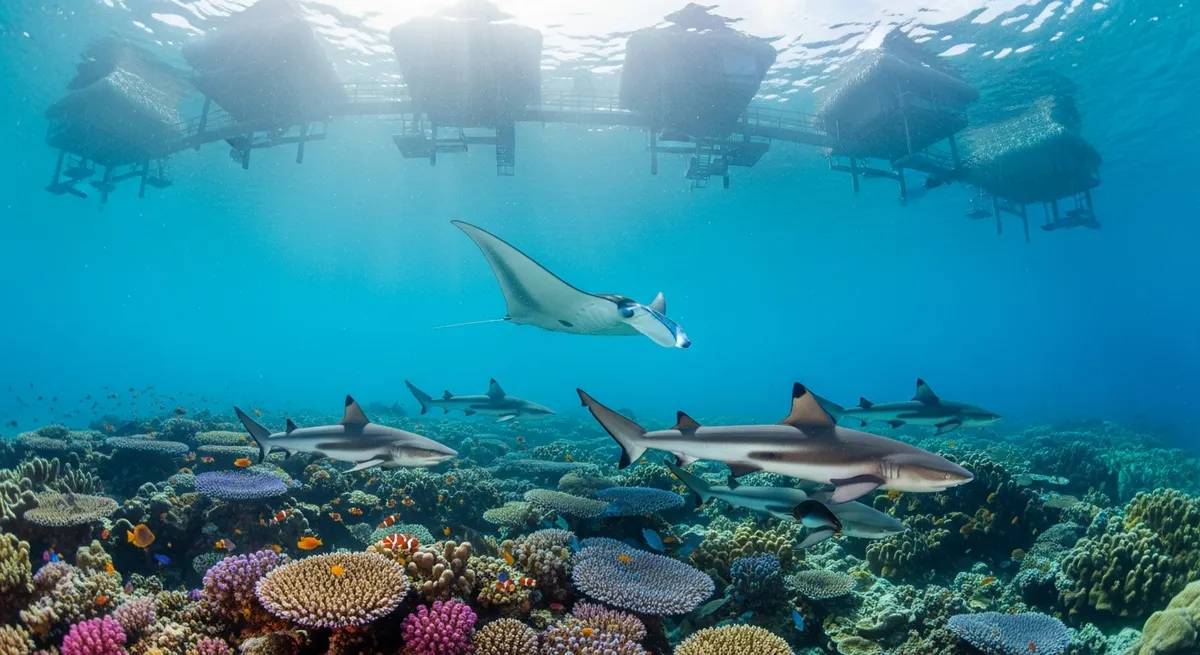
While French Polynesia boasts 145 dive sites across 5 main regions, with a mix of beginner and intermediate options, it's important to choose your dive sites carefully. There are specific areas that cater exceptionally well to those just starting out, offering calm, shallow conditions ideal for practicing skills and enjoying the underwater environment without strong currents. The marine life encountered in these calmer areas is still abundant and vibrant, featuring colorful reef fish, gentle reef sharks, and various corals, providing an inspiring first dive experience.
Best Beginner-Friendly Regions
Moorea & Tahiti: These islands are excellent starting points for beginners due to their readily accessible dive centers and a good selection of sheltered dive sites. Moorea, in particular, offers calm lagoons and gentle drift dives that are perfect for new divers. Sites like the 'Stingray World' or 'The Roses' in Moorea provide shallow depths and opportunities to encounter friendly marine life in a relaxed setting, allowing beginners to build confidence without strong currents.
Bora Bora: While famous for its overwater bungalows, Bora Bora also provides very beginner-friendly diving within its expansive lagoon. The calm, protected waters inside the reef are ideal for initial training and discovery dives. Sites such as 'Anau' or 'Tapu' offer shallow depths and frequent sightings of blacktip reef sharks, eagle rays, and a variety of colorful reef fish in very gentle conditions, making for a memorable first underwater experience.
Tikehau: Known as the 'Pink Sand Island,' Tikehau offers exceptionally clear and calm lagoon diving that is perfect for beginners. The atoll's sheltered inner waters provide numerous shallow sites where new divers can practice skills and observe marine life in very tranquil conditions. The 'Tuheiava Pass' can have stronger currents, but many inner lagoon sites are perfectly suited for those with limited experience, showcasing diverse fish populations and healthy coral gardens.
What Certification Do You Need?
To fully explore the dive sites of French Polynesia beyond a 'Discovery Scuba Dive' (a supervised introductory experience), you will need an internationally recognized certification. The PADI Open Water Diver certification, or an equivalent from agencies like SSI or CMAS, is the standard requirement. This certification qualifies you to dive to a maximum depth of 18 meters (60 feet) with a buddy. Many local dive centers throughout French Polynesia offer these courses, with instruction available in multiple languages.
For those without prior experience, a 'Discover Scuba Dive' is widely available. This allows you to experience diving under direct instructor supervision in shallow water, without requiring a full certification. If you enjoy it, you can often credit this experience towards your Open Water certification course. French Polynesia does not have particular certification agencies that are uniquely popular; PADI and SSI are universally accepted and offered.
Best Time to Visit
The best time to visit French Polynesia for diving is during the dry season, which runs from May to October. During these months, the weather is generally cooler, drier, and less humid, with average air temperatures ranging from 24-28°C (75-82°F). Water temperatures remain consistently warm, typically between 26-28°C (79-82°F), making for comfortable diving conditions.
Visibility is usually at its peak during the dry season, often exceeding 30 meters (100 feet). While the wet season (November to April) can still offer good diving, it is characterized by higher humidity, more rainfall, and a slightly increased chance of tropical storms. For optimal conditions and comfort, planning your trip between May and October is highly recommended. Specific marine life encounters, such as humpback whales, are seasonal, usually from July to October.
What to Expect on Your First Dive
Upon arrival at a dive center in French Polynesia, you'll typically begin with a check-in process where you'll present your certification card (if applicable) and complete any necessary waiver forms. For 'Discover Scuba Dives,' there will be a thorough theoretical briefing covering basic dive principles, equipment use, and safety procedures. You'll then be fitted for your gear - mask, fins, wetsuit (usually a shorty for warmth and protection), BCD, and regulator.
Most dives in French Polynesia are boat dives, with a short ride to the dive site. Entry is usually a backward roll or a giant stride from the boat. Once in the water, your instructor will guide you through a few basic skills in shallow, calm conditions before descending. Underwater, expect relatively calm conditions in beginner areas, with gentle currents at most. The focus will be on comfortable breathing, maintaining buoyancy, and observing the vibrant marine life. The typical dive style for beginners is relaxed, guided, and focused on enjoyment and safety, often in sheltered lagoons or close to shore reefs.
Budget Guide
Diving in French Polynesia can vary in cost. A 'Discover Scuba Dive' typically ranges from 10,000-15,000 XPF (approximately 90-135 USD). A full PADI Open Water Diver course usually costs between 70,000-90,000 XPF (approximately 630-810 USD), which often includes equipment rental and certification fees. For certified divers, a single fun dive averages 7,000-9,000 XPF (approximately 65-80 USD), with packages for multiple dives offering a slight discount (e.g., 2-dive package for 12,000-15,000 XPF, or 110-135 USD).
Equipment rental is often included in dive course prices and sometimes with fun dive packages; if rented separately, it might be an additional 1,000-2,000 XPF (9-18 USD) per dive. Accommodation varies significantly: budget guesthouses can start from 7,000 XPF (65 USD) per night, mid-range hotels from 15,000-30,000 XPF (135-270 USD), and high-end resorts easily exceed 40,000 XPF (360 USD) per night. Transportation between islands via ferry or domestic flights also adds to the overall budget.
Essential Tips
- Book dive trips and courses in advance, especially during the peak dry season (May-October), as popular dive centers can fill up quickly.
- Always use reef-safe sunscreen to protect the delicate coral ecosystems you'll be exploring.
- Be aware of local customs; a friendly 'Ia Ora na' (hello) is always appreciated.
- While many areas are calm, some passes can have strong currents. Always choose dive sites appropriate for your skill level and listen to your dive guide's instructions.
- Stay hydrated, especially in the tropical climate, as this helps prevent decompression sickness.
- Consider bringing an underwater camera, as the visibility and marine life offer excellent photographic opportunities.
- Confirm what is included in your dive package-equipment rental, transfers, and marine park fees can sometimes be extra.
At a Glance
| Destination | Difficulty | Best Months |
|---|---|---|
| Moorea & TahitiFrench Polynesia | Beginner | Jan-Dec |
| Bora BoraFrench Polynesia | Beginner | Jan-Dec |
| RangiroaFrench Polynesia | Beginner | Jan-Dec |
| FakaravaFrench Polynesia | Beginner | Jan-Apr, Aug-Dec |
| TikehauFrench Polynesia | Beginner | - |
Moorea & Tahiti
French Polynesia
Difficulty
Beginner
Best Months
Jan-Dec
Water Temp
26-29C
Dive Centres
15
Practical Info
- dive Sites:
- 73
- dive Centres:
- 15
Bora Bora
French Polynesia
Difficulty
Beginner
Best Months
Jan-Dec
Water Temp
27-29C
Dive Centres
9
Practical Info
- dive Sites:
- 39
- dive Centres:
- 9
Rangiroa
French Polynesia
Difficulty
Beginner
Best Months
Jan-Dec
Water Temp
27-29C
Dive Centres
4
Practical Info
- dive Sites:
- 26
- dive Centres:
- 4
Fakarava
French Polynesia
Difficulty
Beginner
Best Months
Jan-Apr, Aug-Dec
Water Temp
27-30C
Dive Centres
6
Practical Info
- dive Sites:
- 7
- dive Centres:
- 6
Frequently Asked Questions
Do I need a certification to dive in French Polynesia?
To dive independently or participate in guided fun dives, you will need a PADI Open Water Diver certification or an equivalent from another recognized agency like SSI or CMAS. However, you can experience diving without certification through a 'Discover Scuba Dive' program, which is a supervised introductory dive in shallow water with an instructor.
How much does diving cost in French Polynesia?
A 'Discover Scuba Dive' typically costs 10,000-15,000 XPF (90-135 USD). A full Open Water Diver course ranges from 70,000-90,000 XPF (630-810 USD). For certified divers, a single fun dive is about 7,000-9,000 XPF (65-80 USD), with multi-dive packages offering slight discounts. Equipment rental is often included or costs an additional 1,000-2,000 XPF (9-18 USD).
What is the best time to dive in French Polynesia?
The best time to dive is during the dry season, from May to October. During these months, the weather is cooler and drier, with excellent visibility often exceeding 30 meters (100 feet). Water temperatures remain consistently warm, between 26-28°C (79-82°F), providing comfortable diving conditions.
Is French Polynesia safe for beginner divers?
Yes, French Polynesia can be very safe for beginner divers, provided you choose appropriate dive sites and dive centers. Many regions like Moorea, Bora Bora, and Tikehau offer calm, shallow lagoon dives ideal for learning and building confidence. Always follow your instructor's guidance and select sites matching your skill level.
What marine life will I see in French Polynesia?
In French Polynesia, you can expect to see a rich variety of marine life. Common sightings include blacktip reef sharks, grey reef sharks, eagle rays, manta rays (seasonal in some areas), green sea turtles, and numerous species of colorful reef fish like parrotfish, triggerfish, and angelfish. Healthy coral gardens are also a prominent feature.
Related Guides
Planning when to go?
See the month-by-month conditions guide