First Time Diving in Greece - A Beginner's Complete Guide
Everything you need to know before your first dive in Greece
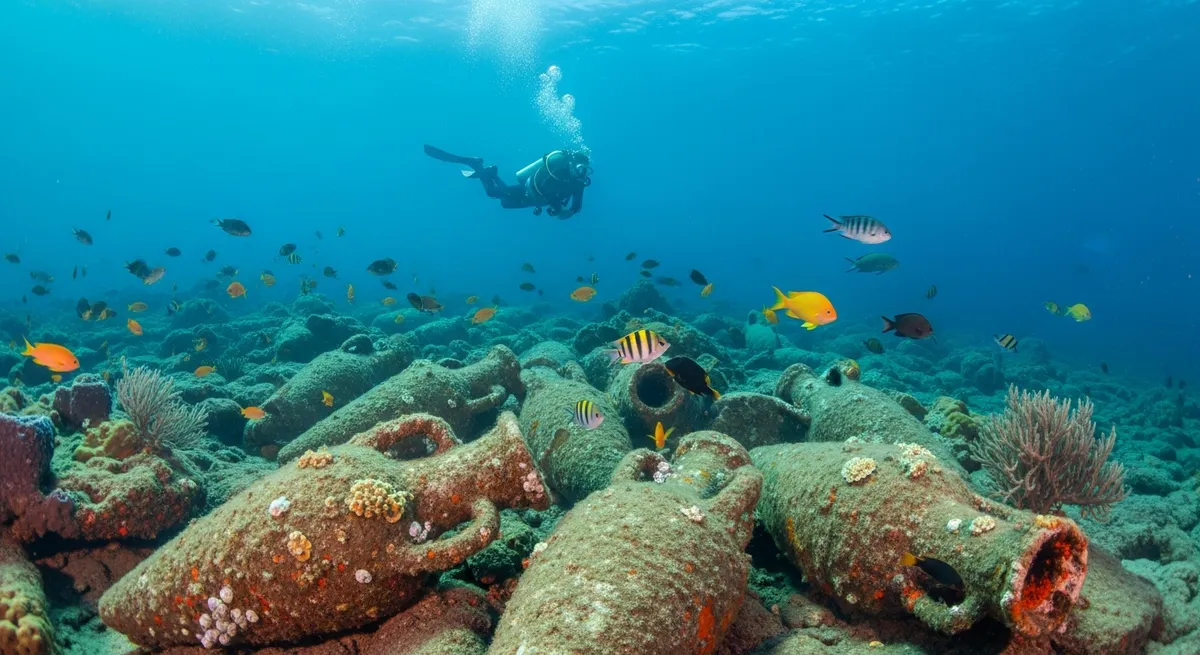
Why Greece for Your First Dives?
Greece, with its 503 dive sites spread across 8 distinct dive regions, offers a surprisingly welcoming environment for beginner divers. The Mediterranean Sea here is renowned for its calm conditions, particularly during the peak diving season. Water temperatures are comfortably warm, typically ranging from 22°C to 28°C (72°F to 82°F) in summer months, which reduces the need for thick wetsuits and makes for a more comfortable experience for those new to the underwater world. Visibility is consistently good, often exceeding 20 meters, allowing new divers to easily orient themselves and appreciate the surroundings without feeling overwhelmed. The diving landscape in Greece is predominantly characterized by reefs, caverns, and shipwrecks, though the wrecks are mostly reserved for more experienced divers. For beginners, the focus is on shallow reef systems and protected bays where gentle slopes and minimal currents prevail. Marine life, while not as abundant as some tropical destinations, includes a variety of Mediterranean species such as octopus, moray eels, groupers, barracuda, and various colorful reef fish. The absence of strong currents in many beginner sites allows for relaxed exploration, making it an ideal location to refine buoyancy control and get comfortable with breathing underwater. While Greece does offer advanced diving opportunities, its vast network of dive centers and numerous accessible sites cater extensively to those just starting out. The relative lack of extreme challenges (only 1 dive site is explicitly rated as advanced out of 503) means that beginners can focus on learning and enjoyment without encountering overly demanding conditions. This makes Greece a suitable and enjoyable choice for your initial foray into scuba diving.Best Beginner-Friendly Regions
Crete
Crete, the largest Greek island, offers numerous sheltered bays and calm waters perfect for new divers. Dive centers along its northern and southern coasts provide easy access to sites with gentle slopes and good visibility. For example, areas around Chania and Rethymno feature shallow reefs where you can practice skills and observe common Mediterranean marine life like bream and wrasse. Many sites are accessible via short boat trips or even shore entries, reducing logistical complexity for beginners.Zakynthos & Ionian Islands
The Ionian Islands, particularly Zakynthos, are well-regarded for their tranquil conditions and interesting underwater topography. The Keri Caves on Zakynthos, for instance, offer shallow swim-throughs and clear waters that are non-intimidating for beginners. The calm, warm waters and protected coves around this region make it an excellent choice for introductory dives and Open Water courses, allowing divers to focus on technique and enjoyment amidst scenic underwater landscapes with sponges and small fish.Halkidiki
Halkidiki, located in northern Greece, boasts a long coastline with many protected coves, especially around its Kassandra and Sithonia peninsulas. The calm, often lake-like conditions here are ideal for initial training and discovery dives. Dive sites typically feature gentle slopes with rock formations and small caves, providing interesting but manageable environments. The visibility is consistently good, and the absence of strong currents ensures a relaxed experience for those getting acquainted with diving.What Certification Do You Need?
To undertake independent recreational dives in Greece, you will generally need a PADI Open Water Diver certification or an equivalent from another recognized agency such as SSI, CMAS, or SDI. Most dive centers across Greece are PADI or SSI affiliated and offer a full range of courses, from Discover Scuba Diving experiences for non-certified individuals to advanced certifications. For a Discover Scuba Diving experience, no prior certification is required, as you will be under direct supervision of an instructor. If you plan to complete your Open Water certification in Greece, local dive centers are plentiful and well-equipped to provide instruction in multiple languages. It's advisable to check with your chosen dive center if they have any specific requirements or popular local certifications they recommend.Best Time to Visit
The prime diving season in Greece runs from May to October. During these months, the weather is consistently warm and sunny, and sea conditions are generally calm. Water temperatures range from approximately 20°C (68°F) in May to a peak of 28°C (82°F) in August, gradually cooling to around 22°C (72°F) by October. Visibility is typically at its best during this period, often exceeding 20-30 meters. July and August are the warmest and busiest months, so if you prefer fewer crowds and slightly milder temperatures, May-June and September-October are excellent alternatives. Avoid the winter months (November-April) for diving, as temperatures drop significantly and sea conditions can be rough.What to Expect on Your First Dive
Upon arriving at a Greek dive center for your first dive, you'll typically begin with a check-in process, verifying any certifications or completing necessary paperwork. If you're doing a Discover Scuba Diving experience, you'll receive a comprehensive safety briefing covering basic dive theory, equipment use, and underwater communication signals. You'll then be fitted with rental gear-a wetsuit, BCD, regulator, mask, fins, and weights. Most beginner dives in Greece are conducted from a boat, often a small RIB or a larger dive boat, which transports you to a sheltered cove or a calm, shallow reef site. Shore entries are less common for introductory dives but do exist in some areas. Once at the dive site, your instructor will guide you through a controlled entry into the water, usually a giant stride or back roll from the boat. You'll spend some time on the surface getting comfortable with breathing through the regulator and performing basic safety checks. The descent will be slow and controlled, often holding onto a line or the instructor's hand, allowing you to equalize your ears gradually. Underwater, expect a calm and relaxed experience. Your instructor will remain close by, monitoring your air consumption and comfort. You'll typically explore a shallow reef, observing fish and rock formations. Dives are generally slow-paced, focusing on enjoyment and getting accustomed to the underwater environment. The typical dive time for a beginner might be 30-45 minutes, depending on air consumption and comfort levels, followed by a safe ascent and surface interval before returning to the dive center.Budget Guide
For a Discover Scuba Diving experience, which includes equipment rental and instructor supervision, expect to pay around 70-100 EUR (approx. $75-110 USD). An Open Water Diver certification course, typically spanning 3-4 days and including all materials, equipment, and dives, generally costs between 380-550 EUR (approx. $410-600 USD). For certified divers, a single fun dive usually ranges from 40-60 EUR (approx. $45-65 USD), with discounts often available for multi-dive packages (e.g., 2 dives for 70-100 EUR). Equipment rental for fun dives, if not included in the package, might add 15-25 EUR (approx. $16-27 USD) per day. Accommodation costs vary widely: budget hostels or guesthouses can be 30-60 EUR (approx. $33-65 USD) per night, mid-range hotels 80-150 EUR (approx. $87-163 USD), and luxury options significantly more. Meals can range from 15-30 EUR (approx. $16-33 USD) per day for casual dining.Essential Tips
- Book in advance, especially during peak season (July-August), as dive centers can fill up quickly.
- Inform your dive center about any medical conditions beforehand to ensure you meet diving health requirements.
- Familiarize yourself with basic Greek phrases; while English is widely spoken in tourist areas, a few local words are appreciated.
- Bring reef-safe sunscreen and a hat; the Mediterranean sun is strong, especially on dive boats.
- Stay hydrated by drinking plenty of water, particularly between dives and in the warm climate.
- Respect marine life; avoid touching corals or disturbing underwater creatures.
- Consider bringing your own mask and snorkel for comfort, even if renting other gear.
At a Glance
| Destination | Difficulty | Best Months |
|---|---|---|
| CreteGreece | Beginner | Jun-Oct |
| Alonissos Marine ParkGreece | Beginner | Jun-Oct |
| Zakynthos & Ionian IslandsGreece | Beginner | Jun-Sep |
| DodecaneseGreece | Beginner | Jun-Dec |
| HalkidikiGreece | Beginner | Jun-Oct |
Crete
Greece
Difficulty
Beginner
Best Months
Jun-Oct
Water Temp
16-25C
Dive Centres
123
Practical Info
- dive Sites:
- 167
- dive Centres:
- 123
Alonissos Marine Park
Greece
Difficulty
Beginner
Best Months
Jun-Oct
Water Temp
14-27C
Dive Centres
68
Practical Info
- dive Sites:
- 144
- dive Centres:
- 68
Difficulty
Beginner
Best Months
Jun-Sep
Water Temp
16-27C
Dive Centres
7
Practical Info
- dive Sites:
- 96
- dive Centres:
- 7
Dodecanese
Greece
Difficulty
Beginner
Best Months
Jun-Dec
Water Temp
17-29C
Dive Centres
14
Practical Info
- dive Sites:
- 51
- dive Centres:
- 14
Halkidiki
Greece
Difficulty
Beginner
Best Months
Jun-Oct
Water Temp
14-27C
Dive Centres
25
Practical Info
- dive Sites:
- 45
- dive Centres:
- 25
Frequently Asked Questions
Do I need a certification to dive in Greece?
For introductory experiences like a Discover Scuba Dive, no certification is needed as you'll be under direct instructor supervision. To undertake independent recreational dives, you'll need a PADI Open Water Diver certification or an equivalent from agencies like SSI or CMAS.
How much does diving cost in Greece?
A Discover Scuba Dive typically costs 70-100 EUR. An Open Water certification course ranges from 380-550 EUR. For certified divers, a single fun dive is 40-60 EUR, with multi-dive packages offering better value. Equipment rental may be extra, around 15-25 EUR per day.
What is the best time to dive in Greece?
The best time to dive in Greece is from May to October. During these months, water temperatures are warm (20-28°C) and sea conditions are generally calm with excellent visibility. July and August are peak season, while May-June and September-October offer fewer crowds.
Is Greece safe for beginner divers?
Yes, Greece is very safe for beginner divers. Its calm, warm waters, good visibility, and numerous sheltered dive sites with minimal currents make it an ideal place to learn. Dive centers are professional and adhere to international safety standards, with only 1 out of 503 sites rated as advanced.
What marine life will I see in Greece?
In Greece, you can expect to see various Mediterranean marine life such as octopus, moray eels, groupers, barracuda, amberjacks, and a range of colorful reef fish like wrasse and bream. Sponges, sea stars, and anemones are also common on the reefs.
Related Guides
Planning when to go?
See the month-by-month conditions guide