First Time Diving in Grenada - A Beginner's Complete Guide
Everything you need to know before your first dive in Grenada
Why Grenada for Your First Dives?
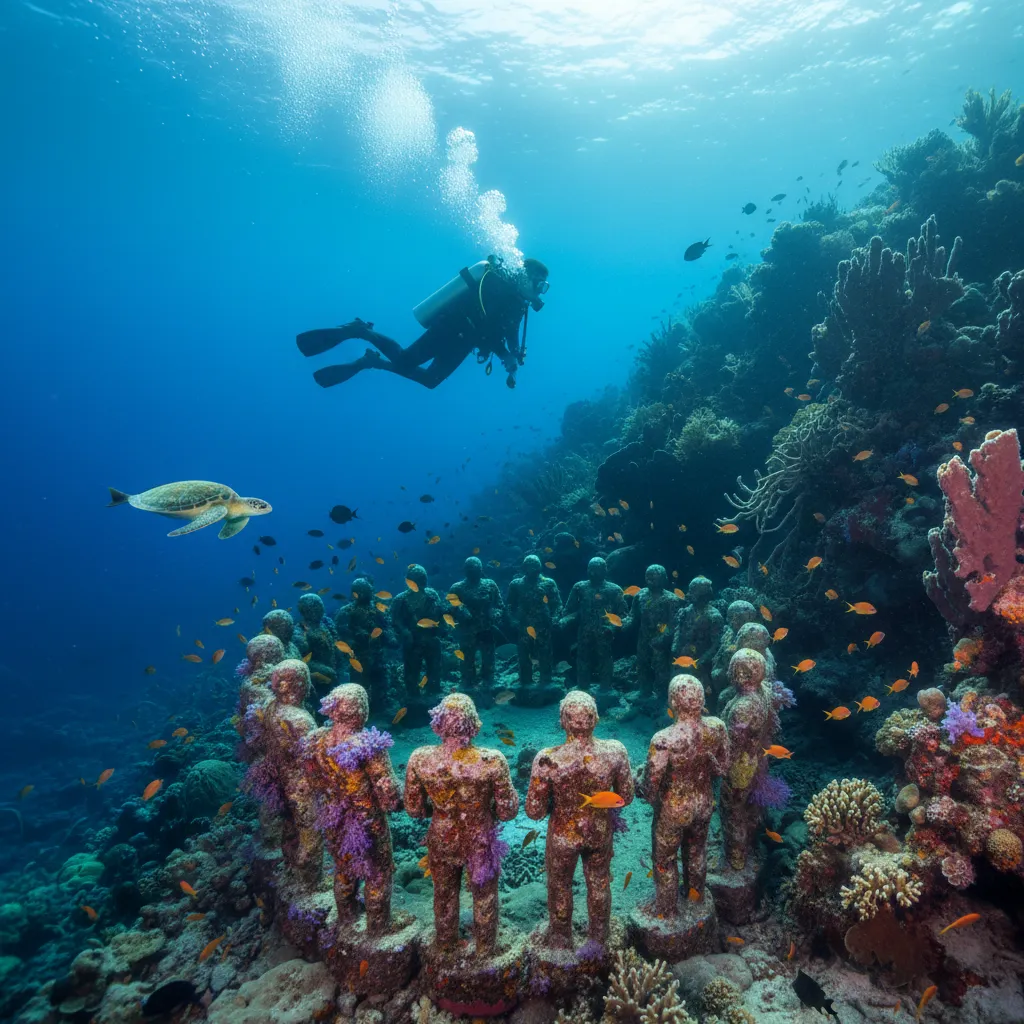
Grenada, often called the "Spice Isle," offers a surprisingly accessible introduction to the underwater world, despite its reputation for more advanced wreck diving. For first-time divers, the primary draw is the consistently warm water, typically ranging from 26-29°C (79-84°F) year-round. This means no need for thick wetsuits, making the experience more comfortable and less intimidating. While Grenada boasts 94 dive sites across two main regions, only a small portion are designated as beginner-friendly, so choosing the right dive operator and site is crucial.
Visibility in Grenada is generally good, often exceeding 20 meters (65 feet), providing clear views of the vibrant coral reefs and diverse marine life. You can expect to encounter colorful reef fish like parrotfish, angelfish, and snapper, along with occasional sightings of sea turtles, stingrays, and moray eels. While Grenada is not exclusively a beginner destination, its calm, shallow bays and protected reef areas provide ideal conditions for learning the ropes without strong currents or complex navigation. However, it's important to note that many of Grenada's most famous sites, particularly the wrecks, are best suited for intermediate to advanced divers, so managing expectations and focusing on the designated beginner sites is key.
Best Beginner-Friendly Regions
For your first dives in Grenada, the Southwest Coast around St. George's is the most accommodating region. This area benefits from sheltered bays and shallower reefs, making it perfect for initial training and discovery dives. Sites like the Flamingo Bay and Dragon Bay offer calm conditions and diverse shallow reef ecosystems where you can practice skills and get comfortable underwater. These sites are easily accessible by short boat rides from most dive centers in the capital, providing a convenient and stress-free experience for newcomers.
While Carriacou is known for its beautiful reefs, its dive sites tend to cater more to intermediate divers due to slightly stronger currents and deeper profiles. Therefore, for absolute beginners, sticking to the Southwest Coast is highly recommended. The dive operators in this primary region are well-versed in introducing new divers to the sport, with dedicated instructors and appropriate gear for entry-level experiences. The proximity to amenities and medical facilities also adds an extra layer of comfort for those taking their first plunge.
What Certification Do You Need?
To participate in certified dives in Grenada, you will need a PADI Open Water Diver certification or an equivalent entry-level certification from another recognized agency such as SSI, NAUI, or BSAC. This certification allows you to dive to a maximum depth of 18 meters (60 feet) and participate in guided dives. If you are not yet certified, you can complete a Discover Scuba Diving (DSD) experience, which allows you to try diving under direct instructor supervision in shallow water without needing a full certification. Many local dive centers in Grenada offer both DSD programs and full Open Water Diver courses, often completed over 3-4 days.
Grenada's dive centers primarily operate under PADI and SSI standards, making these the most popular certification agencies. It's advisable to check with your chosen dive operator regarding their specific affiliations and course offerings. Completing the theoretical portion of your Open Water course online before arriving in Grenada (eLearning) can save valuable vacation time, allowing you to focus on the practical in-water training once you arrive.
Best Time to Visit
The best time to visit Grenada for diving is during the dry season, which runs from December to May. During these months, you can expect stable weather conditions with less rainfall and generally calmer seas, making for more comfortable boat rides and better visibility. Air temperatures average around 28-30°C (82-86°F), and water temperatures consistently range from 27-29°C (81-84°F). This period also typically offers the best underwater visibility, often exceeding 25 meters (80 feet).
The shoulder months of June and November can also offer good diving conditions with fewer crowds, though there is an increased chance of rain. The hurricane season officially runs from June to November, with the peak typically being from August to October. While Grenada is generally outside the main hurricane belt, it's still prudent to monitor weather forecasts if traveling during these months. For optimal comfort and predictability, the December-May window is highly recommended for first-time divers.
What to Expect on Your First Dive
Your first dive in Grenada, whether a Discover Scuba Dive or your initial Open Water training dive, will typically begin at a local dive center on the Southwest Coast. You'll start with a check-in process, filling out necessary paperwork and medical questionnaires. This is followed by a comprehensive briefing from your instructor, covering safety procedures, equipment use, communication signals, and an overview of the dive site.
After the briefing, you'll be fitted with your rental gear – wetsuit, BCD, regulator, mask, fins, and weights. Most beginner dives in Grenada are boat dives, meaning you'll board a dive boat for a short ride to a sheltered, shallow bay. On the boat, your instructor will assist you with gearing up. Entry into the water is usually a controlled giant stride or back roll, followed by a surface check of your equipment. Once comfortable, you'll slowly descend with your instructor, often starting in very shallow water (2-5 meters) to practice basic skills like mask clearing and regulator recovery. The underwater experience will focus on controlled breathing, buoyancy, and enjoying the marine environment in a calm, current-free setting. Most beginner dives last between 30-45 minutes, depending on air consumption, before a gentle ascent back to the boat.
Budget Guide
Diving in Grenada offers various price points. A Discover Scuba Diving (DSD) experience for uncertified divers typically costs between $100-150 USD. A full PADI Open Water Diver course, including all materials, equipment, and dives, usually ranges from $550-700 USD. For certified divers, a two-tank fun dive package generally costs $110-140 USD, with discounts often available for multi-day or multi-dive packages. Equipment rental, if not included in your package, is usually an additional $20-30 USD per day.
Accommodation in Grenada varies widely. Budget-friendly guesthouses and apartments can be found for $60-100 USD per night, while mid-range hotels typically cost $150-300 USD. Higher-end resorts can exceed $400 USD per night. Local currency is the Eastern Caribbean Dollar (XCD), with approximately 2.7 XCD to 1 USD. While many places accept USD, paying in XCD or by credit card often offers better exchange rates. Factor in transportation (taxis or local buses), food (local meals can be inexpensive, restaurants more costly), and any additional activities when planning your overall budget.
Essential Tips
- Book in Advance: Especially during the peak season (December-May), dive centers can get busy. Book your courses or fun dives a few weeks ahead to secure your spot.
- Stay Hydrated: The tropical climate and sun can lead to dehydration. Drink plenty of water before, during, and after your dives.
- Sun Protection: The Grenadian sun is strong. Use reef-safe sunscreen, wear a hat, and consider a rash guard for surface intervals.
- Motion Sickness: If prone to seasickness, take preventative medication at least an hour before your boat dive.
- Check Your Gear: Even with rental equipment, always do a personal check of your gear before entering the water.
- Local Currency: While USD is often accepted, having some Eastern Caribbean Dollars (XCD) for small purchases or local transport is useful.
- Respect Marine Life: Observe marine life without touching or disturbing it. Adhere to responsible diving practices.
At a Glance
| Destination | Difficulty | Best Months |
|---|---|---|
| Southwest CoastGrenada | Beginner | Jan-Dec |
| CarriacouGrenada | Beginner | Jan-Dec |
Southwest Coast
Grenada
Difficulty
Beginner
Best Months
Jan-Dec
Water Temp
27-27C
Dive Centres
4
Practical Info
- dive Sites:
- 66
- dive Centres:
- 4
Carriacou
Grenada
Difficulty
Beginner
Best Months
Jan-Dec
Water Temp
28-28C
Dive Centres
6
Practical Info
- dive Sites:
- 28
- dive Centres:
- 6
Frequently Asked Questions
Do I need a certification to dive in Grenada?
To participate in regular guided dives in Grenada, you need a PADI Open Water Diver certification or equivalent. However, you can try diving without certification through a Discover Scuba Diving (DSD) experience, which is supervised by an instructor in shallow water.
How much does diving cost in Grenada?
A Discover Scuba Diving experience typically costs $100-150 USD. A full PADI Open Water course ranges from $550-700 USD. For certified divers, a two-tank fun dive package is usually $110-140 USD, with equipment rental often an additional $20-30 USD per day.
What is the best time to dive in Grenada?
The best time to dive in Grenada is during the dry season, from December to May. During these months, you can expect stable weather, calm seas, excellent visibility, and water temperatures of 27-29°C (81-84°F).
Is Grenada safe for beginner divers?
Yes, Grenada is safe for beginner divers, especially when sticking to the designated beginner-friendly sites on the Southwest Coast. These areas offer calm, shallow conditions without strong currents, ideal for learning and gaining confidence under the supervision of qualified instructors.
What marine life will I see in Grenada?
On beginner dives in Grenada, you can expect to see a variety of colorful reef fish such as parrotfish, angelfish, and snapper. You may also encounter sea turtles, stingrays, garden eels, and various types of moray eels on the healthy coral reefs.
Related Guides
Planning when to go?
See the month-by-month conditions guide