First Time Diving in Indonesia - A Beginner's Complete Guide
Everything you need to know before your first dive in Indonesia
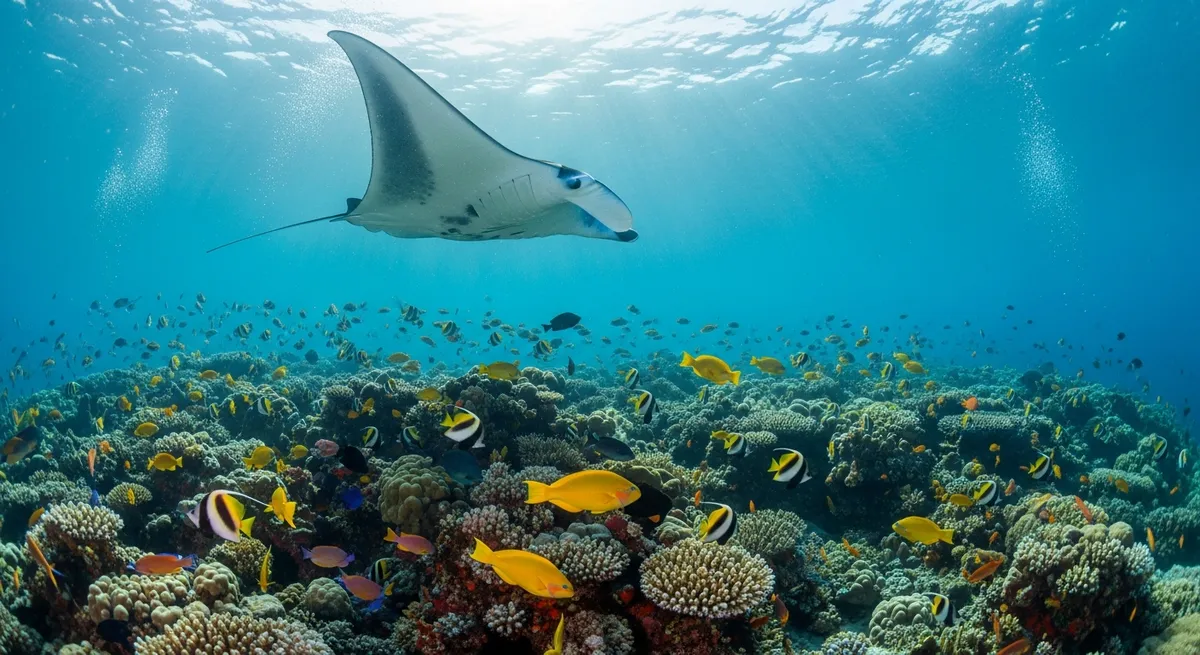
Why Indonesia for Your First Dives?
Indonesia, with its vast archipelago and incredible biodiversity, offers an unparalleled introduction to the underwater world. While known for its advanced dive sites, Indonesia also boasts numerous locations perfectly suited for beginners. The warm tropical waters, typically ranging from 26-30°C, eliminate the need for thick wetsuits, making the experience more comfortable and less daunting for newcomers. Visibility is often excellent, frequently exceeding 20 meters, allowing new divers to enjoy the vibrant coral reefs and marine life without struggling to see.
However, it's important to be honest: Indonesia is a large country with diverse conditions. While many sites are calm and sheltered, some regions do experience strong currents. For your first dives, focusing on the designated beginner-friendly areas is crucial. These locations offer shallow, protected bays with gentle conditions, allowing you to build confidence and master basic skills in a relaxed environment. You'll encounter an incredible array of marine creatures, from colorful reef fish like clownfish and angelfish to various species of turtles and even small reef sharks, providing a truly memorable first diving experience.
Best Beginner-Friendly Regions
Lombok & Gili Islands: The Gili Islands (Gili Trawangan, Gili Meno, Gili Air) are perhaps Indonesia's most popular beginner dive destination. Their calm, shallow waters and numerous dive schools make them ideal for learning. Dive sites like Turtle Heaven or Manta Point (though manta sightings are less frequent for beginners) offer gentle drifts and abundant reef life, including many green and hawksbill turtles. The visibility is consistently good, and the absence of strong currents in many areas makes skill practice stress-free.
Bali: While Bali offers a mix of dive experiences, specific areas are excellent for beginners. Padang Bai, on the east coast, is particularly well-suited. Sites like Blue Lagoon and Jepun are sheltered bays with minimal current, vibrant coral gardens, and a high chance of spotting reef sharks, octopuses, and a variety of macro life. Tulamben, known for the USAT Liberty wreck, also has calm sections suitable for introductory dives, especially the shallow coral garden adjacent to the wreck, offering a unique experience without deep penetration.
Komodo: Although Komodo is often associated with strong currents, specific areas within the national park are surprisingly beginner-friendly. For instance, parts of Sebayur Kecil and Kanawa Island offer sheltered, shallow reefs with excellent visibility and a remarkable diversity of fish and corals. Dive operators in Komodo are skilled at selecting sites appropriate for varying experience levels, ensuring that even first-time divers can safely experience some of this region's famous marine beauty, albeit carefully guided away from the stronger current areas.
What Certification Do You Need?
To embark on your first certified dives in Indonesia, you will typically need a PADI Open Water Diver certification or an equivalent from another recognized agency such as SSI, NAUI, or CMAS. This certification allows you to dive to a maximum depth of 18 meters with a buddy. If you're unsure about committing to a full course, many dive centers offer a 'Discover Scuba Diving' (DSD) experience. This allows you to try diving under direct instructor supervision in shallow water, without requiring certification. Indonesia has a robust network of dive centers, particularly in tourist-heavy areas, offering courses in multiple languages. PADI and SSI are the most widely available and recognized certification agencies across the country.
Best Time to Visit
The best time to visit Indonesia for diving generally depends on the region. For most popular dive destinations like Bali, Komodo, and the Gili Islands, the dry season, running from April to October, offers the most favorable conditions. During these months, you can expect less rain, calmer seas, and excellent visibility. Water temperatures typically range from 26°C to 29°C across these regions. Some areas, like Raja Ampat, have slightly different seasons, with peak conditions often from October to April, avoiding the rougher seas of July and August. Always check the specific regional conditions, but for a general first-time dive trip focusing on calm conditions, aiming for the dry season is recommended.
What to Expect on Your First Dive
Your first certified dive in Indonesia will typically begin at a local dive center. After check-in, you'll receive a comprehensive briefing covering the dive site, marine life you might encounter, hand signals, and safety procedures. You'll then be fitted with rental equipment-mask, fins, wetsuit (usually a 3mm shorty), BCD (buoyancy control device), regulator, and tank. Most beginner dives in Indonesia are boat dives, particularly in regions like the Gili Islands or Komodo. You'll gear up on the boat, do a buddy check, and enter the water, often with a giant stride or a back roll entry. Once in the water, your instructor will guide you through a final equipment check and a controlled descent. Underwater, expect to move slowly, focusing on buoyancy and breathing. The pace is relaxed, allowing you to absorb the vibrant surroundings. Many beginner sites feature calm conditions with gentle or no currents, making the experience peaceful and enjoyable. After the dive, you'll surface, return to the boat, and head back to the dive center for debriefing and logbook entries.
Budget Guide
Diving in Indonesia offers a range of price points. A 'Discover Scuba Diving' experience typically costs between IDR 700,000-1,200,000 (approx. $45-80 USD). A full PADI Open Water Diver course, including all materials and dives, usually ranges from IDR 4,500,000-7,500,000 (approx. $300-500 USD), depending on the region and dive center. Fun dives for certified divers are generally IDR 400,000-700,000 per dive (approx. $25-45 USD), with discounts for multi-dive packages. Equipment rental is often included in course prices and sometimes in fun dive packages, but if not, expect to pay an additional IDR 50,000-150,000 (approx. $3-10 USD) per day for full gear. Accommodation varies wildly: budget hostels can be IDR 100,000-300,000 (approx. $7-20 USD) per night, mid-range hotels IDR 400,000-1,000,000 (approx. $27-67 USD), and resorts upwards of IDR 1,500,000 (approx. $100 USD).
Essential Tips
- Book Courses in Advance: Especially during peak season, popular dive centers fill up quickly. Book your Open Water course or DSD a few weeks ahead.
- Check Current Conditions: While specific regions are beginner-friendly, local conditions can change. Always consult with the dive center about the day's expected currents and visibility.
- Sun Protection is Key: The equatorial sun is intense. Use reef-safe sunscreen, wear a rash guard, and stay hydrated, even on cloudy days.
- Learn Basic Indonesian Phrases: A few simple phrases like 'terima kasih' (thank you) or 'halo' (hello) will be greatly appreciated by local staff.
- Respect Marine Life: Never touch, chase, or harass marine animals or corals. Maintain proper buoyancy to avoid accidental contact.
- Consider Dive Insurance: While not mandatory, dive-specific insurance (like DAN) is highly recommended for any diving activity, especially in remote areas.
- Stay Hydrated: The tropical climate and diving can lead to dehydration. Drink plenty of water before, during, and after your dives.
At a Glance
| Destination | Difficulty | Best Months |
|---|---|---|
| SulawesiIndonesia | Beginner | Jan-Dec |
| Lombok & Gili IslandsIndonesia | Beginner | Jan-Dec |
| Raja AmpatIndonesia | Beginner | Jan-Dec |
| BaliIndonesia | Beginner | Jan-Dec |
| KomodoIndonesia | Beginner | Jan-Dec |
Sulawesi
Indonesia
Difficulty
Beginner
Best Months
Jan-Dec
Water Temp
29-30C
Dive Centres
17
Practical Info
- dive Sites:
- 315
- dive Centres:
- 17
Lombok & Gili Islands
Indonesia
Difficulty
Beginner
Best Months
Jan-Dec
Water Temp
28-30C
Dive Centres
304
Practical Info
- dive Sites:
- 244
- dive Centres:
- 304
Raja Ampat
Indonesia
Difficulty
Beginner
Best Months
Jan-Dec
Water Temp
29-30C
Dive Centres
28
Practical Info
- dive Sites:
- 204
- dive Centres:
- 28
Bali
Indonesia
Difficulty
Beginner
Best Months
Jan-Dec
Water Temp
29-31C
Dive Centres
20
Practical Info
- dive Sites:
- 194
- dive Centres:
- 20
Komodo
Indonesia
Difficulty
Beginner
Best Months
Jan-Dec
Water Temp
28-30C
Dive Centres
30
Practical Info
- dive Sites:
- 118
- dive Centres:
- 30
Frequently Asked Questions
Do I need a certification to dive in Indonesia?
Yes, to participate in regular fun dives in Indonesia, you need a PADI Open Water Diver certification or an equivalent from another recognized agency. However, you can try diving without certification via a 'Discover Scuba Diving' experience, always under direct instructor supervision.
How much does diving cost in Indonesia?
A 'Discover Scuba Diving' experience costs around IDR 700,000-1,200,000 ($45-80 USD). A PADI Open Water course is typically IDR 4,500,000-7,500,000 ($300-500 USD). Fun dives are IDR 400,000-700,000 ($25-45 USD) per dive. Equipment rental is often included or costs extra.
What is the best time to dive in Indonesia?
For most beginner-friendly regions like Bali and the Gili Islands, the dry season from April to October offers the best conditions with calmer seas and excellent visibility. Water temperatures typically range from 26-29°C during this period.
Is Indonesia safe for beginner divers?
Yes, Indonesia is safe for beginner divers, provided you choose reputable dive centers and stick to designated beginner-friendly sites. These areas offer calm, shallow waters with experienced instructors. Always communicate your experience level honestly.
What marine life will I see in Indonesia?
As a beginner diver in Indonesia, you can expect to see a wide array of colorful reef fish, various species of sea turtles (green and hawksbill), reef sharks, octopuses, cuttlefish, and vibrant coral gardens. Specific sightings depend on the dive site and region.
Related Guides
Planning when to go?
See the month-by-month conditions guide