First Time Diving in Italy - A Beginner's Complete Guide
Everything you need to know before your first dive in Italy
Why Italy for Your First Dives?
Italy offers a surprising and accessible entry point for beginner divers, despite its reputation for historical sites rather than underwater adventures. With 676 dive sites spread across four distinct regions, there's ample opportunity to find calm, sheltered waters ideal for learning. While some areas cater to more experienced divers, 77 of Italy's dive sites are specifically classified as beginner-friendly, indicating a strong foundation for new enthusiasts.
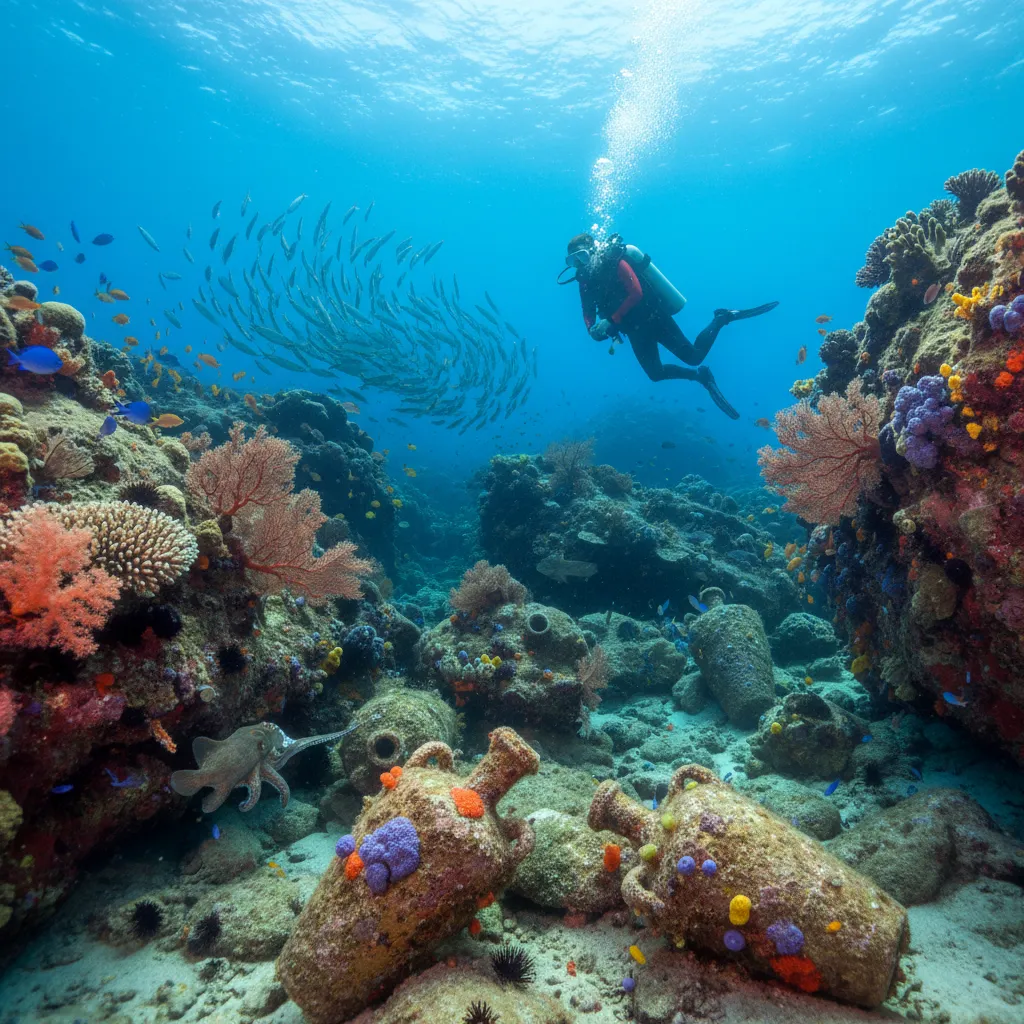
The Mediterranean climate ensures generally pleasant water temperatures, particularly from late spring through early autumn, making it comfortable for extended time underwater. Visibility is typically good, often exceeding 15-20 meters in many areas, which is crucial for building confidence and enjoying the underwater scenery. Marine life, while not always large pelagics, includes vibrant reef fish, octopuses, moray eels, and various invertebrates. The underwater topography frequently features interesting rock formations, small caves, and ancient amphorae, adding an archaeological dimension to your first dives.
While Italy does have areas with stronger currents or deeper wrecks for advanced divers, the abundance of beginner sites means you can easily avoid these. The country's dive centers are well-established and adhere to international safety standards, providing a secure environment for your initial underwater experiences. It's a destination where you can combine a rich cultural holiday with an introduction to scuba diving, making it a compelling choice for a first-time dive trip.
Best Beginner-Friendly Regions
Portofino & Liguria: This northwestern region offers excellent beginner opportunities, particularly within the Portofino Marine Protected Area. Sites like 'Christ of the Abyss' (often accessible from shallower depths for beginners) and various sheltered coves around Santa Margherita Ligure provide calm conditions and interesting rock formations with plenty of small fish. The underwater visibility is generally good, and the presence of protected areas ensures a healthy marine ecosystem for new divers to explore.
Ustica: Located off the coast of Sicily, Ustica is Italy's first marine protected area and is renowned for its clear waters and abundant marine life. While some sites are for advanced divers, many shallow reefs and caverns are perfect for beginners. Sites such as 'Secca della Colombara' offer gentle slopes and a chance to see groupers, barracudas, and colorful nudibranchs in a relaxed environment. The island's focus on marine conservation contributes to a rich and rewarding experience for new divers.
Naples & Campania: The Bay of Naples and its surrounding areas, including the islands of Ischia and Procida, offer a unique blend of natural beauty and underwater archaeology. Beginner-friendly sites can be found in sheltered bays, allowing for calm descents. The underwater volcanic activity has created interesting landscapes, and you might encounter ancient Roman ruins submerged close to shore. Dive centers around Sorrento and the Amalfi Coast provide access to gentle sites suitable for first-time divers, often with a mix of reef life and historical artifacts.
What Certification Do You Need?
To participate in guided fun dives in Italy, you will typically need an entry-level certification such as PADI Open Water Diver or an equivalent certification from another recognized agency like SSI, CMAS, or NAUI. This certification demonstrates that you have completed the necessary theoretical knowledge and practical skills to dive safely with a buddy. If you are not yet certified, you can enroll in an Open Water Diver course at almost any dive center in Italy. Alternatively, for a supervised introduction without full certification, you can opt for a 'Discover Scuba Diving' experience, which allows you to dive under direct instructor supervision in shallow water. Italian dive centers are plentiful and well-equipped to offer these courses, with instructors often speaking multiple languages.
Best Time to Visit
The best time for beginner diving in Italy is generally from June to September. During these months, the weather is consistently warm and sunny, and sea conditions are typically calm. Water temperatures range from approximately 20°C (68°F) in early June to a peak of 26°C (79°F) in August, gradually cooling to around 23°C (73°F) by September. Air temperatures during this period are usually between 25°C and 30°C (77°F-86°F), making surface intervals comfortable. While July and August are the busiest months for tourism, they offer the warmest waters and best visibility. For slightly fewer crowds and still excellent conditions, late May-early June and late September-early October are also good options, with water temperatures still comfortable, typically around 19-22°C (66-72°F).
What to Expect on Your First Dive
When you arrive at a dive center in Italy for your first dive, whether it's a Discover Scuba Diving experience or your first certified fun dive, the process is generally straightforward. You'll first complete any necessary paperwork, including medical questionnaires. A detailed briefing will follow, covering the dive site, safety procedures, communication signals, and what marine life you might encounter. Your instructor or guide will then assist you with selecting and assembling your equipment – wetsuit, BCD, regulator, mask, fins. Most beginner dives in Italy are conducted from a boat, as many of the best sites are off-shore. You'll gear up on the boat, and your instructor will conduct a final safety check.
Entry into the water is typically a controlled backward roll or a giant stride, depending on the boat. Once in the water, you'll perform a final equipment check and practice breathing from your regulator on the surface. The descent will be slow and controlled, with your instructor guiding you and ensuring you equalize your ears properly. Underwater, expect relatively calm conditions at beginner sites, with gentle currents or none at all. You'll likely swim along a reef or rocky bottom at a shallow depth (typically 5-12 meters for beginners), observing fish, octopuses, and other small marine creatures. The focus will be on maintaining buoyancy, controlled breathing, and enjoying the new environment. The dive will conclude with a slow ascent, a safety stop, and an easy exit back onto the boat.
Budget Guide
Diving in Italy offers a range of options suitable for various budgets. Here's an approximate guide:
- Discover Scuba Diving (DSD) Experience: Expect to pay around €80-€120 (approx. $85-$130 USD) for a DSD, which includes equipment rental and direct instructor supervision for one introductory dive.
- PADI Open Water Diver Course: A full Open Water certification course typically costs between €450-€600 (approx. $480-$640 USD). This usually includes all theoretical materials, pool sessions, four open water dives, equipment rental, and certification fees.
- Fun Dives (for certified divers): A single fun dive will cost approximately €40-€60 (approx. $43-$65 USD), often excluding equipment rental. A package of 2 dives on the same trip usually ranges from €75-€110 (approx. $80-$120 USD).
- Equipment Rental: If you're a certified diver and need to rent full equipment, expect an additional €20-€35 (approx. $21-$38 USD) per day.
- Accommodation: Budget accommodation (hostels, budget hotels) can start from €40-€70 (approx. $43-$75 USD) per night. Mid-range hotels are typically €90-€150 (approx. $96-$160 USD) per night, while high-end options can exceed €200 (approx. $215 USD). Prices vary significantly by region and season.
Essential Tips
- Book in Advance During Peak Season: Especially if you plan to dive in July or August, dive centers and popular beginner courses can fill up quickly. Book your dives and courses several weeks ahead.
- Check Local Marine Protected Area Rules: Many of Italy's best dive sites are within marine protected areas. Be aware of and respect local regulations regarding fishing, anchoring, and interacting with marine life.
- Consider Combining Diving with Culture: Italy offers a unique opportunity to blend diving with historical and cultural exploration. Plan your trip to include both underwater and land-based sightseeing.
- Learn Basic Italian Phrases: While many dive staff speak English, knowing a few basic Italian phrases can enhance your experience and interactions with locals.
- Be Prepared for Boat Dives: A significant number of Italy's dive sites, especially the more scenic ones, are accessed by boat. If you are prone to seasickness, consider preventative measures.
- Hydrate and Protect from Sun: The Mediterranean sun can be intense. Stay well-hydrated and use reef-safe sunscreen, especially during surface intervals.
- Inquire About Archaeological Dive Sites: Italy has a rich underwater archaeological heritage. Ask your dive center if they offer dives to submerged Roman ruins or ancient amphorae fields suitable for beginners.
At a Glance
| Destination | Difficulty | Best Months |
|---|---|---|
| Portofino & LiguriaItaly | Beginner | - |
| UsticaItaly | Beginner | - |
| Naples & CampaniaItaly | Beginner | Jun-Oct |
| SardiniaItaly | Beginner | - |
Portofino & Liguria
Italy
Difficulty
Beginner
Dive Centres
138
Practical Info
- dive Sites:
- 317
- dive Centres:
- 138
Ustica
Italy
Difficulty
Beginner
Water Temp
15-15C
Dive Centres
137
Practical Info
- dive Sites:
- 126
- dive Centres:
- 137
Naples & Campania
Italy
Difficulty
Beginner
Best Months
Jun-Oct
Water Temp
15-27C
Dive Centres
38
Practical Info
- dive Sites:
- 124
- dive Centres:
- 38
Frequently Asked Questions
Do I need a certification to dive in Italy?
Yes, to participate in guided fun dives in Italy, you generally need an entry-level certification like PADI Open Water Diver or an equivalent. If you're not certified, you can do a 'Discover Scuba Diving' experience under direct instructor supervision, or enroll in a full Open Water course at local dive centers.
How much does diving cost in Italy?
A 'Discover Scuba Diving' experience typically costs €80-€120. A full PADI Open Water course is around €450-€600. For certified divers, a single fun dive is approximately €40-€60, with equipment rental costing an additional €20-€35 per day. Prices vary by region and season.
What is the best time to dive in Italy?
The best time for beginner diving in Italy is from June to September. During these months, water temperatures range from 20°C to 26°C, and sea conditions are generally calm with good visibility. July and August offer the warmest waters but also the busiest tourist crowds.
Is Italy safe for beginner divers?
Yes, Italy is safe for beginner divers. There are 77 beginner-specific dive sites with calm conditions and good visibility. Dive centers are well-established, adhere to international safety standards, and offer experienced instructors to guide new divers, ensuring a secure learning environment.
What marine life will I see in Italy?
In Italy, beginner divers can expect to see a variety of Mediterranean marine life, including colorful reef fish, octopuses, moray eels, barracudas, groupers, and various invertebrates like nudibranchs. Some sites also feature interesting underwater topography and ancient archaeological artifacts.
Related Guides
Planning when to go?
See the month-by-month conditions guide