First Time Diving in Madagascar - A Beginner's Complete Guide
Everything you need to know before your first dive in Madagascar
Why Madagascar for Your First Dives?
Madagascar, an island nation known for its unique biodiversity, offers a distinct experience for first-time divers. While it features a mix of difficulty levels across its 39 dive sites, several regions are well-suited for beginners. The warm Indian Ocean waters, typically ranging from 25-30°C, provide comfortable conditions for extended dives, reducing the need for thick wetsuits and making the experience more enjoyable for new divers. Visibility is generally good, often exceeding 15-20 meters, allowing beginners to easily orient themselves and observe marine life without feeling overwhelmed.
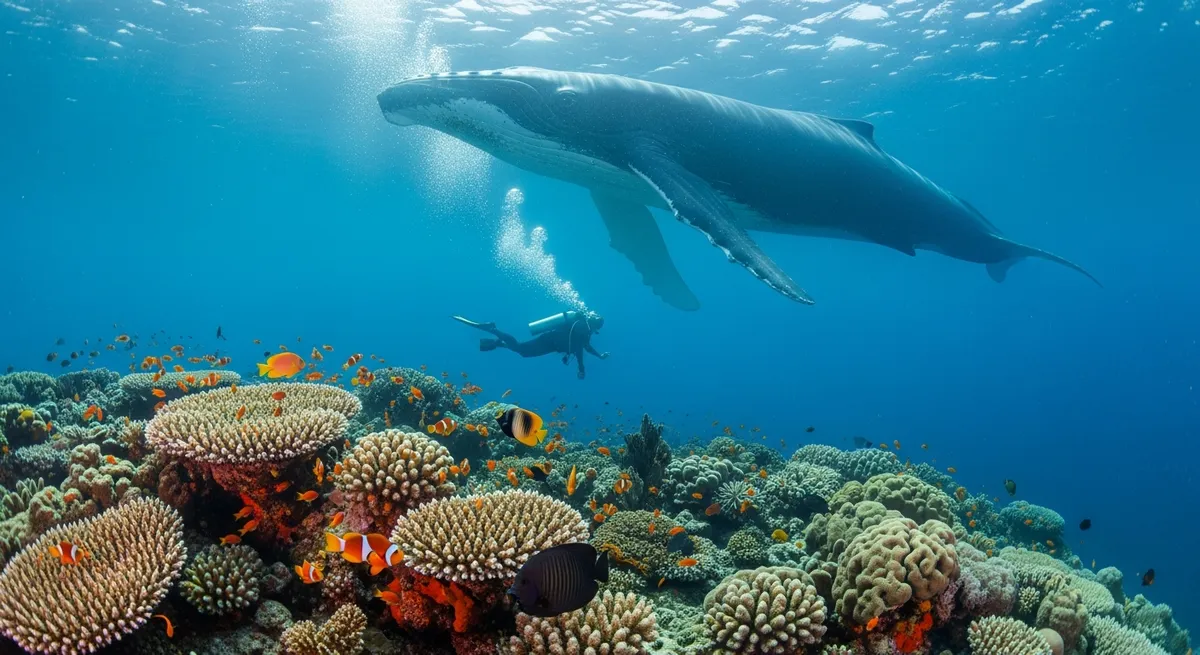
While some areas can present stronger currents, many beginner-friendly sites are characterized by calmer, sheltered bays and reefs. The marine environment is rich with colorful coral gardens, an abundance of reef fish, and opportunities to spot larger pelagics like turtles, rays, and even whale sharks during specific seasons. It's important to note that while accessible, Madagascar is not as developed for mass tourism as some other dive destinations, which means a more authentic and less crowded experience, but also requires a bit more planning and flexibility. The dive centers are typically smaller and offer personalized attention, which can be a significant advantage for those taking their first breaths underwater.
Best Beginner-Friendly Regions
Nosy Be
Nosy Be, located off the northwest coast, is arguably Madagascar's most established dive destination and offers excellent options for beginners. The waters around Nosy Be are generally calm, especially in protected bays, and many dive sites feature gentle slopes and shallow depths ideal for learning. You can expect to see vibrant coral reefs, various reef fish, and often turtles. Dive sites like the “Aquarium” or “Tany Kely Marine Reserve” are particularly good for first-timers, offering easy conditions and abundant marine life in shallower waters.
Nosy Iranja & Radama Islands
South of Nosy Be, the Nosy Iranja and Radama Islands region provides a more remote but equally rewarding experience for beginners. The diving here is characterized by healthy reefs and fewer divers, offering a tranquil introduction to the underwater world. While some sites might have moderate currents, many sheltered coves and shallow coral gardens are perfect for new divers. Expect good visibility and encounters with various reef fish, rays, and sometimes even dolphins near the surface. Dive centers in this area are typically liveaboards or small resorts, offering focused instruction.
Île Sainte-Marie
On Madagascar's east coast, Île Sainte-Marie (or Nosy Boraha) offers a different but equally appealing environment for beginner divers, especially during the whale season. While the Indian Ocean on this side can sometimes have more surge, many dive sites are sheltered and suitable for those new to diving. The main draw here, beyond healthy reefs and diverse fish life, is the opportunity to witness humpback whales from July to September. There are also several accessible wreck dives in shallower waters that beginners can explore under supervision, adding an exciting dimension to their first dives.
What Certification Do You Need?
For your first certified dives in Madagascar, a PADI Open Water Diver certification or an equivalent certification from agencies like SSI, CMAS, or NAUI is generally required. This certification allows you to dive independently with a buddy to a maximum depth of 18 meters. If you're completely new to diving and want to try it out, a 'Discover Scuba Diving' experience is available at most dive centers. This program allows you to dive under direct instructor supervision to a shallower depth (typically 12 meters) without needing a full certification. Local dive centers are readily available in key regions like Nosy Be and Île Sainte-Marie, offering courses and guided dives. PADI is the most widely recognized and offered certification in Madagascar.
Best Time to Visit
The best time to visit Madagascar for diving generally spans from April to December, offering optimal conditions across most regions. The peak season for diving, characterized by the warmest water temperatures and best visibility, is typically from September to December. During these months, water temperatures range from 27-30°C, and visibility can often exceed 25 meters.
The cooler, drier season from May to August offers slightly lower water temperatures (around 25-27°C) but still excellent visibility. This period also coincides with the humpback whale migration off the east coast (July-September), making Île Sainte-Marie particularly appealing for those interested in whale watching and diving. The rainy season, from January to March, can bring rougher seas and reduced visibility, making it less ideal for beginner divers, though diving is still possible in some sheltered areas.
What to Expect on Your First Dive
Your first dive experience in Madagascar will typically begin at a local dive center. You'll usually start with a check-in process, where you'll present your certification (if applicable) and fill out any necessary paperwork, including medical declarations. Following this, there will be a detailed dive briefing covering the dive site, expected marine life, safety procedures, and hand signals. You'll then be assigned and fitted with your rental gear – wetsuit, BCD, regulator, mask, fins – which you'll assemble with your instructor's help.
Most dives in Madagascar are conducted from a boat, ranging from traditional pirogues to larger speedboats. After a short ride to the dive site, you'll gear up on the boat. Entry into the water is usually a giant stride from the side of the boat, or a back roll depending on the vessel. Once in the water, your instructor will guide you through a final buoyancy check before descending. The underwater experience will involve exploring reefs at a calm pace, with your instructor always close by, pointing out marine life and ensuring your comfort and safety. Currents are typically mild at beginner sites, allowing for relaxed exploration before a slow ascent and return to the boat.
Budget Guide
Diving in Madagascar can be a moderately priced experience. A Discover Scuba Diving experience typically costs around 50,000-80,000 MGA (approximately $12-20 USD). A full PADI Open Water Diver course usually ranges from 1,800,000-2,500,000 MGA (approximately $450-625 USD), including equipment rental and certification fees. Fun dives for certified divers are generally priced at 150,000-250,000 MGA (approximately $38-63 USD) per dive, with discounts often available for multi-dive packages (e.g., 5-10 dives). Equipment rental, if not included in a package, can add an extra 20,000-40,000 MGA (approximately $5-10 USD) per day.
Accommodation costs vary widely. Budget guesthouses can be found for 80,000-150,000 MGA (approximately $20-38 USD) per night, while mid-range hotels typically cost 200,000-400,000 MGA (approximately $50-100 USD) per night. High-end resorts can exceed 500,000 MGA (approximately $125 USD) per night. It's advisable to factor in transportation costs to dive regions, which can sometimes be substantial due to Madagascar's infrastructure.
Essential Tips
- Book dive courses and packages in advance, especially during peak season (September-December), as dive centers can be smaller and have limited availability.
- Carry a dive computer if you own one, even for beginner dives, to monitor your depth and bottom time.
- Be prepared for varying levels of infrastructure; some dive centers might have basic facilities, especially in more remote regions.
- Respect local customs and traditions; dress modestly outside of dive resorts and be mindful of local etiquette.
- Consider bringing motion sickness medication if you are prone to seasickness, as boat rides to dive sites can sometimes be long.
- Hydrate well before and after dives, especially in the tropical climate.
- Ensure your travel insurance covers scuba diving activities to the depth you plan to dive.
At a Glance
| Destination | Difficulty | Best Months |
|---|---|---|
| Nosy BeMadagascar | Beginner | - |
| Nosy Iranja & Radama IslandsMadagascar | Beginner | Mar-Nov |
| Nosy MitsioMadagascar | Beginner | Feb-Dec |
| Île Sainte-MarieMadagascar | Beginner | - |
| Tuléar & the SouthMadagascar | Beginner | - |
Nosy Iranja & Radama Islands
Madagascar
Difficulty
Beginner
Best Months
Mar-Nov
Water Temp
27-31C
Dive Centres
14
Practical Info
- dive Sites:
- 13
- dive Centres:
- 14
Nosy Mitsio
Madagascar
Difficulty
Beginner
Best Months
Feb-Dec
Water Temp
27-30C
Dive Centres
2
Practical Info
- dive Sites:
- 5
- dive Centres:
- 2
Frequently Asked Questions
Do I need a certification to dive in Madagascar?
Yes, for independent diving, a PADI Open Water Diver certification or equivalent is required. However, you can try a 'Discover Scuba Diving' experience under instructor supervision without certification.
How much does diving cost in Madagascar?
A Discover Scuba Diving experience costs approximately $12-20 USD. A PADI Open Water course is about $450-625 USD. Fun dives for certified divers are around $38-63 USD per dive, with discounts for packages.
What is the best time to dive in Madagascar?
The best time for diving is from April to December. Peak season with warmest water (27-30°C) and best visibility (25m+) is September to December. July-September is also whale season on the east coast.
Is Madagascar safe for beginner divers?
Yes, Madagascar is suitable for beginner divers, especially in regions like Nosy Be. Dive centers offer personalized attention, and many sites feature calm, shallow waters with good visibility. Always choose reputable dive operators.
What marine life will I see in Madagascar?
You can expect to see colorful coral reefs, a variety of reef fish, sea turtles, rays, and sometimes dolphins. During specific seasons, humpback whales and whale sharks can also be spotted.
Related Guides
Planning when to go?
See the month-by-month conditions guide