First Time Diving in Malaysia - A Beginner's Complete Guide
Everything you need to know before your first dive in Malaysia
Why Malaysia for Your First Dives?
Malaysia offers an excellent entry point into the underwater world for new divers, boasting a significant number of beginner-friendly dive sites. With 74 out of its 410 registered dive sites categorized as suitable for novices, the country provides ample opportunities for learning and comfortable exploration. The warm tropical waters, typically ranging from 27°C to 30°C, eliminate the need for thick wetsuits, making the experience more comfortable and less intimidating for first-timers. This warmth also contributes to longer bottom times and a more relaxed feeling underwater.
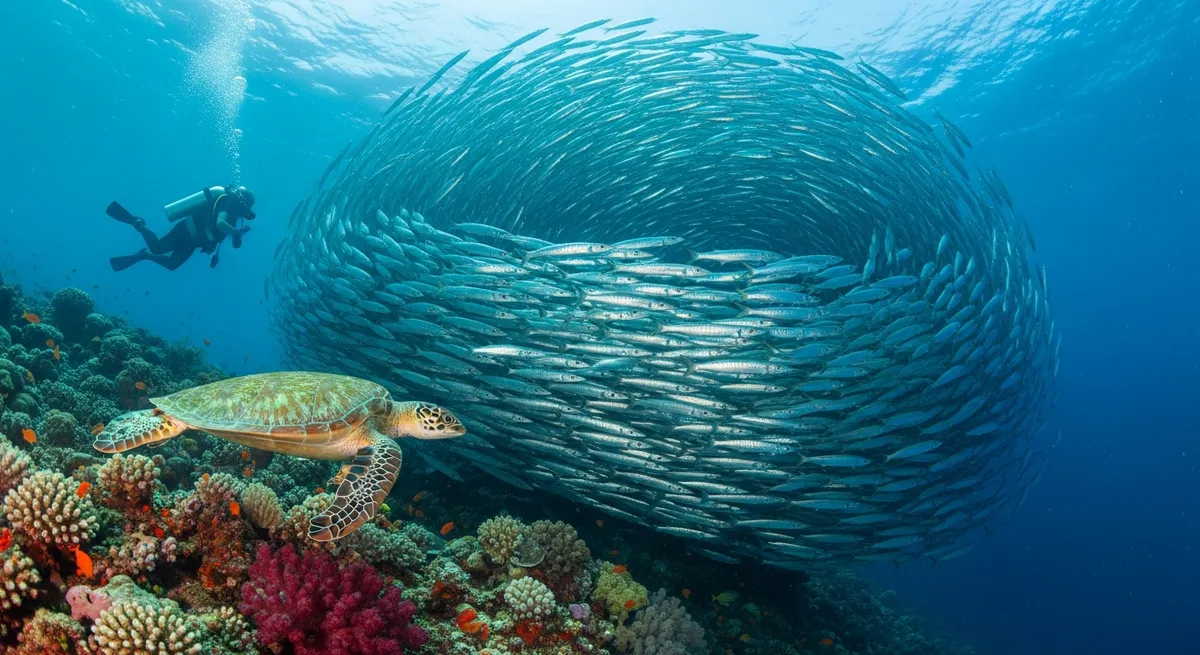
Visibility is consistently good across many regions, often exceeding 15 meters, which helps new divers maintain orientation and reduces anxiety. The gentle currents frequently found in beginner areas allow for easy movement and less physical exertion, ideal for those still mastering buoyancy and finning techniques. Marine life highlights include vibrant coral gardens, numerous species of reef fish like clownfish, parrotfish, and angelfish, as well as encounters with green sea turtles and hawksbill turtles, which are common in many areas. While some advanced sites offer challenges, the focus for beginners remains on calm, protected environments.
Best Beginner-Friendly Regions
Tioman Island: Located off the east coast of Peninsular Malaysia, Tioman is renowned for its calm, shallow reefs and excellent visibility, making it a prime location for beginner divers. Sites like Renggis Island and Coral Island (Pulau Tulai) feature gentle slopes, abundant hard and soft corals, and a diverse array of reef fish. These sites typically have minimal currents, allowing new divers to focus on their skills without added stress. Many dive schools here offer PADI Open Water courses in protected bays.
Perhentian Islands: Further north on the east coast, the Perhentian Islands are another popular spot for new divers. The islands offer numerous sheltered bays with shallow depths and good visibility. Popular beginner sites include Coral Garden and Shark Point (despite the name, it's a gentle reef where blacktip reef sharks are often seen from a distance, posing no threat). The relaxed atmosphere and numerous dive shops make it an ideal place to learn and gain confidence. The waters are typically calm during the diving season, facilitating easy entry and exit from boats.
Redang Island: Adjacent to the Perhentian Islands, Redang also caters well to beginners with its protected reefs and generally calm conditions. Sites like Teluk Dalam and Pasir Panjang offer expansive coral gardens and a chance to see various schooling fish, turtles, and even small reef sharks in a non-threatening environment. The dive sites are generally accessible via short boat rides, and the clear, warm water contributes to a comfortable learning experience. Redang is known for its well-preserved marine park status, ensuring healthy ecosystems for new divers to explore.
What Certification Do You Need?
To participate in guided fun dives beyond a Discover Scuba Diving experience, you will need a PADI Open Water Diver certification or an equivalent certification from another recognized agency such as SSI (Scuba Schools International), NAUI, or CMAS. The PADI Open Water Diver course is the most widely available and recognized certification globally. Malaysia has a robust network of PADI and SSI dive centers, particularly in popular dive regions like Tioman, Perhentian, and Redang. These centers are well-equipped to conduct courses in multiple languages and adhere to international safety standards. There isn't a particular local certification agency that dominates; international certifications are universally accepted and preferred.
Best Time to Visit
The best time to visit Malaysia for diving varies slightly between its two main coastlines. For the East Coast (Perhentian, Redang, Tioman, Mabul & Kapalai, Sipadan), the prime diving season runs from March to October. During these months, the weather is generally dry with calm seas and excellent visibility. Water temperatures consistently range from 28°C to 30°C. The monsoon season affects the East Coast from November to February, bringing heavy rainfall, rough seas, and many dive centers close during this period.
For the West Coast (e.g., Langkawi, although less prominent for beginners), diving is generally possible year-round, with the best conditions from November to May. Water temperatures on the West Coast are similar, around 27°C to 29°C. Overall, for a beginner's first dive experience, focusing on the East Coast during its peak season offers the most reliable and comfortable conditions.
What to Expect on Your First Dive
Your first dive experience, often a Discover Scuba Diving (DSD) program, will typically begin with a check-in at the dive center. You'll complete some paperwork, including a medical questionnaire. A certified instructor will then conduct a thorough briefing, explaining the basic principles of diving, hand signals, equipment functions, and safety procedures. You'll be fitted with appropriate gear-a wetsuit, BCD (buoyancy control device), mask, fins, and regulator. Most beginner dives in Malaysia are conducted from boats, offering access to calm, shallow reefs. You'll typically perform a controlled entry into the water, often a giant stride or a seated back roll.
Once in the water, your instructor will help you get comfortable breathing through the regulator on the surface. You'll practice a few basic skills in shallow water, like mask clearing and regulator recovery, before slowly descending under the direct supervision of your instructor. The underwater experience will be guided and slow-paced, allowing you to focus on breathing and enjoying the marine environment. You'll typically be finning gently over coral reefs, observing fish and other marine life. Currents are usually minimal in beginner dive sites. The dive will last around 30-45 minutes, depending on air consumption, before a safe ascent and return to the boat.
Budget Guide
Diving in Malaysia offers good value. A Discover Scuba Diving (DSD) experience typically costs between MYR 250-400 (approximately USD 55-90), including equipment rental and instructor supervision. A PADI Open Water Diver course usually ranges from MYR 1200-1800 (approximately USD 260-390), covering tuition, materials, certification fees, and gear rental for the duration of the course. Fun dives for certified divers are generally MYR 100-150 (USD 22-33) per dive, with discounts for package deals (e.g., 6-10 dives). Equipment rental for fun dives, if not included in a package, is usually MYR 30-50 (USD 7-11) per day for a full set.
Accommodation costs vary widely. Budget guesthouses on islands like Perhentian or Tioman can be found for MYR 80-150 (USD 17-33) per night, while mid-range resorts might cost MYR 200-400 (USD 44-90) per night. Food is generally affordable, with local meals costing MYR 10-30 (USD 2-7). Transportation to dive regions, such as flights to Kuala Lumpur and then onward domestic flights or bus/ferry combinations, will be an additional cost.
Essential Tips
- Book in Advance for Peak Season: Especially if diving on the East Coast between June and August, accommodation and dive courses can fill up quickly. Book at least 2-3 months ahead.
- Check Monsoon Schedules: The East Coast dive season closes from November to February due to monsoon. Do not plan diving trips there during these months.
- Hydrate Regularly: The tropical climate and physical exertion of diving require good hydration. Drink plenty of water, especially between dives.
- Sun Protection: The equatorial sun is strong. Use reef-safe sunscreen, wear a hat, and consider a rash guard for surface intervals to prevent sunburn.
- Respect Marine Life: Do not touch, chase, or disturb marine animals or corals. Maintain a respectful distance and practice good buoyancy control.
- Medical Check-up: Review the PADI medical questionnaire beforehand. If you answer 'yes' to any question, consult a doctor before traveling to get a medical clearance for diving.
- Cash on Islands: While some larger establishments accept cards, many smaller guesthouses, restaurants, and local shops on the islands operate on a cash-only basis. Bring sufficient Malaysian Ringgit (MYR).
At a Glance
| Destination | Difficulty | Best Months |
|---|---|---|
| Perhentian IslandsMalaysia | Beginner | Jan-Apr, Aug-Dec |
| SipadanMalaysia | Beginner | Jan-Dec |
| Tioman IslandMalaysia | Beginner | Jan-Dec |
| Mabul & KapalaiMalaysia | Beginner | Jan-Dec |
| Redang IslandMalaysia | Beginner | Jan-Dec |
Perhentian Islands
Malaysia
Difficulty
Beginner
Best Months
Jan-Apr, Aug-Dec
Water Temp
28-31C
Dive Centres
30
Practical Info
- dive Sites:
- 106
- dive Centres:
- 30
Sipadan
Malaysia
Difficulty
Beginner
Best Months
Jan-Dec
Water Temp
28-31C
Dive Centres
21
Practical Info
- dive Sites:
- 98
- dive Centres:
- 21
Tioman Island
Malaysia
Difficulty
Beginner
Best Months
Jan-Dec
Water Temp
28-31C
Dive Centres
36
Practical Info
- dive Sites:
- 98
- dive Centres:
- 36
Mabul & Kapalai
Malaysia
Difficulty
Beginner
Best Months
Jan-Dec
Water Temp
29-31C
Dive Centres
106
Practical Info
- dive Sites:
- 70
- dive Centres:
- 106
Redang Island
Malaysia
Difficulty
Beginner
Best Months
Jan-Dec
Water Temp
28-31C
Dive Centres
4
Practical Info
- dive Sites:
- 38
- dive Centres:
- 4
Frequently Asked Questions
Do I need a certification to dive in Malaysia?
For your very first experience, you can do a Discover Scuba Diving (DSD) program without certification. However, to go on guided fun dives after that, you will need a PADI Open Water Diver certification or an equivalent from another recognized agency like SSI or NAUI.
How much does diving cost in Malaysia?
A Discover Scuba Diving experience typically costs MYR 250-400 (USD 55-90). A PADI Open Water course ranges from MYR 1200-1800 (USD 260-390). Fun dives for certified divers are usually MYR 100-150 (USD 22-33) per dive, with equipment rental sometimes an additional MYR 30-50 (USD 7-11) per day.
What is the best time to dive in Malaysia?
For the popular East Coast regions (Perhentian, Redang, Tioman), the best time is from March to October, offering dry weather, calm seas, and excellent visibility. The monsoon season from November to February makes diving difficult or impossible in these areas.
Is Malaysia safe for beginner divers?
Yes, Malaysia is very safe for beginner divers. Its numerous beginner-friendly sites feature warm, calm, and clear waters with gentle currents. Reputable dive centers adhere to international safety standards, and instructors are well-trained to guide new divers.
What marine life will I see in Malaysia?
Beginner divers in Malaysia can expect to see vibrant coral gardens, a variety of reef fish such as clownfish, parrotfish, and angelfish, as well as green sea turtles and hawksbill turtles. Small reef sharks are also occasionally sighted from a distance in some areas.
Related Guides
Planning when to go?
See the month-by-month conditions guide