First Time Diving in Malta - A Beginner's Complete Guide
Everything you need to know before your first dive in Malta
Why Malta for Your First Dives?
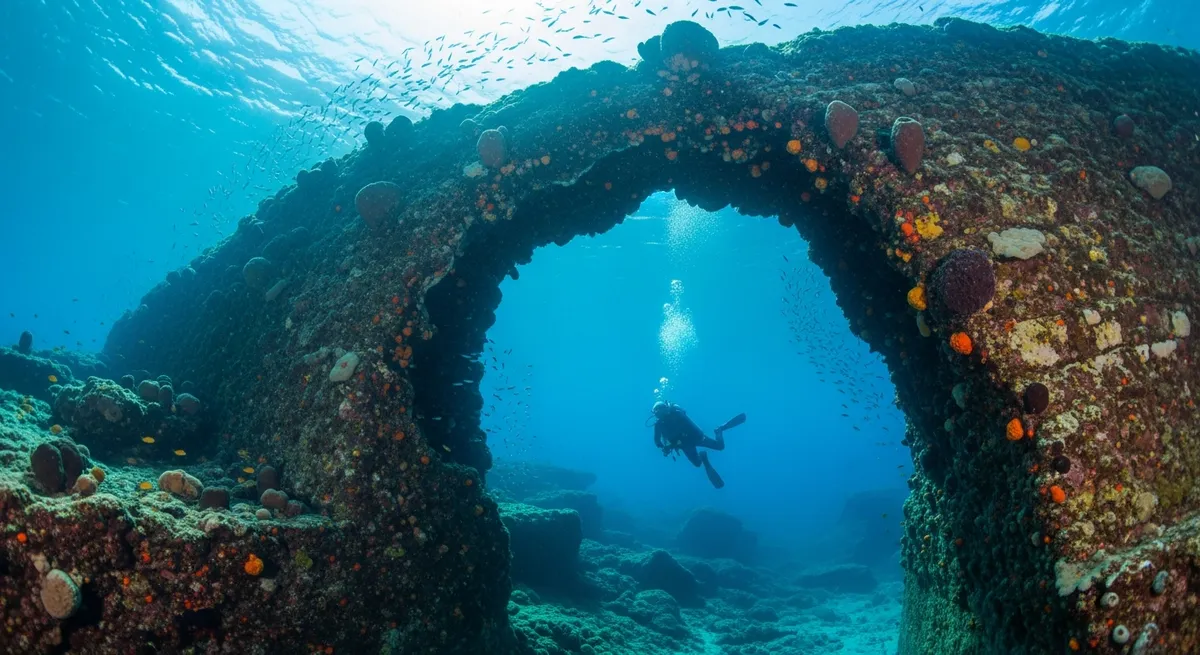
Malta, with its 176 dive sites spread across four distinct regions, offers a compelling environment for new divers. The Mediterranean Sea surrounding the islands provides generally calm conditions, especially during the peak diving season, making it less intimidating for those just starting out. Water temperatures are comfortable for much of the year, reducing the need for thick wetsuits and allowing for more enjoyable longer dives. Visibility is consistently good, often exceeding 20 meters, which helps new divers maintain orientation and appreciate the underwater scenery without feeling overwhelmed.
While Malta is known for its impressive wreck diving, many of these sites are suitable for beginners, often sitting at shallower depths or offering easy access. The island's topography, characterized by caves, caverns, and swim-throughs, adds an exciting element to dives without necessarily requiring advanced skills. Marine life, though not as prolific as tropical reefs, includes octopuses, groupers, barracudas, moray eels, and a variety of smaller reef fish. This diversity provides engaging encounters for beginners without being overly challenging to spot or identify. It's an excellent destination to build confidence and develop foundational diving skills in a supportive environment.
Best Beginner-Friendly Regions
Malta Island
Malta Island offers numerous easily accessible shore dives perfect for beginners. Sites like Ghar Lapsi, located on the southwest coast, provide a sheltered bay with shallow entry points and interesting rock formations to explore. It's a great spot for practicing buoyancy and equalization in calm conditions. Another excellent option is Anchor Bay, near Popeye Village, which features a sandy bottom leading to small reefs and is often used for training dives due to its protected nature and gentle slopes.
Gozo
Gozo, Malta's sister island, is renowned for its relaxed pace and diverse dive sites, many of which are suitable for novices. The famous Inland Sea and Blue Hole at Dwejra offer a unique experience, with the Inland Sea providing a protected lagoon for entry before venturing through a narrow tunnel to the open sea. While the Blue Hole itself requires good buoyancy, the initial areas are manageable. Xlendi Bay also offers shallow, sheltered dives with easy shore access, ideal for confidence building and observing marine life in a calm setting.
Comino
Comino, the smallest of the three main islands, features some of Malta's most picturesque dive sites, many of which can be enjoyed by beginners. The Santa Marija Caves are a popular choice, offering shallow cave penetrations that are well-lit and easily navigable. The crystal-clear waters here provide excellent visibility, making it less daunting for new divers exploring overhead environments for the first time. The Cominotto Reef also has shallower sections with gentle currents, allowing beginners to experience boat diving in a comfortable setting.
What Certification Do You Need?
To fully explore Malta's underwater world, you will need an entry-level scuba diving certification such as PADI Open Water Diver or its equivalent from another recognized agency like SSI, CMAS, or BSAC. This certification qualifies you to dive to a maximum depth of 18 meters with a buddy. If you're completely new to diving and unsure, many local dive centers offer Discover Scuba Diving experiences, which allow you to try diving under direct instructor supervision in shallow water without needing a full certification. Malta has a high density of PADI and SSI dive centers, making it easy to find courses and guided dives regardless of your chosen agency. While PADI is widely popular, SSI is also very prevalent, and both are equally accepted across the islands.
Best Time to Visit
The best time to visit Malta for diving is from May to October. During these months, the weather is consistently warm and sunny, and sea conditions are generally calm. Water temperatures range from a comfortable 20°C (68°F) in May/June to peak at 27°C (81°F) in August, gradually cooling to 24°C (75°F) in October. Air temperatures average between 25°C and 30°C (77°F-86°F) in summer. July and August are the warmest and busiest months, both above and below the water. For fewer crowds and still excellent conditions, consider visiting in May, June, September, or October. While diving is possible year-round, winter months (November-April) bring cooler water temperatures (down to 15°C/59°F), stronger winds, and rougher seas, making them less ideal for beginners.
What to Expect on Your First Dive
Your first dive in Malta, whether a Discover Scuba Dive or your initial certified dive, will typically start at a local dive center. You'll check in, complete any necessary paperwork, and then receive a comprehensive briefing from your instructor or guide. This briefing will cover the dive site, safety procedures, hand signals, and what marine life you might encounter. Following the briefing, you'll be fitted with your rental gear – wetsuit, BCD, regulator, mask, and fins. Many beginner dives in Malta are shore entries due to the easy access and sheltered bays. You'll gear up at the site, perform a buddy check, and then make a calm, controlled entry into the water, often a giant stride or a simple walk-in from a sandy beach or rocky shelf. Once in the water, you'll practice breathing on your regulator at the surface before descending slowly with your instructor, focusing on equalization and buoyancy. The underwater experience will be guided and relaxed, allowing you to focus on breathing and enjoying the environment, often exploring shallow reefs, rock formations, or sandy patches with small marine inhabitants. Currents are generally mild in beginner-friendly areas, ensuring a comfortable experience.
Budget Guide
Diving in Malta offers good value. A Discover Scuba Diving experience typically costs between 70-90 EUR (approx. 75-100 USD). A full PADI Open Water Diver course, including all materials, equipment rental, and certification, generally ranges from 400-550 EUR (approx. 430-600 USD). For certified divers, a single fun dive with full equipment rental costs around 45-60 EUR (approx. 50-65 USD), with packages for multiple dives offering better rates (e.g., 10 dives for 350-450 EUR). Equipment rental for individual items is usually 5-10 EUR per piece per day. Accommodation varies widely: budget hostels start from 20-30 EUR per night, mid-range hotels from 70-120 EUR, and higher-end resorts can be 150 EUR+. Food costs are reasonable, with a meal at a casual restaurant costing 15-25 EUR. Transportation via public bus is inexpensive, or car rental is an option for more flexibility, starting from 25-40 EUR per day.
Essential Tips
- Book your dive center and courses in advance, especially if traveling during peak season (July-August) to secure your spot.
- Consider staying on Gozo for a more relaxed diving experience and easier access to some excellent beginner sites.
- Always carry a small amount of local currency (Euros) for small purchases or tips, though card payments are widely accepted.
- Be aware of the sun- Malta has strong Mediterranean sun, so use high-SPF sunscreen, wear a hat, and stay hydrated between dives.
- Malta's dive sites are primarily shore-based or easily accessible by short boat rides, making logistics straightforward.
- Familiarize yourself with basic Maltese phrases like 'Grazzi' (Thank you) – it's always appreciated by locals.
- If prone to seasickness, choose shore dives or larger boat trips, as boat rides to Comino can sometimes be choppy.
At a Glance
| Destination | Difficulty | Best Months |
|---|---|---|
| CominoMalta | Beginner | Jun-Nov |
| GozoMalta | Beginner | Jun-Nov |
| Malta IslandMalta | Beginner | - |
| Valletta HarbourMalta | Beginner | - |
Comino
Malta
Difficulty
Beginner
Best Months
Jun-Nov
Water Temp
15-28C
Dive Centres
46
Practical Info
- dive Sites:
- 76
- dive Centres:
- 46
Gozo
Malta
Difficulty
Beginner
Best Months
Jun-Nov
Water Temp
15-28C
Dive Centres
15
Practical Info
- dive Sites:
- 69
- dive Centres:
- 15
Malta Island
Malta
Difficulty
Beginner
Water Temp
17-17C
Dive Centres
15
Practical Info
- dive Sites:
- 31
- dive Centres:
- 15
Frequently Asked Questions
Do I need a certification to dive in Malta?
Yes, to dive independently in Malta, you need an entry-level certification like PADI Open Water Diver or equivalent. However, you can try a Discover Scuba Diving experience under direct instructor supervision without prior certification.
How much does diving cost in Malta?
A Discover Scuba Dive typically costs 70-90 EUR. A full PADI Open Water course ranges from 400-550 EUR. For certified divers, a single fun dive with equipment rental is about 45-60 EUR, with multi-dive packages offering better value.
What is the best time to dive in Malta?
The best time to dive in Malta is from May to October. Water temperatures range from 20-27°C (68-81°F) and conditions are generally calm with excellent visibility. May, June, September, and October offer good conditions with fewer crowds.
Is Malta safe for beginner divers?
Yes, Malta is very safe for beginner divers. It offers generally calm sea conditions, good visibility, and numerous sheltered dive sites with easy access. Dive centers are professional and adhere to high safety standards, making it an ideal place to learn.
What marine life will I see in Malta?
While not a tropical reef, Malta's waters are home to diverse Mediterranean marine life. You can expect to see octopuses, groupers, barracudas, moray eels, various smaller reef fish, sea bream, and occasionally stingrays or tuna.
Related Guides
Planning when to go?
See the month-by-month conditions guide