First Time Diving in Marshall Islands - A Beginner's Complete Guide
Everything you need to know before your first dive in Marshall Islands
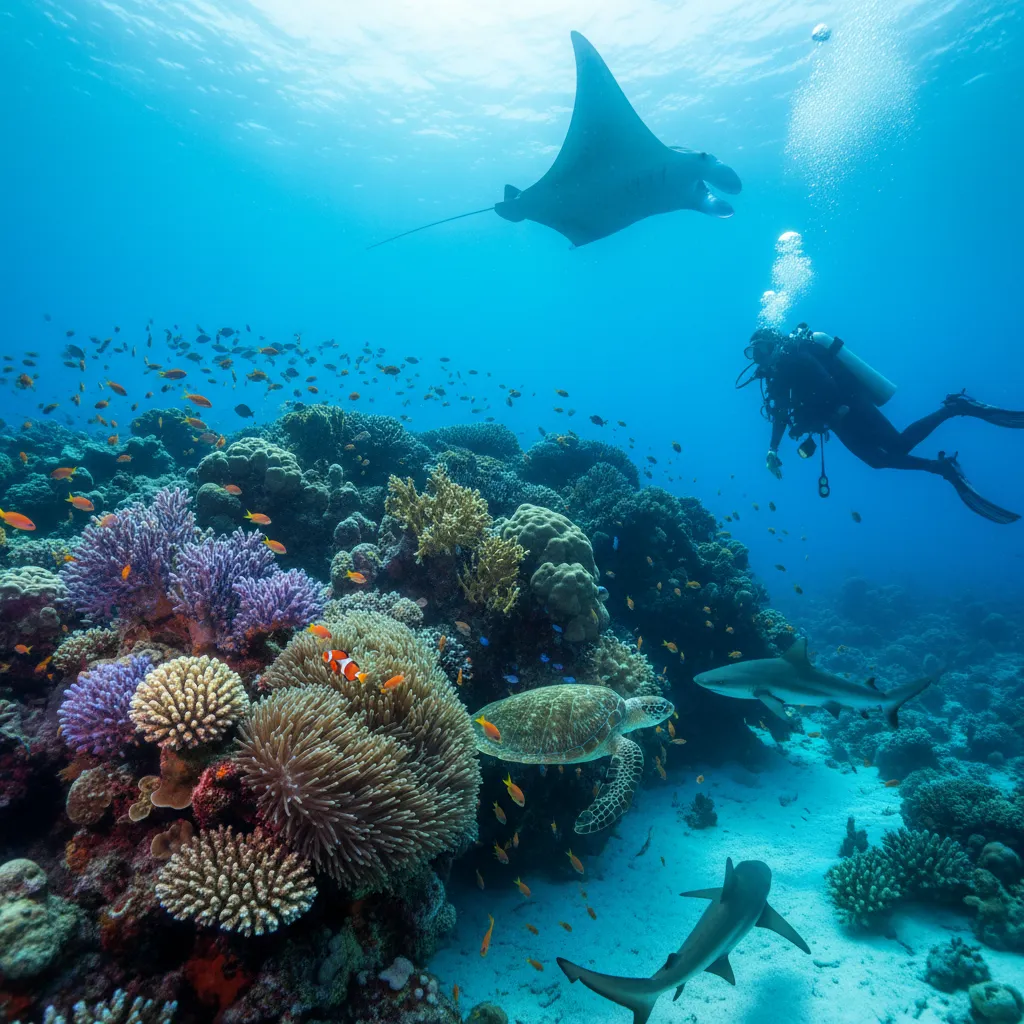
Why Marshall Islands for Your First Dives?
The Marshall Islands offers a unique and historically significant diving experience, but it's important to set realistic expectations for beginners. While the water is consistently warm, averaging 27-29°C (81-84°F) year-round, and visibility can often exceed 30 meters (100 feet), the majority of the 11 listed dive sites are geared towards experienced divers, with a significant number rated expert or advanced. This means that while the environment itself is welcoming, access to truly beginner-friendly sites is limited to specific areas.
For those new to diving, the Marshall Islands presents a beautiful underwater landscape with vibrant coral gardens and a diverse array of reef fish. You can expect to encounter various species of snapper, parrotfish, and damselfish, alongside occasional reef sharks and rays. However, the country is primarily renowned for its advanced wreck diving in Bikini Atoll, which is strictly for highly certified and experienced divers. Therefore, if you are a beginner, your focus will be on the few accessible shallow reef dives, primarily around Majuro Atoll, which still offer a rewarding introduction to tropical diving.
Best Beginner-Friendly Regions
For first-time divers in the Marshall Islands, Majuro Atoll is your primary and most accessible option. While the country has only one designated beginner site out of 11, this site is found within Majuro. The inner lagoon areas around Majuro offer calmer conditions and shallower depths, ideal for gaining confidence and practicing basic skills. You can expect to explore vibrant coral formations and encounter a variety of smaller reef fish in these protected waters.
Bikini Atoll, while historically significant, is not suitable for beginner divers. Its sites are predominantly deep wreck dives with strong currents and complex navigation, demanding advanced certifications and significant experience. There are no beginner-rated sites in Bikini Atoll. Therefore, for your initial dives, focus entirely on the opportunities provided by the dive operators based in Majuro.
What Certification Do You Need?
To participate in guided fun dives in the Marshall Islands, you will typically need a PADI Open Water Diver certification or an equivalent certification from a recognized agency such as SSI, NAUI, or CMAS. This certification demonstrates that you have completed the necessary training to dive safely to a maximum depth of 18 meters (60 feet) with a buddy and under the supervision of a dive professional.
If you are not yet certified, you can enroll in a Discover Scuba Diving (DSD) experience. This allows you to try diving under direct instructor supervision in shallow water, without requiring full certification. Should you wish to become certified, there are local dive centers in Majuro that can provide PADI Open Water Diver courses. It is advisable to contact these centers in advance to confirm availability and schedule, as options might be more limited compared to larger dive destinations.
Best Time to Visit
The Marshall Islands experiences a tropical climate with warm weather and water temperatures year-round, making it a viable diving destination throughout the year. However, the best time to visit for optimal diving conditions is generally from October to April. During these months, the islands typically experience drier weather with less rainfall and calmer seas, which can contribute to better visibility and more comfortable boat rides.
The average air temperature ranges from 27-30°C (81-86°F), and the water temperature consistently stays between 27-29°C (81-84°F). While the wet season, from May to September, brings more rain and a higher chance of tropical storms, diving is still possible. However, conditions might be less predictable with potential for choppier waters and reduced visibility. Always check local weather forecasts closer to your travel dates.
What to Expect on Your First Dive
Upon arriving at the dive center in Majuro, you'll typically begin with a check-in process, where you present your certification card (if applicable) and fill out any necessary waivers. You will then be provided with rental gear, including a BCD, regulator, mask, fins, and wetsuit (though a 3mm shorty or rash guard might suffice given the warm water). Ensure all gear fits comfortably before heading out.
A comprehensive dive briefing will follow, covering the dive site's layout, expected depths, marine life to look for, and emergency procedures. Most dives in Majuro are conducted from a boat. After gearing up on the boat, your instructor or dive guide will lead you through a controlled entry, typically a giant stride or back roll, into the water. Your first underwater experience will focus on shallow reef areas, allowing you to get accustomed to breathing underwater, managing buoyancy, and observing the local marine life in a calm environment. Expect a relaxed pace, with an emphasis on enjoyment and safety.
Budget Guide
Diving in the Marshall Islands can be a moderate to high-cost activity due to the remote location and limited infrastructure. A Discover Scuba Diving (DSD) experience typically costs around $100-150 USD. If you opt for an Open Water Diver certification course, expect to pay approximately $500-700 USD, which usually includes theory, confined water, and open water dives, plus equipment rental.
For certified divers, a single fun dive usually ranges from $60-80 USD, while a two-tank dive package might cost $100-150 USD. Equipment rental, if not included in a package, can add an extra $20-40 USD per day. Accommodation in Majuro varies widely: budget guesthouses can be found for $50-100 USD per night, mid-range hotels for $150-250 USD, and more upscale options potentially exceeding $300 USD. All prices are approximate and subject to change; it's always best to confirm directly with operators.
Essential Tips
- Book in Advance: Dive operators and accommodations in Majuro are limited. Book your dives and lodging well in advance, especially if traveling during peak season (October-April).
- Hydrate Well: The tropical climate and sun can lead to dehydration. Drink plenty of water before and after your dives.
- Bring Reef-Safe Sunscreen: Protect your skin from the strong equatorial sun. Use reef-safe sunscreen to help preserve the delicate marine ecosystem.
- Be Mindful of Currents: While beginner sites are chosen for calm conditions, always listen carefully to your dive guide regarding potential currents, even in lagoons.
- Respect Local Customs: The Marshall Islands has a strong cultural heritage. Be respectful of local customs and traditions, particularly when interacting with residents.
- Travel Insurance: Given the remote location, ensure your travel insurance covers scuba diving and potential medical evacuations.
- Local Currency: The official currency is the US Dollar (USD). While credit cards are accepted in some places, having cash for smaller purchases and local vendors is advisable.
At a Glance
| Destination | Difficulty | Best Months |
|---|---|---|
| Bikini AtollMarshall Islands | Beginner | Jan-Dec |
| Majuro AtollMarshall Islands | Beginner | Jan-Dec |
Bikini Atoll
Marshall Islands
Difficulty
Beginner
Best Months
Jan-Dec
Water Temp
28-28C
Practical Info
- dive Sites:
- 6
Majuro Atoll
Marshall Islands
Difficulty
Beginner
Best Months
Jan-Dec
Water Temp
28-28C
Dive Centres
1
Practical Info
- dive Sites:
- 5
- dive Centres:
- 1
Frequently Asked Questions
Do I need a certification to dive in Marshall Islands?
Yes, for guided fun dives, you'll need a PADI Open Water Diver certification or equivalent. If you're new to diving, you can try a Discover Scuba Diving experience under direct instructor supervision.
How much does diving cost in Marshall Islands?
A Discover Scuba Dive typically costs $100-150 USD. An Open Water certification course is around $500-700 USD. Single fun dives for certified divers range from $60-80 USD, with two-tank dives at $100-150 USD. Equipment rental is extra.
What is the best time to dive in Marshall Islands?
The best time for diving in the Marshall Islands is from October to April, offering drier weather, calmer seas, and excellent visibility. Water temperatures are consistently 27-29°C (81-84°F) year-round.
Is Marshall Islands safe for beginner divers?
While the Marshall Islands has many advanced dive sites, Majuro Atoll offers specific beginner-friendly areas with calmer conditions and shallower depths, making it suitable for first-time divers under professional guidance.
What marine life will I see in Marshall Islands?
In the beginner-friendly areas of Majuro Atoll, you can expect to see vibrant coral gardens, various reef fish like snapper, parrotfish, and damselfish, and occasionally reef sharks and rays.
Related Guides
Planning when to go?
See the month-by-month conditions guide