First Time Diving in Martinique - A Beginner's Complete Guide
Everything you need to know before your first dive in Martinique
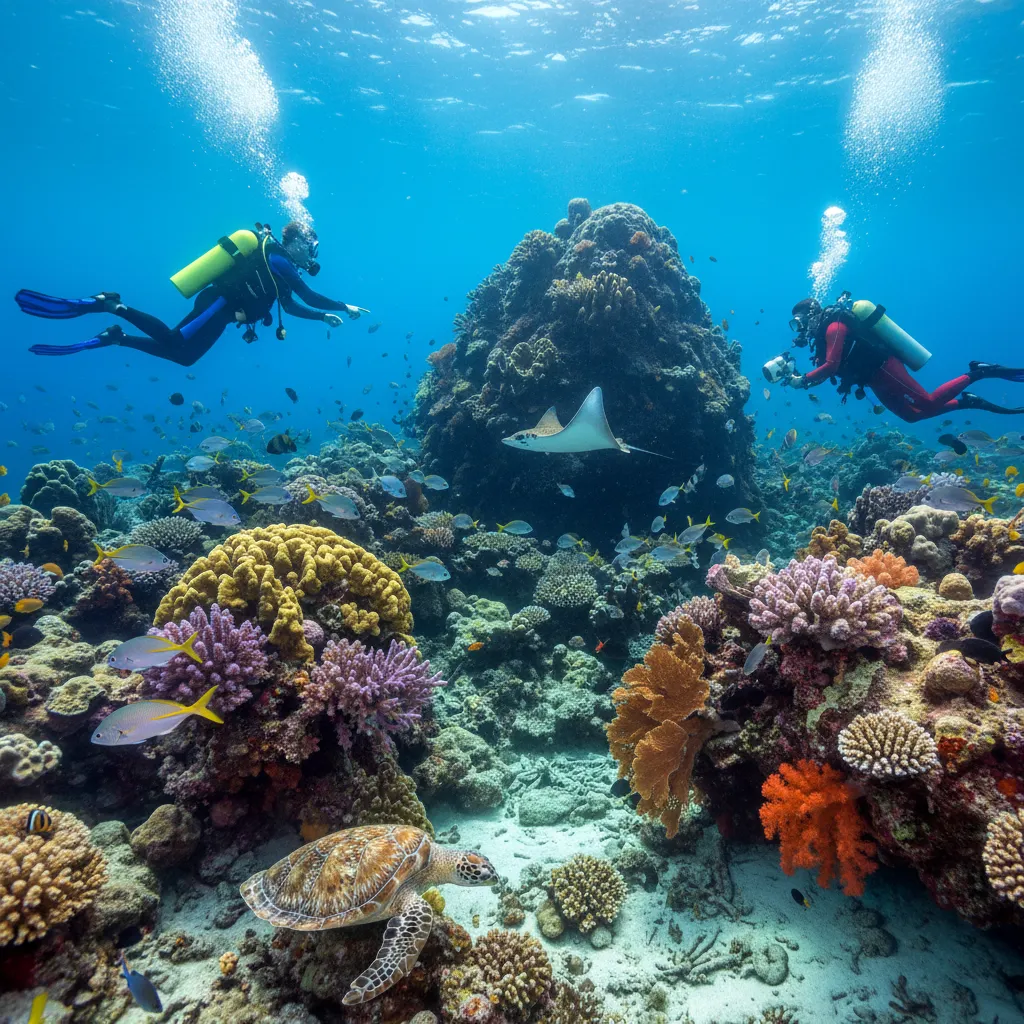
Why Martinique for Your First Dives?
Martinique, with its 26 dive sites spread across two main regions, offers a unique entry point into Caribbean diving. While it presents a mix of difficulties, including some advanced sites, it also provides suitable conditions for beginners. The water temperature consistently hovers around 26-29°C (79-84°F) year-round, making for comfortable dives without the need for thick wetsuits. Visibility often exceeds 20 meters (65 feet), allowing new divers to easily orient themselves and enjoy the underwater scenery.
For beginners, Martinique's appeal lies in its volcanic topography, which has created interesting reef formations and sheltered bays. While not exclusively a beginner destination – only 1 out of 4 listed difficulty levels are beginner – the presence of dedicated beginner sites means new divers can find safe and engaging experiences. Marine life highlights include various reef fish, moray eels, and occasional sightings of turtles and rays. The underwater environment is generally calm in designated beginner areas, allowing for a relaxed introduction to buoyancy and underwater exploration.
Best Beginner-Friendly Regions
While Martinique has a diverse range of diving, the Saint-Pierre region offers some of the most accessible and interesting sites for those new to diving. The volcanic history of this area has created unique underwater landscapes, including the famous wrecks of Saint-Pierre, which are often shallow enough for introductory dives or can be explored from a distance. The calm waters in many of the bays here provide excellent conditions for skill practice and leisurely exploration, with a good chance to see various reef fish and corals.
The Diamond Rock region, while known for its more challenging sites, also features sheltered areas that can be suitable for beginners, particularly for those on a Discover Scuba Diving experience or completing their Open Water certification. These specific beginner sites benefit from the diverse marine ecosystem around Diamond Rock but are chosen for their shallower depths and reduced currents. Always consult with a local dive center to ensure a site is appropriate for your skill level.
What Certification Do You Need?
To participate in guided fun dives in Martinique, you will typically need a PADI Open Water Diver certification or an equivalent certification from another recognized agency, such as SSI, CMAS, or NAUI. This certification demonstrates that you have completed basic dive training and are competent to dive independently with a buddy. If you are not yet certified, many local dive centers in Martinique offer Discover Scuba Diving programs, which allow you to experience diving under direct supervision in shallow water without needing a full certification. They also offer full PADI Open Water courses, which usually take 3-4 days to complete.
Martinique's dive centers primarily cater to international standards, so your PADI or equivalent certification will be readily accepted. There isn't one particular certification agency that dominates or is exclusively popular; most centers are multilingual and can accommodate divers from various backgrounds.
Best Time to Visit
The best time to visit Martinique for diving is during the dry season, which runs from December to May. During these months, the weather is generally sunny with less rainfall and lower humidity, making for more comfortable surface intervals and boat rides. Water temperatures remain consistently warm, typically between 26-29°C (79-84°F) year-round, so a 3mm shorty wetsuit or even just a rash guard might suffice for most divers. Visibility is also at its best during the dry season, often exceeding 20-30 meters (65-98 feet).
The wetter season, from June to November, can bring more rain and a higher chance of tropical storms, particularly from August to October. While diving is still possible, conditions might be more variable, and some dive operations may temporarily close during peak storm periods. However, water temperatures remain high, and marine life is still abundant.
What to Expect on Your First Dive
Upon arrival at a dive center in Martinique, you'll first check in, complete any necessary paperwork, and present your certification card if you have one. For Discover Scuba Diving participants, a brief medical questionnaire will be required. Following check-in, you'll receive a detailed briefing from your instructor or dive guide. This will cover the dive plan, safety procedures, hand signals, and specific information about the dive site, including expected marine life and any potential currents.
After the briefing, you'll be fitted with your rental gear, including a wetsuit (if desired), BCD, regulator, mask, fins, and weights. Most dives in Martinique are conducted from a boat. You'll board the boat, where your gear will be assembled and double-checked. Entry into the water is typically a giant stride from the side of the boat. Once in the water, you'll complete a final safety check with your buddy or instructor before descending. The underwater experience in beginner-friendly areas is generally characterized by calm conditions and gentle currents, allowing you to focus on buoyancy and enjoying the vibrant marine environment. The typical dive style is relaxed, with an emphasis on observing marine life rather than covering long distances.
Budget Guide
Diving in Martinique offers a range of price points. A Discover Scuba Diving experience, which includes equipment rental and direct instructor supervision, typically costs around €80-€100 (approx. $85-$110 USD). For those looking to get certified, a PADI Open Water Diver course, including all materials, equipment, and dives, usually ranges from €450-€550 (approx. $480-$590 USD).
Fun dives for certified divers are generally priced per dive. A single boat dive often costs €45-€55 (approx. $48-$60 USD), with discounts available for packages of multiple dives (e.g., 6-dive package for €240-€280, or $255-$300 USD). Equipment rental, if not included in a package, can add an additional €15-€25 (approx. $16-$27 USD) per day. Accommodation ranges widely, from budget guesthouses starting at €50-€80 (approx. $53-$85 USD) per night to mid-range hotels at €100-€200 (approx. $110-$215 USD) per night, and luxury resorts upwards of €250 (approx. $265 USD).
Essential Tips
- Book your dives in advance, especially during the peak dry season (December-May), as dive centers can fill up quickly.
- Consider renting a car to explore the island and access different dive regions, as public transport can be limited.
- Brush up on your French or bring a translation app; while many in the tourism industry speak English, French is the official language.
- Be aware that currents can vary, even in generally calm areas. Always listen carefully to your dive guide's briefing and follow their instructions.
- Hydrate frequently, especially between dives, due to the warm Caribbean climate.
- Carry reef-safe sunscreen to protect both your skin and the delicate marine ecosystem.
- Confirm the dive center's cancellation policy, particularly if traveling during the wetter season when weather can be unpredictable.
At a Glance
| Destination | Difficulty | Best Months |
|---|---|---|
| Diamond RockMartinique | Beginner | Jan-Dec |
| Saint-PierreMartinique | Beginner | Jan-Dec |
Diamond Rock
Martinique
Difficulty
Beginner
Best Months
Jan-Dec
Water Temp
27-27C
Dive Centres
9
Practical Info
- dive Sites:
- 14
- dive Centres:
- 9
Saint-Pierre
Martinique
Difficulty
Beginner
Best Months
Jan-Dec
Water Temp
27-27C
Dive Centres
3
Practical Info
- dive Sites:
- 12
- dive Centres:
- 3
Frequently Asked Questions
Do I need a certification to dive in Martinique?
To go on guided fun dives, you need a PADI Open Water Diver certification or equivalent. However, you can experience diving without certification through a Discover Scuba Diving program, or get certified locally.
How much does diving cost in Martinique?
A Discover Scuba Diving experience is typically €80-€100. A PADI Open Water course costs €450-€550. Single fun dives are €45-€55, with multi-dive packages offering better value. Equipment rental may be an additional €15-€25 per day.
What is the best time to dive in Martinique?
The best time for diving is during the dry season, from December to May, when weather is sunny and visibility is optimal. Water temperatures remain warm (26-29°C) year-round.
Is Martinique safe for beginner divers?
Yes, Martinique has specific beginner-friendly dive sites, particularly in the Saint-Pierre region, offering calm conditions and good visibility. Always choose a reputable dive center and follow instructor guidance.
What marine life will I see in Martinique?
Divers in Martinique can expect to see a variety of reef fish, moray eels, and occasional sightings of sea turtles and rays. The volcanic underwater topography also adds unique visual interest.
Related Guides
Planning when to go?
See the month-by-month conditions guide