First Time Diving in Mauritius - A Beginner's Complete Guide
Everything you need to know before your first dive in Mauritius
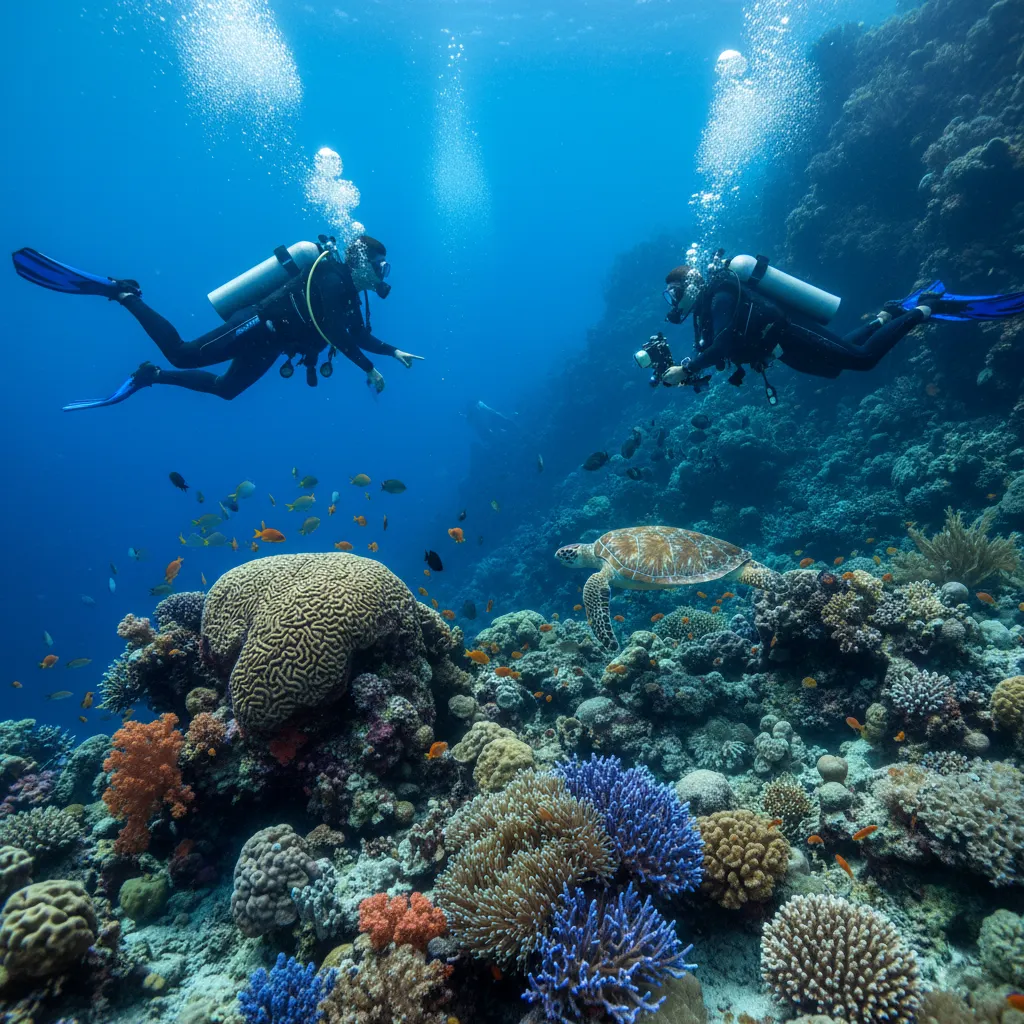
Why Mauritius for Your First Dives?
Mauritius offers a welcoming environment for beginner divers, making it an excellent choice for your initial underwater explorations. With generally calm waters and good visibility, the learning curve is less steep than in destinations with strong currents or challenging conditions. The water temperature typically ranges from 23°C to 28°C (73°F to 82°F) year-round, eliminating the need for thick wetsuits and contributing to a more comfortable and enjoyable experience for those new to diving. This warmth is particularly beneficial as it helps divers relax and focus on mastering their skills.
While Mauritius boasts 48 dive sites across two main regions, it's important to note that only a small portion - specifically 2 sites - are categorized as beginner-friendly. This means that while the overall conditions are favorable, careful selection of dive sites and regions is crucial for a positive first-time experience. You can expect to encounter a vibrant array of marine life, including colorful reef fish like angelfish and parrotfish, as well as occasional sightings of turtles and rays in shallower, protected areas. The absence of consistently strong currents in designated beginner zones allows for a more relaxed pace, enabling new divers to practice buoyancy and enjoy the underwater scenery without feeling overwhelmed.
Best Beginner-Friendly Regions
For your first dives in Mauritius, the Flic en Flac & West Coast region stands out as the primary recommendation. This area provides access to calm, sheltered waters ideal for initial training and discovery dives. Dive centers along this coast are well-equipped and experienced in catering to novices. Specific beginner-friendly sites here often include shallow coral gardens with gentle currents, allowing new divers to comfortably practice skills and observe marine life. Expect good visibility and a variety of smaller reef fish.
While Rodrigues Island is a fantastic dive destination, its 2 beginner sites are fewer than the West Coast. However, for those looking for a slightly more remote and tranquil experience once comfortable with basic skills, Rodrigues can offer beautiful, less crowded shallow reefs. The conditions are typically good, with healthy coral formations and a diverse range of fish species. It's recommended for beginners who have completed at least a Discover Scuba Diving experience or are taking their Open Water course and are looking for a quieter environment.
What Certification Do You Need?
To participate in guided fun dives in Mauritius, you will generally need a PADI Open Water Diver certification or an equivalent certification from another recognized agency such as SSI, NAUI, or CMAS. This certification demonstrates that you have completed the necessary training to dive safely to a maximum depth of 18 meters (60 feet). If you are not yet certified, you can enroll in a Discover Scuba Diving (DSD) program, which allows you to experience diving under direct instructor supervision in shallow water without requiring full certification. Many local dive centers throughout Mauritius, particularly in the Flic en Flac and West Coast areas, offer DSD programs and full Open Water Diver courses. PADI is the most widely recognized and popular certification agency in Mauritius, so finding PADI-certified instructors and courses is very common.
Best Time to Visit
The best time to visit Mauritius for diving, particularly for beginners, is during the dry season from May to December. During these months, the weather is generally cooler and less humid, with less rainfall. Water temperatures during this period range from 23°C to 25°C (73°F to 77°F), offering comfortable conditions for diving without needing thick exposure suits. Visibility is also typically at its best, often exceeding 20 meters (65 feet), which is ideal for new divers learning to navigate and appreciate the underwater environment. The peak diving season is from September to November, when conditions are most stable. While diving is possible year-round, the cyclonic season from January to March can bring heavier rains, stronger winds, and choppier seas, which may impact dive schedules and comfort for beginners.
What to Expect on Your First Dive
Your first dive in Mauritius, whether it's a Discover Scuba Diving experience or the initial open water training dive, will typically begin at a local dive center. You'll start with a check-in process, where you complete any necessary paperwork and liability waivers. Following this, your instructor will conduct a thorough briefing, explaining the equipment, basic hand signals, safety procedures, and what marine life you might encounter. You'll then be fitted with your dive gear - mask, fins, wetsuit, BCD (buoyancy control device), and regulator. Most beginner dives in Mauritius are conducted from a boat, departing from coastal towns. You'll typically gear up on the boat before making a controlled entry into the water, often a giant stride or back roll. Once in the water, your instructor will guide you through some shallow water skills practice, such as mask clearing and regulator recovery, before slowly descending to a maximum depth suitable for beginners (usually 6-12 meters for DSD, up to 18 meters for Open Water training). The underwater experience will be calm, with gentle currents, focusing on buoyancy control and enjoying the reef. After 30-45 minutes, you'll ascend slowly, make a safety stop, and return to the boat.
Budget Guide
Diving in Mauritius can be a rewarding experience, and understanding the costs is helpful. A Discover Scuba Diving (DSD) program, which includes equipment rental and instructor supervision for one dive, typically ranges from MUR 3,000 to MUR 5,000 (approximately USD 70-120). A full PADI Open Water Diver course, including all materials, equipment, and certification, generally costs between MUR 18,000 and MUR 25,000 (approximately USD 400-580). For certified divers, a single fun dive usually costs MUR 1,500 to MUR 2,500 (USD 35-60), while a package of two dives on the same outing might be MUR 2,500 to MUR 4,000 (USD 60-95). Equipment rental, if not included in a package, is typically MUR 300-500 (USD 7-12) per item per day. Accommodation ranges widely: budget guesthouses can be MUR 1,500-3,000 (USD 35-70) per night, mid-range hotels MUR 5,000-10,000 (USD 120-230), and luxury resorts upwards of MUR 15,000 (USD 350+).
Essential Tips
- Book your beginner dives or courses in advance, especially during the peak season (September-November), as dive centers can get busy.
- Focus on the Flic en Flac & West Coast region for your first dives due to its higher concentration of beginner-friendly sites and established dive centers.
- Stay hydrated by drinking plenty of water, especially before and after dives, to help prevent decompression sickness.
- Wear reef-safe sunscreen to protect both your skin and the delicate marine ecosystem.
- Respect local customs and traditions; dress modestly when visiting non-beach areas and be mindful of noise levels.
- Communicate any anxieties or discomforts immediately with your instructor - they are there to ensure your safety and enjoyment.
- Confirm what is included in your dive package (e.g., equipment rental, transfers, marine park fees) to avoid any surprises.
At a Glance
| Destination | Difficulty | Best Months |
|---|---|---|
| Flic en Flac & West CoastMauritius | Beginner | Jan-Dec |
| Rodrigues IslandMauritius | Beginner | Jan-Dec |
Flic en Flac & West Coast
Mauritius
Difficulty
Beginner
Best Months
Jan-Dec
Water Temp
28-28C
Dive Centres
27
Practical Info
- dive Sites:
- 43
- dive Centres:
- 27
Rodrigues Island
Mauritius
Difficulty
Beginner
Best Months
Jan-Dec
Water Temp
29-29C
Dive Centres
3
Practical Info
- dive Sites:
- 5
- dive Centres:
- 3
Frequently Asked Questions
Do I need a certification to dive in Mauritius?
To go on guided fun dives, you need a PADI Open Water Diver or equivalent certification. If you're not certified, you can do a Discover Scuba Diving (DSD) program under direct instructor supervision, which does not require certification.
How much does diving cost in Mauritius?
A Discover Scuba Diving experience costs MUR 3,000-5,000 (USD 70-120). A full PADI Open Water course is MUR 18,000-25,000 (USD 400-580). A single fun dive for certified divers is MUR 1,500-2,500 (USD 35-60).
What is the best time to dive in Mauritius?
The best time for diving, especially for beginners, is during the dry season from May to December. Water temperatures are 23°C-25°C, and visibility is typically best, often exceeding 20 meters.
Is Mauritius safe for beginner divers?
Yes, Mauritius is generally safe for beginner divers, especially in designated beginner-friendly areas like the Flic en Flac & West Coast. These areas offer calm waters, good visibility, and experienced dive centers focused on training new divers.
What marine life will I see in Mauritius?
In Mauritius, particularly in beginner-friendly areas, you can expect to see colorful reef fish such as angelfish, parrotfish, and damselfish. Occasional sightings of turtles, rays, and moray eels are also possible in shallower reefs.
Related Guides
Planning when to go?
See the month-by-month conditions guide