First Time Diving in Mexico - A Beginner's Complete Guide
Everything you need to know before your first dive in Mexico
Why Mexico for Your First Dives?
Mexico offers a diverse range of diving experiences, making it a compelling choice for a first-time diver, especially given its 329 dive sites across 9 regions. While some areas are known for advanced diving, there are ample opportunities for beginners. The Caribbean side, particularly Cozumel, boasts warm waters, typically ranging from 26-29°C (79-84°F) year-round, which is comfortable for extended dives without needing thick wetsuits. Visibility on the Caribbean coast is consistently good, often exceeding 20 meters (65 feet), allowing for clear views and a less intimidating introduction to the underwater world.
For beginners, the generally calm conditions and the presence of vibrant reef systems with abundant marine life are significant advantages. You can expect to see colorful reef fish like parrotfish, angelfish, and snapper, as well as turtles and rays. While the Sea of Cortez offers cooler waters and different marine encounters, the warm, clear Caribbean waters provide a gentle entry point. It's important to note that some areas, like the Socorro Islands, are strictly for advanced divers due to strong currents and pelagic encounters, so choosing the right region is crucial for a positive first experience.
Best Beginner-Friendly Regions
Cozumel: Located off the Yucatán Peninsula, Cozumel is renowned for its drift diving, but many sites are suitable for beginners. The Palancar Reef system, particularly sites like Palancar Gardens and Columbia Shallows, features shallower sections with gentle currents, allowing new divers to practice buoyancy and enjoy the vibrant coral formations and reef fish. Many dive operators here cater specifically to entry-level divers, offering personalized attention and slower-paced dives. The island's infrastructure is well-developed for tourism, making logistics straightforward.
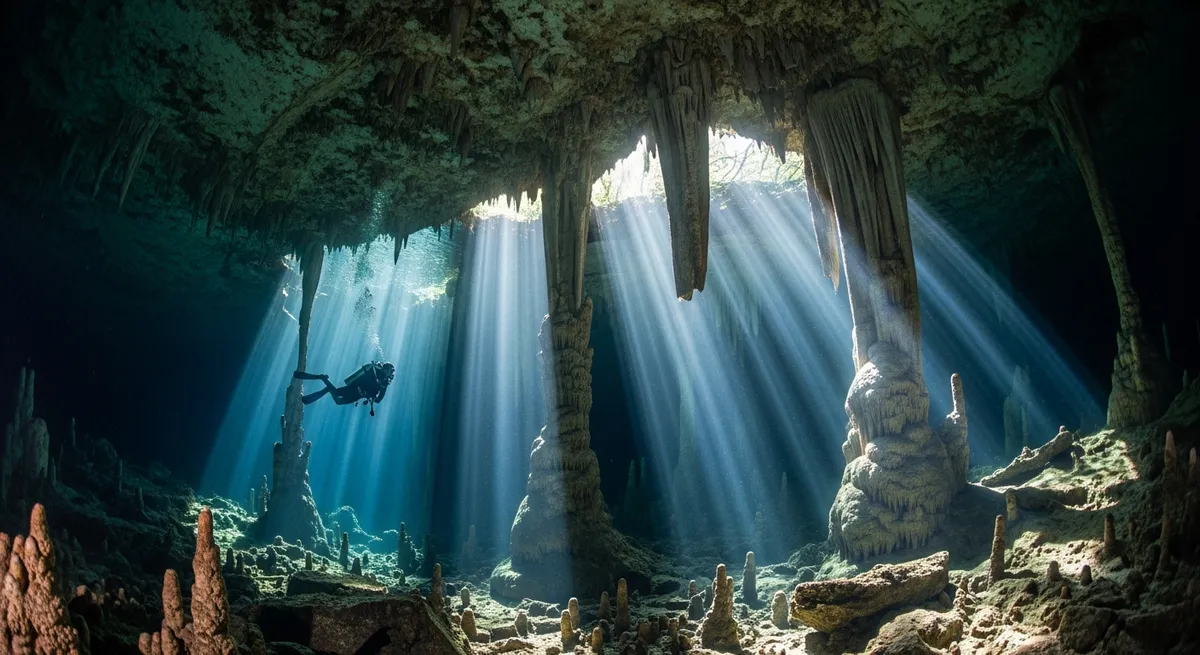
Yucatán Cenotes: While some cenotes require advanced certification, many, like Dos Ojos or Chac Mool, offer cavern dives that are accessible to Open Water certified divers. These unique freshwater sinkholes provide a distinct experience with incredible light beams, stalactites, and stalagmites. The water is consistently around 24-25°C (75-77°F), and visibility is often unlimited. These dives are typically calm, with no currents, focusing on exploration within a controlled, overhead environment with a guide, making them a memorable and safe option for beginners.
Isla Mujeres: Just a short ferry ride from Cancún, Isla Mujeres offers a more relaxed diving experience than its bustling neighbor. The local reefs are generally shallow and protected, with minimal currents, making them ideal for new divers. Sites like Manchones Reef are home to sections of the Underwater Museum of Art (MUSA), providing an interesting and unique visual experience alongside natural reef inhabitants. The gentle conditions and a focus on smaller group diving contribute to a comfortable learning environment.
What Certification Do You Need?
To participate in guided fun dives in Mexico, you will need a PADI Open Water Diver certification or an equivalent from another recognized agency like SSI, NAUI, or CMAS. This certification demonstrates that you have completed the necessary training to dive safely to a maximum depth of 18 meters (60 feet). If you are not yet certified, you can complete a Discover Scuba Diving (DSD) program, which allows you to experience diving under direct instructor supervision in shallow water, typically to a maximum depth of 12 meters (40 feet). Many local dive centers throughout Mexico, especially in tourist-heavy areas like Cozumel and Playa del Carmen, are PADI 5-Star Dive Centers, making PADI a popular and widely recognized certification choice. SSI is also very prevalent.
Best Time to Visit
The best time to visit Mexico for diving largely depends on the region. For the Caribbean coast (Cozumel, Yucatán Cenotes, Isla Mujeres), the dry season from November to April offers the most stable weather, with less rain and lower humidity. Water temperatures during this period average 26-28°C (79-82°F). The hurricane season runs from June to October, with peak activity in September and October, which can bring strong winds, rain, and potential dive cancellations. However, diving during the shoulder months of May-June and October-November can offer good conditions with fewer crowds and potentially lower prices.
For the Sea of Cortez, the prime diving season is from July to November, when water temperatures are warmer, ranging from 26-30°C (79-86°F), and marine life, including larger pelagics, is more active. Cooler months from December to June see water temperatures drop to 18-24°C (64-75°F), but this is when sea lions are most playful and whale sharks are present (typically October-April). The Socorro Islands are best visited from November to May for pelagic encounters, with water temperatures between 24-28°C (75-82°F).
What to Expect on Your First Dive
Your first dive in Mexico, especially if it's a Discover Scuba Diving experience or your initial certified dive, will typically follow a structured process. You'll start at the dive center for check-in, where you'll complete waivers and present your certification card if applicable. Next, there will be a detailed briefing covering the dive site, safety procedures, hand signals, marine life you might encounter, and the dive plan (depth, time, entry/exit). You'll then be fitted for gear-mask, fins, wetsuit (if needed), BCD, and regulator. Most beginner dives in Mexico, particularly in Cozumel and Isla Mujeres, are boat dives. You'll gear up on the boat, complete a giant stride or back roll entry, and perform a final buddy check at the surface.
Once in the water, your instructor will guide you through a controlled descent. The underwater experience will focus on maintaining buoyancy, controlling your breathing, and observing the marine environment. You'll likely dive in calm, shallow areas with minimal current, allowing you to get comfortable. Dive guides in Mexico are generally very attentive and prioritize safety, ensuring you have a relaxed and enjoyable experience. After the dive, you'll surface, return to the boat, and head back to the dive center for debriefing and logging your dive.
Budget Guide
Diving in Mexico offers a range of price points. A Discover Scuba Diving (DSD) experience typically costs between $100-$150 USD. A full PADI Open Water Diver course, including confined and open water dives, usually ranges from $450-$600 USD. Fun dives for certified divers vary by region and number of dives. A two-tank boat dive in Cozumel might cost $90-$120 USD, while a cenote dive (often a two-tank experience) could be $120-$180 USD due to specialized guides and logistics. Equipment rental is often included in course prices and sometimes in fun dive packages, but if not, expect to pay $20-$30 USD per day for a full set.
Accommodation costs vary widely. Hostels can be found for $20-$40 USD per night, mid-range hotels for $80-$150 USD, and resorts for $200+ USD. Food is generally affordable, especially if you eat at local eateries; expect to pay $10-$20 USD per meal. Transportation, such as local taxis or colectivos, is also reasonably priced. Overall, a beginner diver planning a week-long trip, including a certification course and basic accommodation, might budget $1,200-$2,000 USD, not including international airfare.
Essential Tips
- Book in Advance: Especially during peak season (November-April) or for specific cenote tours, booking your dives and courses several weeks ahead is advisable to secure your spot and preferred dive operator.
- Bring Reef-Safe Sunscreen: Mexico is committed to protecting its marine environments. Use mineral-based, reef-safe sunscreen to avoid harming corals and marine life.
- Carry Cash (Pesos): While many places accept credit cards, having Mexican Pesos for smaller purchases, tips, and local food stalls is very useful. USD is accepted in some tourist areas but often at unfavorable exchange rates.
- Stay Hydrated: The warm climate, especially on the Caribbean coast, can lead to dehydration. Drink plenty of water before, during, and after your dives.
- Understand Currents in Cozumel: Cozumel is famous for its drift diving. While beginner sites have gentler currents, be prepared for a relaxed drift-style dive where the boat picks you up at the end. Listen carefully to your dive guide's instructions.
- Respect Cenote Rules: Cenotes are fragile ecosystems. Follow all rules regarding no touching formations, using specific wetsuits for freshwater (rentals often provided), and avoiding strong fin kicks near the bottom.
- Tip Your Dive Crew: Tipping is customary in Mexico for good service. A typical tip for dive guides and boat crew is 10-15% of your dive cost, or $10-$20 USD per day per diver.
At a Glance
| Destination | Difficulty | Best Months |
|---|---|---|
| CozumelMexico | Beginner | Mar-May, Aug-Sep, Nov |
| Sea of CortezMexico | Beginner | Jan-Dec |
| Yucatán CenotesMexico | Beginner | Jan-Dec |
| Socorro IslandsMexico | Beginner | Jan-Dec |
| Isla MujeresMexico | Beginner | - |
Cozumel
Mexico
Difficulty
Beginner
Best Months
Mar-May, Aug-Sep, Nov
Water Temp
27-30C
Visibility
21-25 nmi
Dive Centres
86
Practical Info
- dive Sites:
- 219
- dive Centres:
- 86
Sea of Cortez
Mexico
Difficulty
Beginner
Best Months
Jan-Dec
Water Temp
21-30C
Dive Centres
13
Practical Info
- dive Sites:
- 53
- dive Centres:
- 13
Yucatán Cenotes
Mexico
Difficulty
Beginner
Best Months
Jan-Dec
Water Temp
27-31C
Dive Centres
2
Practical Info
- dive Sites:
- 48
- dive Centres:
- 2
Socorro Islands
Mexico
Difficulty
Beginner
Best Months
Jan-Dec
Water Temp
24-30C
Dive Centres
67
Practical Info
- dive Sites:
- 9
- dive Centres:
- 67
Frequently Asked Questions
Do I need a certification to dive in Mexico?
To participate in guided fun dives in Mexico, you need a PADI Open Water Diver certification or an equivalent from another recognized agency. If you're not certified, you can try a Discover Scuba Diving (DSD) program under direct instructor supervision, which does not result in a certification.
How much does diving cost in Mexico?
A Discover Scuba Diving experience typically costs $100-$150 USD. A PADI Open Water Diver course ranges from $450-$600 USD. A two-tank fun dive for certified divers is usually $90-$120 USD in Cozumel and $120-$180 USD for cenote dives. Equipment rental is often extra, around $20-$30 USD per day.
What is the best time to dive in Mexico?
For the Caribbean coast (Cozumel, Cenotes, Isla Mujeres), the dry season from November to April offers the most stable weather and comfortable water temperatures (26-28°C). The Sea of Cortez is best from July to November for warmer waters and active marine life. Socorro Islands are from November to May.
Is Mexico safe for beginner divers?
Yes, Mexico is safe for beginner divers, especially in regions like Cozumel, the Yucatán Cenotes, and Isla Mujeres. These areas offer calm, clear waters and numerous dive operators catering to entry-level divers with experienced instructors and well-maintained equipment. Always choose reputable dive centers.
What marine life will I see in Mexico?
In the Caribbean, you can expect to see colorful reef fish, sea turtles, stingrays, nurse sharks, and various corals. The Sea of Cortez offers a different experience with sea lions, whale sharks (seasonally), mobula rays, and a wide array of pelagic species. Cenotes feature unique freshwater ecosystems with occasional small fish.
Related Guides
Planning when to go?
See the month-by-month conditions guide