First Time Diving in New Zealand - A Beginner's Complete Guide
Everything you need to know before your first dive in New Zealand
Why New Zealand for Your First Dives?
New Zealand offers a unique and surprisingly diverse environment for beginner divers, despite its reputation for rugged landscapes. While the country features only 9 officially designated beginner dive sites out of 266, these locations are carefully chosen for their calm conditions and manageable depths, making them ideal for initial underwater experiences. The water temperatures, particularly in the northern regions during summer, are comfortable enough for extended dives, typically ranging from 18-24°C (64-75°F). Visibility can vary but is often excellent, especially in marine reserves, allowing new divers to focus on buoyancy and observation rather than navigating murky waters.
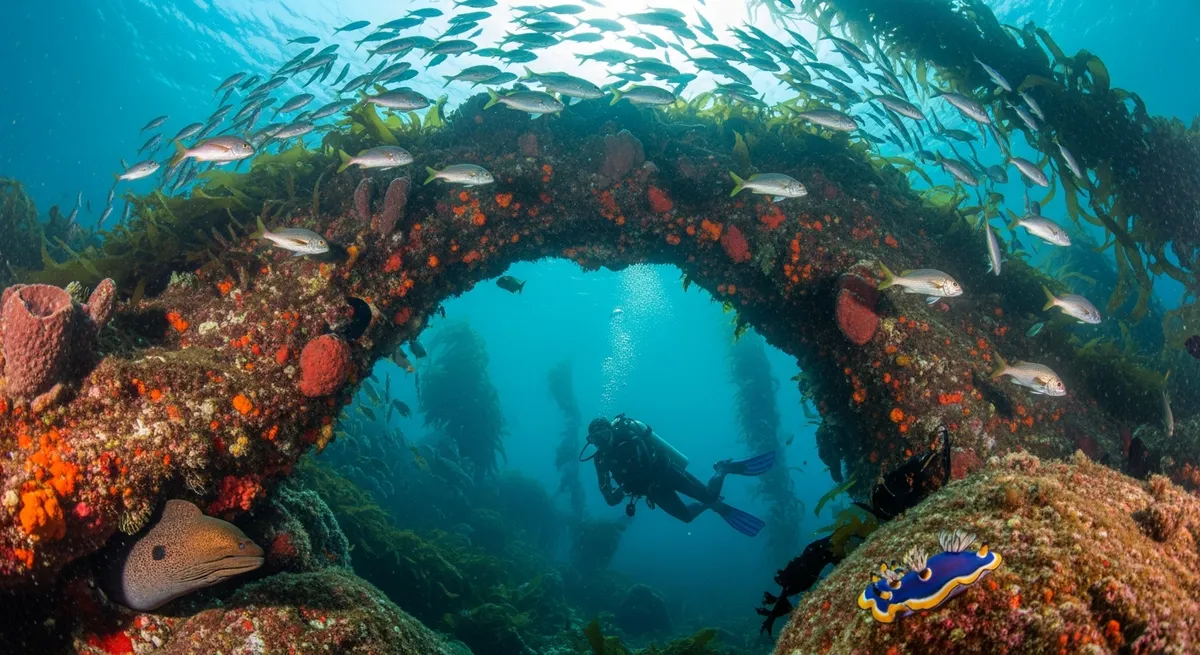
While New Zealand isn't a tropical dive destination, its temperate waters host a fascinating array of marine life. Beginners can expect to encounter vibrant schooling fish, colourful anemones, nudibranchs, and various crustaceans. Larger encounters might include stingrays, eagle rays, and even dolphins in certain areas. It's important to note that New Zealand diving can be more challenging than some tropical locations due to cooler water temperatures in the south and potential for currents in exposed areas, but the designated beginner sites are specifically selected to mitigate these factors, providing a safe and rewarding introduction to the underwater world.
Best Beginner-Friendly Regions
Poor Knights Islands: Located off the coast of Northland, the Poor Knights Islands are a marine reserve known for their extensive cave systems and abundant fish life. While some areas are suited for advanced divers, specific sheltered bays and shallow reefs offer excellent conditions for beginners. Dive sites like Northern Arch and Barren Arch provide calm, clear waters where new divers can comfortably explore kelp forests, observe schools of snapper and trevally, and marvel at the colourful sponge gardens. The protection offered by the islands' unique geography often creates very stable conditions.
Goat Island & Hauraki Gulf: New Zealand's first marine reserve, Goat Island (Cape Rodney-Okakari Point Marine Reserve) near Leigh, is an exceptional spot for beginners. Its easily accessible shore entry and consistently calm, shallow waters make it perfect for practicing skills and observing marine life without strong currents. Expect to see large snapper, kingfish, eagle rays, and various invertebrates. Further into the Hauraki Gulf, sheltered coves and islands offer numerous protected sites ideal for introductory dives, often with good visibility and diverse temperate marine ecosystems.
Bay of Islands: This historical and scenic region in the north offers numerous sheltered bays and islands that are well-suited for beginner divers. The calm, relatively warm waters during summer provide a comfortable environment for learning. Dive operators in areas like Paihia and Russell often lead trips to sites with gentle currents and interesting rock formations, where new divers can encounter schooling fish, reef inhabitants, and occasionally even dolphins. The accessibility and established dive infrastructure here make it a convenient choice for those taking their first plunge.
What Certification Do You Need?
To participate in guided fun dives in New Zealand, you will typically need to hold a PADI Open Water Diver certification or an equivalent entry-level certification from a recognised agency such as SSI, NAUI, or BSAC. Most dive centres across New Zealand offer PADI Open Water Diver courses, which usually take 3-4 days to complete and include theory, confined water (pool) training, and four open water dives. If you are not yet certified but wish to try diving, many operators offer 'Discover Scuba Diving' experiences, which allow you to dive under direct instructor supervision in shallow water without prior certification.
Best Time to Visit
The best time to visit New Zealand for diving largely depends on your preferred water temperature and location. Generally, the summer months from December to February offer the warmest water temperatures and best surface conditions, particularly in the northern regions. During this period, water temperatures in the north can range from 20-24°C (68-75°F), while in the south (like Fiordland or Kaikōura), they might be cooler, around 14-18°C (57-64°F).
Autumn (March-May) can also be excellent, with often stable weather and good visibility, though water temperatures begin to drop. Winter (June-August) sees the coldest water temperatures, especially in the south, but can offer exceptional visibility and opportunities for unique marine encounters, such as whale migrations off Kaikōura. Spring (September-November) is a transitional period with increasing water temperatures and improving conditions. For beginners, aiming for the summer months in the northern regions will provide the most comfortable and predictable experience.
What to Expect on Your First Dive
Upon arriving at a dive centre in New Zealand for your first dive (whether a Discover Scuba Dive or your first certified fun dive), you'll typically start with a check-in process, confirming your booking and completing any necessary paperwork, including medical questionnaires. You'll then receive a comprehensive briefing from your instructor or dive guide, covering the dive plan, safety procedures, hand signals, and what marine life you might encounter at the specific dive site. This briefing is crucial for understanding local conditions and expectations.
Next, you'll be fitted with appropriate gear, including a wetsuit (often a 5mm or 7mm for warmth), BCD, regulator, mask, fins, and weights. Many beginner-friendly dives in New Zealand are conducted from purpose-built dive boats, offering a comfortable platform for entry and exit. You'll gear up on the boat, perform a buddy check, and typically enter the water with a giant stride or back roll. Once in the water, your instructor will guide you through your first breaths underwater, buoyancy control, and basic navigation. Most beginner dives are conducted in calm, sheltered areas with minimal current, allowing you to focus on the experience and observe the temperate marine environment. Shore dives, particularly at Goat Island, involve carrying gear a short distance and wading in from the beach. Expect a calm, guided experience focused on safety and enjoyment.
Budget Guide
Diving in New Zealand involves various costs, which can be estimated as follows:
- Discover Scuba Diving Experience: Expect to pay approximately NZD 200-300 (USD 125-190) for a half-day experience, including all equipment and instructor supervision.
- PADI Open Water Diver Course: A full certification course typically costs NZD 600-900 (USD 375-560), depending on the dive centre and region. This usually includes all course materials, equipment rental, and certification fees.
- Fun Dives (for certified divers): A two-tank boat dive will generally cost NZD 180-250 (USD 110-155), including tanks and weights. Full equipment rental (wetsuit, BCD, regulator, mask, fins) adds an extra NZD 50-80 (USD 30-50) per day.
- Accommodation: Hostel dorm beds range from NZD 30-60 (USD 19-38) per night, mid-range motels/hotels from NZD 120-250 (USD 75-155) per night, and more upscale options start from NZD 250+ (USD 155+).
- Food: Budget around NZD 50-80 (USD 30-50) per day for basic meals if eating out, less if self-catering.
Essential Tips
- Book in Advance: Especially during the peak summer season (December-February), dive trips and courses, particularly to popular spots like the Poor Knights Islands, can book out quickly.
- Wetsuit Choice: Even in summer, New Zealand waters are cooler than the tropics. A 5mm or 7mm wetsuit is standard; consider a hood and gloves for added comfort, especially in the south or during cooler months.
- Medical Declaration: Be prepared to complete a medical questionnaire. If you answer 'yes' to any significant medical conditions, you may require a doctor's sign-off before diving.
- Respect Marine Reserves: Many popular dive sites are within marine reserves, meaning no fishing or taking of any marine life is permitted. Adhere strictly to these rules.
- Weather Dependency: Dive trips in New Zealand are highly weather-dependent. Be flexible with your plans, as trips can be cancelled or rescheduled due to strong winds or rough seas.
- Currents: While beginner sites are chosen for calm conditions, some areas can experience currents. Listen carefully to your dive guide's briefing and follow instructions.
- Local Knowledge: Engage with local dive operators and instructors. Their knowledge of specific sites, conditions, and marine life will enhance your experience.
At a Glance
| Destination | Difficulty | Best Months |
|---|---|---|
| Poor Knights IslandsNew Zealand | Beginner | Jan-May, Nov-Dec |
| Goat Island & Hauraki GulfNew Zealand | Beginner | Jan-Apr, Nov-Dec |
| Bay of IslandsNew Zealand | Beginner | - |
| KaikōuraNew Zealand | Beginner | Jan-Mar |
| FiordlandNew Zealand | Beginner | - |
Poor Knights Islands
New Zealand
Difficulty
Beginner
Best Months
Jan-May, Nov-Dec
Water Temp
16-22C
Dive Centres
9
Practical Info
- dive Sites:
- 88
- dive Centres:
- 9
Goat Island & Hauraki Gulf
New Zealand
Difficulty
Beginner
Best Months
Jan-Apr, Nov-Dec
Water Temp
14-22C
Dive Centres
20
Practical Info
- dive Sites:
- 84
- dive Centres:
- 20
Kaikōura
New Zealand
Difficulty
Beginner
Best Months
Jan-Mar
Water Temp
13-18C
Dive Centres
13
Practical Info
- dive Sites:
- 36
- dive Centres:
- 13
Frequently Asked Questions
Do I need a certification to dive in New Zealand?
To go on guided fun dives in New Zealand, you typically need a PADI Open Water Diver certification or equivalent. However, if you're not certified, you can try a 'Discover Scuba Diving' experience under direct instructor supervision in shallow water.
How much does diving cost in New Zealand?
A 'Discover Scuba Diving' experience costs around NZD 200-300 (USD 125-190). A full PADI Open Water course is typically NZD 600-900 (USD 375-560). For certified divers, a two-tank fun dive is NZD 180-250 (USD 110-155), with equipment rental adding NZD 50-80 (USD 30-50).
What is the best time to dive in New Zealand?
The best time for diving, especially for beginners, is during the summer months from December to February. Northern regions see water temperatures of 20-24°C (68-75°F). Autumn (March-May) can also offer stable weather and good visibility.
Is New Zealand safe for beginner divers?
Yes, New Zealand is safe for beginner divers, particularly at designated beginner sites. These locations, like parts of Poor Knights Islands and Goat Island, are chosen for calm conditions and manageable depths. Dive operators prioritize safety with thorough briefings and supervision.
What marine life will I see in New Zealand?
In New Zealand's temperate waters, you can expect to see schooling fish like snapper and trevally, colourful anemones, nudibranchs, and various crustaceans. Encounters with stingrays, eagle rays, and sometimes dolphins are also possible, especially in marine reserves.
Related Guides
Planning when to go?
See the month-by-month conditions guide