First Time Diving in Panama - A Beginner's Complete Guide
Everything you need to know before your first dive in Panama
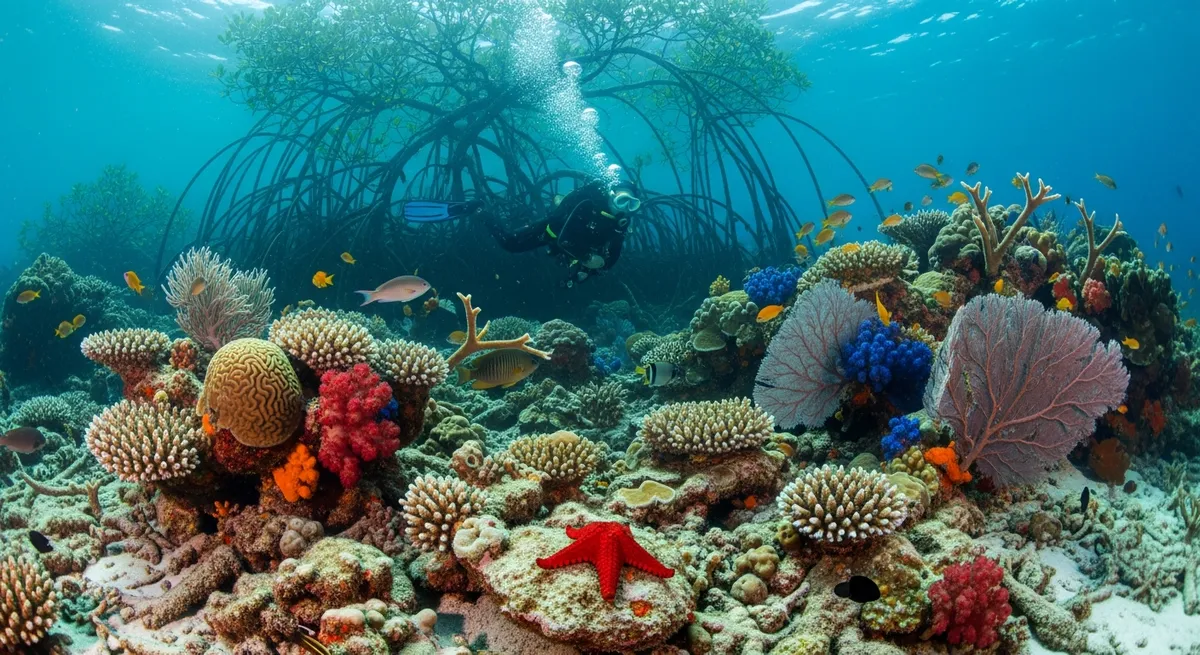
Why Panama for Your First Dives?
Panama offers a compelling mix for first-time divers, particularly those seeking a warm, accessible introduction to tropical marine environments. With over 53 dive sites spread across both Caribbean and Pacific coasts, the country provides diverse experiences. While some areas present more challenging conditions for advanced divers, there are numerous sheltered coves and calm reef systems ideal for beginners. The consistent warm water temperatures, typically ranging from 26-30°C (79-86°F) year-round, eliminate the need for thick wetsuits, making the experience more comfortable and less intimidating for newcomers. Visibility often ranges from 10-30 meters (30-100 feet), allowing for clear views of the vibrant coral formations and diverse marine life. You can expect to encounter reef fish, rays, and various invertebrates, providing a rich visual experience without overwhelming currents in designated beginner areas. While Panama isn't exclusively a beginner destination, its designated calm sites and readily available instruction make it a suitable choice for your inaugural underwater adventures.Best Beginner-Friendly Regions
Bocas del Toro
Located on Panama's Caribbean coast, Bocas del Toro is an excellent choice for beginner divers due to its generally calm, shallow reefs and vibrant coral gardens. The archipelago's numerous islands create sheltered conditions, protecting dive sites from strong currents. Dive sites like Hospital Point or Coral Gardens offer gentle slopes and abundant reef fish, making them perfect for practicing buoyancy and observing marine life without challenging conditions. Local dive centers are plentiful and experienced in guiding new divers through their first underwater experiences.San Blas Islands
The San Blas Islands, also on the Caribbean side, offer a unique and tranquil diving experience, often characterized by calm, clear waters and pristine coral reefs. While fewer dedicated dive operations exist compared to Bocas del Toro, many local Guna communities offer basic snorkeling and some dive opportunities with smaller, community-focused operators. The shallow reefs and minimal boat traffic make for a peaceful introduction to diving, with chances to see colorful reef fish and healthy corals in a less commercialized setting. Expect a more rustic experience here, but one that is very rewarding for beginners seeking serenity.Pearl Islands
Situated in the Pacific Ocean, the Pearl Islands provide a different but equally rewarding experience for beginner divers. While the Pacific can sometimes have stronger currents, many of the inner islands offer protected bays and coves with calm conditions. Sites like those around Contadora Island often feature gentle slopes and good visibility, allowing beginners to comfortably explore coral formations and encounter a variety of Pacific marine life, including schools of fish and sometimes even rays. The accessibility from Panama City makes it a convenient option for those looking for a quick dive getaway.What Certification Do You Need?
To dive independently in Panama, you will need a PADI Open Water Diver certification or an equivalent certification from another recognized agency, such as SSI, NAUI, or CMAS. This certification demonstrates that you have completed the necessary theoretical and practical training to dive safely to a maximum depth of 18 meters (60 feet). If you're not yet certified, many dive centers across Panama offer introductory experiences like the PADI Discover Scuba Diving program, which allows you to try diving under direct supervision without committing to a full course. You can also complete your full Open Water certification in Panama, with courses readily available in regions like Bocas del Toro and the Pearl Islands. PADI is widely popular, so finding a center offering their courses is straightforward.Best Time to Visit
Panama offers good diving conditions year-round, but specific seasons provide optimal experiences depending on the coast. For the Caribbean side (Bocas del Toro, San Blas), the drier season from December to April generally offers the calmest waters and best visibility, with water temperatures consistently around 26-28°C (79-82°F). The Pacific coast (Coiba, Pearl Islands) experiences its dry season from December to May, which also brings clearer waters and calmer conditions, with water temperatures ranging from 27-30°C (81-86°F). During the wetter months (May-November), rainfall can reduce visibility, particularly in coastal areas, but diving is still possible, and some divers prefer this time for fewer crowds. Overall, the December-April window is generally considered the most reliable for beginners across both coasts due to stable weather and excellent water conditions.What to Expect on Your First Dive
Your first dive in Panama, especially if it's a Discover Scuba Diving experience or part of an Open Water course, will typically begin at a local dive center. After check-in, you'll receive a comprehensive briefing from your instructor, covering safety procedures, basic hand signals, equipment familiarization, and an overview of the dive site. You'll then be fitted with rental gear-wetsuit, BCD, regulator, mask, fins, and weights. Many beginner dives in Panama, particularly in Bocas del Toro and the Pearl Islands, are boat dives, meaning you'll travel a short distance to a sheltered site. Entry will usually be a controlled backward roll or a giant stride from the boat. Once in the water, your instructor will guide you through shallow water skills, such as mask clearing and regulator recovery, before slowly descending. Expect a calm, controlled environment, often with minimal current, focused on comfortable exploration of the reef and observation of marine life. The typical dive style for beginners emphasizes gentle drifts or stationary exploration of coral gardens, ensuring a relaxed introduction to the underwater world.Budget Guide
A Discover Scuba Diving experience in Panama typically costs between $90-$120 USD. If you decide to pursue your PADI Open Water Diver certification, expect to pay around $350-$500 USD, which usually includes all course materials, instruction, and equipment rental. For certified divers, a two-tank fun dive trip ranges from $80-$130 USD, with package deals often available for multiple days of diving. Equipment rental, if not included in a package, is generally $20-$30 USD per day for a full set. Accommodation costs vary widely: budget hostels can be found for $20-$40 USD per night, mid-range hotels are typically $70-$150 USD, and more upscale resorts can start from $200 USD per night. Food costs are reasonable, with local meals costing $5-$15 USD. Panama uses the US Dollar (USD) as its official currency, making budgeting straightforward.Essential Tips
- Book your dive excursions and courses in advance, especially during the dry season (December-April), as popular centers can fill up quickly.
- Be aware that some remote areas, like the San Blas Islands, have limited dive infrastructure; confirm operator credentials and safety standards beforehand.
- Respect local customs, particularly in indigenous Guna Yala territory (San Blas), where photography rules and cultural sensitivities apply.
- Carry insect repellent, especially in humid coastal regions like Bocas del Toro, as mosquitoes and sandflies can be prevalent.
- Consider bringing motion sickness medication if you are prone to seasickness, as many dive sites require boat travel.
- Stay hydrated, especially in the tropical climate; drink plenty of water before and after your dives.
- Confirm with your dive center if park fees are included in the dive price, as some protected areas, like Coiba National Park, require additional entry fees.
At a Glance
| Destination | Difficulty | Best Months |
|---|---|---|
| Coiba National ParkPanama | Beginner | - |
| Bocas del ToroPanama | Beginner | Jan-Dec |
| San Blas IslandsPanama | Beginner | - |
| Pearl IslandsPanama | Beginner | - |
Coiba National Park
Panama
Difficulty
Beginner
Dive Centres
10
Practical Info
- dive Sites:
- 27
- dive Centres:
- 10
Bocas del Toro
Panama
Difficulty
Beginner
Best Months
Jan-Dec
Water Temp
28-29C
Dive Centres
10
Practical Info
- dive Sites:
- 26
- dive Centres:
- 10
Frequently Asked Questions
Do I need a certification to dive in Panama?
To dive independently in Panama, you need a PADI Open Water Diver certification or an equivalent from another recognized agency. However, you can try diving without certification through a Discover Scuba Diving program, which is supervised by an instructor.
How much does diving cost in Panama?
A Discover Scuba Diving experience typically costs $90-$120 USD. A full PADI Open Water certification ranges from $350-$500 USD. For certified divers, a two-tank fun dive trip is usually $80-$130 USD. Equipment rental is about $20-$30 USD per day.
What is the best time to dive in Panama?
The best time to dive in Panama for beginners is generally the dry season, from December to April. This period offers the calmest waters, best visibility, and consistent warm water temperatures (26-30°C or 79-86°F) across both Caribbean and Pacific coasts.
Is Panama safe for beginner divers?
Yes, Panama is suitable for beginner divers, especially in designated areas like Bocas del Toro and specific sites in the Pearl Islands. These regions offer calm, shallow waters and experienced dive centers focused on safety and introductory experiences. Always choose reputable operators.
What marine life will I see in Panama?
In Panama, you can expect to see a variety of reef fish, colorful corals, rays, sea turtles, and various invertebrates. Depending on the coast, you might encounter different species, but all beginner sites offer abundant visual experiences of tropical marine ecosystems.
Related Guides
Planning when to go?
See the month-by-month conditions guide