First Time Diving in Papua New Guinea - A Beginner's Complete Guide
Everything you need to know before your first dive in Papua New Guinea
Why Papua New Guinea for Your First Dives?
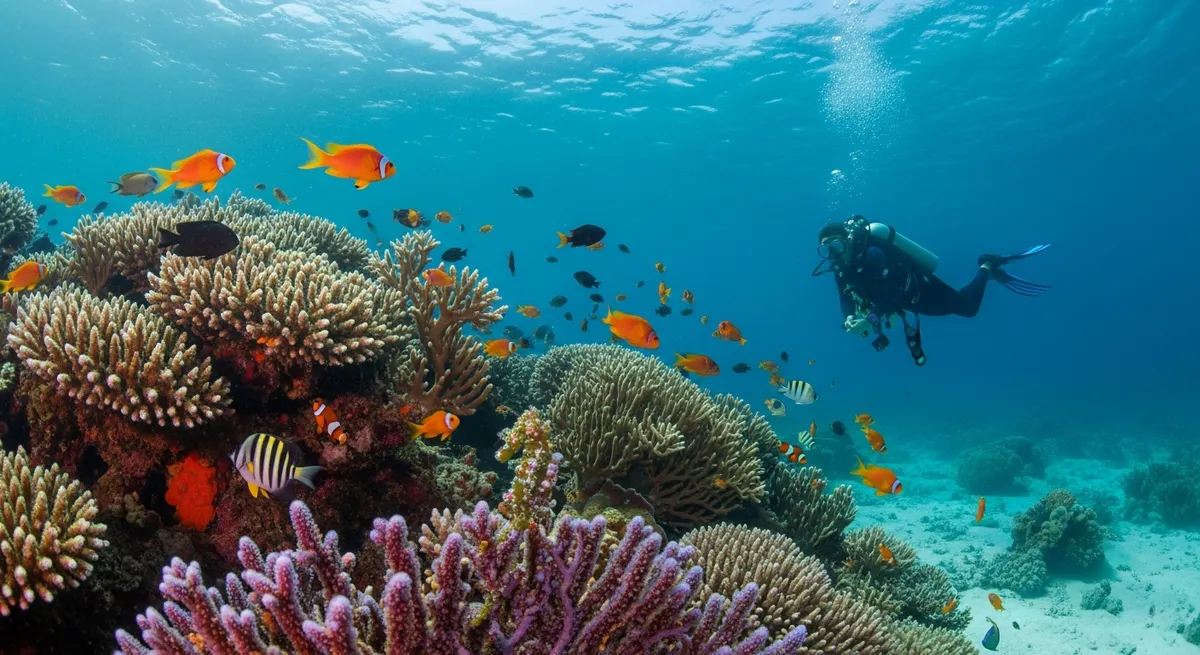
Papua New Guinea (PNG) offers a unique and rewarding experience for beginner divers, though it's important to approach it with the right expectations. While some sites can be challenging, many areas provide sheltered, calm conditions ideal for your initial underwater explorations. The water temperature consistently ranges from 25-30°C (77-86°F), making for comfortable dives without the need for thick wetsuits. Visibility often exceeds 20 meters, allowing for clear views of the vibrant ecosystems.
What sets PNG apart for beginners is the sheer diversity of marine life you'll encounter, even in shallower, protected areas. You can expect to see an incredible array of colorful reef fish, various species of anemonefish, turtles, and a multitude of soft and hard corals. While famous for its large pelagics and wreck diving, these are typically at deeper, more advanced sites. Many beginner-friendly locations focus on healthy, vibrant reefs that are less exposed to strong currents.
It's fair to note that PNG is not a typical 'resort-style' dive destination where every site is manicured for beginners. Some regions do present more advanced conditions. However, with 61 dive sites across 6 regions, there's ample opportunity to find a suitable introduction to diving. Reputable dive operators prioritize safety and will guide you to sites appropriate for your skill level, ensuring a positive first diving experience.
Best Beginner-Friendly Regions
Kimbe Bay, New Britain: Located on the north coast of New Britain, Kimbe Bay is often considered one of PNG's premier dive destinations and has numerous sites suitable for beginners. Its sheltered bay conditions mean less exposure to strong currents, and many dive sites feature pristine coral gardens starting in shallow waters. Sites like Restorf Island offer gentle slopes and abundant reef fish, making it a perfect introduction to PNG's biodiversity. The calm conditions are ideal for practicing buoyancy and getting comfortable underwater.
Milne Bay: Situated at the southeastern tip of mainland PNG, Milne Bay is another excellent choice for beginners, particularly for its macro life and muck diving opportunities. While it also has deeper walls, many shallower reefs and sandy slopes provide calm environments. Sites around Tawali Resort, for instance, offer protected areas with a high concentration of small, interesting critters, which can be less intimidating than diving with large pelagics. The lack of strong currents in many areas makes it relaxing for new divers.
Tufi: Known for its dramatic fjords, Tufi offers unique diving experiences in sheltered waters. The fjords themselves provide natural protection from open ocean swells and currents, creating very calm conditions. While the inner fjords might have less vibrant coral, the outer reefs, accessible from Tufi, still offer healthy coral gardens and reef fish in gentle environments. The visibility here is often excellent, and the unique topography adds an interesting dimension to your first dives.
What Certification Do You Need?
For your first certified dives in Papua New Guinea, a PADI Open Water Diver certification or an equivalent entry-level certification from another recognized agency (like SSI, NAUI, CMAS) is generally required. This certification allows you to dive to a maximum depth of 18 meters (60 feet) and is sufficient for exploring many of PNG's beautiful reef sites.
If you're not yet certified, most dive centers in PNG offer the PADI Discover Scuba Diving experience, which is a supervised introduction to diving that doesn't result in a certification, or the full PADI Open Water Diver course. PADI is the most globally recognized and popular certification agency, so you'll find their courses widely available. Local dive centers are well-equipped to provide training, often with experienced instructors who understand the local conditions.
Best Time to Visit
Papua New Guinea experiences a tropical climate, and diving is possible year-round, but specific seasons offer optimal conditions depending on the region. Generally, the drier months from May to November are considered the best time to visit for diving across most regions, offering calmer seas and excellent visibility.
- Kimbe Bay & New Britain: The best conditions are typically from May to November, with excellent visibility and calm waters. December to April can see stronger winds and rain, potentially impacting sea conditions.
- Milne Bay: Good diving is available year-round, but the period from October to April is often preferred for less wind and calmer seas.
- Tufi: Similar to Kimbe Bay, May to November generally offers the most favorable conditions.
Water temperatures remain consistently warm throughout the year, typically ranging from 25°C to 30°C (77°F to 86°F), so a 3mm wetsuit or even a rash guard is usually sufficient for comfort.
What to Expect on Your First Dive
Your first dive in Papua New Guinea will typically begin with a check-in at the dive center, where you'll present your certification card (if applicable) and complete any necessary paperwork. This is followed by a thorough dive briefing, where your instructor or dive guide will cover the dive plan, site features, marine life to look out for, safety procedures, and hand signals. Pay close attention, especially to local specifics like potential currents or unique entry/exit points.
Next, you'll be fitted with your rental gear or assemble your own. Dive boats are the primary mode of transport to dive sites in PNG, so you'll typically gear up on the boat. Entry into the water is usually a giant stride from the boat. Once in the water, you'll perform a final buddy check and descend slowly with your instructor, equalizing your ears as you go. Underwater, expect to move at a relaxed pace, observing the reef and marine life. Your instructor will monitor your air consumption and comfort. Dives are generally guided, focusing on safe exploration. Most dives in PNG are boat dives, often drift dives in areas with mild currents, or static dives on protected reefs.
Budget Guide
Diving in Papua New Guinea can be a significant investment, reflecting the remote nature and high quality of the experience. Here's a realistic breakdown:
- Discover Scuba Diving (DSD): Expect to pay around 400-600 PGK (approx. $110-160 USD) for a DSD experience, which includes equipment rental and instructor supervision for one or two dives.
- PADI Open Water Course: A full Open Water certification course typically costs between 1,800-2,500 PGK (approx. $480-670 USD), including theory, confined water, and open water dives, plus equipment rental and certification fees.
- Fun Dives (certified): A single fun dive can range from 150-250 PGK (approx. $40-65 USD), with discounts often available for multi-dive packages (e.g., 300-450 PGK for a two-tank dive).
- Equipment Rental: Most dive packages include basic equipment. If renting separately, expect around 50-100 PGK (approx. $15-25 USD) per day for a full set.
- Accommodation: This varies widely. Budget guesthouses might be 150-300 PGK ($40-80 USD) per night. Mid-range hotels are 400-800 PGK ($110-210 USD). Dedicated dive resorts or liveaboards will be significantly higher, often starting from $300-500+ USD per person per night, usually including meals and diving.
Remember to factor in international and domestic flights, which can be substantial given PNG's location.
Essential Tips
- Book in Advance: Dive resorts and liveaboards, especially in popular regions like Kimbe Bay, can book up months ahead. Plan and reserve your spots well in advance.
- Travel Insurance: Obtain comprehensive travel insurance that specifically covers scuba diving and medical evacuation, as remote locations mean limited immediate medical facilities.
- Respect Local Customs: Papua New Guinea has a diverse culture with many different tribes. Be respectful of local customs, dress modestly when not at the dive resort, and always ask permission before taking photos of people.
- Be Prepared for Logistics: Domestic travel within PNG can be challenging. Flights may be delayed or cancelled, and transport to remote dive lodges can involve small planes and boat transfers. Build buffer time into your itinerary.
- Bring Motion Sickness Medication: While many dive sites are in sheltered bays, boat rides to and from sites can sometimes be choppy, especially during certain seasons.
- Protect Against Sun: The equatorial sun is intense. Use reef-safe sunscreen, wear hats, and cover up when not diving to prevent sunburn.
- Stay Hydrated: The tropical climate means you'll sweat more. Drink plenty of water before, during, and after dives to prevent dehydration.
At a Glance
| Destination | Difficulty | Best Months |
|---|---|---|
| Kimbe BayPapua New Guinea | Beginner | Jan-Dec |
| Rabaul & New BritainPapua New Guinea | Beginner | Jan-Dec |
| Milne BayPapua New Guinea | Beginner | Jan-Dec |
| TufiPapua New Guinea | Beginner | - |
| KaviengPapua New Guinea | Beginner | - |
Kimbe Bay
Papua New Guinea
Difficulty
Beginner
Best Months
Jan-Dec
Water Temp
31-31C
Dive Centres
9
Practical Info
- dive Sites:
- 28
- dive Centres:
- 9
Rabaul & New Britain
Papua New Guinea
Difficulty
Beginner
Best Months
Jan-Dec
Water Temp
31-31C
Dive Centres
10
Practical Info
- dive Sites:
- 21
- dive Centres:
- 10
Milne Bay
Papua New Guinea
Difficulty
Beginner
Best Months
Jan-Dec
Water Temp
31-31C
Dive Centres
11
Practical Info
- dive Sites:
- 12
- dive Centres:
- 11
Frequently Asked Questions
Do I need a certification to dive in Papua New Guinea?
Yes, to participate in 'fun dives' as a certified diver, you will need a PADI Open Water Diver certification or an equivalent from another recognized agency. If you are not certified, you can take a PADI Discover Scuba Diving experience or a full Open Water Diver course at most dive centers.
How much does diving cost in Papua New Guinea?
A Discover Scuba Diving experience costs around 400-600 PGK ($110-160 USD). A full PADI Open Water course is typically 1,800-2,500 PGK ($480-670 USD). A single fun dive for certified divers ranges from 150-250 PGK ($40-65 USD), with multi-dive packages available. These prices usually include equipment rental.
What is the best time to dive in Papua New Guinea?
Generally, the drier months from May to November offer the best conditions for diving across most regions, with calmer seas and excellent visibility. However, specific regions like Milne Bay can be good year-round, with October to April often preferred for less wind.
Is Papua New Guinea safe for beginner divers?
Yes, with reputable dive operators, Papua New Guinea is safe for beginner divers. Operators prioritize safety and will guide you to sites appropriate for your skill level, often in sheltered bays with calm conditions. It's important to choose well-established dive centers and ensure you have adequate travel insurance.
What marine life will I see in Papua New Guinea?
Even in beginner-friendly areas, you can expect to see an incredible array of marine life including diverse reef fish, various species of anemonefish, turtles, and an abundance of soft and hard corals. Milne Bay is particularly known for its macro life, while Kimbe Bay offers vibrant coral gardens.
Related Guides
Planning when to go?
See the month-by-month conditions guide