First Time Diving in Portugal - A Beginner's Complete Guide
Everything you need to know before your first dive in Portugal
Why Portugal for Your First Dives?
Portugal offers a surprisingly accessible entry point for beginner divers, despite its reputation for dramatic coastlines. With 281 dive sites spread across two main regions, there's a good mix of conditions suitable for those just starting out. While some areas present more challenging currents and deeper wrecks, a significant portion-87 sites-are specifically categorized as beginner-friendly.
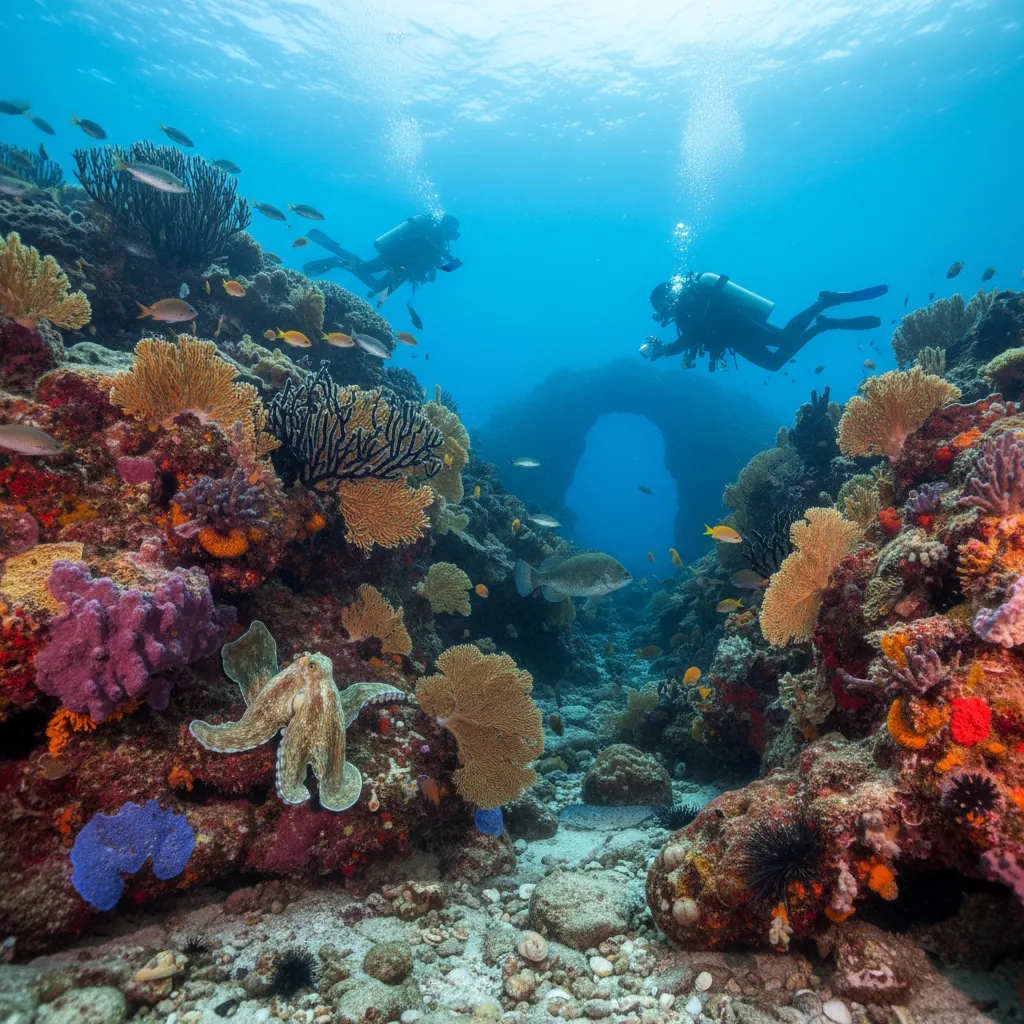
The water temperatures, particularly in the Algarve and the Azores during peak season, are comfortable enough to encourage longer dives without excessive thermal discomfort. Visibility can range from 10 to 30 meters, often providing clear views of the underwater landscape. Marine life, while not always large pelagics, includes a variety of reef fish, octopuses, cuttlefish, and nudibranchs, providing engaging encounters for new divers. It's a destination that allows beginners to build confidence in diverse environments, from calm bays to gentle drift opportunities.
Best Beginner-Friendly Regions
For your first dives in Portugal, focus on these regions for their suitability for new divers:
Algarve & Berlengas: The Algarve coast, particularly around Lagos and Portimão, offers numerous sheltered bays and artificial reefs that are excellent for beginners. Sites like Ocean Revival Park (specifically the shallower sections) near Portimão or the calm waters around Sagres provide gentle conditions and interesting structures to explore. The Berlengas Nature Reserve, while sometimes having stronger currents, also has protected areas with good visibility and varied marine life, suitable for guided beginner dives.
Azores: While often associated with more advanced diving due to its volcanic topography and open ocean sites, the Azores also caters to beginners. Islands like São Miguel and Santa Maria have protected coves and shallow volcanic rock formations. Sites such as the Baixa da Amora in São Miguel offer calm conditions and vibrant macro life, allowing new divers to practice skills and observe a unique ecosystem.
What Certification Do You Need?
To participate in guided fun dives in Portugal, you will generally need a PADI Open Water Diver certification or an equivalent certification from another recognized agency such as SSI, CMAS, or NAUI. If you are not yet certified, you can enroll in a Discover Scuba Diving (DSD) experience, which allows you to try diving under direct instructor supervision in shallow water without needing a full certification. Many dive centers across Portugal, especially in the Algarve and the Azores, are PADI 5-Star Dive Centers or offer SSI courses, ensuring widespread availability of training and guiding services.
Best Time to Visit
The best time to visit Portugal for diving largely depends on the region and your preference for water temperature. Generally, the diving season runs from May to October, with peak conditions from July to September.
- Algarve & Berlengas: Water temperatures range from 17°C in May to 22-24°C in August and September. Visibility is typically best during these months, often reaching 15-25 meters. The summer months offer the calmest sea conditions.
- Azores: Water temperatures are slightly cooler, ranging from 19°C in June to 24-26°C in August and September. Visibility here can be excellent, often exceeding 20-30 meters during the summer.
Visiting outside these months is possible but expect cooler water (requiring thicker wetsuits) and potentially rougher sea conditions, which might impact dive schedules, especially for beginners.
What to Expect on Your First Dive
Your first dive experience in Portugal, whether a DSD or a certified fun dive, will typically follow a structured process. You'll start at the dive center for check-in and paperwork, followed by a comprehensive briefing covering the dive plan, safety procedures, marine life expectations, and communication signals. Next, you'll be fitted with your gear-wetsuit, BCD, regulator, mask, fins. Most beginner dives in Portugal involve boat entries, especially in the Algarve and Azores, providing access to more diverse sites. Shore dives are less common for beginners but do exist in some sheltered areas. Once on the boat, your instructor will guide you through a controlled entry into the water, often a giant stride or a seated back roll. The underwater experience will focus on shallow, calm areas, allowing you to get comfortable with breathing underwater and practice basic skills under direct supervision. Expect gentle currents in beginner-friendly sites, allowing for relaxed exploration of the local marine environment and rock formations.
Budget Guide
Diving in Portugal offers a range of price points. Here's a realistic guide:
- Discover Scuba Diving (DSD): Expect to pay around 80-120 EUR (approximately 85-130 USD) for a DSD experience, which includes equipment rental and instructor supervision.
- PADI Open Water Course: A full Open Water Diver course typically costs between 450-600 EUR (approximately 480-640 USD), including theory, confined water, and open water dives, plus certification fees and equipment.
- Fun Dives (certified): A single fun dive usually costs 40-60 EUR (approximately 45-65 USD), with discounts often available for multi-dive packages (e.g., 2 dives for 75-110 EUR). This usually includes tanks and weights.
- Equipment Rental: Full equipment rental (excluding tanks/weights, which are usually included) is typically 20-30 EUR (approximately 20-35 USD) per day. Some packages may include it.
- Accommodation: Budget hostels range from 25-40 EUR (27-43 USD) per night. Mid-range hotels are 70-120 EUR (75-130 USD) per night. Luxury options can exceed 150 EUR (160 USD) per night.
Essential Tips
- Book in Advance: Especially during peak season (July-September), dive centers can get fully booked. Reserve your courses or fun dives well ahead of time.
- Wetsuit Thickness: Even in summer, consider a 5mm wetsuit, particularly if you tend to get cold or plan to dive in the Azores, where water temperatures can be slightly cooler.
- Check Currents: While beginner sites are chosen for their calm conditions, always discuss potential currents with your dive guide, especially in areas like Berlengas.
- Marine Park Regulations: Be aware of and respect marine park regulations, especially in protected areas like Berlengas and the Azores. Do not touch or disturb marine life or take souvenirs.
- Sun Protection: The Portuguese sun can be strong. Use reef-safe sunscreen, wear a hat, and stay hydrated between dives.
- Language: Most dive centers will have English-speaking staff, but learning a few basic Portuguese phrases can enhance your experience.
- Travel Insurance: Ensure your travel insurance covers scuba diving activities, as standard policies often exclude it.
At a Glance
| Destination | Difficulty | Best Months |
|---|---|---|
| Algarve & BerlengasPortugal | Beginner | - |
| AzoresPortugal | Beginner | - |
Algarve & Berlengas
Portugal
Difficulty
Beginner
Water Temp
17-17C
Dive Centres
47
Practical Info
- dive Sites:
- 225
- dive Centres:
- 47
Azores
Portugal
Difficulty
Beginner
Water Temp
17-17C
Dive Centres
18
Practical Info
- dive Sites:
- 56
- dive Centres:
- 18
Frequently Asked Questions
Do I need a certification to dive in Portugal?
To go on guided fun dives, you need a PADI Open Water Diver certification or equivalent. If you're uncertified, you can try a Discover Scuba Diving experience under direct instructor supervision in shallow water.
How much does diving cost in Portugal?
A Discover Scuba Diving experience costs 80-120 EUR. A full Open Water course is 450-600 EUR. A single fun dive for certified divers is 40-60 EUR. Equipment rental is typically 20-30 EUR per day.
What is the best time to dive in Portugal?
The best time for diving is from May to October, with peak conditions from July to September. Water temperatures range from 17°C to 26°C depending on the region and month, with good visibility and calmer seas.
Is Portugal safe for beginner divers?
Yes, Portugal is suitable for beginner divers. A significant number of sites (87) are categorized as beginner-friendly, offering calm conditions and good visibility. Always dive with a certified instructor or guide from a reputable dive center.
What marine life will I see in Portugal?
You can expect to see a variety of reef fish, octopuses, cuttlefish, nudibranchs, and various crustaceans. Depending on the region, you might also encounter schools of sardines, barracudas, or even rays in certain areas.
Related Guides
Planning when to go?
See the month-by-month conditions guide