First Time Diving in São Tomé & Príncipe - A Beginner's Complete Guide
Everything you need to know before your first dive in São Tomé & Príncipe
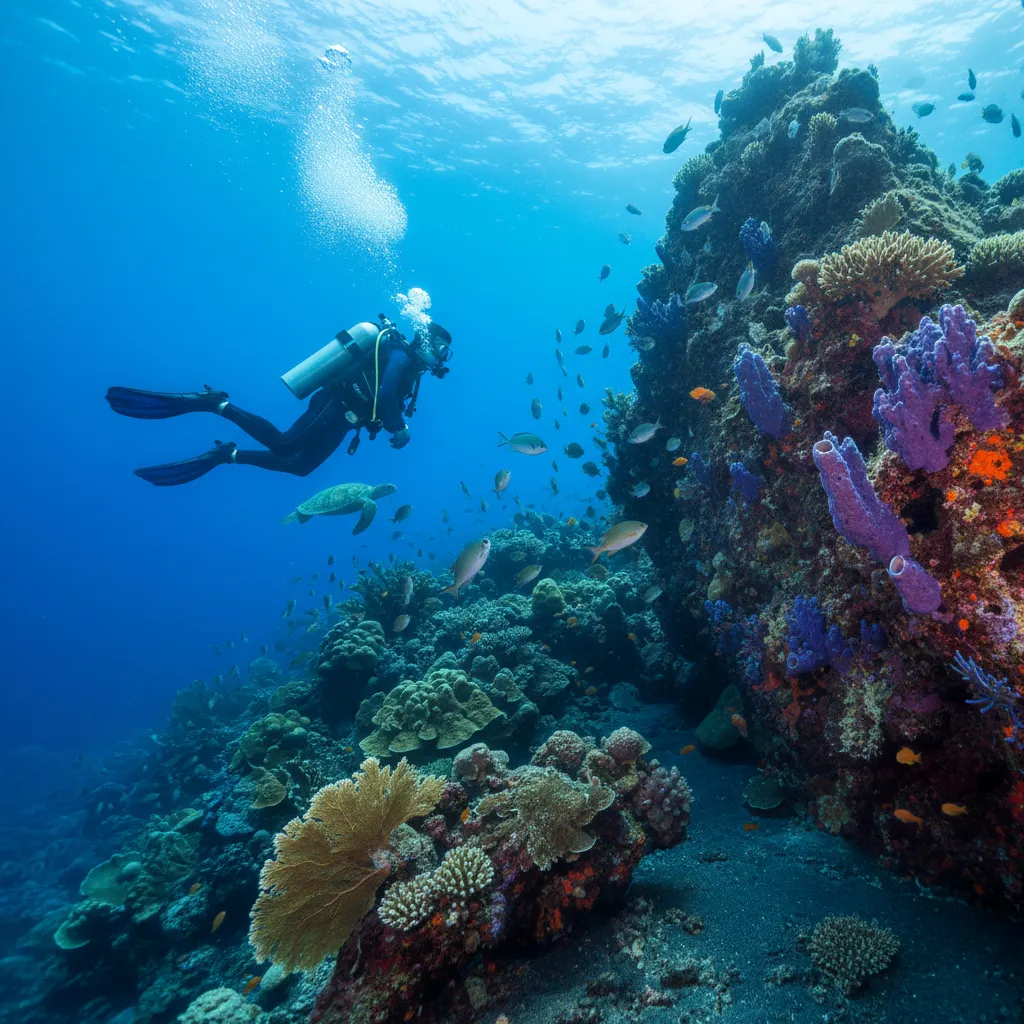
Why São Tomé & Príncipe for Your First Dives?
São Tomé & Príncipe offers a unique and intimate introduction to scuba diving, particularly appealing to those seeking a less crowded experience. While the country features a mix of difficulty levels across its 6 dive sites, there are certainly accessible options for beginners. The warm equatorial waters, typically ranging from 26-29°C (79-84°F), eliminate the need for thick wetsuits, making for a more comfortable first dive experience. Visibility generally hovers around 15-25 meters (50-80 feet), providing ample opportunity to observe the underwater environment without feeling overwhelmed.
For first-time divers, the lack of strong, unpredictable currents at many of the shallower sites around São Tomé is a significant advantage. This allows beginners to focus on buoyancy and breathing without battling challenging conditions. While not known for massive pelagic encounters, the islands boast a healthy array of reef fish, moray eels, octopus, and various crustaceans. Spotting a green sea turtle or a manta ray is also a possibility, adding to the excitement of initial dives. The uncommercialized nature of diving here means personalized attention from dive centers, which is invaluable for new divers.
Best Beginner-Friendly Regions
The island of São Tomé is the primary hub for diving and offers several sites suitable for beginners. Its accessibility and established dive operations make it an ideal starting point. Many of the shallower reef dives near the capital provide calm conditions and gentle slopes, perfect for practicing basic skills. While specific site names might vary slightly between operators, look for sites with maximum depths of 12-18 meters (40-60 feet) and minimal current, often found closer to shore or within sheltered bays.
Príncipe, though less developed for diving, also holds potential for beginners, particularly around its more sheltered coves. The smaller scale of operations here means a very personalized experience. If visiting Príncipe, inquire with local operators about calmer, shallower reef areas that might be suitable for introductory dives. The unhurried pace and pristine environment can contribute to a very relaxed first diving experience.
What Certification Do You Need?
To embark on certified dives in São Tomé & Príncipe, you will typically need a PADI Open Water Diver certification or an equivalent certification from another recognized agency like SSI or CMAS. This entry-level certification allows you to dive to a maximum depth of 18 meters (60 feet) with a buddy. If you're not yet certified, local dive centers offer Discover Scuba Diving experiences, which allow you to try diving under direct instructor supervision in shallow water without prior certification. They also provide full Open Water Diver courses for those looking to get certified during their trip. PADI is the most commonly recognized certification agency by local operators.
Best Time to Visit
The best time to visit São Tomé & Príncipe for diving is during the dry season, which runs from June to September. During these months, you can expect more consistent sunny weather and generally calmer seas, contributing to better visibility and a more comfortable boat ride. The water temperature during this period remains warm, typically in the 26-28°C (79-82°F) range. While diving is possible year-round, the rainy season (October to May) can bring heavier rainfall, choppier conditions, and potentially reduced visibility, especially after heavy downpours.
What to Expect on Your First Dive
Your first dive experience in São Tomé & Príncipe will likely begin at a local dive center. After a warm welcome, you'll complete necessary paperwork and receive a thorough safety briefing. This briefing will cover the dive plan, hand signals, equipment usage, and what marine life you might encounter. You'll then be fitted with appropriate rental gear-mask, fins, wetsuit (usually a 3mm shorty or full suit), BCD, regulator, and weights. Many dives here are conducted from small, nimble boats, often traditional fishing vessels adapted for diving, which offer a short ride to the dive sites. Shore dives are less common but can be arranged for specific introductory experiences.
Once at the dive site, your instructor will guide you through a gentle backward roll or giant stride entry into the water. You'll spend some time on the surface ensuring everything is comfortable before beginning your descent. Under the direct supervision of your instructor, you'll gradually descend, practicing equalization techniques and getting accustomed to breathing underwater. The typical style of diving is relaxed, with a focus on observing the reef and its inhabitants at a leisurely pace. Currents are generally mild at beginner sites, allowing for an easy drift or stationary exploration. Expect a dive lasting around 45-60 minutes, depending on air consumption, followed by a safe ascent and surface interval.
Budget Guide
Diving in São Tomé & Príncipe is generally more affordable than some highly commercialized destinations, but it's important to budget appropriately. A Discover Scuba Diving experience typically costs between $70-100 USD (approximately 1,500-2,200 STD). An Open Water Diver certification course, which usually takes 3-4 days, can range from $450-600 USD (approximately 9,900-13,200 STD), including equipment rental and certification fees. Fun dives for certified divers are usually around $50-70 USD (approximately 1,100-1,500 STD) per dive, with discounts often available for multi-dive packages. Equipment rental, if not included in a course or package, might add $10-20 USD per day. Accommodation varies widely: budget guesthouses can be found for $30-60 USD per night, mid-range hotels for $80-150 USD, and higher-end resorts for $200+ USD.
Essential Tips
- Book dive trips and courses in advance, especially during the dry season (June-September), as dive operators are fewer and can get booked up.
- Bring appropriate sun protection-reef-safe sunscreen, hats, and rash guards-the equatorial sun is intense.
- Be prepared for a slower pace of life and travel; flexibility is key when planning activities.
- Carry local currency (Dobra - STD) for smaller purchases and tips, though USD is accepted by some larger establishments.
- Inform your dive center of any medical conditions well in advance to ensure you can dive safely.
- Stay hydrated; the tropical climate can lead to dehydration quickly, especially when engaging in physical activity.
- Respect local customs and marine life; maintain a respectful distance from creatures and avoid touching anything underwater.
At a Glance
São Tomé
São Tomé & Príncipe
Difficulty
Beginner
Best Months
Jan-Dec
Water Temp
29-29C
Dive Centres
2
Practical Info
- dive Sites:
- 6
- dive Centres:
- 2
Frequently Asked Questions
Do I need a certification to dive in São Tomé & Príncipe?
To go on certified dives, you need a PADI Open Water Diver certification or equivalent. However, you can try diving without certification via a Discover Scuba Diving experience, supervised by an instructor in shallow water.
How much does diving cost in São Tomé & Príncipe?
A Discover Scuba Dive typically costs $70-100 USD. An Open Water course ranges from $450-600 USD. Fun dives for certified divers are around $50-70 USD per dive, with equipment rental sometimes an additional cost.
What is the best time to dive in São Tomé & Príncipe?
The best time for diving is during the dry season, from June to September. This period offers calmer seas, better visibility, and consistent warm water temperatures of 26-28°C (79-82°F).
Is São Tomé & Príncipe safe for beginner divers?
Yes, São Tomé & Príncipe can be safe for beginner divers, especially at shallower sites with mild currents. Dive centers provide personalized attention, and the warm waters make for a comfortable experience. Always dive with a certified instructor.
What marine life will I see in São Tomé & Príncipe?
You can expect to see various reef fish, moray eels, octopus, and crustaceans. Green sea turtles and manta rays are also sometimes spotted. The focus is on smaller, vibrant reef inhabitants rather than large pelagic schools.
Related Guides
Planning when to go?
See the month-by-month conditions guide