First Time Diving in Seychelles - A Beginner's Complete Guide
Everything you need to know before your first dive in Seychelles
Why Seychelles for Your First Dives?
Seychelles offers a compelling proposition for first-time divers, largely due to its consistently warm waters and generally good visibility. The average water temperature hovers around 27-29°C (81-84°F) year-round, eliminating the need for thick wetsuits and making for a comfortable introduction to the underwater world. While some areas can experience currents, many of the inner island dive sites are sheltered, providing calm conditions ideal for mastering buoyancy and basic skills. This comfortable environment allows beginners to focus on the experience rather than battling the elements.
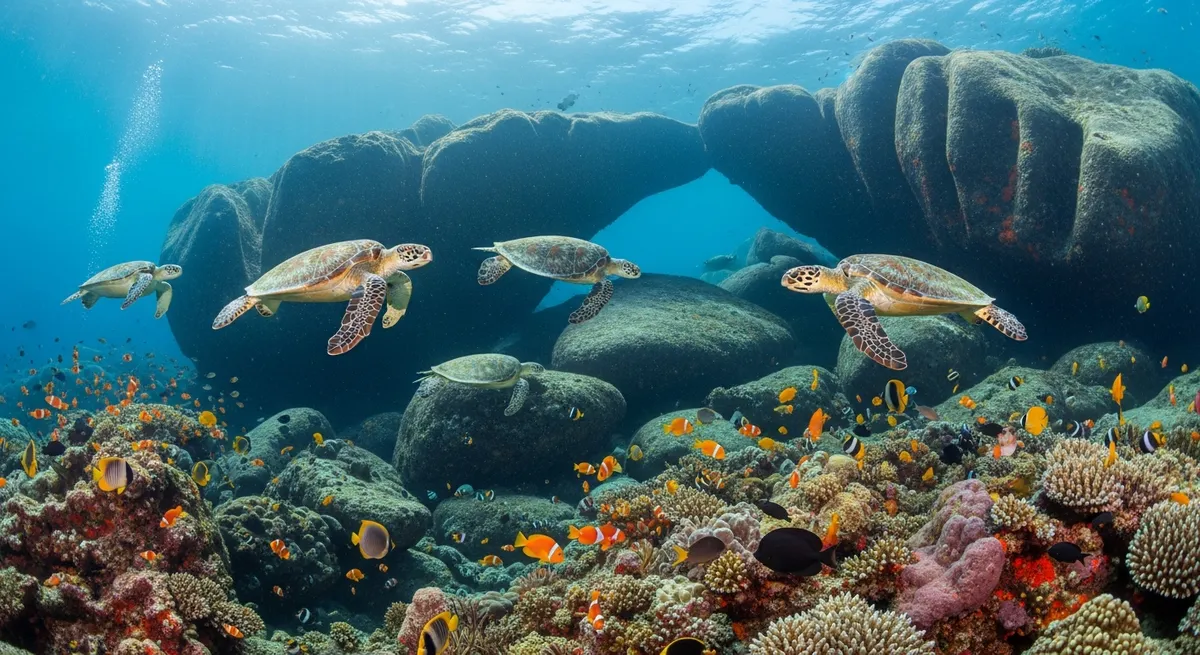
The marine life in Seychelles is diverse and accessible, even at shallower depths. You can expect to encounter a variety of reef fish, turtles, rays, and often reef sharks. The coral gardens, while recovering in some areas, still offer vibrant displays of hard and soft corals. While Seychelles is known for its pelagic encounters in deeper waters, the shallower reefs around the Inner Islands provide plenty of fascinating subjects for new divers, making every dive an engaging experience without being overwhelming. It's a destination where you can progress from a discover scuba dive to your Open Water certification with genuine enjoyment.
Best Beginner-Friendly Regions
Inner Islands: This region, encompassing islands like Mahe, Praslin, and La Digue, is widely considered the most accessible for beginners. The dive sites here are typically shallower and more sheltered, offering calmer conditions and less current. Specific sites like 'Ennerdale Wreck' (a shallow wreck at 30m, but with plenty to see above 18m) off Mahe, 'Ave Maria' near Praslin, and 'Sister Rocks' off La Digue provide gentle introductions to reef diving and marine life. Visibility is generally excellent, enhancing the learning experience.
Silhouette Island: Located west of Mahe, Silhouette Island offers a slightly more remote feel but still maintains beginner-friendly conditions, particularly on its eastern and southern coasts. The island's protected marine park status helps preserve its reefs. Dive sites like 'Grand Barbe' and 'Anse La Passe' are known for their gentle slopes and abundant fish life, making them suitable for those still building confidence. The less crowded sites here can offer a more peaceful learning environment.
Desroches & Amirantes: While often associated with more advanced diving due to its atoll structure, certain areas around Desroches Island within the Amirantes group can be suitable for confident beginners, especially when guided by local experts. The extensive reef system offers sheltered lagoons and shallower outer reef sections. Sites like 'The Canyon' and 'Desroches Wall' (the shallower sections) present opportunities to see larger marine life in generally good conditions, provided the currents are monitored. It's best to consult with local dive centers for specific beginner-appropriate sites here.
What Certification Do You Need?
For your first real dives beyond a supervised Discover Scuba Diving experience, you will need a PADI Open Water Diver certification or an equivalent certification from another recognized agency such as SSI, CMAS, or NAUI. This certification qualifies you to dive independently with a buddy to a maximum depth of 18 meters (60 feet). Most dive centers in Seychelles offer Open Water courses, which typically take 3-4 days to complete, including classroom sessions, confined water training, and four open water dives. Local dive centers are abundant, especially around the Inner Islands, and are well-equipped to provide training in English, French, and sometimes other languages. PADI is the most globally recognized and commonly offered certification in Seychelles.
Best Time to Visit
The best time to visit Seychelles for diving is generally during the calmer inter-monsoon periods: April to May and October to November. During these months, the winds are lighter, resulting in flatter seas and optimal visibility, often exceeding 30 meters (100 feet). Water temperatures during these periods are consistently warm, ranging from 28-30°C (82-86°F).
The southeast monsoon (June to September) brings stronger winds and choppier seas, which can reduce visibility, particularly on the exposed coasts. The northwest monsoon (December to March) brings more rain but generally calmer seas and good visibility, with water temperatures around 27-29°C (81-84°F). For first-time divers prioritizing calm conditions and maximum visibility, the inter-monsoon periods are ideal.
What to Expect on Your First Dive
Upon arrival at the dive center, you'll typically check-in, complete any necessary paperwork, and be fitted for rental gear. A comprehensive dive briefing will cover the dive site, expected marine life, safety procedures, and communication signals. Your instructor will assist you in gearing up, which involves assembling your BCD, regulator, and tank. Most dives in Seychelles are boat dives, so you'll board a comfortable dive boat for a short ride to the site.
The entry into the water is usually a giant stride from the boat, followed by a surface check of your gear. Your first underwater experience will be guided closely by your instructor, focusing on controlled descent, buoyancy, and enjoying the surroundings. Expect relatively calm conditions on beginner-friendly sites, with gentle currents at most. You'll spend time observing the vibrant reef life, practicing basic skills, and getting comfortable breathing underwater. The typical dive duration is 45-60 minutes, depending on air consumption. After the dive, you'll ascend safely, return to the boat, and head back to the dive center for debriefing and logbook entries.
Budget Guide
Diving in Seychelles can vary in cost depending on the island and dive center. Here's a realistic estimate:
- Discover Scuba Diving (DSD): A single introductory dive experience, typically costing 120-180 USD (approximately 1,600-2,400 SCR). This includes equipment rental and instructor supervision.
- PADI Open Water Course: Expect to pay 550-750 USD (approximately 7,400-10,000 SCR) for a full certification course. This usually covers all materials, equipment rental, and instructor fees for the duration of the course.
- Fun Dives (Certified Divers): A single fun dive typically costs 60-85 USD (approximately 800-1,150 SCR). Package deals for multiple dives (e.g., 6-10 dives) can reduce the per-dive cost.
- Equipment Rental: While often included in course and DSD prices, daily rental for full gear (BCD, regulator, wetsuit, mask, fins) can be around 30-50 USD (approximately 400-670 SCR) if not part of a package.
- Accommodation: Budget guesthouses can start from 70-120 USD per night, mid-range hotels 150-300 USD, and luxury resorts 400 USD+.
It's always advisable to confirm prices directly with dive centers, as they can fluctuate seasonally and between operators.
Essential Tips
- Book in Advance: Especially during peak seasons (April-May, October-November) and around major holidays, dive courses and boat spots can fill up quickly. Book your dives and courses well ahead of your trip.
- Sun Protection: The equatorial sun is intense. Use reef-safe sunscreen, wear a hat, and consider a rash guard even when not diving.
- Stay Hydrated: Drink plenty of water before and after dives to prevent dehydration, especially in the warm climate.
- Respect Marine Life: Do not touch corals or marine animals. Maintain a respectful distance and observe from afar.
- Current Awareness: While beginner sites are generally calm, some areas can experience mild currents. Listen carefully to your dive brief and follow your instructor's guidance.
- Local Currency: While USD is often accepted, having Seychellois Rupees (SCR) for smaller purchases or local establishments is beneficial.
- Consider Travel Insurance: Ensure your travel insurance covers scuba diving, especially for medical emergencies.
At a Glance
| Destination | Difficulty | Best Months |
|---|---|---|
| Inner IslandsSeychelles | Beginner | Jan-Dec |
| Aldabra & Outer IslandsSeychelles | Beginner | Jan-Mar, Dec |
| Silhouette IslandSeychelles | Beginner | - |
| Desroches & AmirantesSeychelles | Beginner | - |
Inner Islands
Seychelles
Difficulty
Beginner
Best Months
Jan-Dec
Water Temp
27-30C
Dive Centres
21
Practical Info
- dive Sites:
- 75
- dive Centres:
- 21
Aldabra & Outer Islands
Seychelles
Difficulty
Beginner
Best Months
Jan-Mar, Dec
Water Temp
25-30C
Dive Centres
4
Practical Info
- dive Sites:
- 4
- dive Centres:
- 4
Frequently Asked Questions
Do I need a certification to dive in Seychelles?
For an introductory experience, you can do a Discover Scuba Diving (DSD) program without certification. However, to participate in regular fun dives and explore beyond shallow depths, you will need a PADI Open Water Diver certification or an equivalent from another recognized agency like SSI or CMAS.
How much does diving cost in Seychelles?
A Discover Scuba Diving experience typically costs 120-180 USD. A full PADI Open Water course ranges from 550-750 USD. For certified divers, a single fun dive is usually 60-85 USD, with discounts for multi-dive packages. Equipment rental is often included in course prices.
What is the best time to dive in Seychelles?
The optimal times for diving in Seychelles are during the inter-monsoon periods from April to May and October to November. These months offer the calmest seas, best visibility (often over 30 meters), and water temperatures of 28-30°C.
Is Seychelles safe for beginner divers?
Yes, Seychelles is generally very safe for beginner divers. The Inner Islands offer sheltered, shallow dive sites with minimal currents and consistently warm water. Dive centers are well-regulated, and instructors are experienced in guiding new divers, prioritizing safety and comfort.
What marine life will I see in Seychelles?
Beginner divers in Seychelles can expect to see a rich variety of reef fish, green and hawksbill turtles, various species of rays (including stingrays and eagle rays), and often reef sharks. The coral reefs also host diverse hard and soft corals and smaller macro life.
Related Guides
Planning when to go?
See the month-by-month conditions guide