First Time Diving in Singapore - A Beginner's Complete Guide
Everything you need to know before your first dive in Singapore
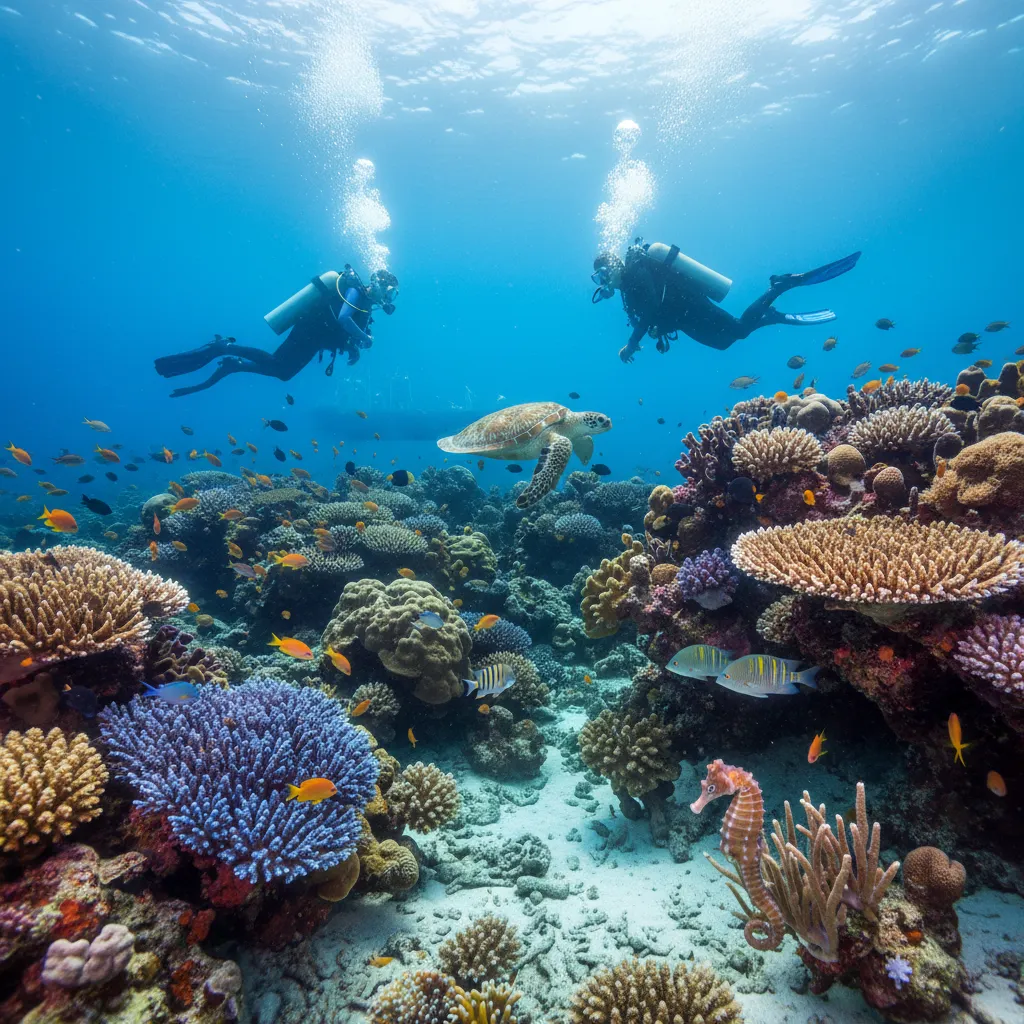
Why Singapore for Your First Dives?
Singapore, while not immediately recognized as a dive mecca, offers a unique and accessible entry point for beginner divers. With consistently warm water temperatures averaging 28-30°C (82-86°F) year-round, cold is rarely a concern, allowing new divers to focus on skills and buoyancy without the added challenge of thick wetsuits. The relatively sheltered nature of its dive sites, primarily around the Southern Islands, means calmer conditions are often the norm, reducing motion sickness and making for a more comfortable first experience.
Visibility in Singapore's waters typically ranges from 3-8 meters (10-26 feet), which, while not always extensive, is perfectly adequate for learning and spotting the diverse macro life. New divers will appreciate the ability to focus on smaller creatures like nudibranchs, seahorses, and various reef fish without being overwhelmed by vast, open spaces. The focus here is on discovering the intricate details of the reef, making it an excellent training ground for developing observation skills and buoyancy control in a controlled environment. Singapore presents a manageable challenge, ideal for building confidence before venturing to destinations with stronger currents or deeper dives.
Best Beginner-Friendly Regions
Singapore's dive sites are concentrated in one key region: the Southern Islands. This area offers the most accessible and suitable conditions for novice divers, with 11 designated beginner sites out of a total of 202. The sheltered coves and relatively shallow depths here provide a safe and controlled environment for learning. Dive centres typically operate boat trips to these islands, ensuring convenient access to the best spots for training and introductory dives.
Within the Southern Islands, sites like Pulau Hantu are particularly well-regarded for beginners. Pulau Hantu is actually two islands, Hantu Besar (Big Ghost) and Hantu Kechil (Small Ghost), separated by a shallow channel. Its calm, shallow waters and gentle currents are ideal for practicing basic skills and getting comfortable underwater. You can expect to see a variety of macro life and hard corals, making it engaging without being overly complex for a first dive. The focus here is on discovering smaller, fascinating creatures in a relaxed setting.
What Certification Do You Need?
To participate in guided fun dives in Singapore, you will generally need to hold a PADI Open Water Diver certification or an equivalent certification from a recognized agency such as SSI, NAUI, or CMAS. This certification demonstrates that you have completed the necessary training to dive safely to a depth of 18 meters (60 feet) with a buddy. For those who are not yet certified, local dive centres offer Discover Scuba Diving experiences, which allow uncertified individuals to try diving under direct instructor supervision in shallow water. If you wish to pursue full certification, the PADI Open Water Diver course is widely available and popular in Singapore, typically taking 3-4 days to complete.
Best Time to Visit
Diving in Singapore is possible year-round due to its tropical climate, but certain periods offer slightly more favourable conditions. The dry season, from March to September, generally sees less rainfall and calmer seas, which can sometimes translate to marginally better visibility. However, visibility is more influenced by tides and local conditions than by specific months. Water temperatures remain consistently warm throughout the year, typically ranging from 28°C to 30°C (82°F to 86°F), so thermal comfort is never an issue for divers.
The monsoon season, from November to February, brings more rain and potentially choppier surface conditions, but diving operations usually continue. It's advisable to check with local dive operators closer to your travel dates for the most up-to-date conditions and schedule availability, especially if planning a trip during the monsoon months. For beginner divers, any time of year can be suitable, as the sheltered nature of the Southern Islands often provides protection from strong weather.
What to Expect on Your First Dive
Your first dive in Singapore will typically begin at a local dive centre where you'll check in, complete any necessary paperwork, and get fitted for your gear. After a comprehensive pre-dive briefing covering safety procedures, dive site specifics, and communication signals, you'll gear up. Most dives in Singapore are boat dives, meaning you'll travel by boat to the Southern Islands. Once at the dive site, your instructor will guide you through a controlled entry into the water, usually a giant stride or a seated back roll.
Underwater, the experience for beginners in Singapore focuses on shallow, calm conditions. You'll likely start with some basic skill practice, such as mask clearing and regulator recovery, in very shallow water before slowly descending. The pace will be relaxed, allowing you to get accustomed to breathing underwater and maintaining buoyancy. You'll be closely supervised by your instructor, who will point out marine life like nudibranchs, crabs, and various reef fish. Expect a focus on observing the smaller details of the reef rather than expansive vistas. Dives are typically planned to avoid strong currents, making for a comfortable and stress-free introduction to the underwater world.
Budget Guide
Diving in Singapore can vary in cost depending on the activity. A Discover Scuba Diving experience, perfect for uncertified beginners, typically costs around SGD 180-250 (USD 135-185). For those seeking full certification, a PADI Open Water Diver course usually ranges from SGD 650-850 (USD 485-630), often including equipment rental and boat trips. Fun dives for certified divers are generally priced at SGD 120-180 (USD 90-135) for a two-dive trip, including tanks and weights, with additional costs for full equipment rental (SGD 50-80 or USD 35-60 per day).
Accommodation in Singapore ranges widely. Budget hostels can be found for SGD 30-70 (USD 20-50) per night, while mid-range hotels typically cost SGD 150-300 (USD 110-220) per night. Luxury options are significantly higher. Food is generally affordable, especially at hawker centres, where a meal can cost SGD 5-15 (USD 4-11). Transportation is efficient and reasonably priced using public transport. Overall, a beginner dive trip to Singapore can be tailored to various budgets, but it's not the cheapest dive destination in Southeast Asia.
Essential Tips
- Book in Advance: Dive trips, especially on weekends, can fill up quickly. Book your spots with dive centres at least 1-2 weeks ahead.
- Check Tides: Visibility in Singapore is heavily influenced by tidal movements. Ask your dive centre about the best tide windows for your planned dive day.
- Bring Reef-Safe Sunscreen: Protect yourself from the strong tropical sun, but ensure your sunscreen is reef-safe to minimize environmental impact.
- Stay Hydrated: The tropical heat and humidity can lead to dehydration. Drink plenty of water before and after your dives.
- Manage Expectations for Visibility: Singapore's visibility is generally moderate. Focus on the rich macro life and intricate reef details rather than expecting long-distance views.
- Be Punctual: Singaporean dive operators value punctuality. Arrive on time for check-ins and boat departures to avoid delays.
At a Glance
| Destination | Difficulty | Best Months |
|---|---|---|
| Southern IslandsSingapore | Beginner | Jan-Dec |
Southern Islands
Singapore
Difficulty
Beginner
Best Months
Jan-Dec
Water Temp
28-28C
Dive Centres
42
Practical Info
- dive Sites:
- 202
- dive Centres:
- 42
Frequently Asked Questions
Do I need a certification to dive in Singapore?
For guided fun dives in Singapore, you will need a PADI Open Water Diver certification or equivalent. However, if you're uncertified, you can try a Discover Scuba Diving experience under direct instructor supervision in shallow water.
How much does diving cost in Singapore?
A Discover Scuba Diving experience costs SGD 180-250 (USD 135-185). A PADI Open Water Diver course ranges from SGD 650-850 (USD 485-630). Fun dives for certified divers are typically SGD 120-180 (USD 90-135) for a two-dive trip, with equipment rental extra.
What is the best time to dive in Singapore?
Diving is possible year-round in Singapore. The dry season from March to September generally offers calmer seas and potentially better visibility. Water temperatures are consistently warm, 28-30°C (82-86°F), throughout the year.
Is Singapore safe for beginner divers?
Yes, Singapore is suitable for beginner divers. Its dive sites in the Southern Islands offer calm, shallow waters with gentle currents, ideal for learning. Water temperatures are consistently warm, enhancing comfort during training.
What marine life will I see in Singapore?
In Singapore's waters, you can expect to see a variety of macro life, including nudibranchs, seahorses, various species of crabs and shrimp, and a range of reef fish. Hard corals are also present, providing habitats for these smaller creatures.
Related Guides
Planning when to go?
See the month-by-month conditions guide