First Time Diving in Solomon Islands - A Beginner's Complete Guide
Everything you need to know before your first dive in Solomon Islands
Why Solomon Islands for Your First Dives?
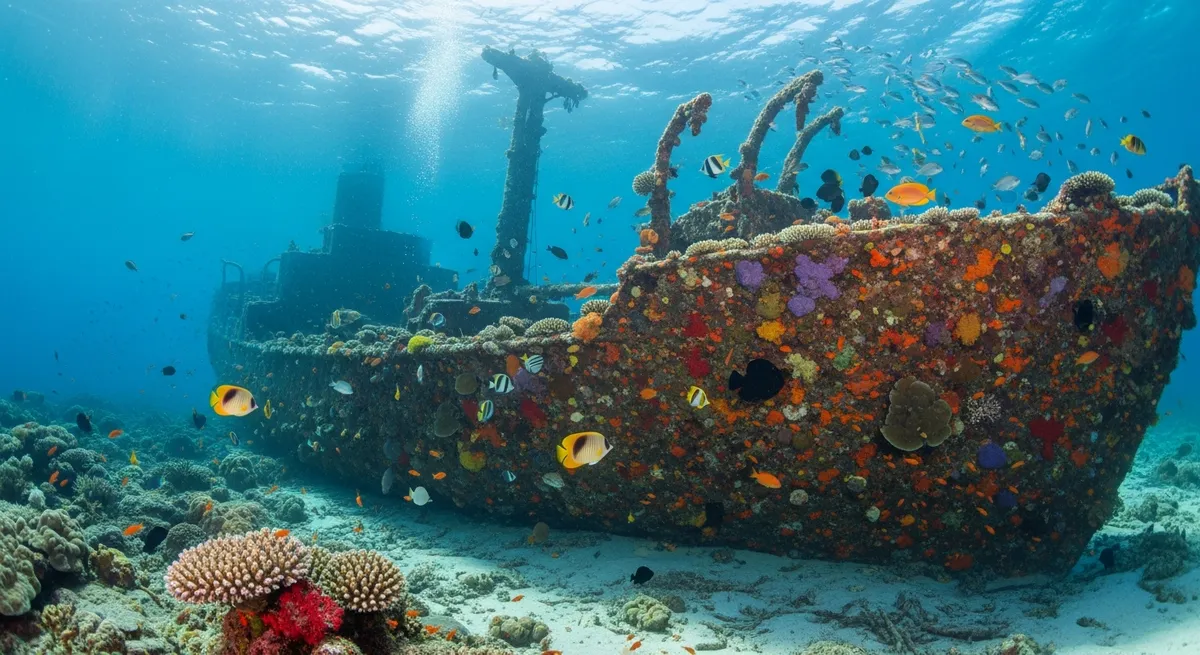
The Solomon Islands offer a unique and rich diving experience, particularly for those interested in historical wrecks and vibrant coral reefs. While often associated with more advanced wreck diving, certain regions and sites are very suitable for beginners. The average water temperature hovers around 28-30°C (82-86°F) year-round, making for comfortable dives without the need for thick wetsuits. Visibility is generally good, often exceeding 20 meters (65 feet), which is excellent for new divers to orient themselves and enjoy the underwater scenery.
However, it's important to set realistic expectations. Of the 119 dive sites across 5 regions, only 18 are officially rated as beginner-friendly, and 5 as intermediate. This means that while there are options, the Solomon Islands are not primarily a beginner-focused destination in the same way some other tropical locations might be. The country is known for its strong currents in certain areas and deeper wreck dives. Therefore, beginners should stick strictly to guided dives at designated easy sites and communicate their experience level clearly to dive operators to ensure a safe and enjoyable introduction to diving in this historically significant underwater world.
Best Beginner-Friendly Regions
Marovo Lagoon
Marovo Lagoon, a UNESCO World Heritage site, offers some of the most pristine and protected reef diving in the Solomon Islands. Its sheltered waters mean less exposure to strong currents, making it ideal for new divers. The lagoon is home to an incredible diversity of hard and soft corals, with gentle slopes and shallow reefs perfect for practicing buoyancy and observing reef fish. While specific beginner sites aren't always named universally, dive operators here specialize in finding calm, shallow areas within the lagoon that provide a gentle introduction to the underwater environment, often featuring parrotfish, anemonefish, and various nudibranchs.
Florida Islands
The Florida Islands, located close to the capital Honiara, provide accessible diving with a mix of historical and natural sites. While some areas feature deeper wrecks, there are numerous shallow reefs and walls suitable for beginners. Dive sites like Twin Tunnels (though often done as a multi-level dive) have shallower sections with abundant coral growth and fish life. The proximity to Honiara means easier logistics for first-time visitors, with established dive centers offering guided trips to calmer areas. Expect to see reef sharks, barracuda, and schools of fusiliers in these vibrant reef systems.
Russell Islands
The Russell Islands offer a fantastic blend of healthy reefs and some unique geological features that have calmer, shallower sections suitable for beginners. While places like Leru Cut are famous for advanced divers, many outer reefs and sheltered bays provide excellent conditions for novices. The visibility here is often superb, and the coral gardens are extensive. Dive operators in the Russells are adept at selecting sites with minimal current and depths appropriate for Open Water divers, allowing them to comfortably explore coral bommies and observe a variety of macro life and reef fish.
What Certification Do You Need?
To participate in guided fun dives in the Solomon Islands, you will need to hold a PADI Open Water Diver certification or an equivalent certification from a recognized agency such as SSI, NAUI, or CMAS. This certification demonstrates that you have completed the necessary training to dive safely to a maximum depth of 18 meters (60 feet). If you are not yet certified, many local dive centers offer Discover Scuba Diving experiences for uncertified individuals, allowing you to try diving under direct supervision in shallow water. They also provide full Open Water Diver courses. PADI is widely recognized, and most dive centers will be PADI affiliated or accept PADI certifications. It's advisable to complete your certification before arriving, especially if time is limited, as the Solomon Islands are more remote and course availability might vary.
Best Time to Visit
The Solomon Islands generally experience warm, tropical weather year-round, making it a viable dive destination throughout the year. However, the optimal time to visit for stable weather and calm seas is typically during the drier season, from May to November. During these months, you can expect less rainfall, lower humidity, and more consistent sunshine. Water temperatures remain consistently warm, ranging from 28°C to 30°C (82°F to 86°F) regardless of the season, meaning a 3mm shorty or even just a rash guard will usually suffice. While the wet season (December to April) can bring heavier rains and potentially choppier seas, dive operations generally continue, although some sites might be temporarily inaccessible due to weather conditions. Always check with your chosen dive operator closer to your travel dates for the most up-to-date local conditions.
What to Expect on Your First Dive
Your first dive experience in the Solomon Islands will typically begin at a local dive center or resort. You'll go through a check-in process, presenting your certification card and filling out any necessary liability waivers. Following this, there will be a comprehensive dive briefing, where your guide will outline the dive plan, safety procedures, hand signals, marine life you might encounter, and specific details about the dive site, including entry and exit points and maximum depth. You'll then be fitted with rental gear or assemble your own equipment. Most diving in the Solomon Islands is boat-based, so you'll gear up on the boat. Entry into the water is usually a giant stride from the boat. Once in the water, you'll perform a final buddy check and descend slowly with your guide. The underwater experience for beginners will focus on calm, sheltered reefs, allowing you to get comfortable with breathing underwater and practicing buoyancy. You can expect a relaxed pace, with your guide pointing out interesting marine life. Currents at beginner sites are generally mild to non-existent. After the dive, you'll surface, return to the boat, and enjoy the ride back, often with discussions about what you saw.
Budget Guide
Diving in the Solomon Islands can vary in cost depending on the region and operator. A Discover Scuba Diving experience typically costs between SBD 800 - SBD 1200 (approximately USD 95 - USD 145). An Open Water Diver certification course, including all materials and dives, generally ranges from SBD 5000 - SBD 7500 (approximately USD 600 - USD 900). For certified divers, a single fun dive usually costs SBD 500 - SBD 700 (approximately USD 60 - USD 85), with discounts for multi-dive packages (e.g., 10-dive packages might reduce the per-dive cost). Equipment rental is often included in course prices, but for fun dives, it might be an additional SBD 100 - SBD 200 (approximately USD 12 - USD 25) per day for full gear. Accommodation ranges significantly: budget guesthouses can be SBD 200 - SBD 400 (USD 25 - USD 50) per night, mid-range resorts SBD 800 - SBD 1500 (USD 95 - USD 180), and luxury options above SBD 2000 (USD 240+). Food costs are reasonable, especially if eating local cuisine.
Essential Tips
- Communicate Your Experience: Always be upfront with your dive operator about your exact certification level and number of dives. This helps them match you with appropriate sites and guides.
- Book in Advance: Especially for liveaboards or specific resorts in remote areas like Marovo Lagoon, booking well in advance (3-6 months) is highly recommended due to limited availability.
- Respect Local Customs: The Solomon Islands are a culturally rich nation. Be mindful of local customs and dress modestly when not at your resort or on a dive boat. Always ask permission before taking photos of people.
- Carry Cash: While some major resorts and dive centers accept credit cards, many smaller establishments and local vendors operate on a cash-only basis. The local currency is the Solomon Islands Dollar (SBD).
- Malaria Prevention: The Solomon Islands are a malaria-risk area. Consult your doctor about anti-malarial medication and take precautions against mosquito bites.
- Travel Insurance: Ensure your travel insurance specifically covers scuba diving, including medical evacuation, as medical facilities can be limited in remote areas.
- Hydrate Well: The tropical climate can lead to dehydration. Drink plenty of water before and after dives.
At a Glance
| Destination | Difficulty | Best Months |
|---|---|---|
| Iron Bottom SoundSolomon Islands | Beginner | Jan-Dec |
| Gizo & Western ProvinceSolomon Islands | Beginner | Jan-Dec |
| Marovo LagoonSolomon Islands | Beginner | - |
| Florida IslandsSolomon Islands | Beginner | - |
| Russell IslandsSolomon Islands | Beginner | - |
Iron Bottom Sound
Solomon Islands
Difficulty
Beginner
Best Months
Jan-Dec
Water Temp
30-30C
Dive Centres
4
Practical Info
- dive Sites:
- 74
- dive Centres:
- 4
Gizo & Western Province
Solomon Islands
Difficulty
Beginner
Best Months
Jan-Dec
Water Temp
29-31C
Dive Centres
6
Practical Info
- dive Sites:
- 45
- dive Centres:
- 6
Frequently Asked Questions
Do I need a certification to dive in Solomon Islands?
Yes, to participate in guided fun dives in the Solomon Islands, you need a PADI Open Water Diver certification or an equivalent from another recognized agency. Uncertified individuals can try a Discover Scuba Diving experience under direct supervision in shallow water.
How much does diving cost in Solomon Islands?
A Discover Scuba Diving experience costs SBD 800-1200 (USD 95-145). An Open Water Diver course is SBD 5000-7500 (USD 600-900). A single fun dive for certified divers is SBD 500-700 (USD 60-85), with discounts for packages. Equipment rental is often extra for fun dives, around SBD 100-200 (USD 12-25) per day.
What is the best time to dive in Solomon Islands?
The best time to dive in the Solomon Islands is during the drier season, from May to November. This period offers more stable weather, less rainfall, and calmer seas. Water temperatures remain consistently warm, 28-30°C (82-86°F), year-round.
Is Solomon Islands safe for beginner divers?
While the Solomon Islands have many advanced dive sites, there are 18 beginner-friendly sites spread across regions like Marovo Lagoon, Florida Islands, and Russell Islands. Beginners should stick to these designated sites and clearly communicate their experience level to dive operators to ensure a safe and enjoyable dive experience.
What marine life will I see in Solomon Islands?
In the Solomon Islands, particularly on beginner-friendly reef dives, you can expect to see vibrant hard and soft corals, diverse reef fish like parrotfish and anemonefish, nudibranchs, reef sharks, barracuda, and schools of fusiliers. The marine biodiversity is rich, offering a compelling underwater experience.
Related Guides
Planning when to go?
See the month-by-month conditions guide