First Time Diving in South Africa - A Beginner's Complete Guide
Everything you need to know before your first dive in South Africa
Why South Africa for Your First Dives?
South Africa offers a diverse and often exhilarating introduction to scuba diving, though it's important to set realistic expectations. While some regions boast calm, warmer waters suitable for beginners, other areas present more challenging conditions with cooler temperatures and stronger currents. Across its 380 dive sites, you'll find a mix of difficulty levels, with 7 sites specifically identified as beginner-friendly, 11 as intermediate, and 9 as advanced. This means careful site selection is crucial for your first underwater adventures.
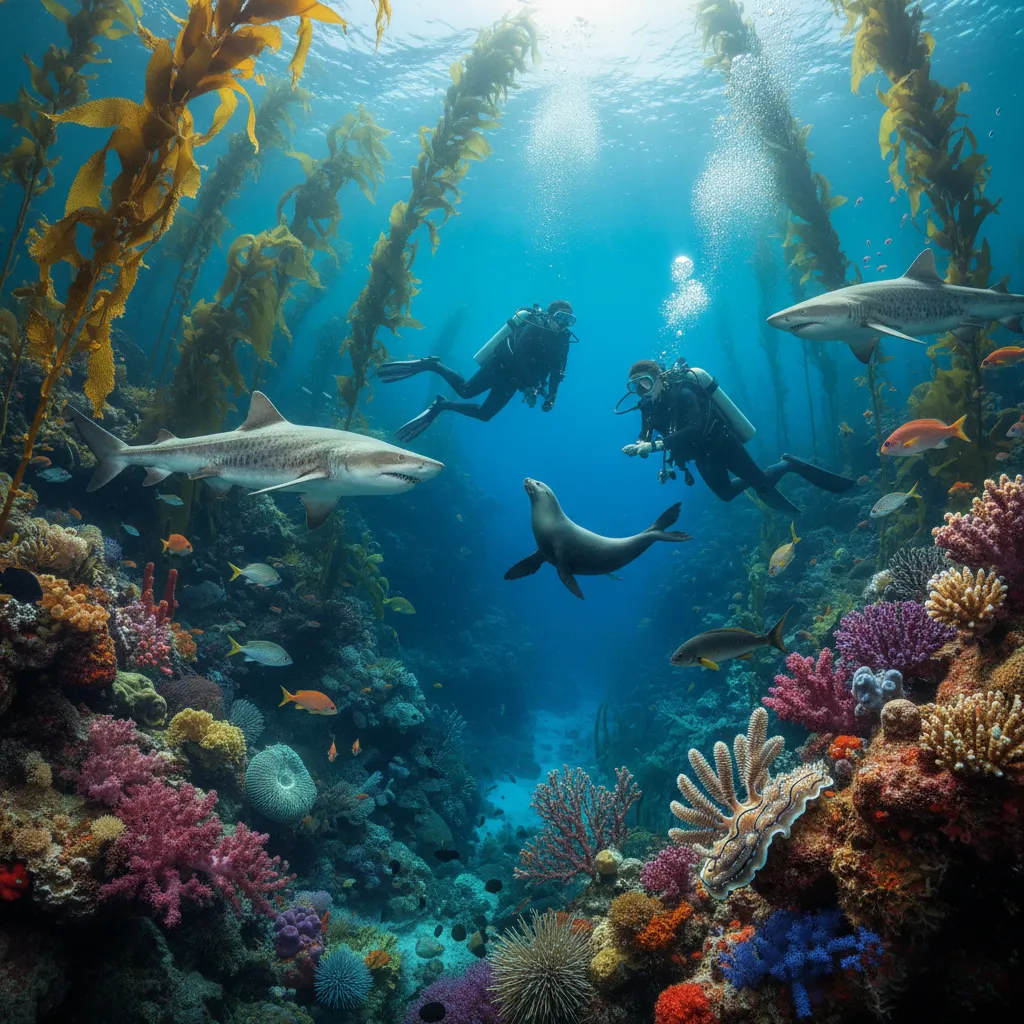
For beginners, the warmer Indian Ocean coast offers more comfortable conditions. Water temperatures here can range from 20-28°C, providing a gentler introduction than the cooler Atlantic side, which can drop to 10-18°C. Visibility varies significantly by region and season, from 5 meters on a challenging day to 30+ meters in optimal conditions. Marine life highlights include vibrant coral reefs, a variety of reef fish, turtles, and smaller shark species in the warmer waters. While South Africa is renowned for its large pelagics, these are typically found in more advanced diving scenarios.
Overall, South Africa can be a suitable destination for a first dive experience, provided you choose the right region and dive operator. It’s a country that rewards divers with unique ecosystems and encounters, but it's not universally easy. Be prepared for a range of conditions and always prioritize safety and comfort, especially as a beginner.
Best Beginner-Friendly Regions
When planning your first dives in South Africa, focusing on specific regions will enhance your experience. While the country offers a vast array of dive sites, not all are suitable for novices. Here are the top three regions that cater to beginners:
Sodwana Bay, KwaZulu-Natal
Located on the warm Indian Ocean coast, Sodwana Bay is arguably the best beginner-friendly region in South Africa. Its protected bay ensures calmer conditions, and the vibrant coral reefs are shallow enough for new divers to explore comfortably. Water temperatures are consistently warmer, typically 22-28°C, and visibility often exceeds 15 meters. Dive sites like Two Mile Reef (the shallower sections) and Quarter Mile Reef offer gentle drifts and abundant reef fish, making them ideal for initial open water dives. The focus here is on colorful hard and soft corals, moray eels, and various tropical fish species.
Cape Town & Western Cape
While Cape Town itself is known for its cooler Atlantic waters and kelp forests, certain sheltered bays and specific sites in the Western Cape can be suitable for beginners, especially during calmer summer months. The focus here is on unique temperate marine life, including various nudibranchs, octopuses, and the distinctive Cape fur seals. Water temperatures are cooler, ranging from 10-18°C, so a thicker wetsuit is essential. Dive sites such as Shark Alley near Gansbaai (for surface viewing) and specific sheltered areas in False Bay can offer calmer conditions for initial training dives, often involving shore entries.
KwaZulu-Natal (excluding Sodwana Bay)
Beyond Sodwana Bay, other parts of KwaZulu-Natal also offer beginner-friendly options. Areas around Umkomaas, while famous for Aliwal Shoal (which has more advanced sections), also have shallower, protected areas suitable for training. The warm Indian Ocean waters persist here, offering comfortable temperatures. These areas provide opportunities to see smaller reef sharks, rays, and a variety of reef fish. Dive operators in these regions are experienced in guiding new divers to appropriate sites, often focusing on the shallower reef sections or protected lagoons for initial experiences.
What Certification Do You Need?
To participate in guided fun dives in South Africa, you will generally need to hold a PADI Open Water Diver certification or an equivalent certification from a recognized agency like SSI, NAUI, or CMAS. This certification demonstrates that you have completed basic training in dive theory, confined water skills, and open water dives, allowing you to dive safely with a buddy to a maximum depth of 18 meters.
If you are not yet certified, you can enroll in a Discover Scuba Diving (DSD) experience. This is a single-day introductory program where you learn basic skills and complete one or two supervised dives under the direct guidance of an instructor. It does not result in a certification but allows you to experience diving before committing to a full course.
South Africa has numerous PADI and SSI dive centers located in all key diving regions. These centers offer a full range of courses, from DSD to advanced certifications. While PADI is very popular, you will find a good presence of SSI centers as well. It's advisable to book your course or DSD in advance, especially during peak season.
Best Time to Visit
The best time to visit South Africa for diving depends significantly on the region you plan to explore, due to the country's diverse climate and ocean currents.
- Sodwana Bay & KwaZulu-Natal (Indian Ocean Coast): The prime diving season here is generally from May to September, which is winter in South Africa. During these months, the weather is cooler and drier, leading to calmer seas and often better visibility, which can exceed 20 meters. Water temperatures remain warm, typically 22-26°C. While diving is possible year-round, summer (November-March) can bring more rain, wind, and plankton blooms, potentially reducing visibility.
- Cape Town & Western Cape (Atlantic Ocean Coast): The best conditions for diving in the cooler Western Cape are during the summer months, from November to March. During this period, the waters are calmer, and visibility can be at its best, often reaching 10-15 meters. Water temperatures range from 10-18°C, so a 5mm or 7mm wetsuit is essential. Winter (June-August) brings colder water, rougher seas, and reduced visibility, making diving more challenging.
For beginners seeking the most comfortable experience, targeting the winter months for the Indian Ocean coast (Sodwana Bay) or the summer months for the calmer areas of the Western Cape will yield the best results.
What to Expect on Your First Dive
Your first dive experience in South Africa, whether it's a Discover Scuba Diving session or your first certified fun dive, will follow a structured process designed for safety and enjoyment.
Upon arrival at the dive center, you'll typically complete paperwork, including medical questionnaires and liability waivers. You'll then receive a comprehensive briefing from your instructor or dive guide. This will cover the dive site's specific features, emergency procedures, communication signals, and a review of your equipment. For DSD participants, this briefing will also include essential dive theory and skill demonstrations.
Next, you'll be fitted with your scuba gear-a wetsuit, BCD, regulator, mask, fins, and weights. Dive operators in South Africa often use rigid inflatable boats (RIBs) for entries, especially in Sodwana Bay. This involves a 'back roll' or 'giant stride' entry from the boat. For some beginner-friendly sites in the Western Cape, shore entries are common, where you walk into the water from the beach. South African waters can have currents, so entries and exits are often swift and efficient to minimize surface time.
Once in the water, you'll perform a final buddy check and descend with your instructor or guide. The underwater experience will vary by region, but expect a focus on buoyancy control, finning techniques, and enjoying the marine environment. In Sodwana Bay, you'll drift along vibrant coral reefs, while in the Western Cape, you might explore kelp forests. Dives are typically planned for depths appropriate for beginners, usually not exceeding 12-18 meters. After the dive, you'll return to the boat or shore, debrief with your guide, and log your dive. The typical dive style is often boat-based, with careful attention to currents and efficient procedures.
Budget Guide
Diving in South Africa offers a range of price points, but it's important to budget realistically for a quality and safe experience.
- Discover Scuba Diving (DSD): Expect to pay R1,000-R1,800 (approx. $55-100 USD) for a DSD experience, which typically includes equipment rental and one or two supervised dives.
- PADI Open Water Course: A full PADI Open Water Diver course usually ranges from R4,500-R7,500 (approx. $250-420 USD). This includes theory, confined water sessions, four open water dives, equipment rental, and certification fees.
- Fun Dives (Certified Divers): A single fun dive will cost approximately R500-R800 (approx. $28-45 USD), often excluding equipment rental. A two-dive package typically ranges from R900-R1,500 (approx. $50-85 USD), sometimes including tank and weights. Full equipment rental for a day can add R200-R400 (approx. $11-22 USD) to your cost.
- Equipment Rental: Daily rental for a full set of gear (BCD, regulator, wetsuit, mask, fins) is usually R200-R400 (approx. $11-22 USD).
- Accommodation: Budget accommodation (hostels, guesthouses) can range from R300-R800 (approx. $17-45 USD) per night. Mid-range hotels or lodges are typically R1,000-R2,500 (approx. $55-140 USD) per night.
These prices are estimates and can vary based on the dive center, location, and time of year. Always confirm current prices directly with the dive operator.
Essential Tips
- Book in Advance: Especially during peak seasons (South African winter for Sodwana Bay, summer for Cape Town), dive courses and popular dive excursions can fill up quickly. Book your spots well in advance.
- Wetsuit Thickness: Be prepared for varying water temperatures. For Sodwana Bay, a 3mm or 5mm wetsuit is usually sufficient. For Cape Town, a 5mm or 7mm wetsuit, possibly with a hood, is highly recommended due to the cooler Atlantic waters.
- Currents: Many South African dive sites, even beginner-friendly ones, can experience currents. Listen carefully to your dive brief and follow your guide's instructions closely. Maintain good buoyancy control.
- Marine Park Fees: Some dive sites, particularly in Sodwana Bay, are within marine protected areas and require a daily conservation or marine park fee, which may or may not be included in your dive package. Confirm this with your dive operator.
- Surface Conditions: The Indian Ocean coast, while warm, can experience strong winds and swell, particularly in summer. If you are prone to seasickness, consider medication before boat dives.
- Local Dive Culture: South African dive operators are generally professional and safety-conscious. Expect thorough briefings and a focus on responsible diving practices.
- Sun Protection: The South African sun is intense. Use high-SPF sunscreen, wear a hat, and stay hydrated, especially when spending time on dive boats.
At a Glance
| Destination | Difficulty | Best Months |
|---|---|---|
| Cape Town & Western CapeSouth Africa | Beginner | Jan-Dec |
| Sodwana BaySouth Africa | Beginner | Jan-Dec |
| KwaZulu-NatalSouth Africa | Beginner | Jan-Dec |
Cape Town & Western Cape
South Africa
Difficulty
Beginner
Best Months
Jan-Dec
Water Temp
19-19C
Dive Centres
44
Practical Info
- dive Sites:
- 264
- dive Centres:
- 44
Sodwana Bay
South Africa
Difficulty
Beginner
Best Months
Jan-Dec
Water Temp
28-28C
Dive Centres
12
Practical Info
- dive Sites:
- 68
- dive Centres:
- 12
KwaZulu-Natal
South Africa
Difficulty
Beginner
Best Months
Jan-Dec
Water Temp
27-27C
Dive Centres
7
Practical Info
- dive Sites:
- 48
- dive Centres:
- 7
Frequently Asked Questions
Do I need a certification to dive in South Africa?
Yes, to participate in guided fun dives in South Africa, you generally need a PADI Open Water Diver certification or an equivalent. If you're not certified, you can try a Discover Scuba Diving experience under instructor supervision, which doesn't result in certification but allows you to dive.
How much does diving cost in South Africa?
A Discover Scuba Diving experience costs R1,000-R1,800 ($55-100 USD). A full PADI Open Water course is R4,500-R7,500 ($250-420 USD). A single fun dive for certified divers is R500-R800 ($28-45 USD), often with equipment rental extra.
What is the best time to dive in South Africa?
For Sodwana Bay and the Indian Ocean coast, May to September (winter) offers calmer seas and better visibility. For Cape Town and the Western Cape, November to March (summer) provides calmer conditions, though waters are cooler.
Is South Africa safe for beginner divers?
South Africa can be safe for beginner divers, provided you choose appropriate sites and reputable dive operators. Stick to beginner-friendly regions like Sodwana Bay, listen to your guide, and be aware of varying conditions like currents and water temperatures.
What marine life will I see in South Africa?
In Sodwana Bay, expect colorful coral reefs, reef fish, moray eels, and turtles. In the Western Cape, you'll encounter unique temperate species like Cape fur seals, various nudibranchs, and octopuses in kelp forests. Larger pelagics are typically for advanced dives.
Related Guides
Planning when to go?
See the month-by-month conditions guide