First Time Diving in Sri Lanka - A Beginner's Complete Guide
Everything you need to know before your first dive in Sri Lanka
Why Sri Lanka for Your First Dives?
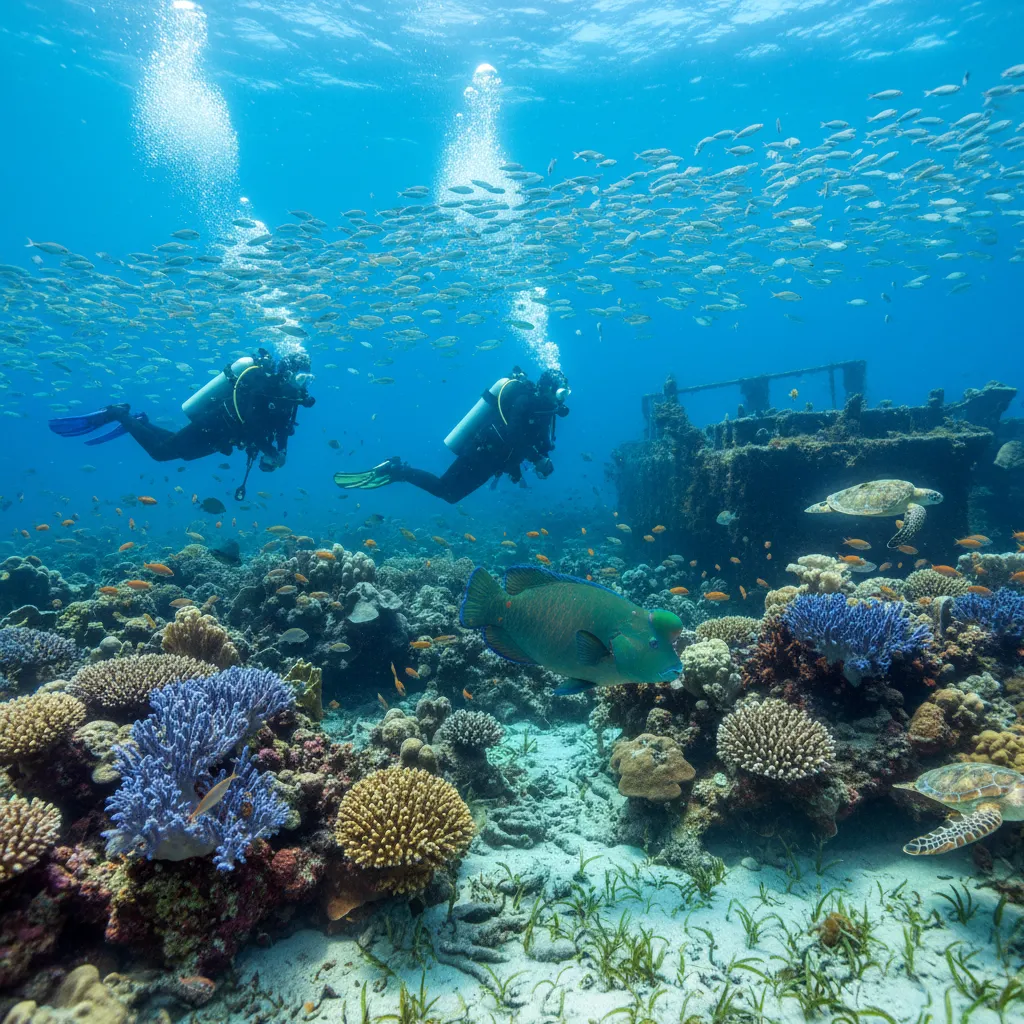
Sri Lanka presents an appealing introduction to the underwater world for new divers. The island nation offers consistently warm water temperatures, typically ranging from 27-30°C, which means comfortable diving without the need for thick wetsuits. Visibility often extends 15-25 meters, providing good conditions for beginners to observe their surroundings and practice skills without feeling overwhelmed by low light or murky conditions. While some sites can experience currents, many of the designated beginner areas are known for their calmer waters.
For those taking their first breaths underwater, Sri Lanka delivers on marine life encounters. You can expect to see a variety of reef fish, vibrant corals, turtles, and smaller reef sharks. The presence of these fascinating creatures in relatively shallow, well-lit environments makes for memorable first dives. The country also boasts a significant number of dive sites, with 120 spread across four main regions, ensuring diverse options as you gain experience.
While Sri Lanka is generally suitable for beginners, it's important to note that some regions and specific sites do present more challenging conditions, including stronger currents or deeper profiles. However, dedicated beginner sites are plentiful, making it possible to tailor your diving experience to your comfort and skill level. Dive centers are accustomed to catering to new divers, offering Discover Scuba Diving experiences and Open Water certification courses in environments conducive to learning.
Best Beginner-Friendly Regions
Hikkaduwa & South Coast
The Hikkaduwa and South Coast region is a prime choice for beginner divers, especially during the dry season. Its sheltered reefs and generally calm conditions make it ideal for initial training and first fun dives. Dive sites like the Hikkaduwa Coral Sanctuary offer shallow, protected areas where you can comfortably practice skills and observe colorful reef fish and turtles. Many local dive centers operate here, specializing in entry-level courses and guided experiences for new divers.
Trincomalee & East Coast
During the East Coast diving season, Trincomalee provides excellent conditions for beginners. The waters here are typically calm and offer good visibility, particularly around sites such as Pigeon Island National Park. The park features shallow coral gardens that are perfect for Discover Scuba Dives and initial Open Water training, allowing new divers to become accustomed to buoyancy and breathing underwater in a relaxed setting while encountering reef sharks and a variety of fish.
Kalpitiya & Northwest
Kalpitiya on the Northwest coast is another strong contender for beginner divers, particularly for those interested in a quieter dive experience. While known for its dolphin and whale watching, its reefs also provide suitable conditions for learning. The sites often feature less current and good visibility, making them comfortable for initial confined water training and subsequent open water dives. The dive centers here are well-equipped to guide novices through their first underwater adventures.
What Certification Do You Need?
To participate in guided fun dives in Sri Lanka, you will need a recognized entry-level scuba diving certification. The most commonly accepted certification is the PADI Open Water Diver or an equivalent certification from agencies like SSI, NAUI, or CMAS. This certification demonstrates that you have completed the necessary academic, confined water, and open water training to dive safely to a maximum depth of 18 meters with a buddy.
If you are completely new to diving and wish to try it out before committing to a full course, you can opt for a Discover Scuba Diving (DSD) experience. This allows you to dive under the direct supervision of an instructor in shallow water, typically to a maximum depth of 12 meters, without needing prior certification. However, a DSD is not a certification and does not allow you to dive independently afterward.
Local dive centers across Sri Lanka are well-equipped to offer PADI courses, from DSD to Open Water and beyond. You will find PADI is the predominant certification agency, making it easy to find courses and instructors who speak various languages. It's advisable to complete the academic portion of your Open Water course online before arriving to maximize your time in the water.
Best Time to Visit
Sri Lanka experiences two distinct monsoon seasons, which dictate the best time to dive in different regions. For the Hikkaduwa & South Coast, the optimal diving season runs from October/November to April/May. During these months, the southwest monsoon has passed, resulting in calm seas, excellent visibility averaging 15-25 meters, and water temperatures consistently between 27-30°C.
Conversely, for the Trincomalee & East Coast, the best diving season is from May/June to September/October. This period sees the northeast monsoon subside, offering calm conditions, good visibility of 15-25 meters, and similar warm water temperatures of 27-30°C. The Kalpitiya & Northwest region generally follows the West Coast season, with optimal conditions from October to May.
Therefore, Sri Lanka offers year-round diving opportunities; you just need to choose the appropriate coast based on the time of year. Always check with local dive operators closer to your travel dates for the most current conditions, as weather patterns can sometimes vary.
What to Expect on Your First Dive
Your first dive in Sri Lanka, especially if it's a Discover Scuba Dive or the initial open water training dive, will follow a structured process. You'll start with a check-in at the dive center, where you'll complete necessary paperwork and try on equipment. This is followed by a comprehensive briefing by your instructor, covering safety procedures, hand signals, equipment function, and what marine life you might encounter. For DSD participants, key skills like mask clearing and regulator recovery will be explained and practiced.
Most first dives in Sri Lanka involve boat entries. After gearing up on the boat, your instructor will guide you through a controlled entry into the water, often a giant stride or a seated back roll. Once in the water, you'll perform a final equipment check and get comfortable on the surface before slowly descending. Many beginner sites are characterized by relatively calm conditions and mild to no current, allowing for a relaxed introduction to breathing underwater.
Underwater, your instructor will maintain close proximity, guiding you through the reef and ensuring your comfort and safety. You'll have ample time to get accustomed to buoyancy and observe the marine environment. The typical dive style for beginners focuses on observation and skill reinforcement rather than covering large distances. Expect the dive to last around 45-60 minutes, depending on your air consumption, followed by a safe ascent and return to the boat or shore.
Budget Guide
Diving in Sri Lanka offers a range of options suitable for various budgets. Here's a realistic cost breakdown:
- Discover Scuba Diving (DSD): A single DSD experience typically costs around 7,000-12,000 LKR (approximately $25-$40 USD), often including equipment rental and instructor supervision.
- PADI Open Water Course: A full PADI Open Water Diver certification course, including theory, confined water, and four open water dives, usually ranges from 60,000-85,000 LKR (approximately $200-$280 USD). This generally covers all equipment, instructor fees, and certification costs.
- Fun Dives (Certified Divers): A single fun dive for certified divers typically costs 6,000-9,000 LKR (approximately $20-$30 USD), with discounts often available for multi-dive packages (e.g., 2 dives for 10,000-15,000 LKR or $35-$50 USD).
- Equipment Rental: Most dive centers include basic equipment rental (BCD, regulator, wetsuit, mask, fins) in course and fun dive prices. If not, individual item rental is usually minimal.
- Accommodation: Budget guesthouses can be found for 4,000-8,000 LKR ($13-$27 USD) per night. Mid-range hotels are 10,000-20,000 LKR ($33-$67 USD), and higher-end options can exceed 25,000 LKR ($80+ USD).
These prices are approximate and can vary based on the dive center, region, and current exchange rates. It's always best to inquire directly with your chosen dive operator for up-to-date pricing.
Essential Tips
- Book in Advance for Peak Season: During the peak diving seasons for each coast (October-May for South/West, May-October for East), dive centers can get busy. Book your courses or fun dives a few days to a week in advance.
- Check Monsoon Schedules: Sri Lanka's diving is highly seasonal. Ensure you are visiting the correct coast for the time of year to avoid rough seas and poor visibility.
- Stay Hydrated: The tropical climate means you'll be sweating more. Drink plenty of water before and after your dives to prevent dehydration and reduce the risk of decompression sickness.
- Bring Reef-Safe Sunscreen: Protect your skin from the strong sun, but choose sunscreens that are safe for coral reefs to minimize your environmental impact.
- Respect Local Customs: When not diving, be mindful of local customs and dress codes, especially when visiting temples or rural areas.
- Carry Local Currency: While some larger dive centers accept cards, smaller operations and local vendors often prefer or require Sri Lankan Rupees (LKR).
- Consider Travel Insurance with Dive Coverage: Ensure your travel insurance policy covers scuba diving accidents and potential medical evacuation, even for beginner-level dives.
At a Glance
| Destination | Difficulty | Best Months |
|---|---|---|
| Hikkaduwa & South CoastSri Lanka | Beginner | Jan-Dec |
| Trincomalee & East CoastSri Lanka | Beginner | Jan-Dec |
| Kalpitiya & NorthwestSri Lanka | Beginner | - |
| Batticaloa & EastSri Lanka | Beginner | - |
Hikkaduwa & South Coast
Sri Lanka
Difficulty
Beginner
Best Months
Jan-Dec
Water Temp
28-28C
Dive Centres
13
Practical Info
- dive Sites:
- 64
- dive Centres:
- 13
Trincomalee & East Coast
Sri Lanka
Difficulty
Beginner
Best Months
Jan-Dec
Water Temp
27-27C
Dive Centres
9
Practical Info
- dive Sites:
- 40
- dive Centres:
- 9
Kalpitiya & Northwest
Sri Lanka
Difficulty
Beginner
Dive Centres
16
Practical Info
- dive Sites:
- 16
- dive Centres:
- 16
Frequently Asked Questions
Do I need a certification to dive in Sri Lanka?
To go on guided fun dives in Sri Lanka, you need an entry-level certification like PADI Open Water Diver. If you're new to diving, you can try a Discover Scuba Diving experience under instructor supervision without certification.
How much does diving cost in Sri Lanka?
A Discover Scuba Dive typically costs 7,000-12,000 LKR ($25-$40 USD). A PADI Open Water course is 60,000-85,000 LKR ($200-$280 USD). Fun dives for certified divers are 6,000-9,000 LKR ($20-$30 USD) per dive, with multi-dive package discounts.
What is the best time to dive in Sri Lanka?
For the South/West Coast (Hikkaduwa), the best time is October/November to April/May. For the East Coast (Trincomalee), it's May/June to September/October. Water temperatures are consistently 27-30°C.
Is Sri Lanka safe for beginner divers?
Yes, Sri Lanka is suitable for beginner divers. Many dive sites offer calm, shallow waters with good visibility and warm temperatures. Reputable dive centers provide thorough briefings and close instructor supervision for new divers.
What marine life will I see in Sri Lanka?
Beginner divers in Sri Lanka can expect to see a variety of colorful reef fish, hard and soft corals, sea turtles, and smaller reef sharks. The specific sightings can vary by region and dive site.
Related Guides
Planning when to go?
See the month-by-month conditions guide