First Time Diving in St. Kitts & Nevis - A Beginner's Complete Guide
Everything you need to know before your first dive in St. Kitts & Nevis
Why St. Kitts & Nevis for Your First Dives?
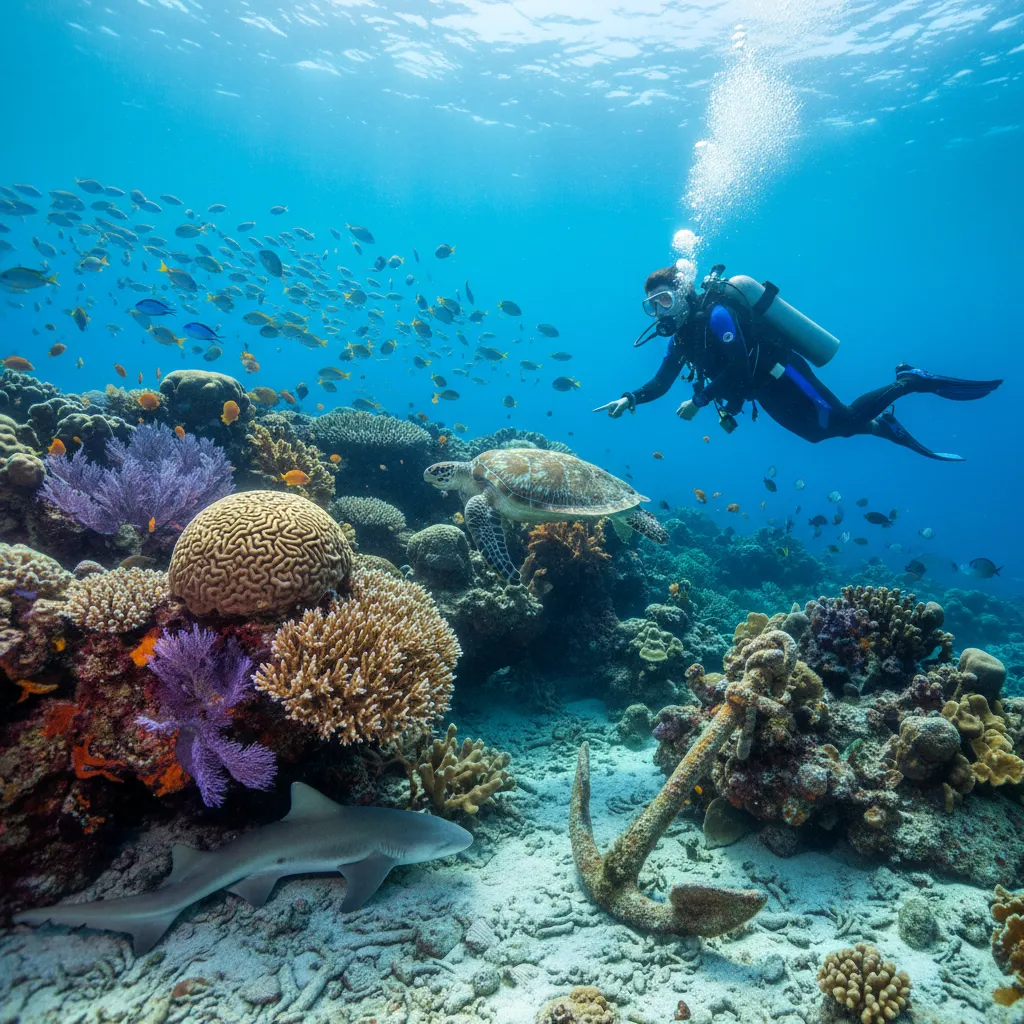
St. Kitts & Nevis offers a truly welcoming environment for beginner divers, making it an excellent choice for your first underwater adventures. The calm, warm Caribbean waters are a significant draw, with average temperatures consistently hovering around 26-29°C (79-84°F) year-round. This eliminates the need for thick wetsuits, making gear feel less cumbersome and allowing you to focus on buoyancy and basic skills in comfort. Visibility is generally excellent, often exceeding 20 meters (65 feet), which helps new divers feel less disoriented and allows for clear views of the vibrant marine life and coral formations. The islands boast a good mix of dive sites, with 8 specifically identified as beginner-friendly out of a total of 39 sites. This means there are plenty of shallow, current-free locations perfectly suited for learning and building confidence. You can expect to encounter a variety of Caribbean reef fish, colorful sponges, and perhaps even some gentle sea turtles or rays without having to navigate challenging conditions. While there are more advanced dives available, the focus for beginners is on accessible, enjoyable experiences right from the start. Unlike some destinations with strong currents or complex dive profiles, St. Kitts & Nevis generally offers relaxed diving conditions that are ideal for those just starting out. The dive operators are accustomed to working with new divers, providing thorough briefings and patient instruction. This supportive atmosphere, combined with the comfortable water conditions and good visibility, makes St. Kitts & Nevis a very suitable and enjoyable destination for your initial forays into scuba diving.Best Beginner-Friendly Regions
For beginners, the primary region to focus on is St. Kitts itself. While Nevis also has dive sites, the majority of the beginner-friendly options and dive operators are concentrated around St. Kitts, particularly on its Caribbean Sea side. This area benefits from calmer waters compared to the Atlantic side, which can experience more swell. Within St. Kitts, the sheltered bays and reefs along the south-western coast are particularly well-suited for new divers. Sites like "Shitten Bay" are excellent for introductory dives, offering shallow depths and a chance to see small wrecks and abundant reef life in a protected environment. "Nags Head" also provides calm conditions and a gentle sloping reef, perfect for practicing buoyancy and getting comfortable underwater. These sites are easily accessible by short boat rides from most dive centers, minimizing travel time and maximizing underwater exploration.What Certification Do You Need?
To go on supervised dives beyond an introductory "Discover Scuba Diving" experience, you will need a recognized scuba diving certification. The most common and widely accepted certification is the PADI Open Water Diver certification or an equivalent from another reputable agency like SSI (Scuba Schools International) or NAUI. This certification qualifies you to dive independently with a buddy to a maximum depth of 18 meters (60 feet). St. Kitts & Nevis has several PADI-affiliated dive centers that offer the full range of courses, from Discover Scuba Diving experiences for non-certified individuals to the Open Water Diver course and beyond. You can complete your course entirely on the islands, which typically takes 3-4 days, or you can do the academic portion online (eLearning) before your trip and complete the practical confined and open water dives in St. Kitts & Nevis. It's advisable to book your course in advance, especially during peak season, to ensure availability with your preferred dive center.Best Time to Visit
The best time to visit St. Kitts & Nevis for diving is generally during the dry season, which runs from December to May. During these months, you can expect stable weather patterns with less rainfall and lower humidity. Water temperatures remain consistently warm throughout the year, typically ranging from 26°C (79°F) in the cooler months (January-February) to 29°C (84°F) in the warmer months (July-October). Air temperatures during the dry season average around 27-30°C (81-86°F). Visibility is excellent year-round, but can be slightly enhanced during the dry season due to less runoff from rain. Hurricane season officially runs from June to November, with the peak months typically being August and September. While direct hits are rare, tropical storms can bring rougher seas and disrupt diving plans during this period. For optimal conditions and peace of mind, planning your trip between December and May is recommended.What to Expect on Your First Dive
Your first dive experience, whether it's a Discover Scuba Diving (DSD) or the first open water dive of your certification course, will typically begin at a local dive center. You'll start with a check-in process, where you'll complete necessary paperwork, including medical questionnaires. For DSDs, there will be a comprehensive safety briefing covering basic dive theory, equipment use, and essential hand signals. For certification courses, you will have already completed or will be completing academic sessions. Next, you'll be fitted with your scuba equipment - mask, fins, wetsuit (if needed, though often optional in St. Kitts' warm waters), BCD (buoyancy control device), regulator, and tanks. Dive centers in St. Kitts & Nevis primarily conduct boat dives for their open water excursions. You'll board a comfortable dive boat, usually with a small group, and enjoy a short ride to a calm, shallow dive site, often on the Caribbean side of St. Kitts. Once at the site, your instructor or dive guide will help you gear up. Entry into the water is typically a controlled giant stride from the boat. You'll spend some time on the surface getting comfortable with your equipment and breathing from the regulator before beginning your descent under the close supervision of your instructor. St. Kitts & Nevis dives are generally calm with minimal currents, making descents and underwater navigation straightforward for beginners. Expect to explore vibrant reef areas, observe various fish species, and practice basic skills in a relaxed environment before safely ascending back to the boat.Budget Guide
Diving in St. Kitts & Nevis offers a range of options suitable for various budgets. Here's a realistic breakdown of costs: * **Discover Scuba Diving (DSD) Experience:** Expect to pay approximately $100-$150 USD per person. This typically includes a brief theory session, equipment rental, and one supervised shallow dive. * **PADI Open Water Diver Course:** A full Open Water certification course, including all materials, equipment rental, and instructor fees, generally costs between $500-$650 USD. If you complete the eLearning portion beforehand, the practical component might be slightly less. * **Fun Dives (for certified divers):** A single boat dive usually costs around $60-$80 USD. A two-tank dive trip is typically $100-$130 USD. Most dive centers offer package deals for multiple dives (e.g., 6-10 dives) which can bring the per-dive cost down. * **Equipment Rental:** If you are certified but don't have your own gear, full equipment rental for a day (BCD, regulator, wetsuit, mask, fins) is usually included in fun dive prices or costs an additional $20-$30 USD per day if rented separately. * **Accommodation Range:** * **Budget-Friendly Guesthouses/Apartments:** $70-$150 USD per night. * **Mid-Range Hotels/Villas:** $150-$300 USD per night. * **Luxury Resorts:** $300+ USD per night. Prices are generally quoted in USD, which is widely accepted, though the local currency is the Eastern Caribbean Dollar (XCD). Always confirm pricing with your chosen dive operator.Essential Tips
* **Book in Advance:** Especially during the peak dry season (December-May), dive centers can get busy. Book your courses or fun dives a few weeks ahead to secure your spot. * **Stay Hydrated:** The tropical climate means you'll be sweating more. Drink plenty of water before, during, and after your dives to prevent dehydration. * **Sun Protection:** The Caribbean sun is strong. Use reef-safe sunscreen, wear a hat, and consider a rash guard for surface intervals. * **Review Medical Forms:** Before arriving, review the PADI medical questionnaire online. If you answer "yes" to any questions, you may need a doctor's clearance to dive, so plan accordingly. * **Respect Marine Life:** Observe marine life without touching. This protects both you and the delicate ecosystem. Never take souvenirs from the underwater environment. * **Currents are Minimal but Present:** While generally calm, some sites might experience mild currents. Listen carefully to your dive brief and follow your guide's instructions. * **Tip Your Crew:** Tipping dive guides and boat crew is customary and appreciated for good service, typically 10-15% of your dive cost.At a Glance
| Destination | Difficulty | Best Months |
|---|---|---|
| St. KittsSt. Kitts & Nevis | Beginner | Jan-Dec |
St. Kitts
St. Kitts & Nevis
Difficulty
Beginner
Best Months
Jan-Dec
Water Temp
27-27C
Dive Centres
3
Practical Info
- dive Sites:
- 39
- dive Centres:
- 3
Frequently Asked Questions
Do I need a certification to dive in St. Kitts & Nevis?
Yes, to go on supervised dives beyond a single introductory "Discover Scuba Diving" experience, you will need a recognized certification like PADI Open Water Diver or an equivalent from SSI or NAUI. Local dive centers offer full certification courses.
How much does diving cost in St. Kitts & Nevis?
A Discover Scuba Diving experience costs $100-$150 USD. A full PADI Open Water course is typically $500-$650 USD. For certified divers, a two-tank fun dive trip ranges from $100-$130 USD.
What is the best time to dive in St. Kitts & Nevis?
The best time for diving is during the dry season, from December to May, when weather is stable and rainfall is minimal. Water temperatures are consistently warm, 26-29°C (79-84°F), year-round.
Is St. Kitts & Nevis safe for beginner divers?
Yes, St. Kitts & Nevis is very safe for beginner divers. The waters are warm and calm, visibility is excellent, and there are many shallow, protected dive sites. Dive operators are experienced with new divers and prioritize safety.
What marine life will I see in St. Kitts & Nevis?
Beginner divers can expect to see a variety of colorful Caribbean reef fish, vibrant sponges and corals, sea turtles, stingrays, and various crustaceans on the shallow reefs and wrecks.
Related Guides
Planning when to go?
See the month-by-month conditions guide