First Time Diving in St. Vincent & the Grenadines - A Beginner's Complete Guide
Everything you need to know before your first dive in St. Vincent & the Grenadines
Why St. Vincent & the Grenadines for Your First Dives?
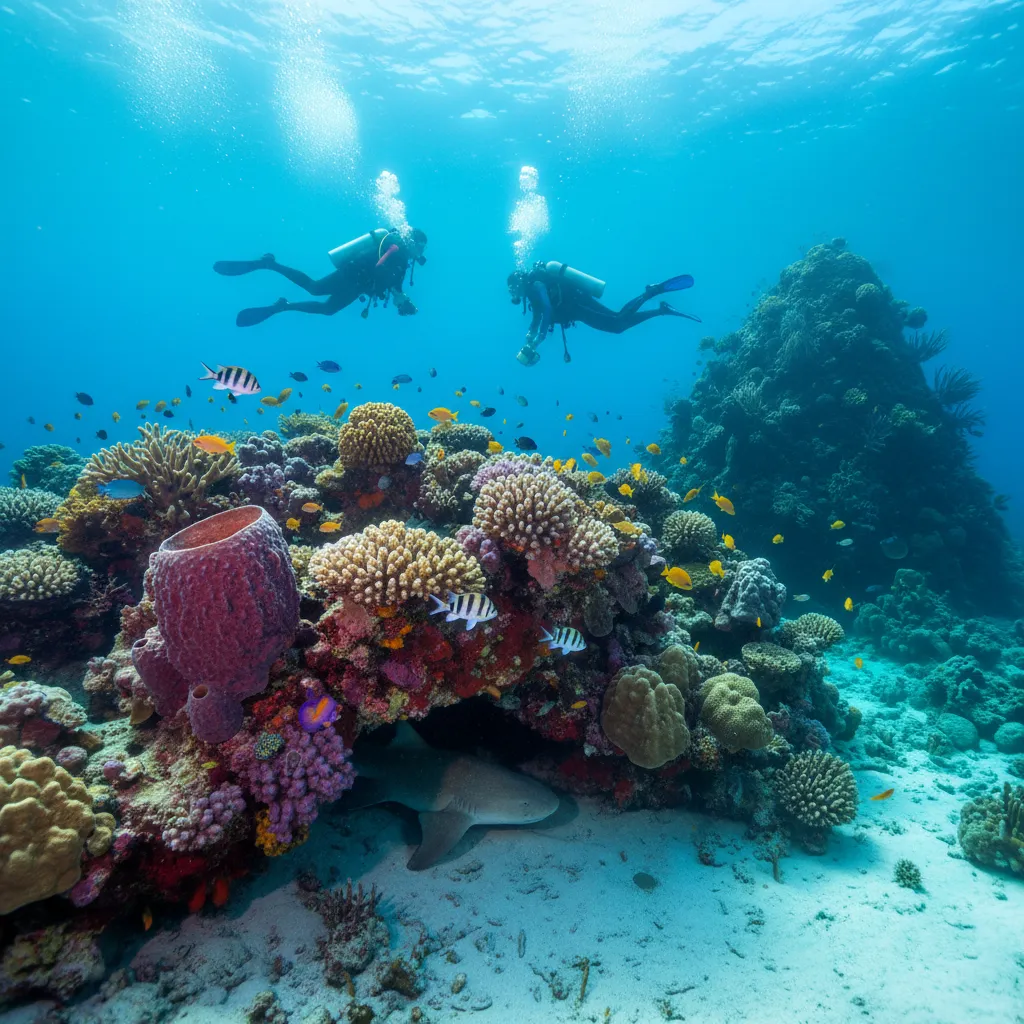
St. Vincent & the Grenadines offers a unique and engaging introduction to scuba diving, particularly for those seeking a blend of vibrant marine life and manageable dive conditions. While some sites cater to advanced divers, the country also provides several excellent opportunities for beginners to get comfortable underwater. The volcanic origins of St. Vincent create dramatic underwater landscapes, including fascinating walls and healthy reefs, which are often less impacted by mass tourism compared to other Caribbean destinations.
Water temperatures in St. Vincent & the Grenadines are consistently warm, generally ranging from 26-29°C (79-84°F) year-round, making for comfortable extended bottom times without the need for thick wetsuits. Visibility is typically good, often exceeding 20 meters (65 feet), allowing new divers to maintain orientation and enjoy the scenery. While not all sites are flat and current-free, careful selection by local dive operators ensures beginners are introduced to calmer environments. Marine life highlights include abundant macro creatures like seahorses and frogfish, along with colorful reef fish, turtles, and occasional rays.
Best Beginner-Friendly Regions
While St. Vincent & the Grenadines has a diverse range of dive sites, two regions stand out for their beginner-friendly options. St. Vincent itself offers a few sheltered spots ideal for initial training and discovery dives. Dive sites like Bat Cave and Anchor Reef, while not exclusively beginner sites, have sections that can be explored by new divers under guidance, offering a taste of the island's unique volcanic formations and macro life.
The Tobago Cays Marine Park, though often associated with more experienced drift diving, also provides calmer, shallower areas perfect for practicing skills and enjoying relaxed dives. The sheltered lagoons within the Cays, particularly around sites like Horseshoe Reef, offer excellent visibility and gentle conditions, allowing beginners to observe turtles, rays, and a variety of reef fish in a tranquil setting. These areas are often accessed via liveaboard or day trips from nearby islands.
What Certification Do You Need?
For your first certified dives in St. Vincent & the Grenadines, you will typically need a PADI Open Water Diver certification or an equivalent certification from another recognized agency such as SSI, NAUI, or CMAS. This certification allows you to dive to a maximum depth of 18 meters (60 feet) and participate in guided fun dives. If you are not yet certified, local dive centers offer Discover Scuba Diving experiences, which allow you to try diving under direct supervision in shallow water without prior certification.
St. Vincent & the Grenadines has a number of PADI-affiliated dive centers, making it easy to complete your Open Water course or refresh your skills. SSI is also well-represented. It's advisable to check with your chosen dive center in advance to confirm their specific agency affiliations and course offerings. Many centers allow you to complete the academic portion of your course online before arriving, saving valuable vacation time for in-water training.
Best Time to Visit
The best time to visit St. Vincent & the Grenadines for diving is during the dry season, which runs from December to May. During these months, you can expect stable weather patterns, lower humidity, and less rainfall. Air temperatures average between 27-30°C (81-86°F), and water temperatures remain warm, typically 26-29°C (79-84°F).
The hurricane season officially runs from June to November. While direct hits are rare, this period can bring increased rainfall, stronger winds, and rougher seas, which may impact dive schedules or visibility. However, diving is still possible during these months, often with fewer crowds. It is always recommended to check weather forecasts closer to your travel dates, especially if visiting during the latter half of the year.
What to Expect on Your First Dive
Your first dive experience in St. Vincent & the Grenadines will typically begin at a local dive center. You'll check in, complete any necessary paperwork, and attend a comprehensive briefing from your instructor or dive guide. This briefing will cover the dive plan, safety procedures, marine life you might encounter, and specific considerations for the dive site.
After the briefing, you'll be fitted with rental equipment-a BCD, regulator, mask, fins, and wetsuit (usually a shorty or 3mm full suit). Most dives in St. Vincent & the Grenadines are conducted from a boat, so you'll typically gear up at the dive center or on the boat itself. Boat rides to beginner-friendly sites are generally short and calm. Entry into the water is usually a giant stride from the boat. Once in the water, your instructor will guide you through a series of shallow-water skills if you are completing a certification, or simply lead you on a gentle tour if it's a discovery dive or fun dive. Expect to move slowly, focus on buoyancy, and enjoy the diverse marine environment at depths suitable for your certification level.
Budget Guide
Diving in St. Vincent & the Grenadines offers various price points. A Discover Scuba Diving experience, perfect for trying diving without certification, typically costs between 100-150 USD per person. For those seeking certification, a PADI Open Water Diver course generally ranges from 500-650 USD, including materials, instruction, and equipment rental.
Certified fun dives usually cost 60-80 USD per single tank dive, with discounts often available for multi-dive packages (e.g., 2-tank dives for 110-140 USD). Equipment rental, if not included in a package or course, is usually around 20-30 USD per day for a full set. Accommodation ranges widely, from budget guesthouses at 50-100 USD per night to mid-range hotels at 150-300 USD, and luxury resorts or liveaboards at 400+ USD per night. All prices are approximate and can vary by operator and season.
Essential Tips
- Book your dive experiences in advance, especially during the peak dry season (December-May), as dive operators can fill up quickly.
- Consider a liveaboard experience for multi-day diving in the Tobago Cays, as this offers the most convenient access to remote sites.
- Be aware that currents can be present at some sites, even those considered beginner-friendly. Always listen carefully to your dive guide's instructions.
- Bring reef-safe sunscreen to protect the delicate coral ecosystems.
- Stay hydrated, especially between dives, as the tropical climate can lead to dehydration.
- Familiarize yourself with local currency (Eastern Caribbean Dollar-XCD), though USD is widely accepted in tourist areas.
- Pack light layers of clothing; the climate is consistently warm, and evenings are pleasant.
At a Glance
| Destination | Difficulty | Best Months |
|---|---|---|
| St. VincentSt. Vincent & the Grenadines | Beginner | Jan-Dec |
| Tobago CaysSt. Vincent & the Grenadines | Beginner | Jan-Dec |
St. Vincent
St. Vincent & the Grenadines
Difficulty
Beginner
Best Months
Jan-Dec
Water Temp
28-28C
Dive Centres
2
Practical Info
- dive Sites:
- 34
- dive Centres:
- 2
Tobago Cays
St. Vincent & the Grenadines
Difficulty
Beginner
Best Months
Jan-Dec
Water Temp
28-28C
Practical Info
- dive Sites:
- 4
Frequently Asked Questions
Do I need a certification to dive in St. Vincent & the Grenadines?
To participate in guided fun dives in St. Vincent & the Grenadines, you will need a PADI Open Water Diver certification or an equivalent. However, if you are not certified, you can try a Discover Scuba Diving experience, which allows you to dive under direct supervision in shallow water without prior certification.
How much does diving cost in St. Vincent & the Grenadines?
A Discover Scuba Diving experience typically costs 100-150 USD. A PADI Open Water course ranges from 500-650 USD. Certified fun dives are usually 60-80 USD per single tank, with 2-tank dives around 110-140 USD. Equipment rental is generally 20-30 USD per day.
What is the best time to dive in St. Vincent & the Grenadines?
The best time for diving is during the dry season, from December to May. During these months, expect stable weather, lower rainfall, and excellent visibility. Water temperatures are consistently warm, between 26-29°C (79-84°F).
Is St. Vincent & the Grenadines safe for beginner divers?
Yes, St. Vincent & the Grenadines can be safe for beginner divers, provided you choose reputable dive operators and suitable dive sites. While some sites have currents, operators will select calmer, shallower locations for new divers and those undergoing training. Always follow your instructor's guidance.
What marine life will I see in St. Vincent & the Grenadines?
In St. Vincent & the Grenadines, you can expect to see a variety of marine life including colorful reef fish, sea turtles, rays, and moray eels. The region is also known for its excellent macro life, such as seahorses, frogfish, and nudibranchs, particularly around St. Vincent's volcanic reefs.
Related Guides
Planning when to go?
See the month-by-month conditions guide