First Time Diving in Trinidad & Tobago - A Beginner's Complete Guide
Everything you need to know before your first dive in Trinidad & Tobago
Why Trinidad & Tobago for Your First Dives?
Trinidad & Tobago offers a unique entry into the underwater world, particularly for those looking to begin their diving journey. While the country boasts 69 dive sites across its single dive region, Tobago is the undisputed heart of the diving scene and where most beginner-friendly experiences are found. The warm Caribbean waters, typically ranging from 26-29°C (79-84°F), provide comfortable conditions for extended dives without the need for thick wetsuits, making it easier to focus on mastering basic skills.
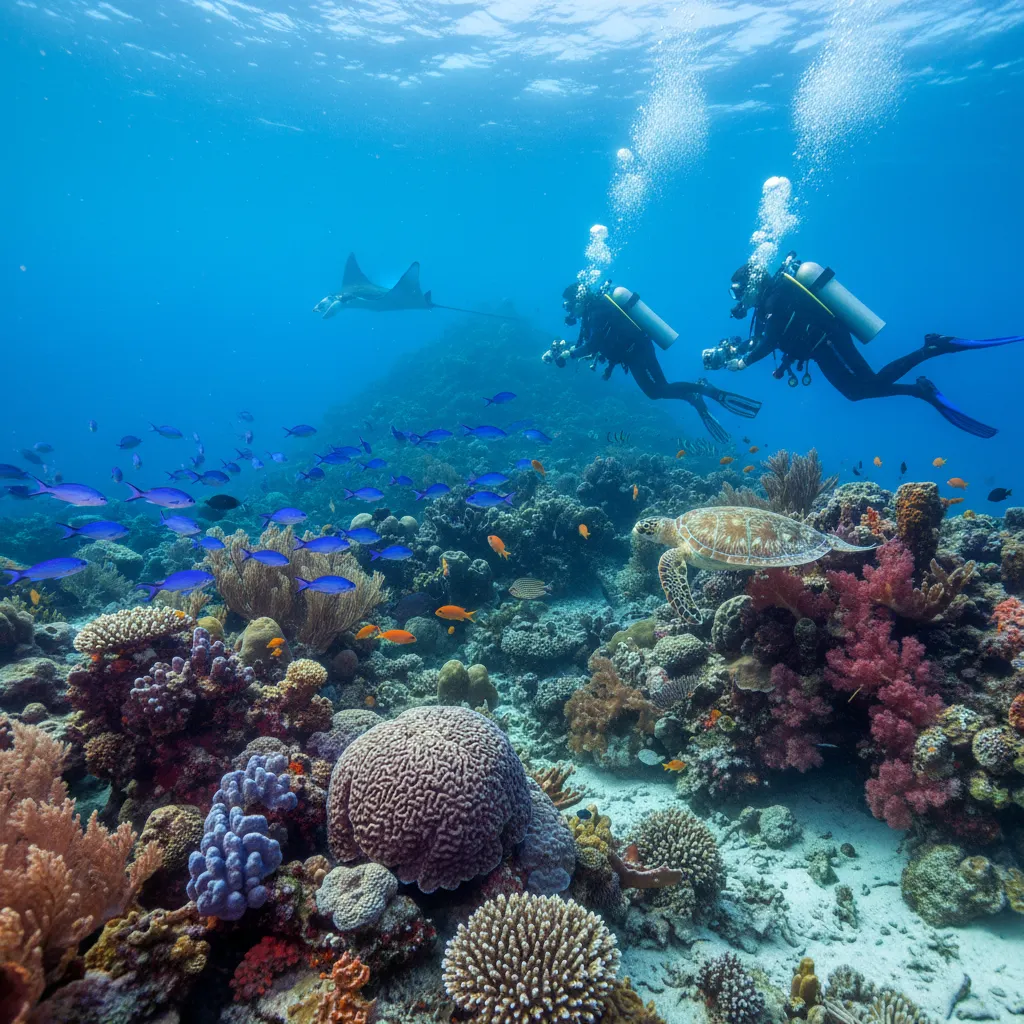
Visibility can vary, often ranging from 15-30 meters (50-100 feet), offering ample opportunity to observe the vibrant reef ecosystems. While some sites can experience currents, many of the beginner-designated areas are sheltered and calm, ideal for initial training and discovery dives. The marine life highlights include colorful reef fish, various types of corals, and the occasional turtle or ray, providing exciting encounters without being overwhelming for a first-timer.
It's important to note that while there are beginner-friendly options, Trinidad & Tobago also has a significant number of intermediate and advanced sites. Of the listed difficulty mix, only one site is specifically designated as beginner. This means that while you can certainly learn and enjoy your first dives here, your initial experiences will likely be concentrated in specific, well-chosen locations. Dive operators are adept at guiding newcomers to these suitable spots.
Best Beginner-Friendly Regions
For beginners, Tobago is the primary and virtually exclusive region to focus on. Its western and northern coasts offer more sheltered conditions compared to the more exposed eastern side. Areas around Speyside and Charlotteville in northeastern Tobago are particularly known for their calmer waters and vibrant shallow reefs, making them ideal for introductory dives and Open Water training. Sites like Japanese Gardens near Speyside, while also popular with experienced divers, has shallower sections perfect for skill practice and first explorations due to its sheltered location and abundant marine life in relatively calm conditions.
The southwestern coast around Crown Point also offers accessible sites. Although not as numerous as Speyside, sites here are often close to resorts and offer easy boat access to calm, shallow reefs. These locations are excellent for Discover Scuba Diving experiences, allowing participants to get a taste of diving in a controlled and comfortable environment. Operators in this area are highly experienced in catering to first-time divers.
What Certification Do You Need?
To participate in guided fun dives in Trinidad & Tobago, you will typically need an entry-level certification such as the PADI Open Water Diver, SSI Open Water Diver, or an equivalent from another recognized agency like NAUI or CMAS. These certifications qualify you to dive to a maximum depth of 18 meters (60 feet) with an equally certified buddy. If you are not yet certified, local dive centers offer Discover Scuba Diving (DSD) programs, which allow you to experience diving under direct instructor supervision in shallow water without prior certification.
For those looking to get certified, PADI and SSI are the most widely available and recognized certification agencies in Trinidad & Tobago. Dive centers throughout Tobago offer full Open Water Diver courses, which typically take 3-4 days to complete. It's advisable to book your course in advance, especially during peak season, to ensure availability with your preferred dive center.
Best Time to Visit
The best time to visit Trinidad & Tobago for diving is during the dry season, which runs from December to May. During these months, you can expect more consistent sunny weather, lower rainfall, and generally calmer sea conditions, which contribute to better visibility. Water temperatures remain consistently warm throughout the year, typically ranging from 26°C to 29°C (79°F to 84°F), so thermal comfort is rarely an issue.
The wet season, from June to November, can bring more rain and potentially rougher seas, which might affect visibility and dive schedules. While diving is still possible during this period, conditions can be less predictable. January to April are often considered peak months for favorable diving conditions, offering the best balance of calm seas and excellent visibility, making them ideal for beginner divers.
What to Expect on Your First Dive
Your first dive experience, whether a Discover Scuba Dive or the initial open water dives of a certification course, will typically begin at a local dive center. Upon arrival, you'll complete necessary paperwork and watch a safety briefing video. Your instructor will then conduct a detailed pre-dive briefing, explaining the equipment, basic hand signals, and what to expect underwater. You'll then be fitted with your gear- wetsuit, BCD, regulator, mask, and fins. Most beginner dives in Tobago are conducted from a boat, as many of the best sites are a short ride away.
Once on the boat, your instructor will help you don your gear. Entry into the water is usually a controlled giant stride or a backroll, depending on the boat. In the water, you'll spend some time acclimatizing on the surface, practicing breathing through your regulator and clearing your mask. For DSD participants, you'll perform a few basic skills in very shallow water before slowly descending with your instructor. The underwater experience in Tobago's beginner sites is generally calm, with gentle currents or none at all, allowing you to focus on buoyancy and enjoying the marine environment. Your instructor will be with you every step of the way, guiding you through the reef and pointing out marine life. After your dive, you'll ascend slowly, return to the boat, and head back to the dive center for debriefing and logbook signing.
Budget Guide
A Discover Scuba Diving (DSD) experience in Trinidad & Tobago typically costs between TTD 700-900 (USD 100-130). If you decide to pursue full certification, a PADI or SSI Open Water Diver course usually ranges from TTD 3,500-5,000 (USD 500-750), which often includes equipment rental and certification fees. This can vary based on the dive center and whether materials are included.
For certified divers, a single fun dive usually costs TTD 450-550 (USD 65-80), while a two-tank dive trip is typically TTD 850-1000 (USD 125-150). These prices generally include tanks, weights, and a guide. Full equipment rental for a day usually adds an extra TTD 150-200 (USD 20-30). Accommodation in Tobago varies significantly; budget guesthouses can start from TTD 350 (USD 50) per night, mid-range hotels TTD 700-1400 (USD 100-200), and resorts upwards of TTD 1700 (USD 250) per night.
Essential Tips
- Book in Advance: Especially during the dry season (December-May), dive centers in Tobago can get busy. Book your courses or fun dives ahead of time to secure your spot.
- Focus on Tobago: While Trinidad has some diving, Tobago is the main diving hub and where all beginner-friendly sites are located. Plan your dive trip around Tobago.
- Hydrate Well: The tropical climate means you'll be sweating more. Drink plenty of water before and after dives to prevent dehydration.
- Bring Reef-Safe Sunscreen: Protect your skin from the strong Caribbean sun while also protecting the delicate coral reefs.
- Expect Boat Dives: Most of Tobago's best dive sites, even for beginners, are accessed via short boat rides. Be comfortable with boat entries and exits.
- Learn Basic Patois Phrases: While English is widely spoken, learning a few local phrases in Trinidadian Patois can enhance your experience and show respect for local culture.
- Be Mindful of Currents: While beginner sites are chosen for calm conditions, some areas in Tobago can experience currents. Always follow your dive guide's instructions.
At a Glance
| Destination | Difficulty | Best Months |
|---|---|---|
| TobagoTrinidad & Tobago | Beginner | Jan-Dec |
Tobago
Trinidad & Tobago
Difficulty
Beginner
Best Months
Jan-Dec
Water Temp
28-28C
Dive Centres
2
Practical Info
- dive Sites:
- 69
- dive Centres:
- 2
Frequently Asked Questions
Do I need a certification to dive in Trinidad & Tobago?
To go on guided fun dives in Trinidad & Tobago, you will need an entry-level certification like PADI Open Water Diver or equivalent. However, you can experience diving without certification through a Discover Scuba Diving (DSD) program, which is supervised by an instructor in shallow water.
How much does diving cost in Trinidad & Tobago?
A Discover Scuba Dive typically costs TTD 700-900 (USD 100-130). A full Open Water Diver course ranges from TTD 3,500-5,000 (USD 500-750). A single fun dive for certified divers is TTD 450-550 (USD 65-80), and a two-tank dive is TTD 850-1000 (USD 125-150). Equipment rental is usually extra.
What is the best time to dive in Trinidad & Tobago?
The best time to dive is during the dry season, from December to May, when weather is more stable, rainfall is lower, and sea conditions are generally calmer, leading to better visibility. Water temperatures are consistently warm, 26-29°C (79-84°F), year-round.
Is Trinidad & Tobago safe for beginner divers?
Yes, Trinidad & Tobago is safe for beginner divers, especially in the designated beginner sites around Tobago. Dive operators are experienced in guiding newcomers, and the warm, generally calm waters in these areas provide a comfortable learning environment. Always dive with a reputable center and follow your instructor's guidance.
What marine life will I see in Trinidad & Tobago?
On your dives in Trinidad & Tobago, especially in Tobago's reef sites, you can expect to see a variety of colorful reef fish, different types of hard and soft corals, anemones, and potentially turtles, stingrays, or eagle rays. The diversity provides engaging sights for new divers.
Related Guides
Planning when to go?
See the month-by-month conditions guide