First Time Diving in Tunisia - A Beginner's Complete Guide
Everything you need to know before your first dive in Tunisia
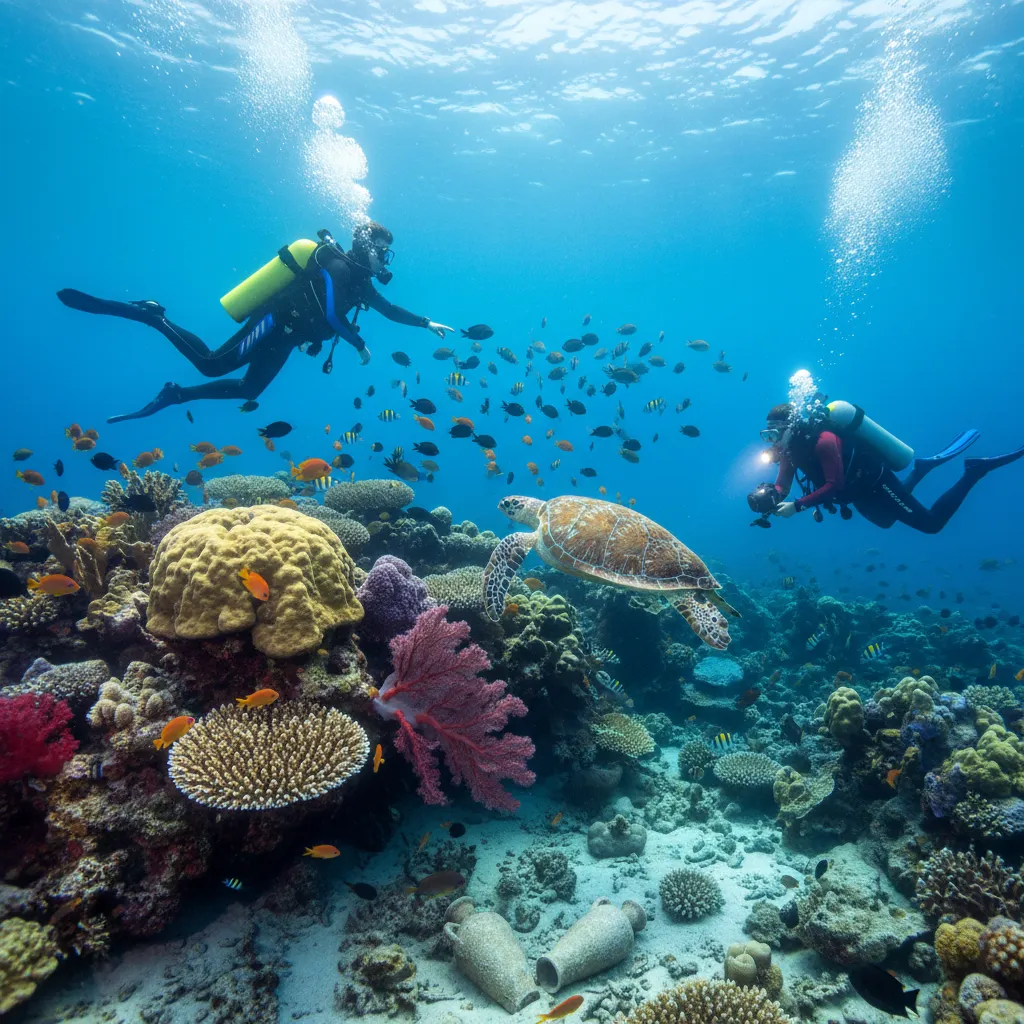
Why Tunisia for Your First Dives?
Tunisia offers a unique and accessible entry point for beginner divers looking to explore the Mediterranean. While the country has 58 dive sites, the majority are concentrated in the Tabarka region, providing a focused experience. The water temperatures are generally mild, making for comfortable diving conditions, especially during the warmer months. Visibility can be good, often ranging from 15-25 meters, allowing new divers to feel at ease as they get accustomed to the underwater environment. While Tunisia is known for its historical wrecks and some more advanced sites, there are also areas suitable for those taking their first breaths underwater. The marine life, while perhaps not as vibrant as tropical reefs, includes a variety of Mediterranean species such as groupers, barracudas, moray eels, and octopus. The relatively calm conditions in designated beginner areas reduce the stress often associated with strong currents or challenging entry points, making it a suitable choice for your initial underwater adventures.Best Beginner-Friendly Regions
**Tabarka** Tabarka stands out as Tunisia's primary dive region and offers the most developed infrastructure for diving. While some of its 58 sites cater to more experienced divers, local dive centers in Tabarka are well-equipped to introduce beginners to the underwater world. The area features interesting rock formations and shallow reefs that are perfect for initial training dives or discover scuba experiences. Specific sites might not be explicitly labeled as 'beginner' in databases, but local operators will guide you to sheltered, shallow spots like those found around the Needles of Tabarka, where you can safely practice skills and enjoy the marine environment without strong currents.What Certification Do You Need?
To independently participate in guided dives in Tunisia, you will typically need a PADI Open Water Diver certification or an equivalent from another recognized agency such as SSI, CMAS, or NAUI. This certification demonstrates that you have completed the necessary theoretical and practical training to dive to a maximum depth of 18 meters. For those who are not yet certified, local dive centers in Tunisia offer 'Discover Scuba Diving' programs, which allow you to experience diving under direct supervision without a full certification. Tunisia has a good presence of PADI dive centers, particularly in tourist-focused areas like Tabarka. You'll find these centers offering a range of courses from beginner to advanced. CMAS is also a recognized agency, especially given the country's proximity to Europe, so if you hold a CMAS certification, it will be widely accepted. It's always advisable to check with your chosen dive center in advance regarding their accepted certifications.Best Time to Visit
The best time to visit Tunisia for diving is during the warmer months, specifically from **May to October**. During this period, the Mediterranean Sea offers its most pleasant conditions for diving. * **May-June:** Water temperatures range from 20°C to 24°C. Air temperatures are comfortable, and tourist crowds are generally lower than in peak summer. * **July-August:** These are the warmest months, with water temperatures reaching 25°C to 28°C. Air temperatures can be quite hot, often exceeding 30°C. Visibility tends to be at its best during this period, often exceeding 20 meters. This is also peak tourist season, so expect more people. * **September-October:** Water temperatures remain warm, typically 22°C to 25°C. Air temperatures become milder, and the crowds begin to thin out. This can be an excellent time for diving, offering a good balance of comfortable conditions and fewer divers. Outside of these months, diving is still possible but water temperatures will be cooler, requiring thicker wetsuits, and some dive centers may operate on reduced schedules.What to Expect on Your First Dive
When you arrive at a dive center in Tunisia for your first dive, especially if it's a Discover Scuba Diving experience, the process is structured for safety and comfort. You'll typically begin by checking in and completing necessary paperwork, including medical questionnaires. This is followed by a comprehensive briefing from your instructor, covering basic dive theory, hand signals, equipment use, and safety procedures specific to the dive site. Next, you'll be fitted with your scuba gear-wetsuit, mask, fins, BCD (Buoyancy Control Device), regulator, and tank. Instructors will ensure everything fits correctly and demonstrate how to use each piece. Most beginner dives in Tunisia, particularly in Tabarka, are conducted from a boat. You'll gear up on the boat, and the entry into the water is usually a controlled giant stride or a seated backroll, with your instructor right beside you. The initial experience will focus on shallow water practice, allowing you to get comfortable breathing underwater and performing basic skills like mask clearing. The underwater experience will be guided and controlled, often in calm, sheltered areas with gentle currents, allowing you to observe the local marine life like small fish, octopus, and sponges at a relaxed pace before a safe ascent and return to the boat.Budget Guide
When planning your diving budget for Tunisia, here's a realistic breakdown of costs: * **Discover Scuba Diving Program:** Expect to pay between 150 TND to 250 TND (approximately $50-$85 USD) for a single guided introductory dive experience, including equipment rental and instructor supervision. * **PADI Open Water Course:** A full PADI Open Water Diver course, including all materials, confined water sessions, and open water dives, typically ranges from 1200 TND to 1800 TND (approximately $400-$600 USD). Prices can vary between dive centers and may sometimes include certification fees. * **Fun Dives (for certified divers):** A single fun dive for certified divers, including tank and weights, usually costs 80 TND to 120 TND (approximately $27-$40 USD). Package deals for multiple dives are often available and offer better value, for example, a 5-dive package might be 350 TND to 500 TND ($120-$170 USD). * **Equipment Rental:** If not included in a package or course, full equipment rental for a day can add 30 TND to 60 TND (approximately $10-$20 USD) per dive. Individual items like wetsuits or BCDs are generally cheaper. * **Accommodation:** Budget accommodation (guesthouses, basic hotels) can be found for 80 TND to 150 TND ($27-$50 USD) per night. Mid-range hotels typically cost 150 TND to 300 TND ($50-$100 USD) per night. High-end resorts will be upwards of 300 TND ($100 USD) per night. These figures are approximate and can fluctuate based on the specific dive center, season, and negotiation.Essential Tips
* **Book in Advance for Peak Season:** If visiting during July or August, book your dive courses or packages well in advance, especially in popular areas like Tabarka, as dive centers can get busy. * **Check Dive Center Accreditations:** Ensure your chosen dive center is properly accredited (e.g., PADI, SSI) and maintains its equipment to high safety standards. * **Hydrate Regularly:** The Tunisian climate, especially in summer, can be hot. Drink plenty of water before and after your dives to prevent dehydration. * **Learn Basic French or Arabic Phrases:** While dive instructors will likely speak English, knowing a few basic phrases in French or Tunisian Arabic can enhance your local interactions and show respect. * **Respect Local Customs:** Tunisia is a Muslim country. Be mindful of local customs and dress codes, especially when not at dive sites or tourist resorts. * **Sun Protection is Crucial:** The Mediterranean sun is strong. Use reef-safe sunscreen, wear a hat, and seek shade when not diving to prevent sunburn. * **Consider a Shorty Wetsuit:** For summer diving, a 3mm shorty wetsuit is often sufficient due to warm water temperatures, offering comfort and flexibility for beginners.At a Glance
| Destination | Difficulty | Best Months |
|---|---|---|
| TabarkaTunisia | Beginner | - |
Tabarka
Tunisia
Difficulty
Beginner
Water Temp
17-17C
Dive Centres
3
Practical Info
- dive Sites:
- 58
- dive Centres:
- 3
Frequently Asked Questions
Do I need a certification to dive in Tunisia?
To dive independently in Tunisia, you typically need a PADI Open Water Diver certification or equivalent. However, you can experience diving without certification through a 'Discover Scuba Diving' program under direct instructor supervision.
How much does diving cost in Tunisia?
A Discover Scuba Diving experience costs around 150-250 TND ($50-$85 USD). A full PADI Open Water course is 1200-1800 TND ($400-$600 USD). Fun dives for certified divers are 80-120 TND ($27-$40 USD) per dive.
What is the best time to dive in Tunisia?
The best time to dive in Tunisia is from May to October. Water temperatures range from 20°C-28°C, visibility is generally good, and conditions are comfortable for beginners.
Is Tunisia safe for beginner divers?
Yes, Tunisia can be safe for beginner divers, especially in established dive regions like Tabarka. Dive centers follow safety protocols, and initial dives are conducted in calm, supervised conditions. Always choose accredited dive operators.
What marine life will I see in Tunisia?
In Tunisia, you can expect to see various Mediterranean marine life such as groupers, barracudas, moray eels, octopus, and different species of fish and sponges. The underwater landscape often features interesting rock formations.
Related Guides
Planning when to go?
See the month-by-month conditions guide