First Time Diving in Turks & Caicos - A Beginner's Complete Guide
Everything you need to know before your first dive in Turks & Caicos
Why Turks & Caicos for Your First Dives?
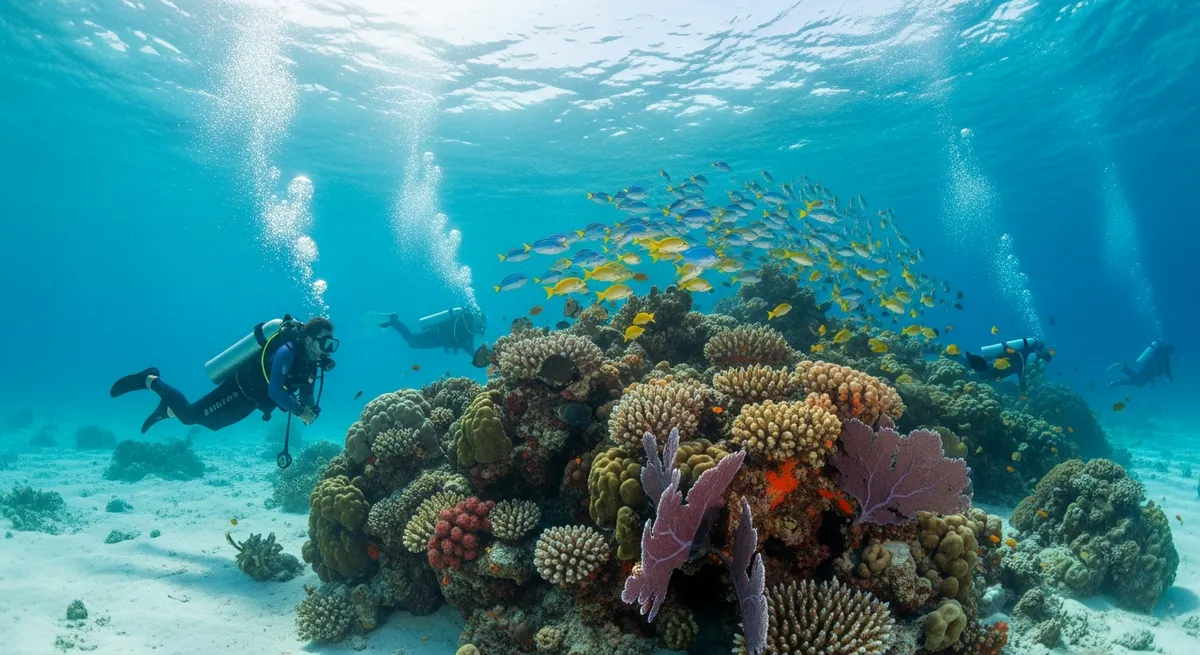
Turks & Caicos offers an excellent introduction to scuba diving, especially for beginners. The islands are known for their consistently warm water temperatures, typically ranging from 78-84°F (25-29°C) year-round. This comfortable warmth eliminates the need for thick wetsuits, making the overall experience more enjoyable and less cumbersome for new divers. Visibility is another major advantage, frequently exceeding 80-100 feet (24-30 meters), allowing for clear views of the underwater landscape and marine inhabitants without the stress of low visibility conditions.
The dive sites often feature gentle currents, particularly in the shallower beginner-friendly areas, which is ideal for those still mastering buoyancy and finning techniques. While some deeper walls can present more challenging conditions, the majority of introductory dives focus on protected reefs and sandy bottoms. Marine life highlights include abundant reef fish, various types of corals, sea turtles, rays, and sometimes nurse sharks or reef sharks. The relatively calm conditions and clear waters make it easier to spot and appreciate these creatures, enhancing the first-time diving experience.
Best Beginner-Friendly Regions
Providenciales (Provo): Providenciales is the most developed island and offers a good mix of dive sites accessible via short boat rides. Many dive operators here cater specifically to beginners, offering Discover Scuba Diving programs and Open Water courses. The barrier reef around Provo provides sheltered, shallow areas with vibrant coral gardens suitable for first dives. While specific beginner sites aren't always named individually due to the vastness of the reef, operators will select calm, protected spots for training and introductory dives, often featuring gentle slopes and abundant reef fish.
Grand Turk: Grand Turk is famous for its dramatic wall dives, but it also has protected shallow reefs perfect for beginners. The proximity of the wall to shore means short boat rides to dive sites, which is a bonus for new divers. Dive sites like "The Aquarium" or "Amphitheater" are often utilized for introductory dives due to their calm conditions, good visibility, and rich marine life in shallower depths before the wall drops off. These sites allow beginners to experience vibrant reef ecosystems without venturing into deeper, more complex environments.
Salt Cay: Salt Cay offers a quieter, more laid-back diving experience, which can be less overwhelming for beginners. The island is known for its healthy shallow reefs and the wreck of the Endymion, parts of which are accessible to beginner divers in very shallow water. Dive sites here are typically calm with minimal currents, providing excellent conditions for learning and enjoying initial dives. The smaller scale of operations also means more personalized attention from dive instructors.
What Certification Do You Need?
For certified divers, a PADI Open Water Diver certification or an equivalent entry-level certification from another recognized agency like SSI, NAUI, or CMAS is generally required to participate in guided fun dives. This certification demonstrates that you have completed the necessary training to dive safely to a maximum depth of 60 feet (18 meters).
If you are not yet certified, you can enroll in a Discover Scuba Diving (DSD) experience. This program allows you to dive under the direct supervision of an instructor to a shallower depth, typically around 40 feet (12 meters), without prior certification. Alternatively, you can complete your full PADI Open Water Diver course (or equivalent) while in Turks & Caicos. There are numerous PADI dive centers across Providenciales, Grand Turk, and Salt Cay, making it easy to find local instruction. PADI is the most popular certification agency in the region, so finding courses and instructors is straightforward.
Best Time to Visit
The best time to visit Turks & Caicos for diving is generally from November to May. During these months, the weather is typically drier, with less humidity and a lower chance of rainfall, offering more consistent sunny days for diving. Air temperatures during this period range from 75-85°F (24-29°C).
Water temperatures remain comfortably warm year-round, typically between 78-84°F (25-29°C), with the cooler end of the spectrum occurring in winter months (January-March) and the warmer end in summer/early fall. Visibility is excellent throughout the year, but the calmer seas often experienced outside of hurricane season (June-November) can make for a more comfortable boat ride, particularly for those prone to seasickness.
While diving is possible year-round, the hurricane season, particularly from August to October, carries an increased risk of tropical storms which can disrupt dive plans. Booking during the peak season (December-April) may require earlier reservations for dive operators and accommodations.
What to Expect on Your First Dive
Your first dive in Turks & Caicos, whether a Discover Scuba Dive or the first open water dive of your certification, will typically begin at a local dive center or marina. You'll check in, complete any necessary paperwork, and then be briefed by your instructor or dive guide. This briefing will cover the dive plan, safety procedures, communication signals, and an overview of the marine life you might encounter.
After the briefing, you'll be fitted with your gear – mask, fins, BCD (buoyancy control device), regulator, and wetsuit (if desired, though often not needed due to warm water). Most dives in Turks & Caicos are boat dives, meaning you'll travel to the dive site via a comfortable dive boat. Once at the site, your instructor will help you gear up, perform a final buddy check, and guide you through a controlled entry into the water, usually a giant stride or back roll. The underwater experience will be calm and guided, focusing on shallow, protected reefs with minimal current. Your instructor will be close by, ensuring your comfort and safety as you explore the vibrant coral and fish life. The typical dive will last 45-60 minutes, depending on air consumption, before a gentle ascent back to the boat.
Budget Guide
Diving in Turks & Caicos can vary in cost depending on the type of experience and duration. Here's a realistic breakdown:
- Discover Scuba Diving (DSD) experience: Expect to pay around $180-$250 USD per person. This typically includes equipment rental and one or two supervised dives.
- PADI Open Water Diver Course: A full certification course usually ranges from $600-$800 USD. This covers classroom sessions, confined water training, four open water dives, equipment rental, and certification fees.
- Fun Dives (for certified divers): A two-tank boat dive generally costs $130-$170 USD, often including tanks and weights. Full equipment rental, if needed, is an additional $30-$50 USD per day.
- Accommodation: Budget accommodation (guesthouses, smaller hotels) can start from $150-$250 USD per night. Mid-range hotels are $300-$500 USD per night, while luxury resorts can easily exceed $600+ USD per night.
- Local Currency: The official currency is the US Dollar (USD), so no currency conversion is needed for most visitors.
Essential Tips
- Book in Advance: Especially during peak season (December-April), dive operators and popular accommodations can book up quickly. Secure your spots well in advance.
- Hydrate Well: The warm climate and sun can lead to dehydration. Drink plenty of water before and after your dives to prevent fatigue and reduce the risk of decompression sickness.
- Sun Protection: The sun in Turks & Caicos is intense. Use reef-safe sunscreen, wear a hat, and consider a rash guard or light wetsuit for sun protection while in the water.
- Respect Marine Life: Do not touch corals or marine animals. Maintain proper buoyancy to avoid contact with the reef.
- Listen to Your Guide: Always follow the instructions of your dive instructor or guide. They are familiar with local conditions and marine life behavior.
- Check for Local Fees: Some islands or dive sites may have small marine park fees or environmental levies. Inquire with your dive operator beforehand.
- Consider Travel Insurance: Ensure your travel insurance covers scuba diving activities, especially if you plan to do multiple dives.
At a Glance
| Destination | Difficulty | Best Months |
|---|---|---|
| ProvidencialesTurks & Caicos | Beginner | Jan-Dec |
| Grand TurkTurks & Caicos | Beginner | - |
| Salt CayTurks & Caicos | Beginner | - |
| South CaicosTurks & Caicos | Beginner | - |
Providenciales
Turks & Caicos
Difficulty
Beginner
Best Months
Jan-Dec
Water Temp
26-26C
Dive Centres
4
Practical Info
- dive Sites:
- 35
- dive Centres:
- 4
Frequently Asked Questions
Do I need a certification to dive in Turks & Caicos?
For guided fun dives, you need a PADI Open Water Diver certification or equivalent. If you're uncertified, you can do a Discover Scuba Diving experience or complete your full Open Water course locally.
How much does diving cost in Turks & Caicos?
A Discover Scuba Dive costs $180-$250 USD. A full PADI Open Water course ranges from $600-$800 USD. For certified divers, a two-tank fun dive is typically $130-$170 USD, plus equipment rental if needed.
What is the best time to dive in Turks & Caicos?
The best time for diving is from November to May, offering drier weather and calmer seas. Water temperatures are consistently warm, 78-84°F (25-29°C), year-round with excellent visibility.
Is Turks & Caicos safe for beginner divers?
Yes, Turks & Caicos is very suitable for beginner divers. It features warm waters, high visibility, and many sheltered, shallow dive sites with minimal currents, making for a safe and enjoyable learning environment.
What marine life will I see in Turks & Caicos?
Beginner divers can expect to see various reef fish, colorful corals, sea turtles, rays, and occasionally nurse sharks or reef sharks in the shallower, protected areas.
Related Guides
Planning when to go?
See the month-by-month conditions guide