First Time Diving in United Kingdom - A Beginner's Complete Guide
Everything you need to know before your first dive in United Kingdom
Why United Kingdom for Your First Dives?
The United Kingdom, with its 6144 dive sites spread across five distinct regions, might not immediately spring to mind as a beginner diver's haven, but it offers a unique and rewarding introduction to the underwater world. While water temperatures are cooler than tropical destinations, ranging from 8°C in winter to 18°C in summer, modern wetsuits and drysuits make diving comfortable. Visibility can vary significantly, from 5 meters on an average day to 20+ meters on exceptional days, particularly in areas like the Scottish West Coast or Scapa Flow. This variability teaches divers to adapt to different conditions, a valuable skill for any aspiring diver.
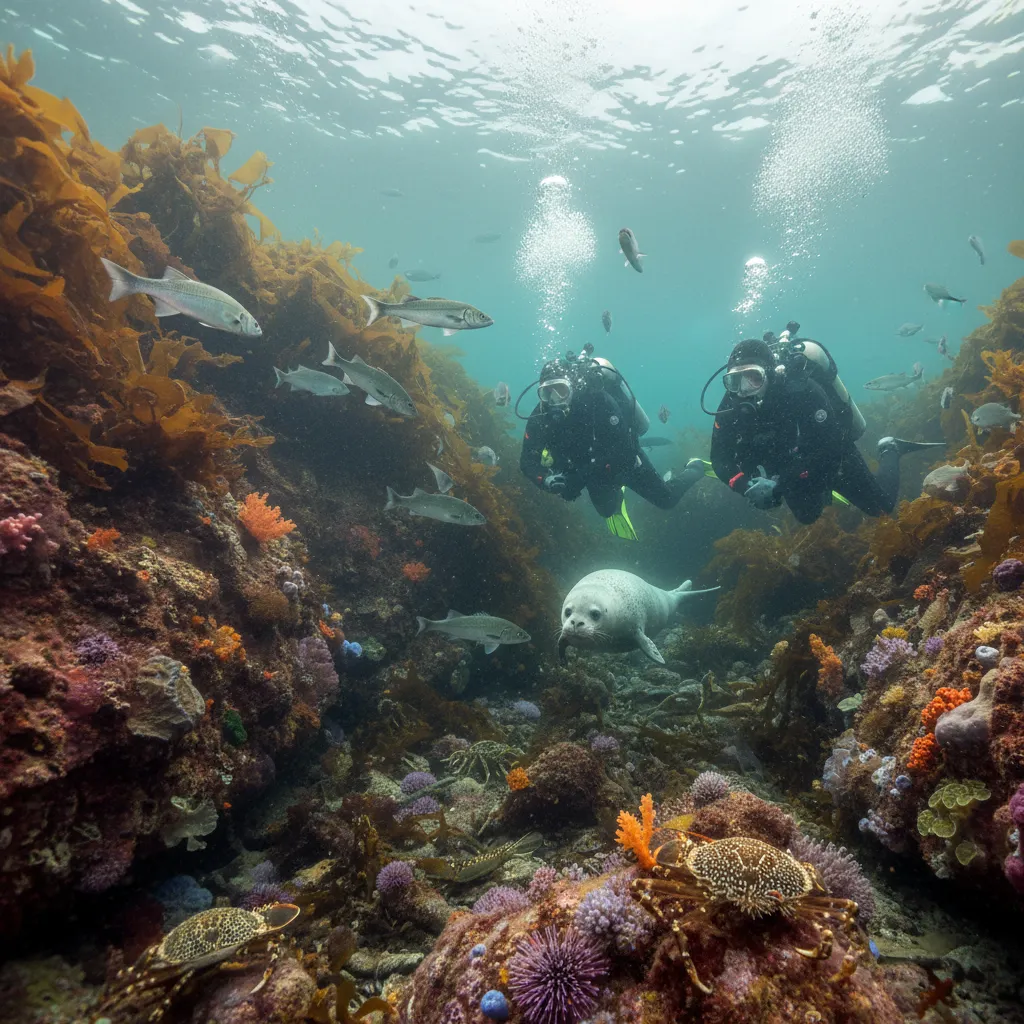
For beginners, the UK presents a fantastic opportunity to develop strong buoyancy control and cold-water diving skills. The marine life, though different from coral reefs, is abundant and fascinating. You can expect to encounter seals, various species of crabs and lobsters, colourful anemones, wrasse, pollock, and even occasional dolphins or porpoises. The UK's dive sites often feature interesting topography, including kelp forests, rocky reefs, and historical wrecks, offering a diverse range of environments to explore right from your first dives.
It's important to be honest: diving in the UK can be challenging compared to warm, calm tropical waters. Currents can be present, and the cooler temperatures require appropriate thermal protection. However, this challenge is precisely what makes it such a good training ground. With 60 identified beginner-friendly sites out of 6144, there are plenty of sheltered, shallower locations specifically chosen for their suitability for new divers, ensuring a safe and educational experience.
Best Beginner-Friendly Regions
Cornwall & Devon: This southwestern region offers some of the UK's milder temperatures and a good mix of sheltered coves and shore diving opportunities perfect for beginners. The coastline features many rocky reefs and kelp forests. Specific sites like Helford River in Cornwall provide calm, shallow conditions ideal for initial skill practice and observing local marine life such as wrasse and crabs. Dive centres here are well-equipped to cater to new divers.
Northumberland & Northeast: While cooler, the Northeast coast provides excellent diving with accessible shore entries and sheltered bays. St Abbs Voluntary Marine Reserve, though technically just over the border in Scotland, is often accessed from this region and is renowned for its clear waters and abundant marine life in sheltered conditions, making it an excellent spot for beginners to experience diverse ecosystems including anemones and various fish species. Local dive operators are experienced in guiding new divers through these conditions.
Scottish West Coast: Famous for its sea lochs, the Scottish West Coast offers generally calm, protected waters with stunning scenery both above and below the surface. The lochs provide natural shelter from open sea conditions, making them ideal for beginners to practice skills and explore the unique temperate marine life. Sites around Oban, often referred to as the 'Gateway to the Isles,' offer numerous sheltered dives with diverse life including sea squirts, soft corals, and various crustaceans, all within manageable depths and currents.
What Certification Do You Need?
To dive independently or participate in guided recreational dives in the United Kingdom, you will typically need a PADI Open Water Diver certification or an equivalent from another recognized agency such as SSI, BSAC, or NAUI. For those new to diving, a PADI Discover Scuba Diving experience is an excellent way to try diving under direct instructor supervision without committing to a full course. Local dive centres across the UK are plentiful and offer a full range of courses, from beginner to advanced. BSAC (British Sub-Aqua Club) is a popular and well-established agency within the UK, and many clubs and centres are affiliated with them, offering a slightly different training structure focused on club diving.
Best Time to Visit
The best time for diving in the United Kingdom, especially for beginners, is generally from late spring to early autumn, specifically May through September. During these months, water temperatures are at their warmest, ranging from 12°C to 18°C, making for more comfortable dives. Air temperatures are also milder, simplifying gear handling and surface intervals. Visibility tends to be better during this period as well, often ranging from 8-15 meters, though it can still be variable. The longer daylight hours also allow for more flexible dive schedules. While diving is possible year-round, the colder winter months (October-April, with water temperatures 8°C-12°C) require more advanced cold-water gear and experience.
What to Expect on Your First Dive
On your first dive in the UK, expect a thorough and professional experience. After checking in at the dive centre, you'll receive a detailed briefing covering the dive site, potential marine life, safety procedures, and any specific conditions like currents or entry/exit points. You'll then be fitted with appropriate gear, including a thick wetsuit or drysuit, hood, gloves, and boots, along with standard scuba equipment. Most beginner dives in the UK are conducted from either shore entries, particularly in sheltered bays or lochs, or from small RIBs (Rigid Inflatable Boats) or hard boats. Shore entries involve a gradual walk into the water, while boat dives typically involve a backward roll or giant stride entry. Underwater, expect to practice basic skills in a calm, controlled environment, focusing on buoyancy and breathing. Your instructor will guide you through the site, pointing out local marine life and ensuring your comfort and safety. Dives are typically shallower, within recreational limits, and generally in calm conditions chosen specifically for new divers. The emphasis is on a safe, enjoyable introduction to the underwater environment.
Budget Guide
Diving in the United Kingdom involves a range of costs. A Discover Scuba Diving experience typically costs between £80-£120 (approx. $100-$150 USD). A full PADI Open Water Diver course can range from £450-£650 (approx. $560-$810 USD), depending on the centre and location. Fun dives for certified divers usually cost £35-£50 (approx. $45-$65 USD) per dive, often with discounts for multi-dive packages. Equipment rental, if not included in a course, is usually £25-£40 (approx. $30-$50 USD) per day for a full set. Accommodation varies widely; budget hostels or B&Bs might be £40-£80 (approx. $50-$100 USD) per night, while mid-range hotels or guesthouses could be £80-£150 (approx. $100-$190 USD) or more. Factor in travel costs, as many dive sites are in more remote coastal areas.
Essential Tips
- Book in Advance: Especially during peak season (May-September) and for courses, dive centres can get busy. Book your dives and courses well ahead of time.
- Embrace Cold Water Gear: Don't underestimate the need for good thermal protection. A 7mm wetsuit, hood, gloves, and boots are standard for summer, with drysuits often preferred for cooler months or longer dives.
- Check Visibility Reports: Visibility can vary day to day. Check with local dive centres for recent conditions before you go.
- Understand UK Dive Logistics: Many UK dives are boat dives, often on RIBs, which can be a different experience from larger tropical dive boats. Be prepared for potentially quicker entries and exits.
- Respect Marine Protected Areas: Many popular dive sites, like St Abbs, are Voluntary Marine Reserves. Understand and adhere to local guidelines to protect the marine environment.
- Consider Local Expertise: Even if certified, consider diving with a local guide or instructor for your first few UK dives. Their knowledge of currents, entry points, and local marine life is invaluable.
- Be Flexible: Weather in the UK can change rapidly. Dive plans might be altered due to sea conditions. Maintain a flexible attitude.
At a Glance
| Destination | Difficulty | Best Months |
|---|---|---|
| Cornwall & DevonUnited Kingdom | Beginner | - |
| Northumberland & NortheastUnited Kingdom | Beginner | Apr-Sep |
| Scottish West CoastUnited Kingdom | Beginner | Jan-Dec |
| Scottish East Coast & BordersUnited Kingdom | Beginner | Jan-Dec |
| Scapa Flow, OrkneyUnited Kingdom | Beginner | - |
Cornwall & Devon
United Kingdom
Difficulty
Beginner
Water Temp
10-10C
Dive Centres
163
Practical Info
- dive Sites:
- 2188
- dive Centres:
- 163
Northumberland & Northeast
United Kingdom
Difficulty
Beginner
Best Months
Apr-Sep
Water Temp
8-16C
Dive Centres
58
Practical Info
- dive Sites:
- 1247
- dive Centres:
- 58
Scottish West Coast
United Kingdom
Difficulty
Beginner
Best Months
Jan-Dec
Water Temp
8-15C
Dive Centres
14
Practical Info
- dive Sites:
- 1021
- dive Centres:
- 14
Scottish East Coast & Borders
United Kingdom
Difficulty
Beginner
Best Months
Jan-Dec
Water Temp
7-15C
Dive Centres
14
Practical Info
- dive Sites:
- 906
- dive Centres:
- 14
Scapa Flow, Orkney
United Kingdom
Difficulty
Beginner
Water Temp
8-8C
Dive Centres
1
Practical Info
- dive Sites:
- 782
- dive Centres:
- 1
Frequently Asked Questions
Do I need a certification to dive in United Kingdom?
Yes, to dive independently or participate in guided recreational dives in the United Kingdom, you will need a PADI Open Water Diver certification or an equivalent from another recognized agency like SSI, BSAC, or NAUI. For those just trying it out, a Discover Scuba Diving experience is available under direct instructor supervision.
How much does diving cost in United Kingdom?
A Discover Scuba Diving experience typically costs £80-£120 ($100-$150 USD). A full PADI Open Water course is £450-£650 ($560-$810 USD). Fun dives for certified divers are usually £35-£50 ($45-$65 USD) per dive, with equipment rental an additional £25-£40 ($30-$50 USD) per day.
What is the best time to dive in United Kingdom?
The best time for diving, especially for beginners, is from May through September. During these months, water temperatures are warmest (12°C-18°C), visibility tends to be better (8-15 meters), and air temperatures are milder, making for a more comfortable experience.
Is United Kingdom safe for beginner divers?
Yes, the United Kingdom is safe for beginner divers, provided they dive with qualified instructors and appropriate gear. While conditions can be more challenging than tropical waters, there are 60 beginner-friendly sites specifically chosen for their calm and manageable conditions, allowing new divers to learn and gain valuable cold-water diving skills.
What marine life will I see in United Kingdom?
In the United Kingdom, you can expect to see a variety of temperate marine life. Common sightings include seals, various species of crabs and lobsters, colourful anemones, wrasse, pollock, and diverse fish species. Occasional sightings of dolphins or porpoises are also possible, especially on the Scottish coasts.
Related Guides
Planning when to go?
See the month-by-month conditions guide