First Time Diving in US Virgin Islands - A Beginner's Complete Guide
Everything you need to know before your first dive in US Virgin Islands
Why US Virgin Islands for Your First Dives?
The US Virgin Islands (USVI) offers an excellent introduction to scuba diving, particularly for beginners. With a significant number of dive sites specifically rated for novice divers-32 out of 49 total sites-it's clear this destination caters to those just starting their underwater journey. The calm, warm waters provide a comfortable learning environment, minimizing common anxieties associated with colder or more turbulent conditions.
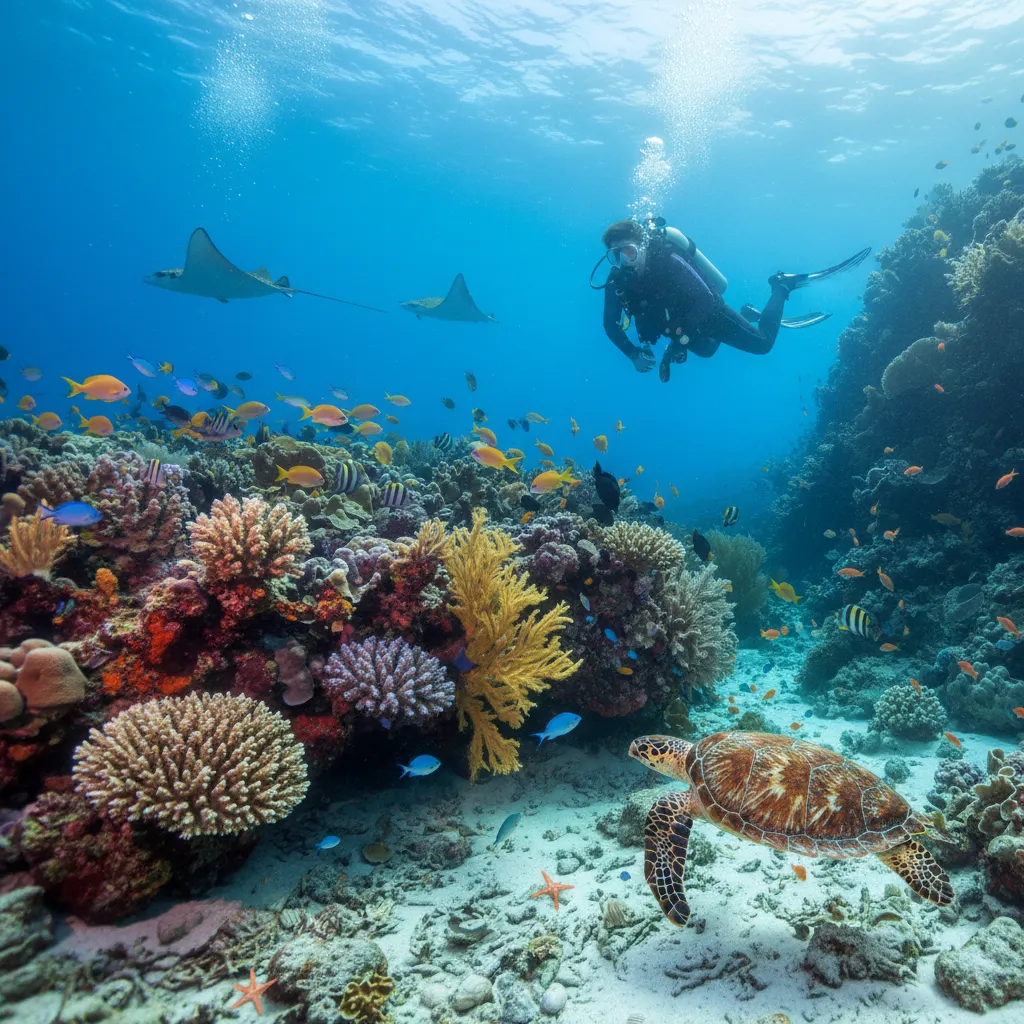
Water temperatures in the USVI consistently range from 78-84°F (25-29°C), allowing divers to comfortably wear lighter wetsuits or even just a skin suit, reducing the amount of gear and increasing comfort. Visibility is often impressive, typically ranging from 60-100 feet (18-30 meters), which helps new divers maintain orientation and enjoy the vibrant underwater scenery without feeling overwhelmed by murky conditions. Expect to encounter a variety of reef fish, sea turtles, stingrays, and nurse sharks, all within a generally gentle current environment.
Best Beginner-Friendly Regions
St. Thomas & St. John: This region is a prime choice for new divers due to its protected bays and numerous shallow reefs. Many dive operations run out of St. Thomas, offering easy access to sites like Cow and Calf Rocks, which feature shallow tunnels and swim-throughs suitable for beginners, and the Cartanser Sr. wreck, which sits in manageable depths. St. John, largely a national park, provides pristine conditions and calm waters, with sites like Trunk Bay offering gentle reef explorations. The abundance of dive centers in St. Thomas makes logistics straightforward for first-time divers.
St. Croix: As the largest of the US Virgin Islands, St. Croix also boasts excellent beginner diving opportunities, particularly along its protected north shore. The Frederiksted Pier is a famous shore dive that's ideal for all levels, including beginners, due to its shallow depth, lack of current, and abundant macro life. Another notable site is the Butler Bay Wrecks, where some wrecks are shallow enough for Open Water divers to explore safely. St. Croix offers a slightly more relaxed pace compared to St. Thomas, which can be appealing for those seeking a tranquil first dive experience.
What Certification Do You Need?
For certified divers, a PADI Open Water Diver certification or an equivalent entry-level certification from recognized agencies like SSI, NAUI, or CMAS is generally required to participate in guided fun dives. This certification demonstrates that you have the fundamental skills and knowledge to dive safely to a maximum depth of 60 feet (18 meters). If you are not yet certified, you can enroll in a Discover Scuba Diving (DSD) experience, which allows you to try diving under direct instructor supervision in shallow water without needing full certification. Many local dive centers in the USVI offer full Open Water courses, typically taking 3-4 days to complete, as well as DSD programs.
Best Time to Visit
The US Virgin Islands offers good diving conditions year-round, but the optimal time to visit for consistently calm seas and clear visibility is generally from December to July. During these months, the weather is typically drier and less humid, with less chance of tropical storms. Water temperatures range from 78-82°F (25-28°C). The hurricane season runs from August to November, and while diving is still possible, there is an increased risk of rougher seas and dive trip cancellations due to weather. During these months, water temperatures can reach 84°F (29°C). For the most comfortable surface conditions and reliable dive experiences, target the winter and spring months.
What to Expect on Your First Dive
Your first dive in the US Virgin Islands will typically begin at a local dive shop or marina. You'll check in, complete any necessary paperwork, and then receive a comprehensive briefing from your instructor or dive guide. This briefing will cover the dive site details, marine life you might encounter, safety procedures, and hand signals. Next, you'll be fitted with your gear-mask, fins, wetsuit (if desired), BCD, regulator, and tank. Most dives in the USVI are boat dives, so you'll board a dive boat and head to the site, which is usually a short ride away. Once at the site, your instructor will assist you with gearing up and performing a buddy check.
Entry into the water is usually a giant stride off the back of the boat, or a seated backward roll for smaller vessels. Once in the water, you'll perform a final equipment check and begin your descent, typically following a line or your instructor. The underwater experience in the USVI is characterized by generally calm currents, allowing for relaxed swimming along vibrant coral reefs. Your instructor will guide you, pointing out marine life and ensuring your comfort and safety throughout the dive. After surfacing, you'll re-board the boat, enjoy some refreshments, and share your experiences before returning to shore. Expect a friendly and professional atmosphere focused on making your first dive enjoyable and safe.
Budget Guide
Diving in the US Virgin Islands can be a moderate expense, with options to suit various budgets. A Discover Scuba Diving (DSD) experience, perfect for uncertified beginners, typically costs between $100-$150 USD. If you decide to pursue full certification, an Open Water Diver course will range from $500-$650 USD, usually including all materials, equipment rental, and instruction. For certified divers, a two-tank fun dive trip generally costs $120-$150 USD, often with equipment rental available for an additional $30-$50 USD per day. Some dive packages might offer discounts for multiple days of diving.
Accommodation costs vary significantly. Budget-friendly guesthouses or Airbnb rooms can start from $100-$150 USD per night. Mid-range hotels typically fall in the $200-$400 USD per night range, while luxury resorts can exceed $500 USD per night. Eating out can range from $15-$25 USD for a casual meal to $50+ USD for a finer dining experience. Overall, a week-long diving trip for a beginner, including a DSD or Open Water course, mid-range accommodation, and meals, could realistically cost $1500-$3000 USD, excluding flights.
Essential Tips
- Book dive trips and courses in advance, especially during peak season (December-May), as popular operators can fill up quickly.
- Be aware that currents are generally mild but can occasionally pick up, particularly around exposed points. Listen carefully to your dive brief.
- Hydrate well before and after diving, as the tropical climate and sun can lead to dehydration.
- Consider bringing reef-safe sunscreen to protect the delicate marine environment.
- Respect marine life-do not touch coral or animals, and maintain a safe distance.
- If prone to seasickness, take preventative medication before boat dives, as conditions can vary.
- Carry small denominations of USD for tips, as it is customary to tip dive guides and boat crew.
At a Glance
| Destination | Difficulty | Best Months |
|---|---|---|
| St. Thomas & St. JohnUS Virgin Islands | Beginner | Jan-Dec |
| St. CroixUS Virgin Islands | Beginner | Jan-Dec |
St. Thomas & St. John
US Virgin Islands
Difficulty
Beginner
Best Months
Jan-Dec
Water Temp
27-27C
Dive Centres
8
Practical Info
- dive Sites:
- 33
- dive Centres:
- 8
St. Croix
US Virgin Islands
Difficulty
Beginner
Best Months
Jan-Dec
Water Temp
27-27C
Dive Centres
3
Practical Info
- dive Sites:
- 16
- dive Centres:
- 3
Frequently Asked Questions
Do I need a certification to dive in US Virgin Islands?
To participate in guided fun dives, you need an Open Water Diver certification (PADI, SSI, etc.). However, if you're not certified, you can try a Discover Scuba Diving (DSD) experience under direct instructor supervision in shallow water. Many dive centers also offer full certification courses.
How much does diving cost in US Virgin Islands?
A Discover Scuba Diving experience costs $100-$150 USD. An Open Water Diver certification course ranges from $500-$650 USD. For certified divers, a two-tank fun dive trip is typically $120-$150 USD, with equipment rental costing an additional $30-$50 USD per day.
What is the best time to dive in US Virgin Islands?
The best time to dive is generally from December to July, offering consistently calm seas, excellent visibility (60-100 feet), and comfortable water temperatures (78-82°F). While diving is possible year-round, the hurricane season from August to November carries a higher risk of rougher conditions.
Is US Virgin Islands safe for beginner divers?
Yes, the US Virgin Islands is considered very safe for beginner divers. With 32 out of 49 dive sites rated for beginners, calm and warm waters (78-84°F), and generally mild currents, it provides an ideal and comfortable learning environment. Dive operators are professional and experienced in guiding new divers.
What marine life will I see in US Virgin Islands?
You can expect to see a variety of vibrant reef fish, including parrotfish, angelfish, and snapper. Common encounters also include green sea turtles, hawksbill turtles, stingrays, nurse sharks, and various types of coral formations. Macro life is also abundant, particularly at sites like Frederiksted Pier.
Related Guides
Planning when to go?
See the month-by-month conditions guide