First Time Diving in Venezuela - A Beginner's Complete Guide
Everything you need to know before your first dive in Venezuela
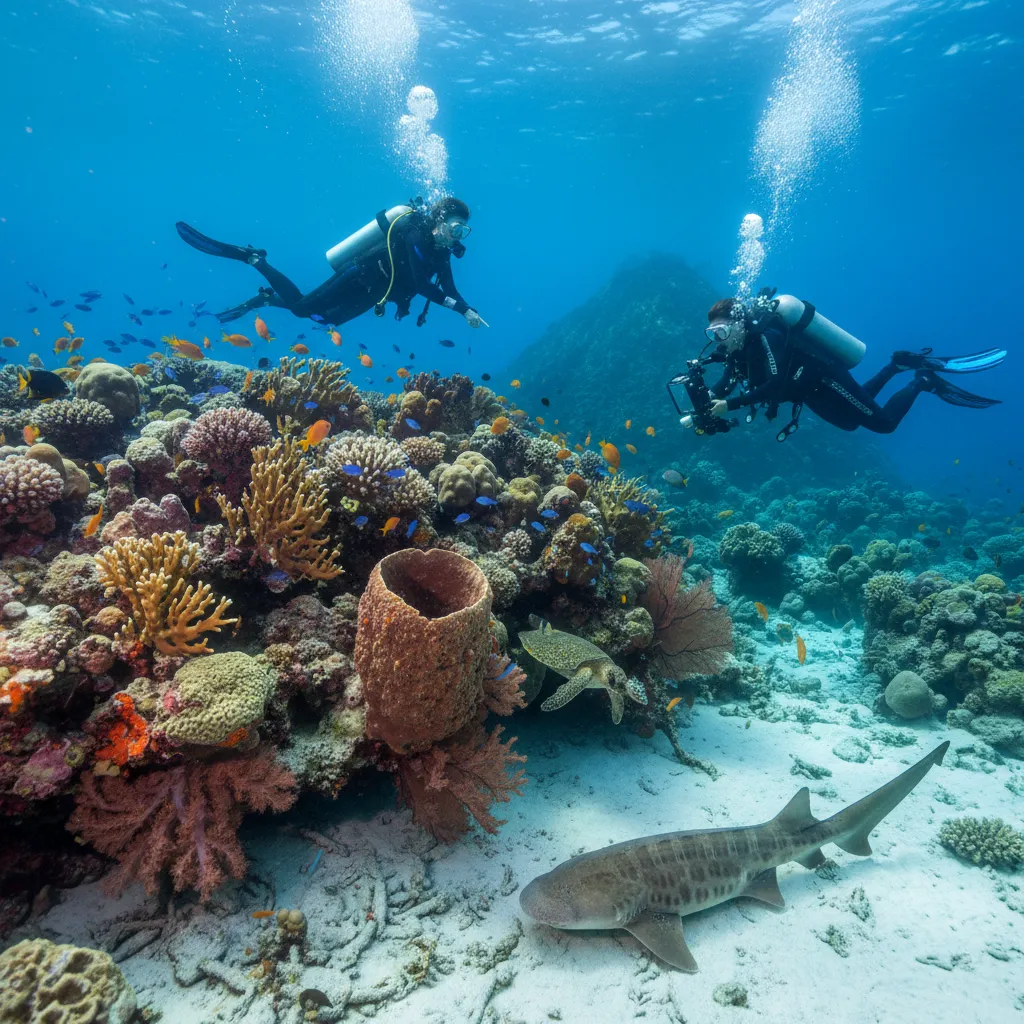
Why Venezuela for Your First Dives?
Venezuela, with its Caribbean coastline and vibrant marine ecosystems, offers a unique entry point for beginner divers. While it may not be as widely publicized as some other Caribbean destinations, its dive sites provide a gentle introduction to underwater exploration. The warm waters, consistently above 26°C (79°F) year-round, eliminate the chill factor often associated with colder dive locations, allowing new divers to focus on buoyancy and basic skills rather than discomfort. Visibility is generally good, often exceeding 15 meters, which helps alleviate anxiety for those new to the underwater environment.
The dive sites cater well to those starting out, with a significant portion being suitable for beginners. Out of 54 recorded dive sites, 4 are specifically categorized as beginner-friendly, and an additional 1 is intermediate, suggesting a manageable learning curve. The sheltered reefs and calm conditions found in key regions like Los Roques and Morrocoy provide ideal learning environments. You can expect to encounter a variety of Caribbean reef fish, healthy corals, and possibly turtles or rays, offering exciting first encounters without overwhelming currents or complex dive profiles.
Best Beginner-Friendly Regions
Los Roques Archipelago: This national park is an excellent choice for beginners due to its extensive barrier reef system that creates numerous sheltered, shallow dive sites. The clear, calm waters here are perfect for practicing basic skills and enjoying the marine environment without strong currents. Dive sites like Dos Mosquises and Cayo Sal offer gentle slopes and abundant reef life, ideal for first-time underwater experiences. The focus here is on relaxed exploration of healthy coral gardens and diverse fish populations.
Morrocoy & Chichiriviche: Located on the mainland coast, Morrocoy National Park and the nearby town of Chichiriviche provide accessible and calm diving conditions. The park features numerous cays and mangrove areas, creating protected lagoons and shallow reefs. Sites around Cayo Sombrero or Cayo Sal (different from the one in Los Roques) are often characterized by minimal currents and good visibility, making them suitable for introductory dives or Open Water training. The proximity to the mainland also offers more varied accommodation and logistical options.
What Certification Do You Need?
To participate in guided fun dives in Venezuela, you will generally need to hold a PADI Open Water Diver certification or an equivalent certification from another recognized agency such as SSI, NAUI, or CMAS. If you are entirely new to diving, you can opt for a Discover Scuba Diving (DSD) experience, which allows you to try diving under direct instructor supervision without prior certification. For a full certification, local dive centers offer PADI Open Water courses, which typically take 3-4 days to complete and involve academic sessions, confined water training, and four open water dives. While PADI is widely popular, local operators are usually equipped to recognize other major certifications.
Best Time to Visit
The best time to visit Venezuela for diving is generally during the dry season, which runs from November to May. During these months, you can expect more stable weather conditions, less rainfall, and calmer seas, leading to optimal visibility. Water temperatures remain consistently warm throughout the year, typically ranging from 26°C to 29°C (79°F to 84°F), so thermal comfort is rarely an issue. While diving is possible year-round, the dry season offers the most reliable conditions for beginner divers, minimizing the chances of rough seas impacting dive plans or comfort.
What to Expect on Your First Dive
On your first dive in Venezuela, whether it's a DSD or your initial Open Water training dive, you'll typically start at a local dive center. The process usually involves checking in, completing necessary paperwork, and receiving a detailed briefing from your instructor. This briefing will cover the dive site, safety procedures, communication signals, and what marine life you might encounter. You'll then be fitted with rental equipment-mask, fins, wetsuit (usually a shorty or 3mm full suit), BCD, and regulator. Most beginner dives in Venezuela are boat dives, especially in Los Roques and Morrocoy, involving a short ride to a sheltered reef. Entry is usually a controlled giant stride from the boat. Underwater, your instructor will guide you through shallow, calm areas, focusing on comfortable breathing and buoyancy control. The typical dive profile for beginners will be shallow, around 5-12 meters, allowing for extended bottom time and ample light. Expect a relaxed pace, with emphasis on enjoying the environment rather than complex maneuvers, and a gradual ascent back to the boat.
Budget Guide
Diving in Venezuela offers varying price points. A Discover Scuba Diving (DSD) experience typically costs between $80 - $120 USD (approximately 280,000 - 420,000 VES, though USD is often preferred for tourist services). A full PADI Open Water Diver course can range from $450 - $600 USD (approximately 1,575,000 - 2,100,000 VES), including equipment rental and certification fees. Fun dives for certified divers are usually priced at $40 - $60 USD per dive (around 140,000 - 210,000 VES) if booked as part of a package, or slightly more for single dives, with equipment rental often an additional $15 - $25 USD per day. Accommodation ranges widely: budget hostels might be $20-$40 USD per night, mid-range hotels $60-$120 USD, and more upscale options $150+ USD, especially in Los Roques. It's advisable to carry USD for most tourist-related expenses.
Essential Tips
- Book in Advance for Los Roques: Dive operators and accommodation in Los Roques can fill up, especially during peak season (November-May). Book well ahead.
- Carry USD Cash: While local currency (VES) is used, many tourist services, including dive operators, prefer or require USD cash. Exchange rates can vary significantly.
- Verify Dive Operator Reputation: Ensure your chosen dive center has good reviews and adheres to international safety standards. Ask about their equipment maintenance.
- Respect Marine Life and Regulations: Venezuela's dive sites are often within national parks. Do not touch corals or marine animals, and follow all park regulations regarding conservation.
- Stay Hydrated: The tropical climate means you'll be sweating more. Drink plenty of water before and after dives to prevent dehydration.
- Sun Protection: The equatorial sun is strong. Use reef-safe sunscreen, wear hats, and consider rash guards to protect your skin, even on cloudy days.
- Language: Spanish is the official language. While some dive operators may have English-speaking staff, knowing basic Spanish phrases can be helpful.
At a Glance
| Destination | Difficulty | Best Months |
|---|---|---|
| Los Roques ArchipelagoVenezuela | Beginner | Jan-Dec |
| Morrocoy & ChichirivicheVenezuela | Beginner | - |
Los Roques Archipelago
Venezuela
Difficulty
Beginner
Best Months
Jan-Dec
Water Temp
28-28C
Dive Centres
1
Practical Info
- dive Sites:
- 30
- dive Centres:
- 1
Morrocoy & Chichiriviche
Venezuela
Difficulty
Beginner
Dive Centres
8
Practical Info
- dive Sites:
- 24
- dive Centres:
- 8
Frequently Asked Questions
Do I need a certification to dive in Venezuela?
To go on guided fun dives, you need a PADI Open Water Diver certification or equivalent. However, if you're a beginner, you can try a Discover Scuba Diving (DSD) experience under direct instructor supervision without certification.
How much does diving cost in Venezuela?
A Discover Scuba Diving experience costs $80-$120 USD. A full PADI Open Water course is $450-$600 USD. Fun dives for certified divers are $40-$60 USD per dive, with equipment rental often an extra $15-$25 USD per day.
What is the best time to dive in Venezuela?
The best time to dive in Venezuela is during the dry season, from November to May. This period offers stable weather, less rain, calmer seas, and optimal visibility, with water temperatures ranging from 26°C to 29°C (79°F to 84°F).
Is Venezuela safe for beginner divers?
Yes, specific dive regions like Los Roques and Morrocoy offer sheltered, shallow sites with calm conditions suitable for beginners. Always choose reputable dive operators and follow their safety guidelines.
What marine life will I see in Venezuela?
In Venezuela's dive sites, you can expect to see a variety of Caribbean reef fish, healthy corals, and potentially turtles or rays. The ecosystems are vibrant and offer good introductory encounters for new divers.
Related Guides
Planning when to go?
See the month-by-month conditions guide