Essential Scuba Equipment: A Beginner's Guide
By DivePlnr Editorial Team | Published March 2026 | Updated March 2026
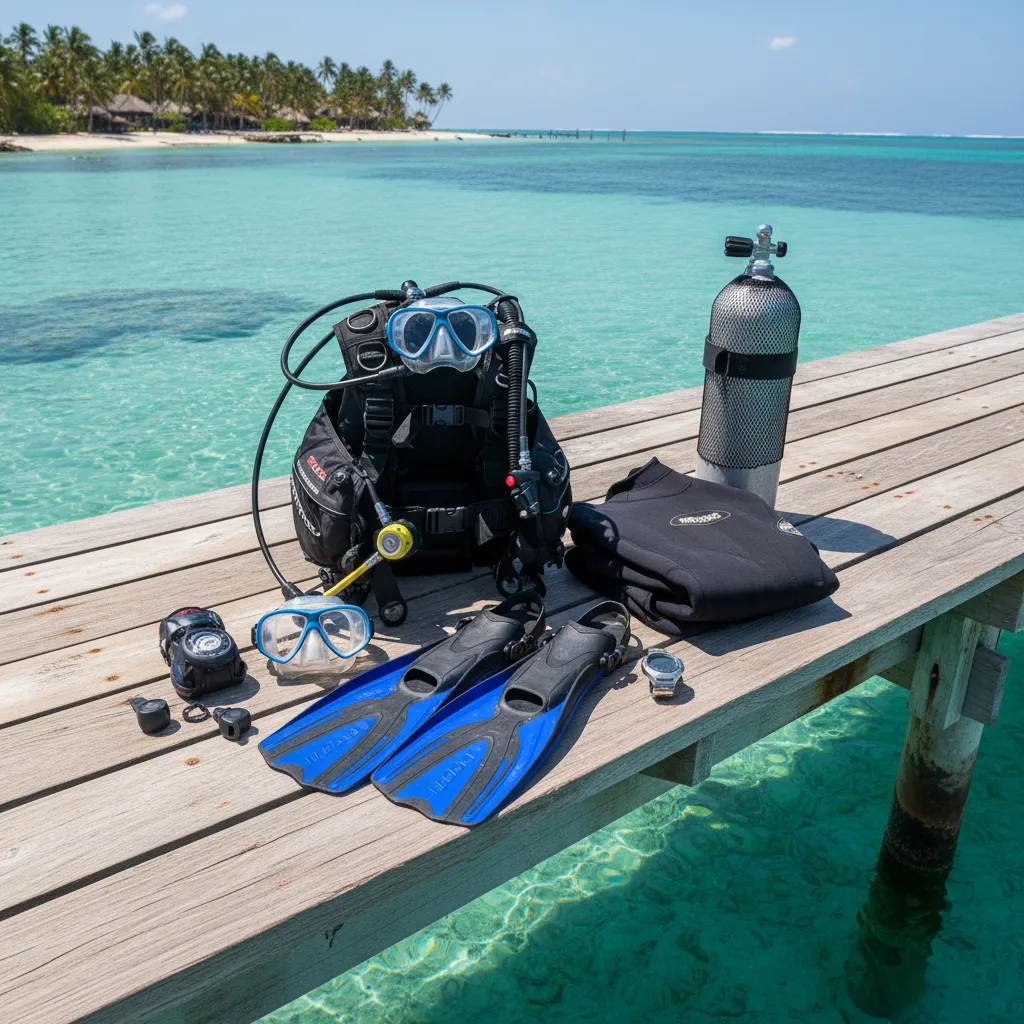
Understanding scuba equipment transforms you from a passenger to a participant. While rental gear gets you underwater, knowing how each piece of equipment works - and eventually owning your own - dramatically improves comfort, safety, and enjoyment. Modern scuba equipment is the result of decades of engineering refinement, and every item serves a critical function. The basic scuba kit consists of a mask, snorkel, fins, exposure suit, buoyancy compensator device (BCD), regulator with alternate air source, tank, weight system, and instrumentation (dive computer or gauges). Together, these items allow a human being to survive and move efficiently in an environment fundamentally hostile to terrestrial life. Learning to select, maintain, and use this equipment properly is one of the most rewarding aspects of becoming a diver. When your gear fits well and you understand how it works, you can focus entirely on the dive itself - the marine life, the underwater landscape, and the sheer joy of being weightless in a world most people will never see.
Mask
Your mask creates an air space in front of your eyes, allowing them to focus underwater. Without a mask, the human eye cannot focus in water because the refractive index is too similar to the eye's own fluids. A good mask fits your face without any strap tension - press it gently against your face, inhale through your nose, and it should stay in place. The most important factor in mask selection is fit, not brand or price. A leaking mask will ruin any dive.
Masks come in single-lens and dual-lens designs. Dual-lens masks allow the installation of prescription lenses. Low-volume masks sit closer to the face and are easier to clear of water. A silicone skirt (transparent or black) creates the seal against your skin. Always try before you buy.
Fins
Fins translate leg power into underwater propulsion. There are two main types: full-foot fins that slip on like shoes (common in warm water) and open-heel fins that require boots and are secured with adjustable straps (preferred for cold water and boat diving). Blade fins provide powerful thrust with each kick, while split fins reduce effort and strain on knees and ankles. For beginners, a mid-length, moderately stiff blade fin is a good all-round choice.
Exposure Suit
Wetsuits and drysuits protect against heat loss, sunburn, stings, and abrasion. In tropical water above 27C, a 3mm wetsuit or rash guard suffices. Temperate waters of 15-25C call for a 5mm or 7mm wetsuit. Below 15C, a drysuit is recommended - it keeps you completely dry inside by sealing at the wrists and neck, with insulating undergarments providing warmth. A well-fitting exposure suit is essential for comfortable, extended diving.
BCD - Buoyancy Compensator Device
The BCD is an inflatable jacket or wing that controls your buoyancy. By adding air (from your tank via an inflator hose) you become more buoyant and rise; by venting air through dump valves, you become less buoyant and sink. The BCD also holds your tank and provides attachment points for accessories. Jacket-style BCDs are most common for recreational diving, while back-inflate and wing-style BCDs are preferred by experienced divers for their streamlined profile and better trim.
Regulator
The regulator is your lifeline - it reduces high-pressure air from the tank (200 bar / 3000 psi) to ambient pressure so you can breathe normally. A regulator system consists of a first stage (attached to the tank valve), a primary second stage (the part you breathe from), an alternate air source (octopus) for buddy emergencies, and a low-pressure inflator hose to the BCD. Modern regulators are highly reliable but require annual servicing to maintain performance.
Dive Computer
A dive computer is the single most important piece of instrumentation. It continuously monitors your depth and time, calculates nitrogen absorption, displays your no-decompression limit, tracks ascent rate, and provides safety stop reminders. Wrist-mount computers are most popular, though console-mount versions are also available. A dive computer replaces the need for dive tables and provides real-time, personalised decompression information based on your actual dive profile.
What to Buy First
Most instructors recommend buying personal items first: mask, snorkel, boots, and a dive computer. These items are the most personal in terms of fit and are used on every dive. A mask that fits your face perfectly is impossible to replicate with rental stock. A dive computer tracks your personal nitrogen loading across multiple dives and days. Fins, exposure suits, and larger items can come later as your budget and commitment allow. BCD and regulators are the most expensive items and many divers rent these while they are still learning.
Key Takeaways
- 1Mask fit is the single most important factor - a leaking mask ruins any dive
- 2Buy personal items first: mask, boots, dive computer, and snorkel
- 3A dive computer is essential - it tracks nitrogen loading and keeps you within safe limits
- 4Wetsuits for warm water (3-7mm), drysuits for cold water below 15C
- 5Regulators require annual servicing to maintain reliability and performance
- 6BCD jacket-style suits beginners; back-inflate provides better trim for experienced divers
Frequently Asked Questions
Should I buy or rent scuba equipment as a beginner?
Start by buying personal fit items - mask, snorkel, boots, and a dive computer. These items vary greatly by individual and rental stock may not fit well. Rent the expensive items (BCD, regulators, tank, wetsuit) until you have enough experience to know what you want. Most divers gradually build their own kit over 1-2 years.
How much does a full set of scuba equipment cost?
A complete recreational scuba setup ranges from $1,500 to $5,000 USD depending on brand and features. A mask ($40-150), fins ($60-200), computer ($200-800), regulator set ($300-1,200), BCD ($300-900), and exposure suit ($100-600) are the major items. Quality mid-range gear provides excellent performance without premium pricing.
How often does scuba equipment need servicing?
Regulators should be serviced annually or after every 100 dives, whichever comes first. BCDs should be inspected annually. Tanks require visual inspection annually and hydrostatic testing every 5 years (varies by country). Other items need regular rinsing with fresh water after use and visual inspection for wear.
What is the most important piece of scuba equipment?
The dive computer is arguably the most important purchase. It provides real-time decompression information personalised to your actual dive profile, replacing static dive tables. A quality dive computer significantly increases safety by monitoring depth, time, ascent rate, and nitrogen absorption continuously throughout every dive.