Boat Diving Guide: Etiquette, Entry & Safety
By DivePlnr Editorial Team | Published March 2026 | Updated March 2026
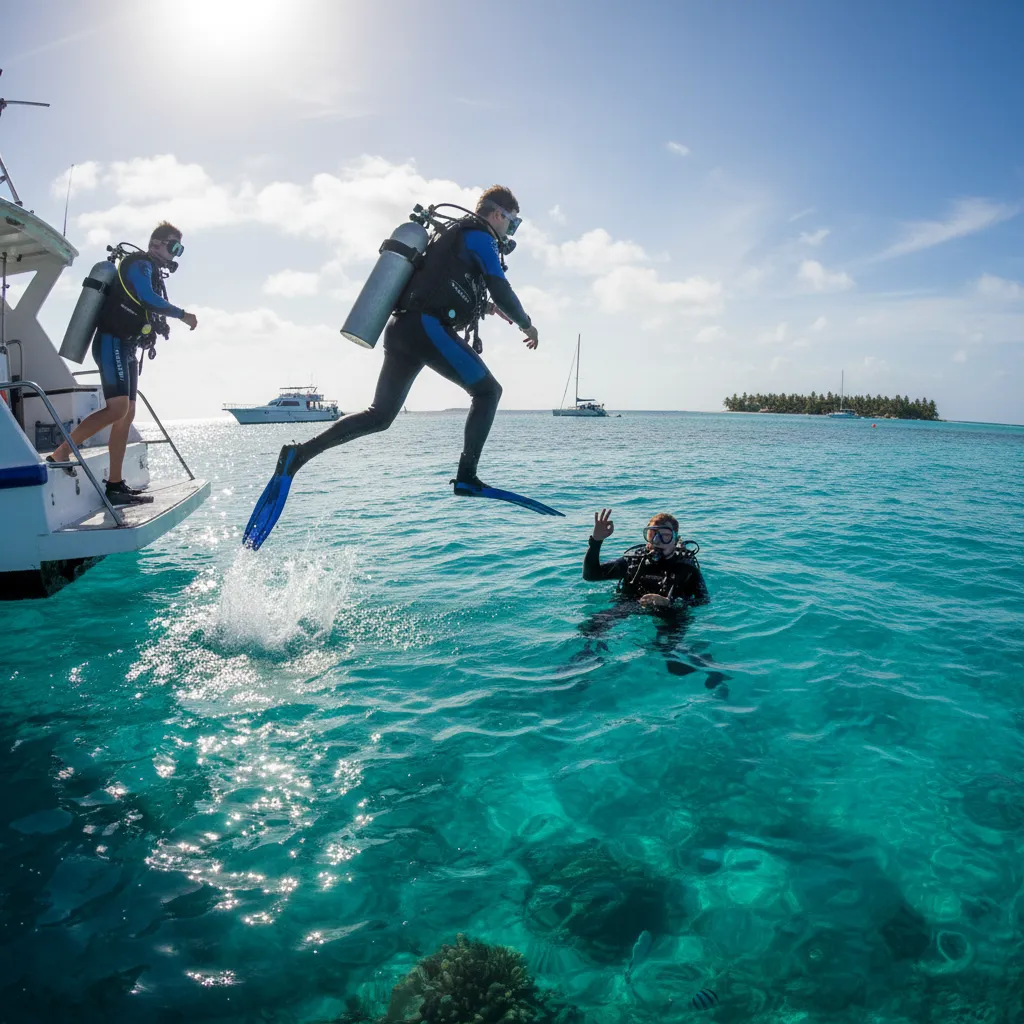
Boat diving opens up a world of dive sites inaccessible from shore - offshore reefs, deep walls, seamounts, current-swept channels, and remote islands. The majority of the world's best dive sites are reached by boat, from small inflatable RIBs to luxury liveaboards. Yet boat diving introduces unique considerations that shore diving does not: seasickness management, giant stride and backward roll entries, navigating ladders with full equipment, managing gear in confined spaces, understanding boat positioning and anchor lines, and working with boat crews whose schedules and procedures must be respected. For many new divers, the first boat dive can feel chaotic - unfamiliar entry methods, a rocking platform, multiple divers gearing up simultaneously, and a divemaster delivering a rapid briefing over engine noise. But boat diving quickly becomes second nature with experience and attention to a few key principles: prepare your equipment before the briefing, listen carefully to the briefing, follow the crew's instructions precisely, and always know where the emergency equipment is located. Understanding boat diving etiquette and procedures marks the transition from novice to capable diver and ensures you are welcome on any boat operation worldwide.
Before Boarding
Arrive at the dock early - at least 15-30 minutes before the scheduled departure. Stow your gear where the crew directs, not wherever seems convenient. Large items (BCD, tank) go in designated areas; personal bags go in dry storage. Set up your equipment before the boat departs if possible, while the boat is stable and there is plenty of space. Fill out any required paperwork, show your certification card and logbook, and confirm your experience level with the dive operation.
Seasickness Prevention
Seasickness can ruin a dive trip. Take preventive medication (meclizine, dimenhydrinate, or prescription scopolamine patches) before boarding - these medications are generally considered safe for diving when taken at recommended doses, though prescription patches should be discussed with a dive medicine physician. Stay on deck in fresh air, watch the horizon, avoid reading or looking at screens, stay hydrated, and eat light, bland food. If you feel unwell, move to the stern (back) of the boat where motion is least and focus on the horizon. Never vomit into the wind.
Boat Entry Methods
Giant Stride
The most common entry from a platform at or near water level. With all equipment on and functioning, hold your mask and regulator firmly to your face with one hand, and step off the platform with a large stride, keeping your legs apart. Look ahead, not down. Once in the water, signal OK to the boat crew immediately and move away from the entry point for the next diver.
Backward Roll
Used from small boats and RIBs where standing is impractical. Sit on the gunwale (edge) with your back to the water. On the count or command, lean backward and roll into the water, tucking your chin and holding your mask. Trust the technique - it feels unnatural but works perfectly.
Seated Entry
From low docks or platforms, sit on the edge with legs in the water, turn to face the platform, and lower yourself in. Used when conditions are calm and the entry point is close to water level.
Exiting the Water
Remove fins before climbing a boat ladder - ascending a ladder in fins is dangerous and damages equipment. Most operations provide a fin-removal line or step at the waterline. Hand up heavy equipment (cameras, lights) before climbing if a crew member is available. Climb steadily with both hands on the ladder rails. Watch for swells that can surge you into or away from the ladder.
Boat Diving Etiquette
Respect the shared space. Stow gear compactly. Do not place equipment on seats or walkways. Rinse camera equipment in the designated fresh-water rinse tank, not the drinking water supply. Use the toilet (head) before gearing up. Do not block the entry/exit area. Wait your turn to gear up and enter. Listen to crew instructions and the divemaster's briefing attentively. If you do not understand something, ask before entering the water.
Safety Equipment and Procedures
Know the location of life jackets, fire extinguishers, first aid kit, oxygen kit, and emergency communication equipment. Understand the recall procedure - most boats use a specific underwater recall signal (often a metal-on-metal banging or an electronic recall device). Carry a surface marker buoy and whistle on every boat dive. In current, deploy your SMB before surfacing so the boat can track your position. Never remove your equipment in the water unless instructed to do so - a fully equipped diver is easier to assist than one struggling with loose gear.
Key Takeaways
- 1Set up equipment before the boat departs while conditions are stable
- 2Take seasickness prevention before boarding - medication works preventively, not after symptoms start
- 3Giant stride entry: hold mask firmly, step forward with legs apart, look ahead
- 4Remove fins before climbing the boat ladder - never climb in fins
- 5Always carry an SMB and whistle on boat dives for surface signalling
- 6Know the location of all safety equipment and understand the recall procedure
Frequently Asked Questions
How do I avoid seasickness when diving from a boat?
Prevention is key - take medication 30-60 minutes before boarding. Stay on deck in fresh air, watch the horizon, stay hydrated, and eat light food. Avoid going below deck, reading, or staring at screens. Ginger supplements and acupressure wristbands help some people. If all else fails, getting in the water usually provides immediate relief as wave motion is not felt underwater.
What should I bring on a dive boat?
Essential items: certification card, logbook, personal dive equipment, towel, reef-safe sunscreen, water bottle, light snacks, seasickness medication (if needed), waterproof bag for electronics. Most day boats provide tanks, weights, and sometimes lunch. Confirm what is provided when booking. Leave valuables ashore when possible.
What if I surface away from the boat?
Deploy your surface marker buoy (SMB) before or during ascent so the boat can track you. At the surface, inflate your BCD fully, signal to the boat (arm raised or SMB held high), and stay put - the boat will come to you. If you carry a whistle or mirror, use them to attract attention. Never try to swim a long distance to a boat in current - conserve energy and wait for pickup.