Buddy Diving Procedures & Communication
By DivePlnr Editorial Team | Published March 2026 | Updated March 2026
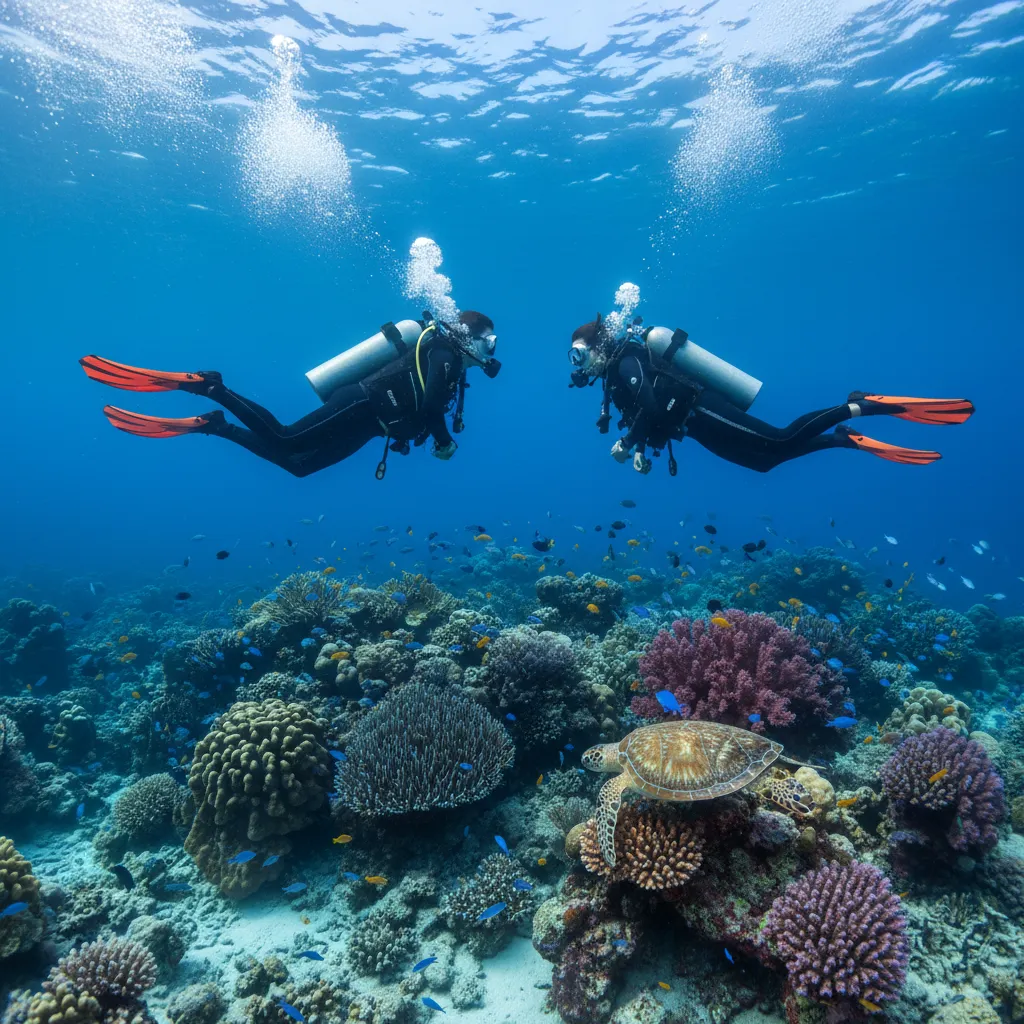
The buddy system is one of the foundational safety principles in recreational scuba diving. Your buddy is your redundant life support system, your second pair of eyes, your emergency responder, and your companion in exploring the underwater world. Effective buddy diving is far more than simply being in the water at the same time as another person - it requires pre-dive planning, continuous communication, mutual awareness, and practiced emergency responses. Studies by DAN consistently show that buddy separation is a contributing factor in a significant proportion of diving fatalities. Many incidents that should have been manageable emergencies - out-of-air situations, equipment malfunctions, medical events - become fatal when the affected diver has no buddy nearby to assist. Conversely, well-functioning buddy teams resolve the vast majority of underwater problems quickly, safely, and often without the diver on the surface even being aware that anything happened. Good buddy diving begins before you enter the water with a thorough pre-dive check and communication plan, continues throughout the dive with regular check-ins and maintained proximity, and extends after the dive with a debrief and log review. Whether you dive with a regular buddy who knows your habits intimately or are paired with someone you just met on a dive boat, the principles of effective buddy diving remain the same.
Pre-Dive Buddy Check
The pre-dive safety check - commonly remembered as BWRAF (Begin With Review And Friend) or other agency-specific mnemonics - is a systematic equipment inspection performed by buddy pairs before every dive.
B - BCD / Buoyancy
Check that the BCD inflates and deflates correctly. Test the low-pressure inflator, oral inflate, and all dump valves. Ensure the BCD is properly attached to the tank and the tank is securely fastened. Verify the power inflator hose connection is secure.
W - Weights
Confirm that weight belts or integrated weight systems are secure, properly loaded, and that the quick-release mechanism functions correctly. Both buddies must know how to release each other's weights in an emergency. Check that the right-hand release convention is followed if applicable.
R - Releases
Check all clips, buckles, and releases on the BCD, weight system, and tank band. Ensure you know how to release your buddy's equipment in an emergency. Verify that all releases are properly secured and not in danger of accidental release.
A - Air
Turn on the tank valve fully (then quarter turn back). Breathe from the primary regulator and alternate air source. Check the pressure gauge - a full tank should read 200-230 bar (3000+ psi). Verify the alternate air source is functioning and easily accessible.
F - Final Check
Visual once-over: mask on forehead or around neck, fins ready, no dangling equipment, computer on and functioning, SMB accessible, dive light checked. Confirm the dive plan: maximum depth, bottom time, turn pressure, direction, and signals.
Maintaining Buddy Contact
Stay within arm's reach of your buddy in poor visibility and within 2-3 metres in good visibility. Check in visually every 30-60 seconds. Communicate air supply at regular intervals (every 10 minutes or 50 bar). Match your pace to the slower diver. If one buddy wants to look at something, the other stays close. If you notice your buddy drifting away, signal them immediately - do not wait until they are out of visual range.
Lost Buddy Procedure
If you lose visual contact with your buddy: stop, look around in a full 360-degree scan for 60 seconds (check above and below as well as left and right). Listen for tank-banging or other noise signals. If no contact is re-established within one minute, ascend slowly to the surface, deploy your SMB during ascent, and wait at the surface. Your buddy should be following the same procedure, and you will reunite on the surface. Never spend extended time searching at depth - you consume air rapidly when stressed.
Emergency Procedures
Out-of-Air Buddy Assist
If your buddy signals out of air, immediately offer your alternate air source (octopus). The out-of-air diver takes the offered regulator, secures it, and both divers make a controlled ascent together, maintaining physical contact. Practice this regularly - in a real emergency, muscle memory matters.
Controlled Emergency Swimming Ascent (CESA)
If you run out of air and your buddy is not immediately available, a CESA involves swimming to the surface from 9 metres or less while exhaling continuously. This is a last-resort technique practised during certification. The key is to exhale throughout the ascent - expanding air will escape your lungs naturally if you keep your airway open.
Being a Good Buddy
Communicate your experience level honestly. Do not let ego prevent you from asking for help or calling a dive. Match your dive profile to the less experienced diver. Share interesting sightings. Monitor your buddy's air consumption and comfort level. After the dive, debrief together - discuss what went well, what could improve, and log the dive accurately.
Key Takeaways
- 1Perform a complete BWRAF buddy check before every single dive - no exceptions
- 2Stay within arm's reach in poor visibility and 2-3 metres in good visibility
- 3If separated, search for 60 seconds, then ascend slowly and reunite at the surface
- 4Both buddies must know how to locate and operate each other's alternate air source and weight release
- 5Communicate air supply every 10 minutes or 50 bar throughout the dive
- 6Match your dive profile and pace to the less experienced or less comfortable diver
Frequently Asked Questions
What should I do if my buddy runs out of air?
Immediately offer your alternate air source (octopus). Present it with the mouthpiece facing the correct direction. Once your buddy is breathing comfortably, maintain physical contact (hold each other's BCD) and begin a controlled ascent together at a safe rate. Do not rush - a controlled ascent with shared air is far safer than a panicked bolt to the surface.
Can I dive without a buddy?
Solo diving is practiced by some experienced divers who carry fully redundant equipment (independent air supply, backup mask, cutting tools, navigation aids). Some agencies offer solo diving certifications. However, recreational training agencies universally recommend buddy diving, and most dive operations require it. Solo diving without proper training, equipment, and experience is extremely risky.
What makes a good dive buddy?
A good buddy communicates openly about their experience and comfort level, performs thorough pre-dive checks, maintains appropriate proximity throughout the dive, monitors and shares air supply information, stays calm in unexpected situations, and does not let ego interfere with safety decisions. Reliability and trust are more important than experience level.