Diving in Currents: Drift Diving Techniques
By DivePlnr Editorial Team | Published March 2026 | Updated March 2026
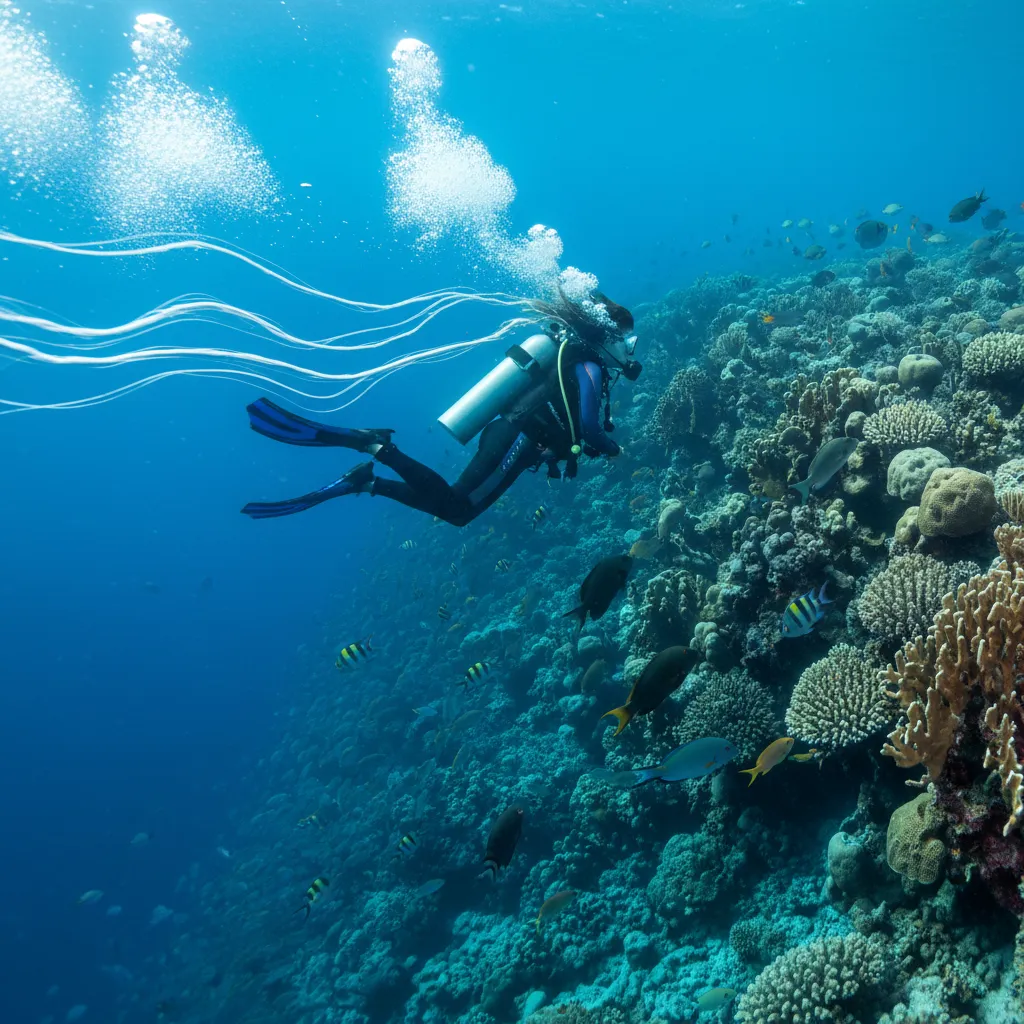
Currents are a fact of life in the ocean, and learning to work with them rather than against them opens access to some of the most spectacular diving on the planet. Drift diving - intentionally using ocean currents to carry you along a reef, wall, or channel - is one of the most exhilarating forms of diving. World-class drift dive sites like the channels of Palau, the passes of French Polynesia, the Komodo currents of Indonesia, and the Gulf Stream walls of Cozumel offer unforgettable experiences: being carried effortlessly past walls of coral while pelagic species - sharks, manta rays, tuna, and barracuda - patrol the blue water attracted by the nutrient-rich flow. However, currents also present genuine risks. An unexpected current can separate buddies, sweep divers into deep water or away from the boat, pin divers against structures, or exhaust those who try to swim against flow that exceeds human swimming capability. Understanding current dynamics, planning for current-affected dives, carrying appropriate safety equipment, and knowing when a current exceeds your ability to manage it are essential skills for any diver who ventures beyond sheltered sites. Current diving requires good buoyancy control, the ability to manage your surface presence for boat pickup, and the discipline to call a dive when conditions exceed your comfort level.
Understanding Currents
Ocean currents result from wind, tides, temperature differences, and underwater topography. Tidal currents are the most predictable and occur as water flows in and out of channels, passes, and restricted areas with the tide. These currents reverse direction with each tidal cycle and are strongest during spring tides (around new and full moons). Understanding the local tidal pattern allows you to predict current direction and strength for dive planning.
Permanent currents such as the Gulf Stream flow continuously in one direction. Localised currents can form around points, over ridges, and through narrow passages where water is forced to accelerate. Down-currents and up-currents can occur along walls and steep drop-offs - these are particularly dangerous as they can push divers to unexpected depths or to the surface rapidly.
Drift Diving Technique
In a drift dive, the boat drops divers upstream and picks them up downstream - or follows the divers' bubbles or surface markers. The diver's role is to maintain a comfortable depth, stay with the group, and enjoy the ride. Minimal swimming is required; the current does the work. Maintain neutral buoyancy and a horizontal, streamlined profile. Keep your arms tucked in and let your fins trail behind you.
Control your depth precisely - in a current, vertical position changes happen quickly and are difficult to correct. Stay above the reef to avoid being pushed into coral. If you need to stop (to look at something or wait for the group), duck behind a large coral head or rock formation that provides a shelter from the flow.
Safety Equipment for Current Diving
A surface marker buoy (SMB) and reel are mandatory for drift diving. Deploy your SMB during your safety stop so the boat can track your position and be ready for pickup when you surface. A whistle and mirror provide backup signalling if the boat does not see your SMB immediately. Carry a DSMB (delayed surface marker buoy) - one that can be inflated and deployed underwater - rather than relying on inflating at the surface in current.
A reef hook - a stainless steel hook on a short line attached to your BCD - allows you to hook into dead rock or rubble to hold position in current without damaging the reef. Essential in destinations like Palau, the Maldives, and Komodo where strong currents carry you past cleaning stations or aggregation points you want to observe.
Managing Challenging Currents
If caught in an unexpected current, do not fight it. Fighting a strong current exhausts you rapidly and achieves nothing. Instead, swim diagonally across the current toward shelter (a reef edge, a wall, or shallow water where current is typically weaker). If there is no shelter, signal your buddy, inflate your BCD, ascend safely, and wait for boat pickup on the surface. In a down-current along a wall, swim away from the wall into open water where the down-current effect diminishes. In an up-current, deflate your BCD, kick downward, and move away from the feature causing the uplift.
Planning Current Dives
Research tidal patterns and current predictions for your destination. Dive at slack tide (when the current pauses between tidal flows) for calmer conditions. Brief thoroughly - agree on procedures for buddy separation, current changes, and emergency ascent. Carry more air than usual - stress and exertion in current increase consumption. Maintain close buddy contact - current separates divers quickly. Listen to the divemaster's briefing carefully; local knowledge of current patterns is invaluable.
Key Takeaways
- 1Never fight a strong current - swim diagonally across it toward shelter or ascend safely
- 2A surface marker buoy (SMB) and reel are mandatory equipment for any drift dive
- 3Tidal currents are predictable - check tide charts and dive at slack tide for calmer conditions
- 4Deploy your SMB during the safety stop so the boat can track your position for pickup
- 5A reef hook allows you to hold position in current without damaging live coral
- 6Down-currents along walls are dangerous - swim away from the wall into open water to escape
Frequently Asked Questions
What is drift diving?
Drift diving is a technique where divers use ocean current to carry them along a dive site - a reef, wall, or channel. The boat drops divers upstream and picks them up downstream (or follows the group). Minimal swimming is required as the current provides propulsion. Drift diving is one of the most exciting forms of diving and provides access to current-fed sites rich in pelagic marine life.
How strong a current can I dive in?
Comfortable drift diving occurs in currents of 0.5-1.5 knots. Currents of 1.5-3 knots are challenging and require experience. Currents above 3 knots are generally too strong for safe recreational diving. However, sheltered areas behind reef structures can provide calm water even when surrounding current is strong. Listen to local guidance and do not exceed your comfort level.
What should I do if I surface far from the boat?
Inflate your BCD fully, deploy your SMB high, use a whistle to attract attention, and wait. Do not try to swim against current to reach the boat - you will exhaust yourself. The boat will come to you. If you carry a GPS-enabled personal locator beacon (PLB), activate it as a backup. Stay calm and conserve energy.