Decompression Theory: Understanding Deco Stops
By DivePlnr Editorial Team | Published March 2026 | Updated March 2026
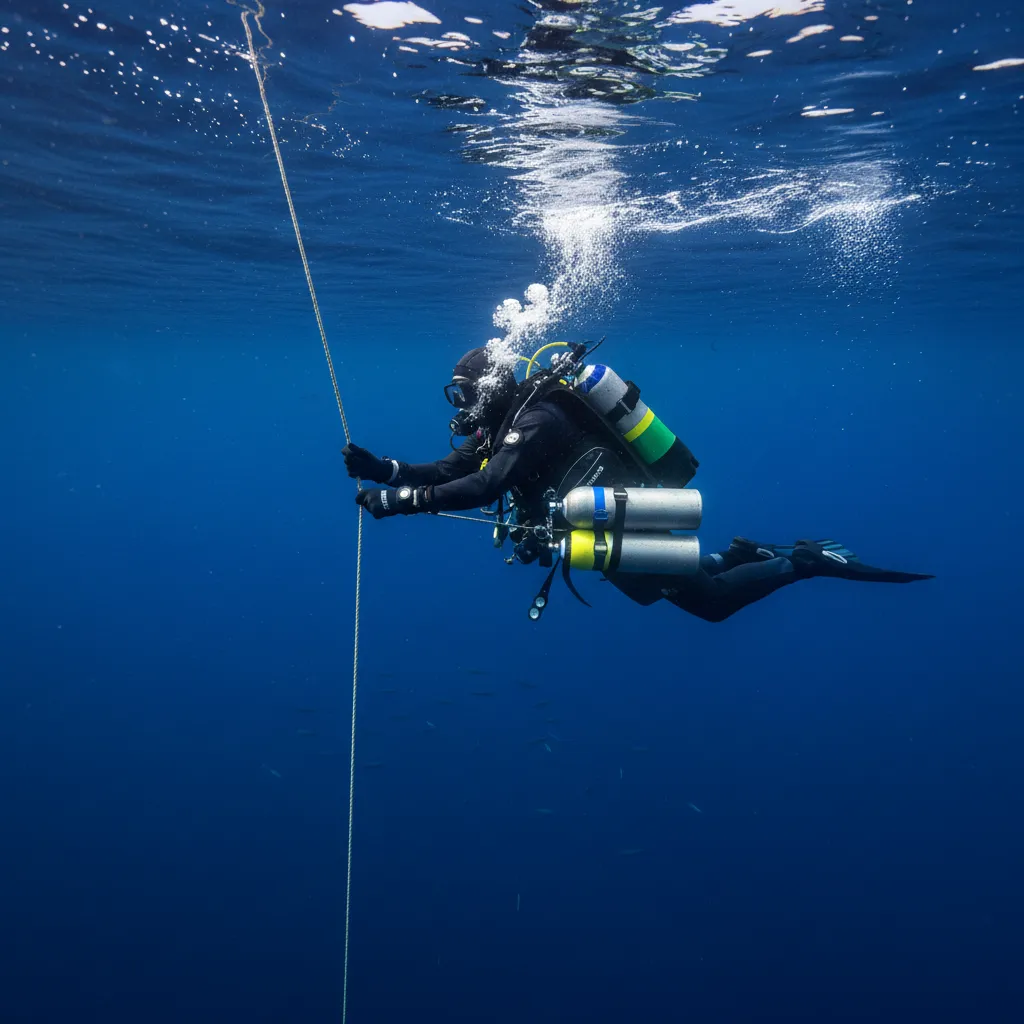
Decompression theory is the scientific foundation upon which all scuba diving is built. Every dive - recreational or technical - involves decompression considerations, even if the recreational diver simply follows a dive computer's no-decompression limits. Understanding how inert gases (primarily nitrogen) dissolve into body tissues under pressure, how they are eliminated during ascent, and what happens when this process goes wrong is essential knowledge for any serious diver. The pioneering work of John Scott Haldane in 1908 established the basic principles that still underpin modern decompression models. Haldane proposed that the body could be modelled as a series of tissue compartments that absorb and release nitrogen at different rates, and that a controlled ascent with stops would allow safe elimination of dissolved gas. Since then, increasingly sophisticated models - Bühlmann's ZH-L16, the Varying Permeability Model (VPM), and the Reduced Gradient Bubble Model (RGBM) - have refined our understanding. Yet decompression science remains imperfect: no model guarantees freedom from decompression sickness, and individual variability means that two divers doing identical profiles may have different outcomes. This article explains the core concepts that every diver should understand.
How Gases Dissolve Under Pressure
Henry's Law states that the amount of gas dissolved in a liquid is proportional to the partial pressure of that gas above the liquid. As a diver descends, ambient pressure increases (1 bar for every 10 metres of seawater), and the partial pressure of nitrogen in the breathing gas rises proportionally. Nitrogen from the lungs diffuses into the blood and from the blood into body tissues, driven by the pressure gradient. Different tissues absorb nitrogen at different rates - blood-rich tissues like the brain and spinal cord saturate quickly (5-10 minutes), while poorly perfused tissues like cartilage and fat saturate slowly (hours).
Tissue Compartments
Decompression models divide the body into theoretical tissue compartments, each with a characteristic half-time - the time required for that tissue to reach 50% saturation at a given pressure. Bühlmann's ZH-L16 model uses 16 compartments with half-times ranging from 4 to 635 minutes. Fast tissues (short half-times) load quickly on descent but also off-gas quickly during ascent. Slow tissues load gradually during long or repetitive dives and require extended decompression to eliminate accumulated gas.
The Ascent Problem
During ascent, ambient pressure decreases. If pressure drops too quickly, dissolved nitrogen cannot be eliminated through normal respiration fast enough, and the gas comes out of solution as bubbles within tissues and blood - analogous to opening a carbonated drink. These bubbles can block blood vessels, compress nerves, and trigger an inflammatory cascade. This is decompression sickness (DCS), commonly known as 'the bends'. Symptoms range from joint pain and skin rashes to paralysis and death.
Decompression Stops
Decompression stops are planned pauses during ascent at specific depths. They allow the pressure gradient between tissues and ambient pressure to drive nitrogen elimination through respiration without exceeding the critical supersaturation ratio that produces symptomatic bubble formation. A typical decompression schedule might include stops at 6m, 3m, and sometimes deeper depths (9m, 12m, 15m+) depending on the dive profile. Stop times are calculated by decompression algorithms running on dive computers or planned using desktop software.
Gradient Factors
Gradient Factors (GF) are a way to add conservatism to Bühlmann-based algorithms. GF Low controls when the first deco stop occurs (lower values = deeper first stop), and GF High controls the final surfacing criterion (lower values = longer shallow stops). Common settings are GF 30/70 for moderate conservatism and GF 20/80 or 30/85 depending on personal physiology and dive profile. Understanding and setting appropriate gradient factors is a key skill for technical divers.
Key Takeaways
- 1Henry's Law governs gas dissolution: more gas dissolves in tissues as pressure increases with depth
- 2Body tissues absorb and release nitrogen at different rates, modelled as tissue compartments with half-times
- 3Too-rapid ascent causes dissolved nitrogen to form bubbles - this is decompression sickness (DCS)
- 4Decompression stops allow controlled nitrogen elimination during ascent
- 5Gradient Factors add conservatism to Bühlmann algorithms - lower GF values = more conservative
- 6No decompression model guarantees freedom from DCS - individual variability is significant
Frequently Asked Questions
What is the difference between no-deco and deco diving?
No-decompression (no-deco) diving means you can ascend directly to the surface at any point during the dive (after a safety stop). You have stayed within the no-decompression limits for your depth and time. Decompression diving means you have exceeded these limits and MUST complete stops at specific depths during ascent - failure to do so significantly increases the risk of DCS.
Why do recreational divers need to understand decompression theory?
Every recreational dive involves nitrogen loading. Understanding how depth, time, and ascent rate affect nitrogen absorption helps you make safer decisions - why slow ascent rates matter, why safety stops are important, why flying after diving requires surface intervals, and why repetitive dives accumulate risk. Even within recreational limits, DCS can occur.
What gradient factors should I use?
Gradient factors are personal and depend on your physiology, fitness, hydration, and risk tolerance. GF 30/70 is commonly used for moderate conservatism. More conservative settings (lower numbers) add safety margin but extend decompression time. Consult your technical diving instructor and consider personal factors including age, body composition, and any history of DCS.
Can I get decompression sickness within recreational limits?
Yes, though it is uncommon. DCS can occur even within no-decompression limits, particularly with rapid ascents, sawtooth profiles, dehydration, poor fitness, or repetitive diving over multiple days. This is why safety stops, slow ascent rates, and conservative dive planning are recommended for all dives.