Deep Diving: Preparation, Risks & Techniques
By DivePlnr Editorial Team | Published March 2026 | Updated March 2026
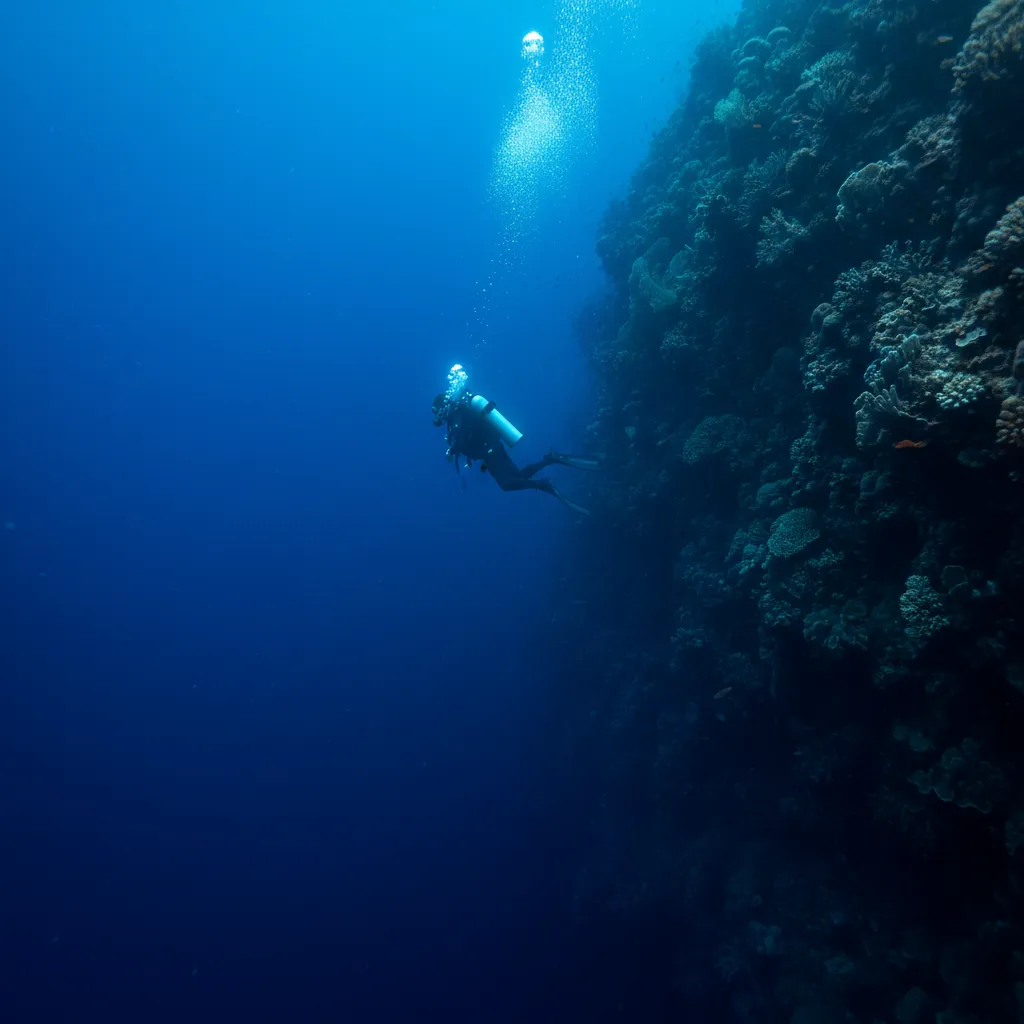
Deep diving - generally defined as dives between 18 and 40 metres for recreational divers - opens access to spectacular underwater environments: deep walls draped in sea fans and black coral, wrecks resting on the seabed, pelagic species cruising in deeper blue water, and geological formations invisible from shallower depths. However, deeper diving introduces significant physiological and practical challenges that demand additional knowledge, preparation, and discipline. As depth increases, no-decompression limits shrink rapidly, air consumption accelerates due to increased gas density, nitrogen narcosis affects cognitive function, and the consequences of any problem - equipment failure, buddy separation, or navigation error - are amplified by the reduced time available to resolve them. The recreational deep diving limit of 40 metres (130 feet) is not arbitrary; it represents the depth at which nitrogen narcosis becomes significant for most divers and where no-decompression times on air become impractically short. Proper deep diving requires an Advanced Open Water certification at minimum, ideally supplemented by a Deep Diving specialty course. It also requires honest self-assessment, conservative planning, appropriate equipment, and the discipline to turn the dive at pre-agreed limits regardless of what you might see just a few metres deeper. Deep diving is immensely rewarding when conducted within proper margins - and unforgiving when those margins are violated.
Nitrogen Narcosis
Nitrogen narcosis - often called "rapture of the deep" or "the martini effect" - is an alteration of consciousness caused by breathing nitrogen at elevated partial pressures. Effects typically begin around 30 metres and increase with depth. Symptoms include impaired judgment, reduced coordination, euphoria or anxiety, tunnel vision, delayed reaction times, and difficulty with complex tasks. At 40 metres, most divers experience noticeable narcosis equivalent to mild alcohol intoxication.
Narcosis is unpredictable - it can vary between dives, between divers, and is exacerbated by cold water, poor visibility, anxiety, fatigue, and carbon dioxide retention from heavy breathing. The only treatment is to ascend to shallower water, where symptoms resolve quickly and completely. Never make important decisions (continuing the dive, extending bottom time) while narcosed. If you suspect narcosis, ascend immediately to a depth where your thinking clears.
Gas Management at Depth
Air consumption at depth increases in direct proportion to ambient pressure. At 30 metres (4 bar absolute), you consume air four times faster than at the surface. At 40 metres (5 bar), five times faster. A 200-bar tank that lasts 60 minutes at the surface may last only 12-15 minutes at 40 metres for an average breather. This makes gas planning critical - calculate your anticipated consumption rate at planned depth, determine your turn pressure and minimum reserve, and adhere to the plan rigorously.
Consider using larger tanks (15-litre rather than 12-litre) for deep dives, and strongly consider nitrox to extend no-decompression limits at depths within the mix's MOD. Some deep divers carry a redundant air source (pony bottle or stage cylinder) as insurance against primary gas failure at depth.
Dive Planning for Deep Dives
Deep dive plans should be more conservative than shallow dive plans. Set a maximum depth and stick to it - "just a few metres deeper" is how many accidents begin. Plan bottom times well within NDLs, allowing a generous margin for ascent and safety stops. Consider using nitrox for the no-decompression time extension or breathing nitrox on a conservative air algorithm for the extra safety margin.
Ascent rates become even more critical on deep dives. The expanding gas in your lungs and BCD accelerates buoyancy changes during ascent. Maintain strict ascent rate discipline (no faster than 9-10 metres per minute from depth) and perform a deep stop at half your maximum depth for one minute, followed by the standard safety stop at 5 metres for 3 minutes.
Equipment Considerations
For deep diving within recreational limits, ensure your regulator is rated for the depth and services at the planned ambient pressure without significant breathing resistance. Cheaper regulators may become difficult to breathe from at depth. A dive computer is essential - no serious deep diving should be done on tables alone. Carry a surface marker buoy and reel for controlled ascents. Ensure your exposure suit provides adequate thermal protection, as deep water is significantly colder in most environments. A dive light is useful for restoring colour at depth, where red, orange, and yellow wavelengths are absorbed by the water column.
Knowing Your Limits
The most dangerous aspect of deep diving is the temptation to exceed your limits. Deep diving is seductive - the blue water, the sense of exploration, and the desire to see what is just below the limit are powerful motivators. But the margin of safety at depth is thin. A problem that is easily managed at 10 metres can become life-threatening at 35 metres. Be honest about your experience level, fitness, and comfort. Never let peer pressure or competitive ego drive you deeper than your training and experience support.
Key Takeaways
- 1Nitrogen narcosis typically begins around 30 metres and impairs judgment - ascend if you suspect it
- 2Air consumption at 40 metres is 5 times the surface rate - gas management is critical
- 3Always plan conservative bottom times with generous margins within no-decompression limits
- 4Ascend at no more than 9-10 metres per minute with a deep stop and safety stop
- 5Consider nitrox to extend NDLs at depths within the mix's maximum operating depth
- 6Never exceed planned maximum depth - 'just a little deeper' is how many accidents begin
Frequently Asked Questions
What is the maximum depth for recreational scuba diving?
The internationally recognised maximum depth for recreational scuba diving is 40 metres (130 feet). This limit exists because nitrogen narcosis becomes significant, no-decompression times are very short, air consumption is extremely high, and the consequences of any problem are severe. Diving beyond 40 metres requires technical diving training and equipment.
What does nitrogen narcosis feel like?
Narcosis affects people differently. Common experiences include a feeling of intoxication or euphoria, difficulty concentrating, impaired arithmetic ability, tunnel vision, delayed reaction times, and inappropriate responses (laughing, fixation on irrelevant details). Some divers experience anxiety or paranoia instead of euphoria. The effects resolve quickly upon ascending.
Do I need special equipment for deep diving?
Within recreational limits (to 40m), you need a reliable regulator rated for the depth, a dive computer, an SMB and reel, adequate thermal protection, and a dive light for colour restoration. A redundant gas supply (pony bottle) is recommended but not required. Beyond 40 metres (technical diving), specialised equipment including redundant systems, multiple gas mixtures, and decompression planning tools are mandatory.
Should I do a deep stop?
Deep stops - pausing for 1 minute at approximately half your maximum depth - are widely practiced among experienced divers. While scientific evidence for their benefit is debated, many decompression researchers and experienced divers consider them prudent, particularly after dives to 30+ metres. They complement, not replace, the standard safety stop at 5 metres.