Dive Planning 101: Tables, Computers & Safety
By DivePlnr Editorial Team | Published March 2026 | Updated March 2026
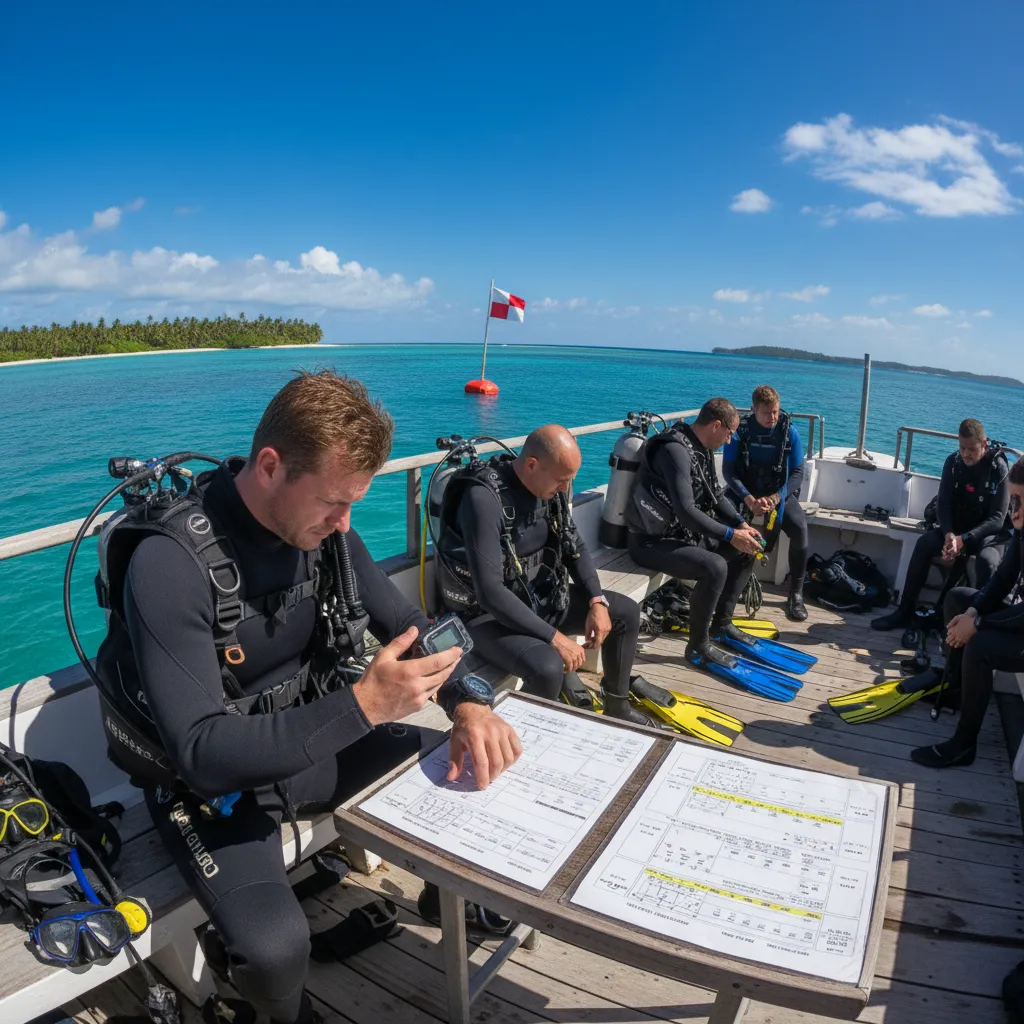
Dive planning is the systematic process of preparing for a dive to maximise safety and enjoyment. A well-planned dive accounts for depth, time, gas supply, environmental conditions, diver experience, and emergency procedures. The old diving adage - 'plan the dive, dive the plan' - encapsulates a philosophy that has saved countless lives since recreational diving began. Historically, dive planning relied on printed dive tables such as the US Navy tables or PADI Recreational Dive Planner, which provided pre-calculated no-decompression limits for various depth and time combinations. Today, most divers use dive computers that perform these calculations in real time, but understanding the principles behind the tables remains important because it teaches the fundamental relationship between depth, time, and nitrogen absorption. Whether you use tables, a computer, or planning software, the planning process follows the same logic: determine maximum depth, calculate available bottom time within no-decompression limits, ensure adequate gas supply with appropriate reserves, account for surface intervals between repetitive dives, and establish clear procedures for handling emergencies. Dive planning is not bureaucratic box-ticking - it is an active process that trains you to think critically about risks and contingencies before entering the water.
Understanding No-Decompression Limits
When you breathe compressed air at depth, nitrogen dissolves into your body tissues at a rate proportional to the ambient pressure. The deeper you go, the faster nitrogen accumulates. No-decompression limits (NDLs) define the maximum time you can spend at a given depth while still being able to ascend directly to the surface at a safe rate. Exceeding these limits requires mandatory decompression stops - planned pauses during ascent that allow nitrogen to off-gas slowly - which is outside the scope of recreational diving.
At 10 metres, NDLs are generous - over 200 minutes on many tables. At 30 metres, they shrink to approximately 20 minutes. At 40 metres (the recreational limit), you may have only 8-10 minutes of no-decompression time. This inverse relationship between depth and time is the most fundamental concept in dive planning.
Dive Tables
Dive tables present NDLs in a matrix format. You find your planned depth on one axis, read across to your planned time, and the table tells you your pressure group - a letter representing your nitrogen loading. For repetitive dives, a surface interval table converts your pressure group at the end of one dive to a new pressure group after a given surface interval, accounting for nitrogen off-gassing at the surface. The residual nitrogen table then adjusts your NDL for the next dive.
While largely replaced by computers for practical use, understanding tables teaches critical thinking about nitrogen management and gives you a backup planning method if your computer fails.
Dive Computers
A dive computer samples depth every few seconds and continuously calculates nitrogen absorption using a decompression algorithm (typically a Buhlmann or RGBM model). It displays your remaining no-decompression time in real time, adjusting for your actual dive profile rather than assuming a constant depth as tables do. This multi-level capability typically gives you significantly more bottom time than tables for dives that are not at a constant depth.
Modern dive computers also track ascent rate, calculate safety stop requirements, manage surface interval times for repetitive diving, and some integrate gas pressure monitoring via wireless transmitters. Always set your computer conservatively - particularly when new to diving - and never share computers between divers on alternating dives.
Gas Planning
Running low on breathing gas is a preventable emergency. Gas planning uses the rule of thirds (for overhead environments) or a minimum reserve approach (for open water). A common recreational planning method: calculate your surface air consumption (SAC) rate, multiply by the pressure at your planned depth to get your depth air consumption, and determine how long your supply will last. Always surface with at least 50 bar (700 psi) reserve - this provides a safety margin for unexpected situations.
The Dive Briefing
Every dive should begin with a briefing covering: entry and exit points, planned depth and bottom time, direction of travel, buddy pairs, communication signals, emergency procedures (lost buddy protocol, out-of-air procedures), and any site-specific hazards such as currents, boat traffic, or marine life to avoid. On guided dives, the divemaster provides this briefing. On independent dives, you and your buddy create the plan together.
Key Takeaways
- 1Plan the dive, dive the plan - systematic preparation is essential for safe diving
- 2No-decompression limits decrease dramatically with depth - 200+ minutes at 10m but only 8-10 minutes at 40m
- 3Dive computers provide real-time multi-level NDL calculations, giving more bottom time than tables
- 4Always surface with at least 50 bar (700 psi) reserve gas supply
- 5Every dive begins with a briefing covering depth, time, route, buddy procedures, and emergencies
- 6Understanding dive tables teaches nitrogen management even if you use a computer
Frequently Asked Questions
Do I still need to learn dive tables if I use a computer?
Understanding dive table principles remains valuable because it teaches the relationship between depth, time, and nitrogen loading. Tables serve as a backup planning method if your computer fails. Most certification courses still teach basic table use, though computers are the standard tool for actual dive planning.
What happens if my dive computer fails during a dive?
If your computer fails mid-dive, end the dive with a slow, controlled ascent and a safety stop at 5 metres for 3-5 minutes. Do not dive again for at least 24 hours without a functioning computer, as you have no way to track residual nitrogen. Always carry a backup timing device and depth gauge if possible.
How do I calculate my air consumption rate?
Track your starting and ending tank pressure, depth, and time over several dives. Surface Air Consumption (SAC) rate = (air used in bar x tank volume in litres) / (time in minutes x absolute pressure in bar). Average recreational SAC rates are 15-20 litres per minute, but this varies enormously with fitness, experience, stress, and exertion.
What is a safety stop and is it mandatory?
A safety stop is a pause at 5 metres (15 feet) for 3 minutes at the end of a dive, allowing additional nitrogen off-gassing before surfacing. While not mandatory for dives within no-decompression limits, it is strongly recommended and considered standard practice. It significantly reduces the risk of decompression sickness, particularly after deeper or longer dives.