Diving Medical & Fitness to Dive
By DivePlnr Editorial Team | Published April 2026 | Updated April 2026
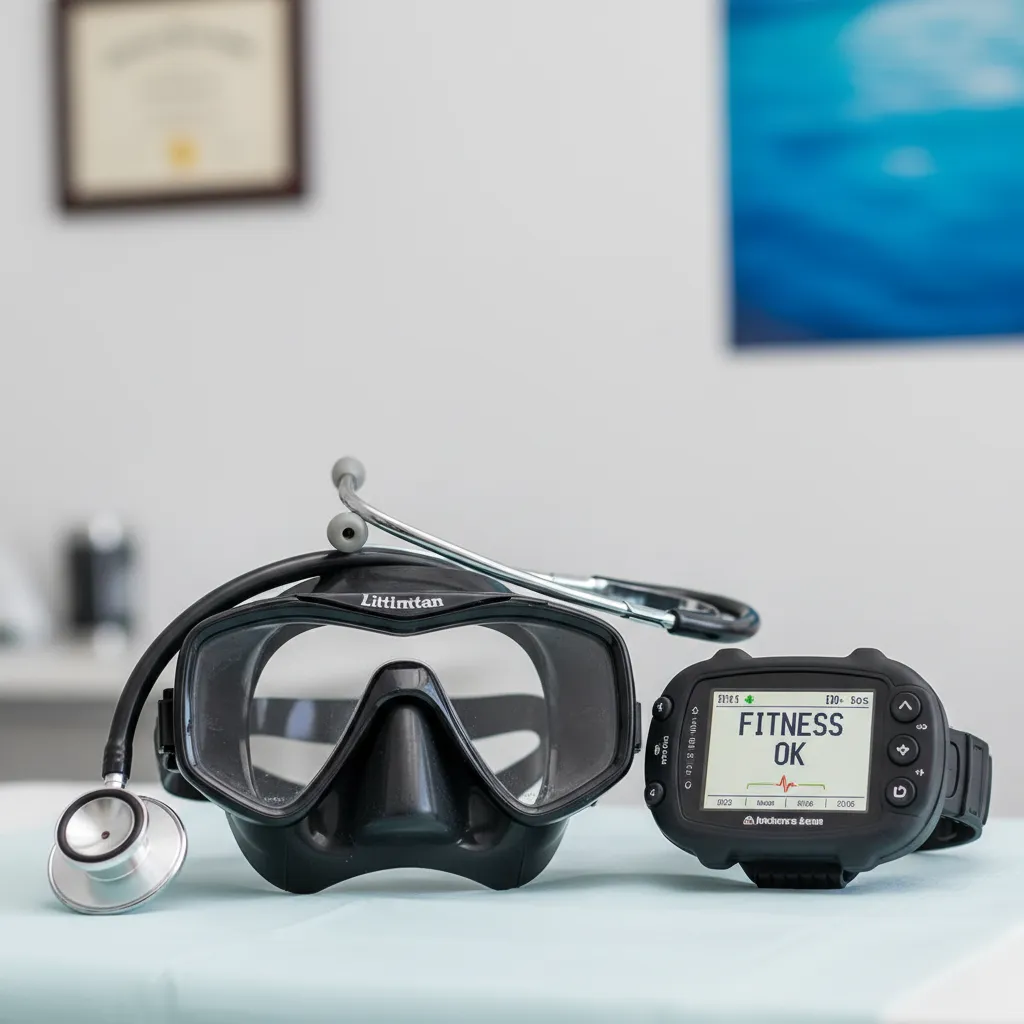
Medical fitness is a non-negotiable prerequisite for scuba diving. The underwater environment places unique physiological demands on the body - pressure changes affect air spaces in the ears, sinuses, and lungs; immersion shifts blood volume centrally; cold water stresses the cardiovascular system; and breathing compressed gas at depth introduces risks that simply do not exist on the surface. Before any reputable dive course or dive operation allows you to enter the water, you will complete a medical questionnaire designed to identify conditions that could put you at risk. This is not a formality - it exists because certain medical conditions can cause sudden incapacitation, barotrauma, or impaired judgement underwater, where the consequences are far more serious than on land. The Recreational Scuba Training Council (RSTC) medical questionnaire is used worldwide and screens for cardiovascular, respiratory, neurological, ENT, and psychological conditions. If you answer "yes" to any question, you need clearance from a physician - ideally one trained in dive medicine - before proceeding. In some countries (UK, Australia, South Africa), a diving medical examination by an approved doctor is mandatory for all new divers, regardless of questionnaire responses. Divers Alert Network (DAN) provides the gold standard for diving medical research and maintains a 24/7 emergency hotline that any diver worldwide can call for medical advice.
Conditions That May Preclude Diving
Absolute Contraindications
Some conditions are considered absolute contraindications to diving - meaning diving is not recommended under any circumstances. These include: spontaneous pneumothorax (collapsed lung) history, severe obstructive or restrictive lung disease, active seizure disorder or epilepsy (a seizure underwater is almost certainly fatal), certain cardiac conditions including uncontrolled arrhythmias and severe coronary artery disease, and any condition causing unpredictable loss of consciousness. The reasoning is straightforward: if a condition can cause sudden incapacitation, and you are 20 metres underwater breathing compressed gas, the outcome is likely fatal.
Relative Contraindications
Many conditions require individual assessment rather than blanket prohibition. Well-controlled asthma is perhaps the most debated - modern guidelines generally allow asthmatics who have normal spirometry, are not triggered by exercise or cold, and can pass a bronchial provocation test. Diabetes (type 1 and 2) was historically a firm no, but current DAN guidelines permit diving with well-controlled diabetes under specific protocols: blood glucose between 150-300 mg/dL before diving, no hypoglycaemic episodes in the previous 12 months, and carrying glucose gel underwater. Heart conditions that have been surgically corrected, well-managed hypertension, and certain psychiatric conditions on stable medication all require case-by-case assessment.
The Diving Medical Examination
A proper dive medical goes beyond the questionnaire. It typically includes: a thorough medical history review, cardiovascular examination (blood pressure, heart sounds, potentially an ECG for divers over 45), respiratory examination including spirometry (lung function testing), ENT examination focusing on tympanic membranes and Eustachian tube function, neurological screening, and assessment of exercise tolerance. The physician is looking for conditions that affect pressure equalisation, cardiovascular fitness under exertion, respiratory function under load, and any risk of sudden incapacitation.
DAN and Dive Insurance
Divers Alert Network (DAN) is the diving industry's primary safety organisation and the world's leading authority on dive medicine. DAN membership provides access to dive accident insurance, which covers hyperbaric treatment (a single recompression session can cost $5,000-$25,000), medical evacuation, and emergency medical care. DAN also operates a 24/7 emergency hotline staffed by dive medicine specialists. Even without membership, any diver or medical professional can call DAN for emergency consultation. Separate from DAN, commercial dive travel insurance (DAN's own travel policy, Dive Assure, or similar) is strongly recommended for any dive trip, as standard travel insurance typically excludes scuba diving incidents.
Fitness and Lifestyle Considerations
Physical Fitness
Scuba diving requires moderate cardiovascular fitness. You need to be able to swim against a current, manage equipment on the surface, and handle unexpected exertion. A reasonable fitness benchmark is the ability to swim 200 metres without stopping and walk briskly for 20 minutes without excessive breathlessness. Overweight divers face increased DCS risk (nitrogen is more soluble in fat tissue) and greater cardiovascular demand. Regular aerobic exercise - swimming, cycling, jogging - improves diving fitness and safety margin.
Age
There is no upper age limit for diving, but age-related changes in cardiovascular function, lung elasticity, and joint mobility all affect diving safety. Divers over 45 should have annual medical assessments, and any new symptoms should prompt immediate review. Many divers dive safely well into their 70s with appropriate medical screening.
Medications
Many common medications are compatible with diving, but some are not. Sedatives, antihistamines that cause drowsiness, beta-blockers (may impair exercise response), and any medication that affects consciousness or cognitive function require careful review. Never start diving on a new medication without consulting a dive-medicine-trained physician. Seasickness medications (specifically meclizine/Bonine) are generally considered acceptable; scopolamine patches are used but can cause blurred vision underwater.
Flying After Diving
Reduced cabin pressure in aircraft (equivalent to roughly 1,800-2,400 metres altitude) can trigger DCS in a diver who has not fully off-gassed. DAN guidelines recommend: minimum 12 hours surface interval after a single no-decompression dive, minimum 18 hours after multiple dives or multiple days of diving, and 24+ hours after any decompression dive. These are minimums - longer is always safer. The same applies to driving to altitude (mountain passes, high-altitude resorts).
Key Takeaways
- 1Every diver must complete a medical questionnaire before diving - answering 'yes' to any item requires physician clearance from a dive-medicine-trained doctor
- 2Absolute contraindications include epilepsy, spontaneous pneumothorax history, and conditions causing unpredictable loss of consciousness
- 3Well-controlled asthma and diabetes are no longer automatic disqualifiers but require specialist assessment and specific protocols
- 4DAN membership provides dive accident insurance covering recompression treatment ($5,000-$25,000 per session) and 24/7 medical consultation
- 5Wait at least 12 hours after a single no-deco dive and 18-24 hours after repetitive dives before flying
- 6Divers over 45 should have annual dive medical examinations and report any new symptoms promptly
Frequently Asked Questions
Can I dive if I have asthma?
In many cases, yes - provided your asthma is well-controlled, not triggered by exercise or cold air, and you have normal spirometry results. You will need clearance from a physician trained in dive medicine. Poorly controlled asthma, exercise-induced bronchospasm, or a recent severe attack are reasons to delay diving until the condition is stabilised.
Do I need dive insurance?
It is strongly recommended. Standard travel and health insurance policies typically exclude scuba diving injuries. Hyperbaric recompression treatment can cost $5,000-$25,000 per session, and medical evacuation from remote dive destinations can exceed $50,000. DAN membership with dive accident insurance starts at around $40/year - a fraction of what a single treatment could cost.
Can I take medication and dive?
Many medications are compatible with diving, but you must consult a dive-medicine physician. Key concerns are medications that cause drowsiness, affect cognitive function, alter cardiovascular response, or mask symptoms that should prompt you to end a dive. Never begin diving on a new medication without professional guidance.
How soon after surgery can I dive?
This depends entirely on the type of surgery. Minor procedures may require a few weeks; major surgery (especially thoracic or cardiac) may require months of recovery plus medical clearance. Ear and sinus surgery requires full healing and confirmed Eustachian tube function. Always get written clearance from both your surgeon and a dive medicine physician.
Is there an age limit for scuba diving?
No upper age limit exists. Many divers continue well into their 70s and beyond. However, age-related cardiovascular changes, reduced respiratory capacity, and joint issues require more frequent medical assessment. Most agencies certify children from age 10 (junior) and 12-15 for full open water certification.